Phase 1 Orthodontic Treatment: How It Works, Results and What to Expect

Phase 1 orthodontic treatment is usually considered while a child still has baby teeth, often after an orthodontic assessment around age 7. Treatment may use braces, expanders, space maintainers, or other appliances depending on the child’s specific growth and bite pattern.
Key Takeaways
- Phase 1 orthodontic treatment is usually considered while a child still has baby teeth, often after an orthodontic assessment around age 7.
- Treatment may use braces, expanders, space maintainers, or other appliances depending on the child’s specific growth and bite pattern.
- The goal is to improve a developing problem, such as a crossbite, severe crowding, or protruding front teeth; it does not always eliminate the need for later treatment.
- Active phase 1 treatment commonly lasts months to around 1 year, followed by monitoring while permanent teeth erupt.
- A specialist orthodontic assessment helps determine whether early treatment is beneficial or whether observation is the safer option.
Phase 1 orthodontic treatment is early, targeted care for selected children who still have both baby and permanent teeth. It aims to address developing bite, jaw-growth, or space problems at the right time, rather than treating every child with braces early.
Overview: what phase 1 orthodontic treatment does
Phase 1 orthodontic treatment, also called interceptive orthodontics, is an early stage of care designed for a child whose teeth and jaws are still developing. It is not simply “braces at a younger age.” Instead, it addresses specific problems that may be easier to influence before most permanent teeth have erupted, such as a narrow upper jaw, crossbite, significant lack of space, or front teeth that project far forward.
The first phase is typically followed by a resting or observation period. During this time, the remaining permanent teeth erupt and the orthodontist monitors growth. Some children later benefit from phase 2 treatment, which is the more familiar comprehensive alignment of permanent teeth with braces or clear aligners. Others may need less extensive later treatment because an early problem was corrected.
Not every child needs two-phase orthodontics. In many cases, waiting until more permanent teeth are present is appropriate and avoids unnecessary treatment. An orthodontist evaluates the individual child’s bite, facial growth, dental development, oral habits, and the likely consequences of waiting before recommending a plan.
Who may be a candidate for early orthodontic care
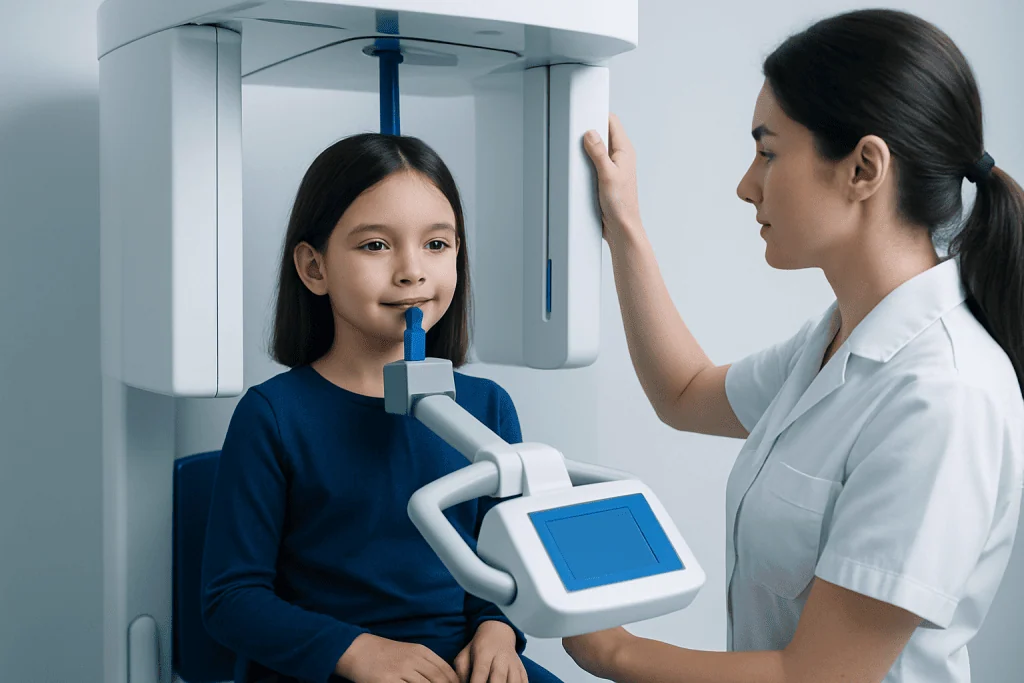
Orthodontic organizations commonly recommend an initial orthodontic evaluation by about age 7. This does not mean treatment should begin at that age. It gives the orthodontist an opportunity to identify whether tooth eruption and jaw growth appear typical, whether monitoring is needed, or whether a time-sensitive concern is present.
A child may be considered for phase 1 orthodontic treatment when there is a developing issue that can affect function, tooth health, or future treatment complexity. Examples include an upper jaw that is too narrow, a crossbite that shifts the lower jaw to one side, very crowded front teeth, early loss of baby teeth, impacted or unusually erupting teeth, and prominent upper front teeth with a greater chance of injury.
Other reasons for assessment include prolonged thumb or finger sucking, mouth breathing, difficulty biting or chewing, speech concerns, clicking or discomfort in the jaw, or a strong family history of significant bite problems. These signs do not automatically mean a child needs braces. They do mean that a dental professional should assess the child carefully.
- Children with mild crowding may only need periodic observation.
- Children with a crossbite or restricted jaw development may benefit from treatment while growth is active.
- Children with complex dental development may need coordinated care with a pediatric dentist, oral and maxillofacial specialist, or ear, nose and throat clinician when appropriate.
How phase 1 orthodontic treatment works: step by step

The process begins with a detailed consultation. The orthodontist reviews medical and dental history, examines the teeth, gums, bite, jaw movement, and facial proportions, and may take photographs, digital scans or impressions, and dental X-rays. These records show the positions of developing permanent teeth and help determine whether immediate treatment is justified.
If treatment is recommended, the plan is tailored to the problem rather than based on a standard appliance. A removable appliance may guide a limited tooth movement or help stop a habit. A palatal expander may gradually widen a narrow upper jaw. Partial braces may be placed on selected teeth to create space or improve the bite. Space maintainers can help preserve room when baby teeth are lost too early.
At the fitting visit, the orthodontic team explains how to wear, clean, and protect the appliance. Some appliances are fixed in place, while removable devices only work when worn as instructed. Follow-up visits allow the orthodontist to assess tooth movement, adjust appliances when needed, and check oral hygiene and gum health.
Once the first-phase goal has been reached, active treatment stops. The child may receive a retainer, or may simply be monitored at planned intervals. This observation phase is important because teeth and jaws continue to change substantially as permanent teeth erupt.
Benefits, limitations, and possible risks
The main benefit of phase 1 orthodontic treatment is timing. For the right child, early care can guide jaw development, correct a functional crossbite, make room for erupting teeth, reduce the risk of trauma to protruding front teeth, or improve the conditions for later comprehensive treatment. It may also make later care simpler in selected cases, although this cannot be guaranteed.
It is equally important to understand the limitations. Early treatment does not always prevent phase 2 braces or aligners. Permanent teeth can still shift as they erupt, and a child’s facial growth cannot be predicted perfectly. The purpose is to manage a specific developing concern, not necessarily to complete every aspect of orthodontic alignment at an early age.
Most effects are temporary and manageable. Teeth can feel sore for several days after appliances are fitted or adjusted. Brackets and wires may irritate the cheeks or lips initially, and removable appliances can affect speech briefly while the child adapts. Poor cleaning around fixed appliances can increase the risk of plaque buildup, gum inflammation, tooth decay, and permanent white marks on enamel.
Rarely, orthodontic tooth movement can be associated with changes to tooth roots or gum levels. Regular reviews, appropriate force levels, good hygiene, and prompt reporting of loose or broken appliances help keep risks low. A child should continue routine dental checkups throughout orthodontic care.
Recovery timeline and everyday care
There is no surgical recovery period after most phase 1 orthodontic treatments. Children usually return to school and normal activities immediately. Mild pressure or tenderness commonly occurs during the first few days after braces, expanders, or other appliances are placed or adjusted. Softer foods can be more comfortable during this brief adjustment period.
With fixed braces, careful brushing around brackets and along the gumline is essential. An orthodontist may recommend fluoride toothpaste, interdental brushes, or other cleaning aids. Sticky, hard, or chewy foods can damage brackets, wires, and expanders, so families should follow the appliance-specific food guidance they receive.
For removable appliances, consistent wear is central to success. The appliance should be cleaned as instructed and kept safely in its protective case when not in the mouth. It should not be wrapped in a napkin, placed in hot water, or shared with anyone else. If it is lost, cracked, or uncomfortable, the orthodontic office should be contacted.
Active treatment duration varies with the problem and the appliance used. Many first-phase plans last roughly 6 to 18 months, followed by a longer observation period. Review appointments are usually less frequent once active treatment has ended, but they remain important for tracking permanent-tooth eruption and growth.
Is phase 1 orthodontics worth it?
Phase 1 orthodontics can be worthwhile when it treats a clearly defined problem that is likely to worsen, affect function, increase the chance of dental injury, or become harder to correct after growth is more advanced. A crossbite associated with a jaw shift, a very narrow upper jaw, or severe space loss are examples where timely care may offer meaningful benefit.
However, it is not automatically worthwhile for every child with crooked or crowded teeth. Some children are best served by regular monitoring until the permanent teeth have erupted. A thoughtful orthodontic assessment should explain the specific treatment goal, what may happen without early intervention, what later treatment may still be needed, and what alternatives are available.
Families can ask the orthodontist to describe how success will be measured and whether the recommendation is intended to improve function, guide growth, reduce risk, or create space. Understanding these goals helps caregivers make an informed decision without assuming that early treatment guarantees a shorter or simpler future course.
How long do braces stay on in phase 1?
When braces are used during phase 1 orthodontic treatment, they are often placed on only selected teeth rather than across the full upper and lower arches. The duration depends on the goal: creating space, correcting a crossbite, moving front teeth, or supporting eruption can each require a different amount of time.
Many children wear active appliances for approximately 6 to 18 months. Some limited corrections take less time, while more complex growth-related problems may need longer treatment or a sequence of appliances. The orthodontist will review progress at follow-up visits and adjust the expected timeframe if tooth eruption or growth changes the plan.
After braces are removed, a retainer or observation period may be needed to protect the improvement while the mouth continues to develop. Later phase 2 treatment, if indicated, is planned separately once enough permanent teeth are in place.
Is phase 2 of braces cheaper than phase 1? Can phase 1 be skipped?
Phase 2 treatment is not necessarily cheaper than phase 1 because the cost of orthodontic care depends on the treatment goals, appliance type, complexity, appointment needs, and local practice arrangements. A two-phase plan involves early active treatment plus later comprehensive treatment, whereas a one-phase plan begins later and may have a different scope. Families should request a clear written explanation of the proposed care plan and what follow-up or retention care it includes.
Phase 1 braces can sometimes be skipped safely. If the issue is mild, likely to resolve or remain manageable with growth, or can be treated effectively after permanent teeth erupt, observation may be preferred. Skipping phase 1 is less suitable when delaying care could allow a functional bite problem, jaw discrepancy, loss of space, or risk to vulnerable front teeth to become more difficult to manage.
The decision should be individualized rather than based on age alone. A second orthodontic opinion can be useful if caregivers are uncertain about the purpose or urgency of a two-phase recommendation. The best plan balances potential benefit, the child’s cooperation, oral hygiene, development, and the expected need for future treatment.
When to seek medical care
A child should see a dentist or orthodontist if there is difficulty biting, chewing, or closing the teeth together; a noticeable jaw shift when biting; front teeth that extend far forward; teeth erupting in unusual positions; or early loss of baby teeth. An assessment is also sensible when caregivers notice persistent thumb sucking, mouth breathing, crowded front teeth, or a family history of major bite problems.
Prompt dental advice is appropriate for tooth pain, swelling, fever, facial swelling, a knocked-out or displaced tooth, or an orthodontic appliance that is embedded, causing significant injury, or has a loose wire that cannot be made comfortable. These concerns may need evaluation by a dentist or urgent medical service, depending on severity.
For international patients, Acibadem International’s multidisciplinary specialists and JCI-accredited hospitals can assess dental and orthodontic concerns and coordinate appropriate care. An in-person orthodontic examination remains the most reliable way to decide whether early treatment, monitoring, or later comprehensive treatment is appropriate.
Frequently asked questions
What age is phase 1 orthodontic treatment usually started?
Phase 1 treatment is often considered between ages 6 and 10, while a child has a mix of baby and permanent teeth. The right timing depends on dental development and the type of bite or jaw concern, not age alone. An orthodontic check by around age 7 can help identify whether treatment or monitoring is appropriate.
Does every child need phase 1 braces before regular braces?
No. Most children do not automatically need early braces or a two-phase treatment plan. Phase 1 is intended for specific developing problems that may benefit from treatment during growth, while many children can wait for comprehensive treatment later if needed.
Will phase 1 orthodontic treatment prevent the need for phase 2?
It may reduce the severity of a developing problem or improve the conditions for later treatment, but it does not always eliminate the need for phase 2. Teeth continue to erupt and jaws continue to grow after early treatment. The orthodontist can explain the realistic goals for an individual child.
Is phase 1 orthodontics painful?
Children may feel pressure, tenderness, or mild soreness for a few days after an appliance is fitted or adjusted. This usually settles as they adapt. Persistent pain, sores, or a broken appliance should be reported to the orthodontic office.
Can a child play sports while wearing phase 1 braces?
In most cases, children can continue sports and normal activities. A properly fitted mouthguard is recommended for contact sports, especially when braces are present. The orthodontist can advise on the safest option for the child’s appliance.
What happens between phase 1 and phase 2 orthodontic treatment?
There is usually a monitoring period while remaining permanent teeth erupt and facial growth continues. The child may wear a retainer in some situations, and scheduled reviews help the orthodontist detect changes early. Phase 2 is only started if comprehensive alignment or bite correction is still needed.
References
- American Association of Orthodontists
- American Dental Association
- British Orthodontic Society
- National Institute of Dental and Craniofacial Research
This article is for general information only and is not a substitute for professional medical advice. Please consult a qualified doctor about your individual situation.
Explore treatments in Turkey — costs, top hospitals & a free quote
JCI-accredited · board-certified surgeons · reply within 24h
Add us as a Preferred Source to see more of our trusted health content across Google Search, AI Overviews and Discover.