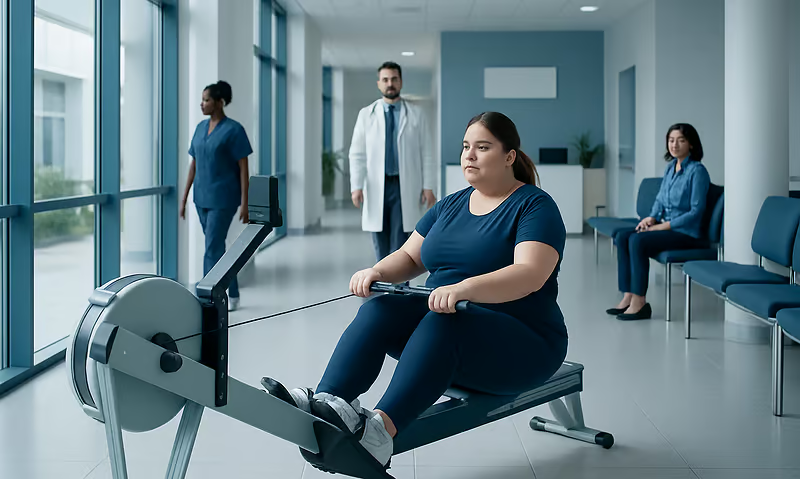
Physical Therapy for Scapula Pain: How It Works, Results and What to Expect

Scapula pain may arise from muscles and joints around the shoulder blade, but can also be referred from the neck, shoulder or less commonly internal organs. A physical therapist assesses posture, movement, strength and daily activities before creating an individualized treatment plan.
Key Takeaways
- Scapula pain may arise from muscles and joints around the shoulder blade, but can also be referred from the neck, shoulder or less commonly internal organs.
- A physical therapist assesses posture, movement, strength and daily activities before creating an individualized treatment plan.
- Recovery usually depends on the cause, symptom duration, activity demands and consistency with home exercises.
- Persistent or worsening pain needs reassessment, particularly when there is weakness, numbness, fever, chest symptoms or pain after significant injury.
- Physical therapy is often a conservative first approach, but it is not a substitute for medical evaluation when warning signs are present.
Physical therapy for scapula pain helps restore comfortable shoulder-blade movement, improve muscle control and address contributing problems in the neck, shoulder or upper back. A tailored program commonly combines assessment, hands-on care, progressive exercise and practical changes to daily activity.
Overview: How Physical Therapy for Scapula Pain Works
Physical therapy for scapula pain is a non-surgical approach that aims to reduce pain and improve how the shoulder blade, shoulder joint, neck and upper back work together. The scapula is the triangular bone at the back of the shoulder. It needs to move and remain stable in a coordinated way during reaching, lifting, pushing and overhead activity.
Pain in this area is often linked to irritated muscles, tendons or joints, reduced mobility, repeated strain, prolonged desk work, poor movement control or a problem in the neck or shoulder. Physical therapy does not simply focus on the painful spot. It identifies contributing movement patterns and gradually builds mobility, strength, endurance and confidence in daily activity.
A clinician may recommend rehabilitation as part of a broader plan for shoulder conditions, including shoulder impingement syndrome, or after injury. The best plan is individualized: exercises that help one person may not be appropriate for another, especially after trauma, surgery or when nerve-related symptoms are present.
What Happens When Your Scapula Hurts?
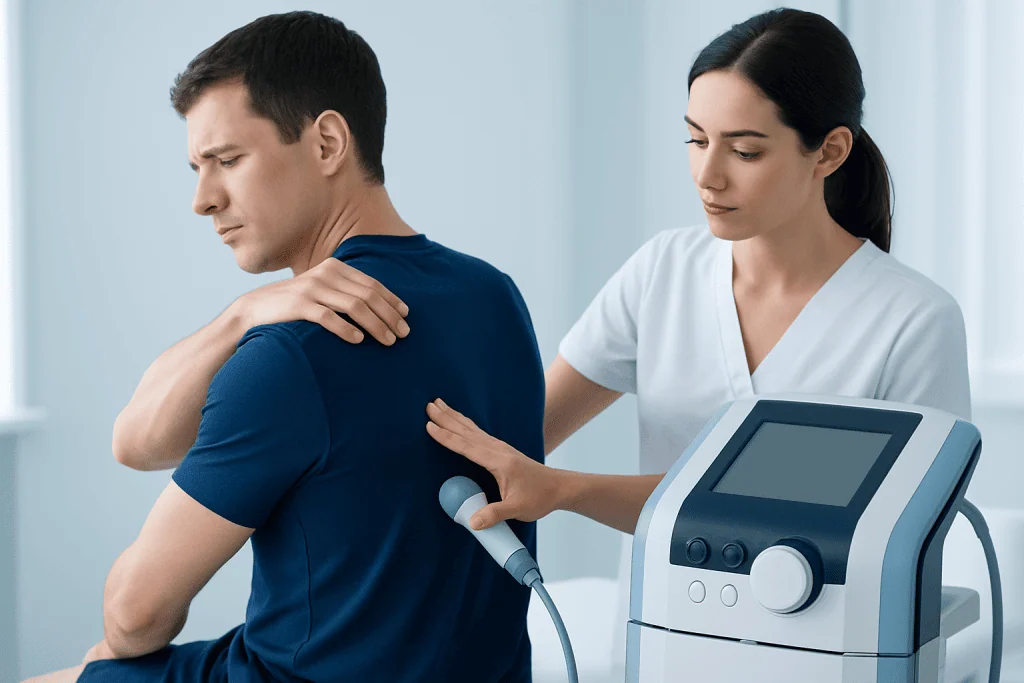
Scapula pain may feel like a dull ache, burning sensation, sharp pain with movement, tightness along the inner border of the shoulder blade, or discomfort that spreads toward the neck, shoulder or arm. Some people notice clicking, fatigue when holding the arms up, or a feeling that the shoulder blade is moving unevenly. These symptoms can interfere with sleep, computer work, driving, sport or lifting.
Common musculoskeletal causes include muscle overload, trigger points, strain around the upper back, altered scapular movement, shoulder tendon problems, joint irritation and neck-related referred pain. Poorly tolerated increases in training, repetitive work and prolonged static posture can all contribute. In some cases, pain around the shoulder blade follows an injury or develops alongside stiffness of the shoulder.
Although most scapular pain is musculoskeletal, location alone cannot identify the cause. A medical professional should consider the person’s symptoms, examination findings and health history. New severe pain, pain with chest pressure or shortness of breath, unexplained sweating, faintness, fever, or pain following a serious accident requires prompt medical assessment.
Who May Benefit From Physical Therapy for Scapula Pain?

Physical therapy may be suitable for people whose symptoms appear related to posture, muscle strain, repetitive activity, shoulder weakness, reduced upper-back mobility or changes in scapular control. It can also be useful during recovery from selected shoulder injuries or procedures when a doctor has confirmed that rehabilitation is appropriate.
During the first appointment, the therapist asks about symptom onset, aggravating and relieving activities, occupation, sport, previous injuries and overall health. Assessment may include observation of posture and movement, range-of-motion testing of the neck and shoulder, strength and endurance testing, palpation when appropriate, and screening for nerve symptoms.
Not everyone should begin with exercise alone. Recent major trauma, suspected fracture or dislocation, progressive weakness, marked loss of function, unexplained weight loss, fever, a history of cancer, or symptoms suggesting heart or lung disease require medical review. Imaging is not routinely needed for uncomplicated symptoms, but a doctor may request it when the history or examination suggests a structural concern.
Step by Step: What to Expect During Treatment
After assessment, the therapist explains the likely contributors to pain and agrees on meaningful goals, such as sleeping more comfortably, returning to work, carrying items, playing sport or reaching overhead. Early treatment may include education about activity modification, comfortable positions, pacing and ways to avoid repeatedly provoking symptoms while remaining as active as safely possible.
Exercise is usually the central part of care. A program may include gentle neck, chest and upper-back mobility work; strengthening for the muscles that stabilize and rotate the shoulder blade; rotator cuff exercises; and gradual practice of functional tasks. The exercises are progressed according to symptoms, movement quality, healing stage and personal goals rather than following a fixed schedule.
Some people also receive hands-on techniques, such as joint or soft-tissue mobilization, when these are clinically appropriate and combined with active rehabilitation. Taping, heat or cold may provide short-term symptom relief for selected individuals, but they are generally supportive measures rather than the main treatment. For comprehensive rehabilitation planning, clinicians may discuss physical therapy and rehabilitation alongside medical assessment.
A home program is important because improvement depends on regular, correctly performed practice between visits. The therapist should show how to do each exercise, explain what degree of temporary discomfort may be acceptable, and advise when an exercise should be stopped and reviewed.
Benefits, Risks and Recovery Timeline
Potential benefits of physical therapy include less pain, improved shoulder-blade coordination, better strength and endurance, greater range of motion and a safer return to ordinary activities. It may also help people understand which movements or workloads are contributing to symptoms, allowing them to make practical adjustments without avoiding movement unnecessarily.
Recovery timelines vary considerably. A recent mild muscle-related problem may begin improving over several weeks, while long-standing pain, significant weakness, work-related overload, a shoulder tendon condition or a neck-related problem may require a longer and more gradual program. Progress is rarely perfectly linear; activity-related soreness can occur as exercises are advanced.
Physical therapy is generally low risk when it is appropriately assessed and tailored. Temporary muscle soreness or mild symptom flare-ups can happen, particularly when starting new exercises. Persistent worsening pain, new tingling or numbness, increasing weakness, swelling, or symptoms that do not settle with the agreed modifications should be reported promptly to the therapist or doctor.
Rehabilitation may be combined with other treatments depending on the diagnosis. For example, a specialist may consider medication, injection-based care or further investigation in selected cases. People recovering from a diagnosed shoulder problem may also benefit from coordinated orthopedic rehabilitation when advised by their care team.
My Shoulder Pain Is Still There After Physical Therapy. What Should I Do?
Persistent shoulder or scapula pain after physical therapy does not automatically mean treatment has failed. The first step is usually reassessment. The therapist and doctor can review the original diagnosis, exercise technique, home-program consistency, workload, sleep, neck symptoms and whether the plan has been progressed appropriately.
Sometimes the pain source is different from the initial assumption, or more than one factor is involved. A shoulder joint condition, rotator cuff problem, cervical spine irritation, nerve involvement or another medical issue may need further evaluation. Depending on the findings, a clinician may adjust rehabilitation, recommend imaging, refer to an orthopedic specialist or involve another relevant specialty.
People should avoid pushing through severe or escalating pain in an attempt to speed recovery. Instead, they should seek guidance on modifying activity and exercise. Acibadem International’s multidisciplinary specialists and JCI-accredited hospitals can assess persistent musculoskeletal symptoms and coordinate care for international patients.
Is Physical Therapy Worth It for Shoulder Pain?
For many people with non-urgent, musculoskeletal shoulder pain, physical therapy is a worthwhile conservative treatment because it addresses function as well as pain. It can help restore movement and strength, support return to work or sport, and provide strategies for managing future flare-ups. Its value is greatest when the program matches the diagnosis and the person can participate regularly.
However, it is not the right stand-alone answer for every type of shoulder pain. Pain caused by fracture, dislocation, infection, serious nerve injury or a non-musculoskeletal condition needs urgent or specialist-led assessment. A clinician can help determine whether rehabilitation should begin now, be modified, or follow another treatment first.
Expectations should be realistic. Physical therapy commonly requires active participation and gradual progression rather than an immediate result. Clear goals, communication about symptom response and a tailored home plan make treatment more useful and safer.
How Long Should Physical Therapy for Shoulder Pain Last? When to Seek Medical Care
The length of physical therapy for shoulder pain depends on the diagnosis, severity, duration of symptoms, treatment goals and response to exercise. Some people need a short course focused on education and a home program, while others require continuing visits over a longer period to rebuild strength, movement confidence and tolerance for work or sport. The therapist should review progress regularly and revise the plan when goals are not being met.
Medical care should be sought promptly for shoulder-blade or shoulder pain accompanied by chest pain or pressure, shortness of breath, fainting, sweating, fever, a painful rash, severe unexplained illness, or pain after a major fall or collision. Urgent assessment is also important for a visibly deformed shoulder, inability to move the arm after injury, sudden major weakness, or new numbness that is persistent or worsening.
A non-urgent appointment is appropriate when symptoms last beyond a reasonable period despite self-care, repeatedly return, disturb sleep, limit work or daily life, or are associated with neck pain radiating into the arm. A doctor can determine whether further assessment is needed and whether rehabilitation should continue, change or be supplemented by other care.
Frequently asked questions
Can poor posture cause scapula pain?
Prolonged static posture can contribute to muscle fatigue and discomfort around the shoulder blade, particularly during desk work or frequent device use. However, posture is only one possible contributor, and pain usually reflects a combination of movement, workload, conditioning, sleep and health factors. A therapist can help identify practical changes without suggesting that one “perfect” posture is required.
Which exercises are used for scapula pain?
Programs often include exercises for upper-back and chest mobility, shoulder-blade control, rotator cuff strength and gradual return to reaching or lifting. The right exercise depends on the cause of pain and the person’s movement assessment. Exercises should be prescribed or reviewed by a qualified clinician when pain is persistent, severe or follows an injury.
Should exercises hurt during physical therapy for scapula pain?
Mild muscle effort or short-lived soreness can be normal when beginning or progressing a rehabilitation program. Sharp pain, severe pain, worsening symptoms that do not settle, or new numbness and weakness are not signals to continue without advice. The person should tell their therapist so the program can be adjusted.
Can neck problems cause pain near the shoulder blade?
Yes. Structures in the neck can refer pain toward the shoulder blade and may sometimes cause tingling, numbness or weakness into the arm or hand. A physical therapist or doctor should assess the neck as well as the shoulder when these symptoms are present. Progressive weakness or persistent neurological symptoms need timely medical review.
Is massage enough to treat scapula pain?
Massage may provide temporary relief for some people, especially when muscle tension is present. It is usually more effective as part of a broader plan that includes assessment, active exercise, workload adjustment and management of the underlying cause. Persistent pain should not be managed with massage alone without a clinical evaluation.
Can scapula pain return after physical therapy?
Symptoms can recur if the original workload, movement demands or contributing condition remains present. Continuing a suitable home program, building activity gradually and responding early to minor flare-ups may reduce recurrence. If pain returns frequently or changes in character, reassessment is advisable.
References
- American Academy of Orthopaedic Surgeons
- American Physical Therapy Association
- National Institute for Health and Care Excellence
- Mayo Clinic
- National Health Service
This article is for general information only and is not a substitute for professional medical advice. Please consult a qualified doctor about your individual situation.
Joint and spine care in Turkey — expert assessment & treatment
JCI-accredited · board-certified surgeons · reply within 24h
Add us as a Preferred Source to see more of our trusted health content across Google Search, AI Overviews and Discover.