Physical Therapy for Seniors: Diagnosis, Outlook, and Modern Treatment Approaches

Physical therapy can support strength, balance, walking ability, flexibility and confidence with daily activities. Care plans are individualized and may address arthritis, falls, surgery recovery, stroke, neurological conditions or general deconditioning.
Key Takeaways
- Physical therapy can support strength, balance, walking ability, flexibility and confidence with daily activities.
- Care plans are individualized and may address arthritis, falls, surgery recovery, stroke, neurological conditions or general deconditioning.
- Assessment includes movement, balance, pain, medical history, medications and personal goals; physical therapists do not replace medical diagnosis.
- Progress is usually gradual, with safe exercises and practical strategies that can continue at home.
- New weakness, sudden severe pain, chest symptoms or signs of stroke require prompt medical assessment rather than routine therapy.
Physical therapy for seniors is a personalized form of rehabilitation that helps older adults move more safely, maintain independence, manage pain and recover function after illness, injury or surgery. A physical therapist assesses the person’s goals, health conditions and home environment to create an appropriate, progressive plan.
Overview: how physical therapy helps older adults
Physical therapy for seniors helps older adults preserve or regain the movement needed for everyday life. It can improve the ability to stand from a chair, walk outdoors, use stairs, reach for objects, bathe, dress and participate in valued activities. Treatment is not limited to recovery after an injury; it may also help people who have become less active, feel unsteady, live with persistent pain or want to reduce their risk of falls.
Older adults often have more than one health consideration, such as arthritis, osteoporosis, heart disease, diabetes, vision changes or medication effects. For this reason, geriatric physical therapy is tailored rather than standardized. The therapist adjusts the type, pace and intensity of activity to the person’s symptoms, endurance, medical advice, preferences and goals.
Physical therapy is commonly delivered in an outpatient clinic, rehabilitation center, hospital, home setting or long-term care facility. Some people need a short course after a specific event, while others benefit from periodic review and a long-term exercise plan. The aim is practical function and safe independence, not simply completing exercises.
Who may benefit and what changes to look for
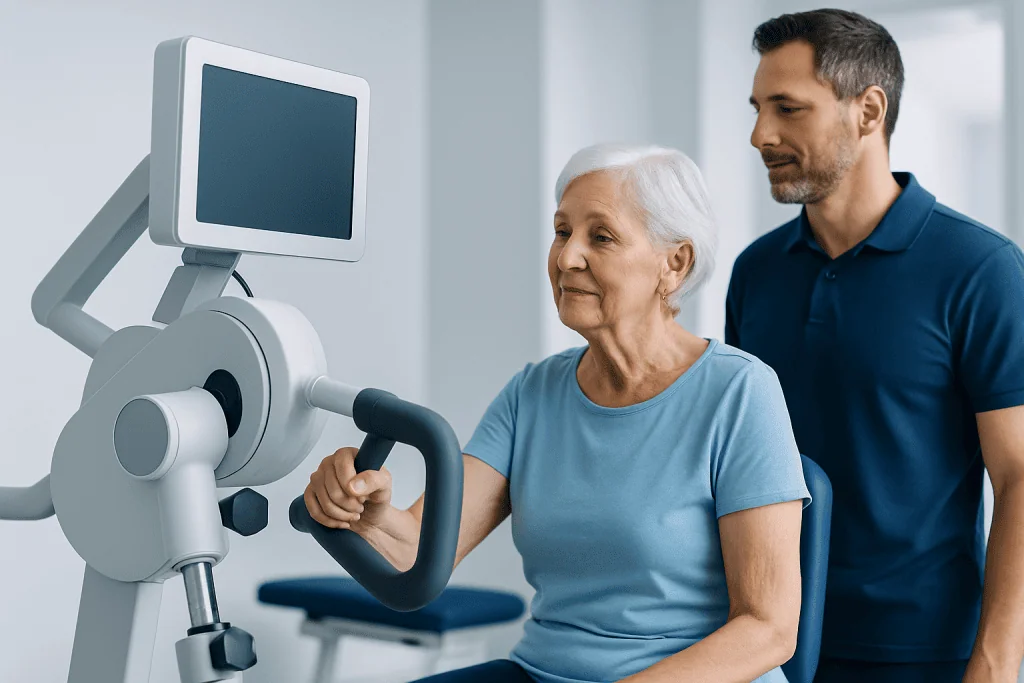
A referral may be considered after a fall, fracture, joint replacement, hospitalization, stroke, prolonged bed rest or a decline in walking ability. It can also be useful for older adults with osteoarthritis, chronic back or neck pain, Parkinsonian movement symptoms, peripheral neuropathy, balance disorders or weakness related to inactivity. Rehabilitation can be part of recovery for people living with conditions such as stroke, when guided by the wider medical team.
Common goals include walking farther or more safely, transferring in and out of bed, improving stair use, reducing fear of falling, managing pain during activity and using a cane or walker correctly. For some people, success means returning to gardening or travel; for others, it means safely moving around the home with less assistance.
Changes are often gradual. Improved confidence, steadier movement, easier chair rises and greater tolerance for daily tasks may appear before major gains in endurance or strength. Progress can vary with sleep, nutrition, mood, pain levels and other medical conditions, so goals are reviewed regularly and adjusted when needed.
- Repeated falls or near-falls
- Difficulty walking, turning or rising from a chair
- Reduced activity after illness, hospitalization or surgery
- Pain or stiffness that limits daily tasks
- Concern about safely using mobility aids
Assessment and diagnosis: building a safe rehabilitation plan

Physical therapists assess function; they do not replace a physician’s role in diagnosing new medical illness. Before treatment begins, the therapist reviews the person’s diagnosis or reason for referral, medical history, medications, prior activity level, pain, recent falls and personal priorities. Information from a geriatrician, primary care doctor, orthopedic specialist, neurologist or surgeon may help ensure that rehabilitation is appropriate.
The physical assessment may include observing posture and walking, checking joint movement and muscle strength, measuring balance, reviewing how the person moves between positions and discussing fatigue or shortness of breath with activity. A therapist may use simple functional tests, such as timed walking or repeated standing from a chair, to establish a starting point and monitor change over time.
Home and environmental factors are also important. Footwear, lighting, loose rugs, stair rails, bathroom access, glasses, hearing aids and mobility equipment can all affect safety. When appropriate, the therapist may recommend an occupational therapy assessment for support with self-care tasks, home modifications or adaptive equipment.
New symptoms may need medical investigation before or alongside rehabilitation. For example, unexplained weight loss, fever, rapidly worsening weakness, new numbness, severe night pain or a sudden decline in function should not be assumed to be part of normal aging.
Modern treatment approaches in geriatric physical therapy
Exercise remains a central part of physical therapy for seniors. A program may combine strength training, flexibility work, balance practice, walking or cycling, posture training and exercises that challenge daily movements. The therapist may begin with supported or seated options and progress gradually as tolerance improves. Proper technique and regular practice are more important than high intensity.
Task-specific training is another practical approach. Rather than treating movement only in isolation, therapy may rehearse activities the person needs at home, such as getting up from a chair, stepping over a threshold, turning safely, carrying a light object or navigating stairs. Gait training can improve walking patterns and help determine whether a cane, walker or other aid is useful.
For pain or restricted movement, treatment may include education, hands-on techniques, carefully selected mobility exercises and pacing strategies. After orthopedic surgery, a structured rehabilitation plan can help restore movement and function; this may be coordinated with orthopedic rehabilitation when appropriate. Assistive technologies, wearable activity monitoring, virtual exercise supervision and balance-training tools may also be used in selected settings, but they complement rather than replace professional assessment.
A well-designed plan accounts for safety. Therapists monitor symptoms and may modify exercises for osteoporosis, joint replacements, cardiovascular conditions, cognitive impairment or neurological disorders. A person should tell the therapist about dizziness, unusual breathlessness, chest discomfort, a medication change or a fall since the previous session.
What to expect during treatment and recovery
The first visit usually focuses on understanding the person’s concerns and setting meaningful goals. The therapist explains the findings, discusses a proposed plan and agrees on exercises that are realistic for the individual. Family members or caregivers may be invited to participate when this helps with communication, transportation, home exercise or safety planning.
Appointments often include supervised activity, education and practice of a home program. The number and frequency of visits depend on the underlying condition, recovery stage, response to treatment and practical needs. A plan after surgery may be more intensive initially, whereas a fall-prevention program may emphasize continued independent exercise and periodic reassessment.
Some mild muscle tiredness after new exercise can be expected, particularly after a period of low activity. Pain that is sharp, severe, progressively worse or associated with swelling, redness, fever, chest symptoms or new neurological symptoms should be reported promptly. Therapy should challenge function safely, not encourage people to push through concerning symptoms.
Outlook is influenced by the cause of mobility difficulty, general health, social support and consistency with the care plan. Even when a long-term condition cannot be reversed, physical therapy may help maintain abilities, reduce complications of inactivity and support participation in daily life.
Prevention and self-care between sessions
Regular movement is one of the most useful ways to protect mobility with age. The safest routine is one that matches the person’s health status and begins at an achievable level. A therapist can recommend suitable exercises for strength, balance and endurance, particularly for someone who has fallen, has osteoporosis, experiences dizziness or has recently been unwell.
Home exercise is most effective when it is simple, specific and performed as instructed. Linking exercises to a regular habit, such as after breakfast or before an evening routine, may improve consistency. Keeping a written plan can help, especially when several exercises are prescribed. If an activity repeatedly increases symptoms, the person should pause and ask the therapist or doctor for guidance.
Fall prevention also includes practical steps: wearing supportive shoes, keeping walkways clear, using adequate lighting, securing rugs, installing grab bars where needed and having vision and hearing checked. Good hydration, balanced nutrition and review of medications with a clinician can support energy, muscle health and steadiness. Alcohol and sedating medicines can affect balance in some individuals.
Acibadem International’s multidisciplinary specialists and JCI-accredited hospitals can assess rehabilitation needs and coordinate physical therapy for international patients when medically appropriate.
When to seek medical care
Older adults should arrange a medical review if pain, stiffness, weakness, dizziness or unsteadiness is limiting daily life, causing reduced activity or leading to falls. A doctor can look for treatable contributors such as medication effects, infection, joint disease, nerve problems, low blood pressure, vision concerns or other medical conditions. Physical therapy may then be recommended as part of the overall plan.
Urgent medical assessment is needed for sudden weakness or numbness, facial drooping, speech difficulty, sudden severe headache, fainting, new confusion, chest pain, severe shortness of breath or a sudden inability to walk. These symptoms may signal a time-sensitive medical problem and should not wait for a routine therapy appointment.
After a fall, prompt assessment is advisable if there is head injury, severe pain, inability to bear weight, visible deformity, new confusion or use of blood-thinning medication. Even without an obvious injury, recurrent falls deserve evaluation. Identifying the cause early can help clinicians address risks and plan safe rehabilitation.
Frequently asked questions
What is physical therapy for seniors?
Physical therapy for seniors is rehabilitation designed around the functional needs and health considerations of older adults. It uses assessment, exercise, education and practical movement training to improve safety, mobility, strength and independence.
Can physical therapy help prevent falls in older adults?
It can help reduce modifiable fall risks by improving balance, leg strength, walking ability and confidence with movement. A therapist can also review safe use of mobility aids and identify home or footwear issues that may contribute to falls.
Is physical therapy safe for someone with arthritis or osteoporosis?
Physical therapy is often appropriate for people with arthritis or osteoporosis, but the program should be individualized. The therapist may adapt exercises, movement range and resistance according to pain, fracture risk, medical advice and current function.
How long does it take to see results from senior physical therapy?
Some people notice improved confidence or easier daily movement within a few weeks, while strength and endurance gains may take longer. Recovery depends on the underlying condition, overall health, attendance, home practice and whether there have been recent illness or surgery.
Do older adults need a doctor’s referral for physical therapy?
Requirements vary by country, health system and insurance arrangement. Even where direct access is possible, medical input is important for new, unexplained or worsening symptoms and for people with complex health conditions.
What should an older adult wear to a physical therapy appointment?
Comfortable clothing that allows easy movement is usually best, along with supportive, non-slip shoes. Bringing a list of medicines, relevant medical reports, glasses, hearing aids and any mobility aid can help the therapist complete a useful assessment.
References
- World Health Organization
- National Institute on Aging
- Centers for Disease Control and Prevention
- American Physical Therapy Association
- National Institute for Health and Care Excellence
This article is for general information only and is not a substitute for professional medical advice. Please consult a qualified doctor about your individual situation.
Explore treatments in Turkey — costs, top hospitals & a free quote
JCI-accredited · board-certified surgeons · reply within 24h
Add us as a Preferred Source to see more of our trusted health content across Google Search, AI Overviews and Discover.