Picc Line: An Evidence-Based Guide for Patients

A PICC line provides long-term venous access for medicines, fluids, nutrition, and blood sampling. It is usually placed in the upper arm using sterile technique and imaging guidance.
Key Takeaways
- A PICC line provides long-term venous access for medicines, fluids, nutrition, and blood sampling.
- It is usually placed in the upper arm using sterile technique and imaging guidance.
- Common concerns include infection, blockage, clotting, and accidental movement of the catheter.
- Good hand hygiene, dressing care, and flushing as instructed help reduce complications.
- Prompt medical advice is important for fever, arm swelling, chest symptoms, or problems with the line.
A PICC line is a long, flexible tube inserted through a vein in the arm and advanced toward a large vein near the heart. It gives reliable access for treatments that need to continue for weeks or months, and with proper care, many people use a PICC line safely at home.
Overview: what a PICC line is and why it is used
A PICC line, short for peripherally inserted central catheter, is a long, thin tube placed into a vein in the upper arm and guided until its tip sits in a large vein near the heart. This gives healthcare teams steady access to the bloodstream without repeated needle sticks. For many patients, it is used when treatment is expected to last longer than a few days.
A PICC line may be recommended for intravenous antibiotics, chemotherapy, fluids, blood tests, or parenteral nutrition when a person cannot get enough nourishment by mouth. It can also be helpful if smaller veins are difficult to access or if certain medicines might irritate ordinary peripheral veins.
Compared with a standard IV in the hand or forearm, a PICC line is designed for medium- to longer-term use. It is different from other central venous devices because it is usually inserted through the arm rather than the chest or neck. The right choice depends on the person’s treatment plan, vein health, and how long access is needed.
How a PICC line is placed and what to expect
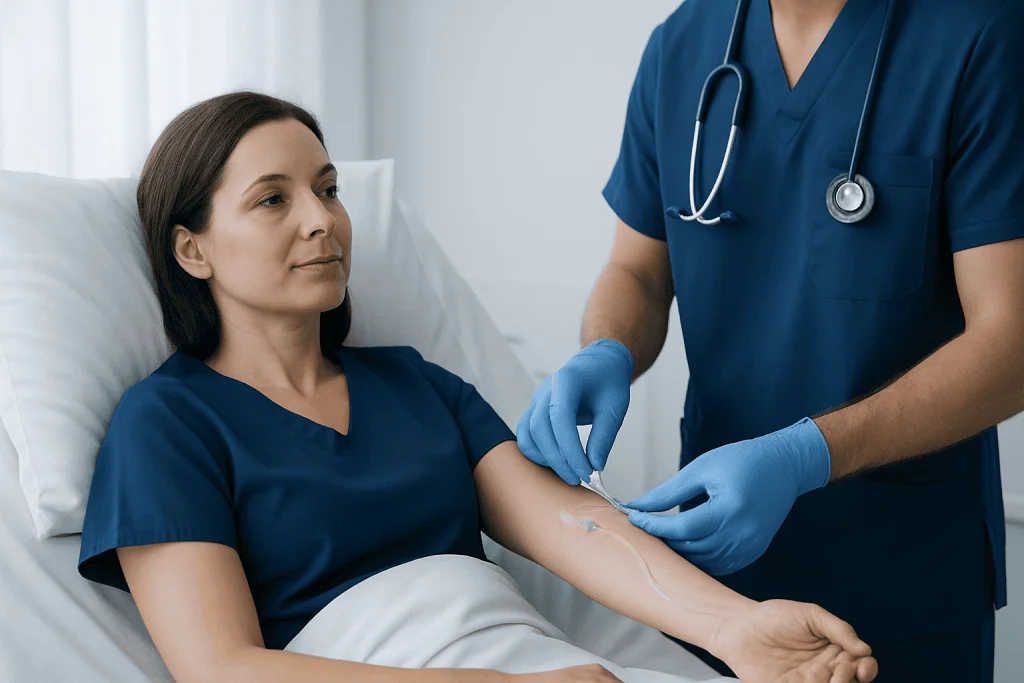
PICC line placement is commonly done in a hospital or outpatient setting by a trained nurse, radiologist, or other qualified clinician. The skin is cleaned carefully, the area is numbed with local anesthetic, and the catheter is inserted into a vein in the upper arm using sterile technique. Ultrasound is often used to help choose the vein and improve accuracy.
After the catheter is advanced, its position is checked, often with imaging or a tip-confirmation system, to make sure the end is in the correct central vein location. The external part of the line is then secured and covered with a sterile dressing. Some lines have one lumen and others have two or more channels, depending on treatment needs.
Most people feel pressure rather than significant pain during insertion. Mild soreness or bruising in the arm may happen for a short time afterward. Patients are usually given instructions about bathing, activity, dressing changes, flushing, and warning signs before going home.
When a PICC line may be recommended

A PICC line is used when reliable venous access is needed for an extended period. It may be chosen for people receiving long courses of IV antibiotics, some cancer treatments, repeated blood tests, or specialized therapies that are safest through a central line. It can also support home-based treatment, allowing care to continue outside the hospital.
There are situations where another device may be more suitable. For example, if treatment is expected to continue for a very long time, or if a person has a higher risk of certain complications, the medical team may discuss a tunneled catheter or an implanted port instead. The decision is individualized and balances convenience, safety, and the expected therapy.
A PICC line does not treat the underlying condition on its own; it is a tool that helps deliver treatment effectively. In some cases, it is part of care for serious infections, sepsis, digestive disorders requiring gastroenterology care, or complex medical treatment plans overseen by several specialists.
Benefits, limitations, and possible risks
The main benefit of a PICC line is dependable access to a large vein over time. This can reduce repeated needle insertions, simplify blood sampling, and make it easier to receive medications that need central venous delivery. For many patients, it can improve comfort and support treatment at home.
At the same time, a PICC line requires ongoing care and carries some risks. Possible complications include infection at the skin or in the bloodstream, blockage within the catheter, formation of a blood clot in the arm vein, irritation of the vein, and accidental movement of the catheter tip. Less commonly, a line may break or stop working properly.
Although these risks are important, careful placement and regular maintenance lower the chance of problems. Patients should know that early reporting of symptoms matters. Fever, increasing redness, drainage, trouble flushing, new swelling, or pain in the arm should never be ignored, because they may point to a complication that needs prompt assessment.
- Benefits: fewer needle sticks, reliable access, support for long-term treatment
- Limitations: needs routine care, may affect bathing or some activities
- Risks: infection, clotting, blockage, dislodgement, mechanical problems
Daily PICC line care and living with the line
Good daily care is one of the most important ways to protect a PICC line. Hands should be cleaned before touching the line or dressing, and the dressing should stay clean, dry, and secure. Patients should follow their care team’s instructions for flushing the line, changing caps if advised, and arranging regular dressing changes by a trained professional or a properly instructed caregiver.
Bathing usually needs extra attention. The line and dressing should be kept dry during showers, and soaking the arm in baths, hot tubs, or pools is generally discouraged unless the care team says otherwise. Clothing should not pull on the catheter, and heavy lifting or repetitive arm strain may be restricted, especially soon after placement.
It is helpful to check the arm and dressing area every day. Patients can look for redness, warmth, tenderness, swelling, leaking, or a dressing that has become loose. If the line seems longer than before, if there is resistance when flushing, or if fluid will not run as expected, the healthcare team should be contacted for advice.
For people receiving care across specialties, coordination matters. A PICC line may be part of broader treatment plans involving medical oncology or ongoing infection management, so clear communication with nurses, pharmacists, and doctors helps keep treatment safe and organized.
How problems are diagnosed and treated
If a complication is suspected, doctors will review symptoms, examine the PICC site and arm, and decide what tests are needed. Blood tests or blood cultures may be used if infection is possible. Ultrasound can help identify a clot in the arm vein, and imaging may be used if there is concern that the catheter tip has moved.
Treatment depends on the cause. Minor skin irritation may improve with dressing adjustment, while an infection may need antibiotics and sometimes removal of the line. A blocked catheter may be treated with approved techniques or medicines used by trained professionals to restore flow. If a blood clot is found, treatment may include anticoagulation and decisions about whether the line can safely stay in place.
Removal of a PICC line is usually straightforward once it is no longer needed or if a complication makes removal safer. A clinician gently withdraws the catheter and applies pressure and a dressing to the site. Patients are then told how to watch the area for bleeding, signs of infection, or ongoing discomfort.
When to seek medical care
Patients should contact a healthcare professional promptly if they develop fever, chills, redness, pus, increasing pain, or swelling around the PICC line. Medical advice is also important if the arm, shoulder, neck, or hand becomes swollen or uncomfortable, since this may suggest vein irritation or a clot.
Urgent assessment is needed for shortness of breath, chest pain, severe dizziness, heavy bleeding, or sudden line damage. These symptoms do not always mean a serious emergency, but they should be evaluated without delay because they can be linked to important PICC-related complications.
If the dressing comes off, the catheter appears to move, or flushing becomes difficult, patients should not force the line. They should secure it as instructed, keep the area clean, and contact their care team. Near the end of the care journey, some patients may seek support through multidisciplinary services; Acibadem International’s specialists in JCI-accredited hospitals diagnose and treat conditions that may require central venous access, including coordinated care in areas such as interventional radiology.
Frequently asked questions
What is the difference between a PICC line and a regular IV?
A regular IV is a short catheter placed in a smaller vein, usually for short-term treatment. A PICC line is longer, reaches a large central vein, and is designed for treatment over weeks to months. It is often chosen when reliable long-term access is needed.
How long can a PICC line stay in place?
A PICC line may remain in place for weeks or months if it is working well and there are no complications. The exact duration depends on the reason for treatment, the condition of the line, and the patient’s overall health. The care team reviews regularly whether it is still needed.
Does PICC line placement hurt?
Placement is usually done with local anesthetic, so many people feel pressure more than pain. Some soreness or bruising afterward can occur for a short time. If pain becomes significant or gets worse, it should be discussed with a clinician.
Can a person shower with a PICC line?
Many people can shower, but the dressing and external catheter need to stay dry. A waterproof cover may be recommended, and soaking in baths, swimming pools, or hot tubs is often discouraged. Patients should follow the instructions given by their care team.
What are the warning signs of a PICC line infection or clot?
Possible signs of infection include fever, chills, redness, warmth, pain, or drainage at the site. A clot may cause swelling, heaviness, discomfort, or color changes in the arm, shoulder, or neck. These symptoms should be reported promptly for medical advice.
How is a PICC line removed?
A trained clinician usually removes the line by gently pulling it out after the area is assessed. Pressure is applied, and the site is covered with a dressing. Most removals are simple, but follow-up instructions are important to monitor for bleeding or signs of infection.
References
- Centers for Disease Control and Prevention
- Infusion Nurses Society
- National Institute for Health and Care Excellence
- Society of Interventional Radiology
- MedlinePlus
This article is for general information only and is not a substitute for professional medical advice. Please consult a qualified doctor about your individual situation.
Explore treatments in Turkey — costs, top hospitals & a free quote
JCI-accredited · board-certified surgeons · reply within 24h
Add us as a Preferred Source to see more of our trusted health content across Google Search, AI Overviews and Discover.

More from the Health Library



Related Specialists

Prof. Dr. Ece Aydoğ
Physical Medicine & Rehabilitation
Assoc. Prof. Dr. Selçuk Keskin
Urology
Dr. Semih Yazla
Otorhinolaryngology
Dr. Feyza Arslan
Physical Medicine & Rehabilitation