

Picking Skin on Scalp: A Complete Medical Overview

Scalp picking may be triggered by dandruff, eczema, psoriasis, lice, folliculitis, allergies, or dry and irritated skin. Repeated picking can create scabs, bleeding, infection, pain, and sometimes patchy hair loss or scarring.
Key Takeaways
- Scalp picking may be triggered by dandruff, eczema, psoriasis, lice, folliculitis, allergies, or dry and irritated skin.
- Repeated picking can create scabs, bleeding, infection, pain, and sometimes patchy hair loss or scarring.
- When picking feels automatic or difficult to stop despite skin damage, it may be part of excoriation disorder, also called skin-picking disorder.
- A clinician can examine the scalp and recommend treatment for both the scalp condition and any repetitive picking behavior.
- Gentle scalp care, trigger awareness, and alternative hand activities can support healing while medical treatment takes effect.
Picking skin on scalp can happen because the scalp is itchy, flaky, sore, or because picking has become an urge that is difficult to resist. Identifying whether a skin condition, infection, hair-product reaction, stress-related habit, or body-focused repetitive behavior is involved helps guide effective care.
Overview: Why People Pick Skin on the Scalp
Picking skin on scalp is common and may be a response to itching, flakes, bumps, scabs, or a feeling that something needs to be removed. In some people, it occurs occasionally while washing or grooming the hair. In others, the urge to pick is frequent, automatic, or difficult to control, leading to persistent sores and distress.
The scalp can be affected by several treatable conditions, including dandruff, seborrheic dermatitis, psoriasis, eczema, contact dermatitis, head lice, and inflammation around hair follicles. These conditions may cause itch, scale, redness, or raised areas that invite scratching and picking. A healthcare professional can help distinguish among these possibilities.
Repeated picking is not simply a matter of willpower. If a person repeatedly picks despite attempts to stop, feels tension or an urge beforehand, or experiences temporary relief afterward, the behavior may be consistent with excoriation disorder. This is a body-focused repetitive behavior that can occur alongside anxiety, obsessive-compulsive symptoms, or other mental health concerns, although it can also occur on its own.
What Scalp Picking Can Look and Feel Like
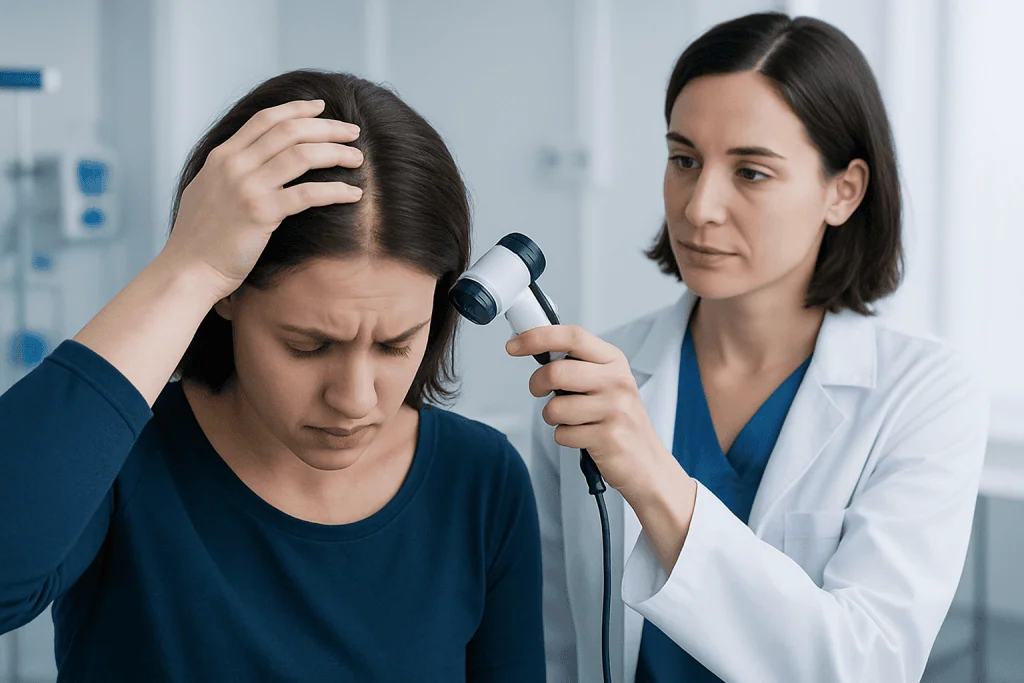
Signs vary according to the cause and how often the scalp is picked. There may be visible flakes, redness, crusting, small sores, bleeding points, or tender bumps. Some people mainly notice itching or a rough area under the fingers, while others describe searching for uneven skin, scabs, or individual hairs.
Picking can occur during periods of stress, boredom, fatigue, studying, screen use, driving, or watching television. It may happen consciously, such as in front of a mirror, or outside awareness, with the person noticing only after finding blood, scabs, or hair on their fingers.
Over time, repeated injury may keep the scalp in an itch-pick cycle. A small wound forms a scab, the scab feels different from surrounding skin, and picking removes it before the skin has healed. This can prolong inflammation and increase the chance of infection.
- Itching, burning, tenderness, or a crawling sensation on the scalp
- Flakes, scale, crusts, pimples, or painful bumps
- Open sores, bleeding, or yellowish drainage
- Broken hairs or patches of thinning where picking is frequent
- Embarrassment, avoidance of haircuts, or worry about being seen
Common Causes and Triggers

Itchy or flaky scalp conditions are common triggers. Dandruff and seborrheic dermatitis can cause greasy or dry scale and redness, often around the hairline, behind the ears, eyebrows, or sides of the nose. Psoriasis may cause thicker, well-defined scale, while eczema can cause dryness, irritation, and sensitivity.
Contact dermatitis is another possibility. It can develop after exposure to hair dye, fragrances, shampoos, styling products, oils, sprays, or other ingredients. Lice, fungal infections, and folliculitis can also cause itching or bumps and need specific medical assessment and treatment rather than repeated scratching or picking.
Scalp picking may continue even after the original skin problem improves. Stress, anxiety, perfectionism, sensory sensitivity, tiredness, and the habit of checking the scalp for irregularities can reinforce the behavior. Picking may offer a brief sense of relief or satisfaction, but it can then lead to more scabs and further urges to pick.
Hair loss can have many causes, and repeated mechanical trauma may contribute to breakage or localized loss. When hair thinning is present, a clinician may also assess for related scalp disorders, including alopecia areata, or other forms of inflammatory hair loss.
How Clinicians Assess Scalp Picking
A clinician will usually ask about the timing of symptoms, scalp itch, products used, hair-care practices, medications, stress, and whether the behavior feels voluntary or difficult to control. It can be helpful to describe what happens immediately before and after picking, such as itching, tension, boredom, relief, or regret.
A physical examination of the scalp can identify scale, inflammation, infection, lice, hair breakage, or scarring. Depending on the findings, a dermatologist may examine hairs and skin more closely, take a swab or sample to look for infection, or recommend testing for a possible allergy. These steps help ensure that a treatable skin condition is not overlooked.
If repetitive picking is causing wounds, emotional distress, or disruption to daily life, a mental health assessment may also be helpful. This is not a judgment about the person. It allows the care team to identify supportive treatment approaches, including behavioral therapy and treatment for coexisting anxiety, depression, or obsessive-compulsive symptoms when appropriate.
Treatment Options: Healing the Scalp and Reducing the Urge
Treatment is based on the underlying cause. For dandruff or seborrheic dermatitis, clinicians may recommend medicated shampoos or topical treatments to reduce yeast overgrowth, scaling, itch, and inflammation. Eczema, psoriasis, allergy-related irritation, and folliculitis each require different approaches, so it is best to avoid using strong medicated products without professional guidance.
Open areas should be treated gently. A clinician may advise how to cleanse the scalp, protect sores, and recognize infection. If bacterial or fungal infection is diagnosed, prescription treatment may be needed. Avoid sharing combs, brushes, hats, or hair accessories when an infectious cause is being considered.
For compulsive or habitual picking, cognitive behavioral therapy, particularly habit-reversal training, can be effective. It helps a person recognize triggers, notice early hand movements, and use a competing response, such as squeezing a soft object, sitting on the hands briefly, knitting, or holding a textured item. Therapy may also include stress-management skills and strategies for reducing mirror checking or scalp scanning.
Medication is not necessary for everyone, but a qualified clinician may discuss options when significant anxiety, depression, obsessive-compulsive symptoms, or persistent excoriation disorder are present. Care can involve dermatology and mental health professionals working together. Acibadem International’s multidisciplinary specialists and JCI-accredited hospitals can assess scalp conditions and repetitive picking concerns for international patients.
Practical Self-Care While the Scalp Heals
Gentle, consistent scalp care can reduce irritation. Use products recommended for the individual scalp condition, wash as advised by a clinician, rinse thoroughly, and avoid very hot water. It may help to pause hair dyeing, bleaching, fragranced products, tight hairstyles, harsh brushing, and frequent use of dry shampoo or styling products if these seem to worsen symptoms.
Keeping fingernails short and smooth can reduce skin injury if picking occurs. Some people find that wearing a hat at home, using a soft head covering at night, or placing adhesive bandages on fingertips creates a helpful pause before picking. These methods should not make the scalp hot, damp, or more irritated.
A trigger record can be useful. The person can note the time, setting, emotions, scalp sensations, and activity associated with each urge. Identifying patterns makes it easier to plan alternatives, such as taking a short walk, practicing slow breathing, using a fidget item, or applying a cool compress if itching is present.
It is important not to blame oneself for setbacks. Healing may take time, especially if a skin condition and a repetitive behavior are both involved. Regular follow-up can help adjust treatment and prevent long-term scalp damage.
When to Seek Medical Care
Medical assessment is advisable when scalp picking causes persistent sores, pain, bleeding, pus, spreading redness, swelling, fever, or swollen lymph nodes. These signs can suggest infection and should not be managed by picking, squeezing, or applying unprescribed remedies.
A person should also arrange an appointment if there is patchy hair loss, broken hairs, thick scaling, severe itch, suspected lice, or symptoms that do not improve with gentle care. Early assessment is especially important when there is concern about scarring, because some inflammatory scalp conditions can affect hair regrowth if left untreated.
Support from a doctor or mental health professional is appropriate when picking feels uncontrollable, takes substantial time, interferes with work or relationships, causes shame or avoidance, or continues despite injury. Urgent mental health support should be sought if a person has thoughts of self-harm or feels unable to stay safe.
Frequently asked questions
Why do I keep picking the skin on my scalp?
Picking may begin because of itching, flakes, scabs, bumps, or irritation from a scalp condition. It can also become a learned repetitive behavior, especially during stress, boredom, or fatigue. A clinician can help identify whether a skin condition, an urge-driven behavior, or both are contributing.
Can picking the scalp cause hair loss?
Repeated picking can break hairs and cause temporary thinning in the affected area. Deep or ongoing injury may inflame the hair follicles and, in some situations, lead to scarring that can affect regrowth. It is important to seek assessment if there are bald patches, pain, or persistent wounds.
Is scalp picking a sign of anxiety?
Stress and anxiety can trigger or worsen scalp picking, but they are not the only causes. The behavior may also be related to an itchy scalp condition, habit, sensory discomfort, or excoriation disorder. A healthcare professional can assess the full picture without judgment.
How can I stop picking scabs on my scalp?
Treating the reason for the scabs is an important first step, since itch and inflammation can drive the urge to pick. Keeping nails short, reducing access to triggers, and using a competing hand activity may help. Habit-reversal training with a qualified therapist can be particularly useful when urges are persistent.
Can dandruff make someone pick their scalp?
Yes. Dandruff and seborrheic dermatitis can cause itch and visible flakes, which may lead a person to scratch or pick. Appropriate medicated scalp treatment can reduce symptoms and make picking less tempting.
When are scalp sores from picking concerning?
Sores need medical attention if they are painful, worsening, draining pus, crusting repeatedly, spreading redness, or accompanied by fever. It is also important to seek care if sores do not heal, hair is falling out, or picking is difficult to control. Prompt treatment can protect the scalp and reduce complications.
References
- American Academy of Dermatology Association
- National Institute of Mental Health
- International OCD Foundation
- Mayo Clinic
- National Health Service
This article is for general information only and is not a substitute for professional medical advice. Please consult a qualified doctor about your individual situation.
Hair transplant in Turkey — costs, graft counts & a free assessment
JCI-accredited · board-certified surgeons · reply within 24h
Add us as a Preferred Source to see more of our trusted health content across Google Search, AI Overviews and Discover.

More from the Health Library



Related Specialists

Dr. Esra Eşbah
Dermatology
Dr. Mustafa Şener Yıldırım
Intensive Care
Dr. Abdullah Etöz
Aesthetic Plastic & Reconstructive Surgery
Dr. Volkan Yurtman
Cardiovascular Surgery