Pictures of Shingles Without Blisters — Explained by Medical Evidence, Not Myths

Shingles can begin before blisters appear, so early images may show redness, swelling, or no visible skin change at all. A blister-free or barely visible presentation may occur in early shingles or in a less common form called zoster sine herpete.
Key Takeaways
- Shingles can begin before blisters appear, so early images may show redness, swelling, or no visible skin change at all.
- A blister-free or barely visible presentation may occur in early shingles or in a less common form called zoster sine herpete.
- Shingles usually affects one side of the body and follows a band-like nerve pattern.
- Doctors diagnose shingles mainly from symptoms and rash pattern, but testing may help when the appearance is unclear.
- Antiviral treatment works best when started early, ideally within the first few days of rash onset.
- Anyone with facial rash, eye symptoms, severe pain, or a weakened immune system should seek medical care promptly.
Pictures of shingles without blisters can be confusing because shingles does not always begin with obvious fluid-filled lesions. In some people, symptoms appear first as burning pain, tingling, or a flat red rash, and a small number may have nerve pain from shingles with little or no visible rash.
Overview: Can shingles appear without blisters?
Yes. Pictures of shingles without blisters may still show real shingles, especially in its earliest stage or in a less common form where nerve pain occurs with minimal rash. Instead of the familiar clusters of fluid-filled bumps, a person may first notice burning, tingling, itching, tenderness, or a flat red patch on one side of the body.
This matters because many people expect shingles to look dramatic from the beginning. In reality, the condition often starts with nerve-related symptoms before the classic blisters appear. Some people seek care when images online do not match what they are seeing on their own skin, which can delay diagnosis and treatment.
Shingles happens when the varicella-zoster virus, the same virus that causes chickenpox, becomes active again later in life. It typically affects a single nerve area, so symptoms usually stay on one side of the face or body. When the appearance is subtle, the pattern of pain and the one-sided distribution can be more informative than photographs alone.
What pictures may show in early or blister-free shingles
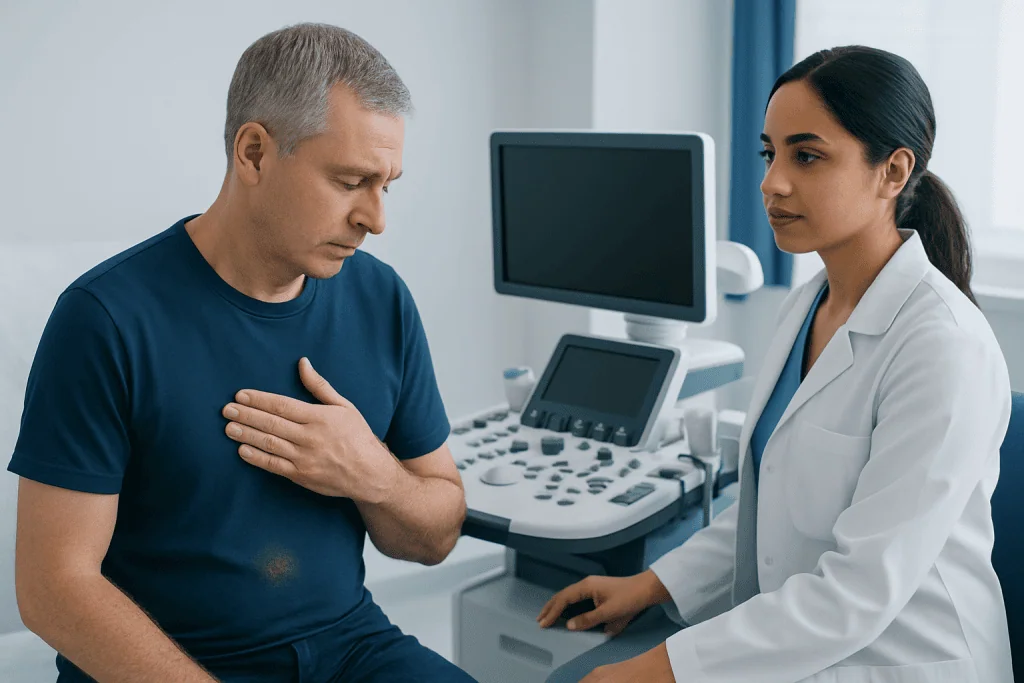
Images described as shingles without blisters may show very different findings depending on the stage. In early shingles, the skin can look normal or only slightly pink while the person feels burning, stinging, or unusual sensitivity. After that, some people develop small red spots or raised bumps before any fluid-filled lesions become visible.
In other cases, photos may show a narrow stripe or patch of redness, mild swelling, or scratch marks caused by itching. These changes can be easy to mistake for contact dermatitis, an insect bite, muscle strain, or another irritation. The key clue is that the symptoms often follow a line or band on one side of the body rather than appearing randomly.
A less common presentation is called zoster sine herpete. This term refers to shingles-related nerve pain without the typical rash. It cannot usually be confirmed from pictures alone, which is why medical history, physical examination, and sometimes testing are important when symptoms strongly suggest shingles but the skin findings are absent or very faint.
- Common locations include the chest, back, abdomen, face, scalp, and around one eye.
- Symptoms are often one-sided and do not cross the midline of the body.
- Pain may feel burning, stabbing, electric, or unusually sensitive to touch.
Symptoms that matter more than the picture
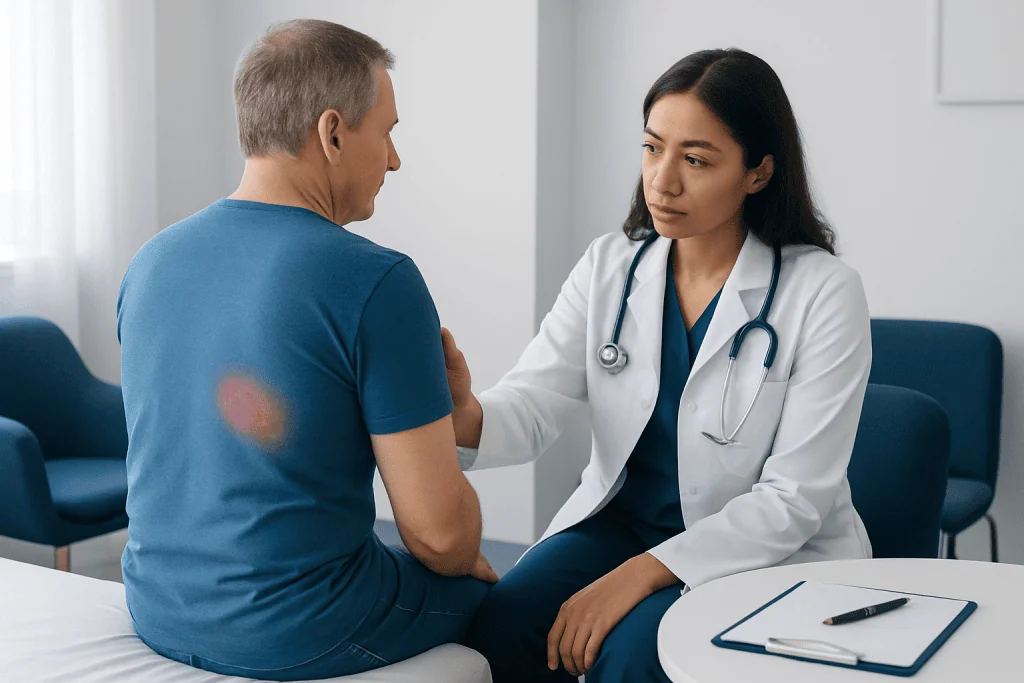
When blisters are absent or delayed, symptoms often provide the clearest clues. Many people describe tingling, burning, itching, numbness, or pain that begins one to five days before any rash appears. The discomfort may be mild at first or severe enough to disturb sleep, concentration, or normal daily activities.
As the condition progresses, a rash may remain flat and red for a short time before becoming raised or blistered. Some people also have fatigue, headache, low-grade fever, or general sensitivity in the affected area. If the face is involved, symptoms may include scalp tenderness, ear pain, or irritation around the eye.
Not every painful rash is shingles, and not every rash-free pain episode is caused by the virus. Still, a one-sided, band-like pattern raises suspicion. People who are uncertain may benefit from reading about shingles more broadly, especially if they recently had unusual nerve pain followed by skin changes.
Why shingles may be mistaken for other skin or nerve problems
Blister-free shingles can resemble many other conditions, which is one reason online pictures are not enough for diagnosis. A flat red patch may be confused with eczema, heat rash, contact dermatitis, friction, hives, or a mild skin infection. Pain without visible rash may be mistaken for a pinched nerve, migraine-related facial pain, dental pain, gallbladder discomfort, or muscle strain, depending on the location.
The differences are often subtle. Shingles usually stays on one side and follows the path of a sensory nerve. Conditions such as eczema or allergic irritation are more likely to itch than burn and often affect both sides or areas exposed to a trigger. In contrast, nerve pain from shingles often feels deeper, sharper, or more sensitive to touch than a typical skin irritation.
Another point of confusion is timing. A person may search for pictures on day one or two of symptoms, before classic blisters have developed. If later lesions appear, the diagnosis becomes clearer. If they do not, a clinician may consider shingles among several possible causes and choose testing or treatment based on the full clinical picture.
How doctors diagnose shingles when blisters are absent
Doctors usually diagnose shingles from the symptom pattern, location, and appearance of the rash if one is present. A one-sided, painful, stripe-like eruption strongly suggests the diagnosis. When there are no blisters yet, the medical history becomes especially important, including when the pain started, whether it is burning or tingling, and whether chickenpox was present in the past.
If the diagnosis is uncertain, a clinician may recommend additional evaluation. Swab testing of a skin lesion can help if a rash later appears. In select situations, blood tests or other studies may be considered, although they are not needed for every patient. Eye symptoms, facial involvement, or severe unexplained nerve pain generally deserve prompt assessment because complications are more likely in these settings.
Depending on symptoms, evaluation may involve dermatology, infectious diseases, neurology, or ophthalmology. Diagnostic support such as MRI may be used when another nerve-related condition is being considered rather than to confirm typical shingles itself. The goal is not simply to name the rash, but to identify who may benefit from early treatment and complication prevention.
Treatment options and why timing matters
Treatment for shingles usually focuses on antiviral medication, pain relief, skin care, and monitoring for complications. Antiviral medicines are most effective when started early, ideally within 72 hours of rash onset, though doctors may still prescribe them later in some situations, such as ongoing new lesions or high-risk facial involvement. Early treatment may shorten the course and reduce symptom severity.
Pain management depends on the person and the severity of symptoms. General options may include over-the-counter pain relievers, prescription pain medicines, and treatments aimed at nerve pain when needed. If the rash is present, keeping the area clean and dry and avoiding scratching can reduce irritation and help protect the skin.
When shingles affects the eye, ear, or face, specialist care is important. In more complex situations, doctors may coordinate evaluation through services such as neurology or dermatology to confirm the cause of pain and guide treatment. Near the end of the care pathway, Acibadem International’s multidisciplinary specialists in JCI-accredited hospitals also diagnose and treat shingles-related conditions for international patients.
Prevention, self-care, and reducing complications
The most effective prevention for many adults is shingles vaccination, which lowers the risk of developing shingles and its complications. A doctor can explain whether vaccination is appropriate based on age, medical history, immune status, and local recommendations. Vaccination does not treat active shingles, but it can play an important role in future protection.
At home, self-care is supportive rather than curative. Rest, gentle skin care, loose clothing, and cool compresses may help with comfort if a rash is present. People should avoid picking at lesions and should wash their hands regularly, especially if blisters develop, because the virus can spread to someone who has never had chickenpox or has not been vaccinated.
Complications can include ongoing nerve pain after the rash clears, known as postherpetic neuralgia. The risk is generally higher with older age and more severe initial symptoms. Prompt assessment and timely treatment can help lower the chance of prolonged discomfort.
When to seek medical care
Medical advice should be sought promptly if a person suspects shingles, especially when symptoms are new and one-sided. This is particularly important if there is pain or rash on the face, near the eye, inside the ear, or on the scalp. Vision changes, eye redness, hearing changes, facial weakness, severe headache, confusion, or rapidly worsening pain need urgent medical attention.
People with weakened immune systems, cancer treatment, organ transplants, uncontrolled chronic illness, or pregnancy should contact a doctor early if shingles is possible. The same is true for older adults and for anyone whose pain is severe even though the skin findings are minimal. Seeking care early can help doctors decide whether antiviral treatment, pain control, or specialist assessment is needed.
If the symptoms do not fit a typical picture, that does not rule shingles in or out. A doctor can assess whether the problem is more likely to be shingles, another skin condition, or a nerve-related disorder requiring different treatment. Photos can be useful to show how a rash changed over time, but they should support, not replace, an in-person medical evaluation.
Frequently asked questions
Can shingles really happen without blisters?
Yes. Shingles may begin with pain, tingling, burning, or a faint red patch before blisters appear. In a less common form called zoster sine herpete, shingles-related nerve pain can occur with little or no visible rash.
What do pictures of shingles without blisters usually show?
They may show mild redness, a flat rash, slight swelling, or no obvious skin change at all. Early images are often less helpful than the symptom pattern, especially one-sided burning or tingling along a narrow strip of skin.
How can a person tell whether it is shingles or something else?
Shingles is more likely when symptoms are one-sided, painful or burning, and follow a band-like pattern. However, eczema, contact dermatitis, nerve pain, and other conditions can look similar, so a doctor may be needed to confirm the cause.
Is shingles contagious if there are no blisters?
The varicella-zoster virus spreads mainly through direct contact with fluid from shingles blisters. If there are no blisters, the risk of transmission is generally much lower, but a doctor should still advise on precautions if the diagnosis is uncertain.
When should treatment for suspected shingles begin?
Treatment is ideally started as early as possible, often within 72 hours of rash onset. Even if blisters have not appeared or the timing is unclear, prompt medical advice is worthwhile because some people may still benefit from early antiviral therapy.
Can shingles without blisters still cause long-term nerve pain?
Yes. Shingles-related nerve irritation can sometimes continue after the acute phase, even if the rash was mild or absent. Early recognition and treatment may help reduce symptom severity and support recovery.
References
- Centers for Disease Control and Prevention
- National Institute on Aging
- American Academy of Dermatology
- National Health Service
- Mayo Clinic
This article is for general information only and is not a substitute for professional medical advice. Please consult a qualified doctor about your individual situation.
Shingles in Turkey — costs, top hospitals & a free quote
JCI-accredited · board-certified surgeons · reply within 24h
Add us as a Preferred Source to see more of our trusted health content across Google Search, AI Overviews and Discover.

More from the Health Library

Voquezna: An Evidence-Based Guide for Patients

Burnt Toast Theory: A Complete Medical Overview

Dysphasia: An Evidence-Based Guide for Patients

Sleep Inertia: What Patients Need to Know

Sulfonylureas: What Patients Need to Know