Pigeon Toed: A Complete Medical Overview

Pigeon toed is another name for in-toeing, a walking pattern in which the feet turn inward. In children, it commonly comes from the feet, lower legs, or hips and often improves naturally over time.
Key Takeaways
- Pigeon toed is another name for in-toeing, a walking pattern in which the feet turn inward.
- In children, it commonly comes from the feet, lower legs, or hips and often improves naturally over time.
- Most cases are painless, but frequent tripping, asymmetry, pain, or worsening should be checked by a doctor.
- Diagnosis is usually based on physical examination and gait assessment rather than routine imaging.
- Treatment depends on the cause and age, ranging from observation and reassurance to targeted therapy or, rarely, surgery.
Pigeon toed, also called in-toeing, means the feet point inward instead of straight ahead. It is common in infants and children, often improves as they grow, and only sometimes needs medical evaluation or treatment.
Overview: what pigeon toed means
Pigeon toed is a common term for in-toeing, a pattern in which one or both feet turn inward when a person stands or walks. In many children, this is part of normal development and gradually improves without treatment. Adults can also appear pigeon toed, though the reasons may differ and may include long-standing bone alignment, muscle balance, or neurologic and orthopedic conditions.
In-toeing can begin at different stages of childhood. In infants, it may come from the shape or position of the feet. In toddlers and young children, it may be related to the lower legs or the way the thigh bones rotate at the hips. The exact source matters because the outlook and treatment approach can vary with age.
Parents often notice that a child walks with the toes pointing inward, runs awkwardly, or trips more than expected. While this can be concerning, most children with pigeon toed walking have healthy development, no pain, and no long-term disability. A careful medical assessment helps separate common developmental patterns from problems that need more attention.
How in-toeing looks and feels
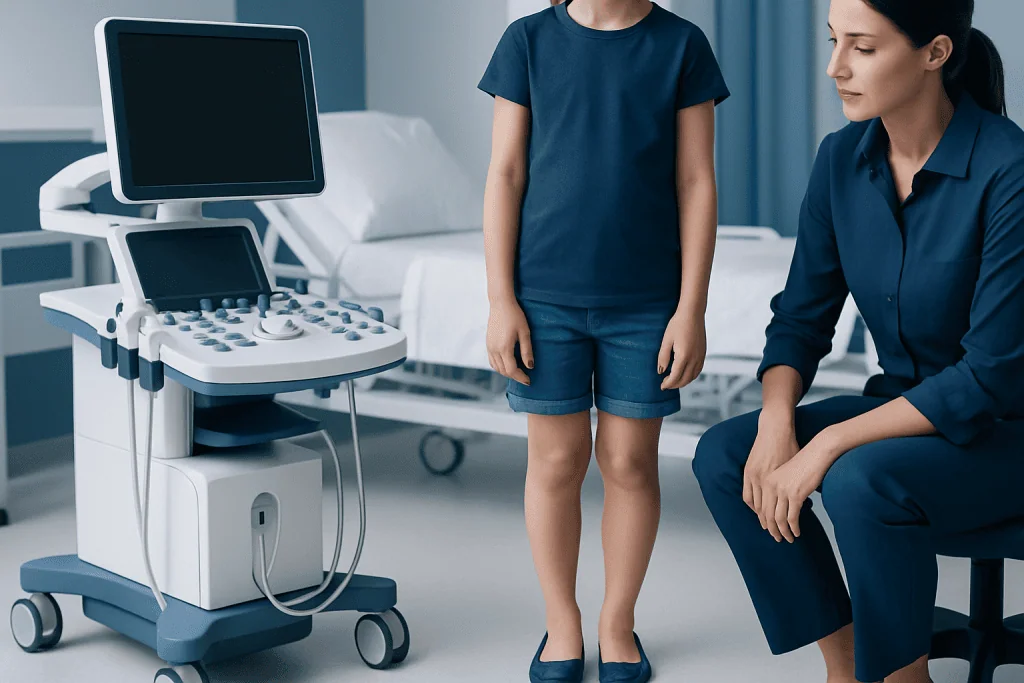
The main sign of being pigeon toed is inward-facing feet during standing, walking, or running. Sometimes only one foot turns inward; in other cases both do. The inward position may be mild and noticed only during faster movement, or more obvious during regular walking.
Many children with in-toeing have no pain at all. Some may seem clumsy, trip frequently, or wear the inside edge of their shoes more quickly. A child may also prefer to sit in a “W” position on the floor, although this posture does not by itself cause in-toeing.
Symptoms that suggest a medical review is especially important include pain, limping, swelling, weakness, stiffness, a noticeable difference between the two sides, or in-toeing that appears suddenly after normal walking had already developed. These features can point to a condition beyond routine developmental variation.
- Feet point inward during walking or running
- Frequent tripping or awkward gait
- One-sided or uneven leg position
- Occasional fatigue with activity
- Usually no pain in typical childhood cases
Why pigeon toed happens
Pigeon toed walking usually comes from one of three main areas: the foot, the shin bone, or the thigh bone. In infants, the front part of the foot may curve inward, a pattern known as metatarsus adductus. In toddlers, the shin bone may rotate inward, called internal tibial torsion. In older children, the thigh bone may rotate inward at the hip, known as increased femoral anteversion.
These patterns often reflect how a child developed in the womb and how bones naturally change as growth continues. Most improve gradually because the skeleton remodels over time. Family history can also play a role, as certain body alignment patterns may run in families.
Less commonly, in-toeing is linked to underlying neurologic, muscular, or orthopedic conditions. Examples can include muscle tone differences, hip disorders, previous fractures, or developmental conditions affecting movement. In adults, a pigeon-toed gait may persist from childhood or may relate to hip rotation, foot alignment, or other musculoskeletal issues. When symptoms are significant, doctors may also evaluate for related orthopedic problems such as hip dysplasia or other gait-related conditions.
How doctors diagnose pigeon toed
Diagnosis usually begins with a medical history and a physical examination. The doctor asks when the in-toeing was first noticed, whether it is getting better or worse, if there is pain or tripping, and whether one side is more affected than the other. Birth history, developmental milestones, and family history may also be relevant.
The physical exam focuses on watching how the child or adult stands, walks, and runs. Doctors assess the feet, the rotation of the lower legs, hip movement, leg lengths, muscle tone, and joint flexibility. This helps identify whether the inward position comes mainly from the foot, tibia, or femur.
Imaging tests are not needed in most typical childhood cases. X-rays or other studies may be considered if the exam suggests a structural problem, if symptoms are painful or worsening, or if surgery is being considered. When the gait pattern is complex, assessment by specialists in orthopedics or pediatric orthopedics can help define the cause and plan follow-up.
Treatment options and what to expect
Treatment depends on the person’s age, the cause of the in-toeing, and how much it affects daily life. For many children, the best initial approach is observation and reassurance. Regular follow-up may be advised to confirm that the alignment is improving as expected with growth.
Special shoes, braces, and inserts were commonly used in the past for routine childhood in-toeing, but they are not usually recommended for typical developmental cases because they have not shown consistent benefit. Supportive footwear may still help comfort and stability, but it does not usually change bone rotation.
If there is a specific foot shape problem in infancy, gentle stretching or casting may sometimes be advised. Physical therapy may be helpful when gait mechanics, balance, strength, or flexibility need attention, especially if there is frequent tripping or an associated neuromuscular issue. In rare, more severe cases that do not improve and clearly interfere with function, surgery may be discussed through orthopedic surgery. The decision is individualized and based on the exact source of the in-toeing, symptoms, age, and exam findings.
Daily care, activity, and long-term outlook
Most children with pigeon toed walking can stay active and participate in normal play and sports. Movement is important for coordination, strength, and confidence. Families usually do not need to restrict activity unless a doctor identifies another orthopedic or neurologic issue that requires a specific plan.
At home, it can help to choose well-fitting shoes and encourage varied sitting and play positions rather than focusing on one posture. Parents should watch for changes over time rather than trying unproven devices or forceful exercises. Gentle stretching, when recommended by a clinician, should be done exactly as instructed.
The long-term outlook is usually very good. Many children improve significantly as they grow, often without any lasting effect on walking ability, physical activity, or joint health. For those with persistent or more complex in-toeing, early assessment can clarify whether monitoring, rehabilitation, or orthopedic care is most appropriate.
When to seek medical care
Medical review is advisable if a child is pigeon toed and the inward turning is severe, getting worse, or causing frequent falls. A doctor should also assess in-toeing that is painful, associated with limping, or clearly different on one side compared with the other. Sudden onset after previously normal walking deserves prompt attention.
Evaluation is also helpful when parents are unsure whether the gait pattern is within the usual range for age, or when a child seems to have stiffness, weakness, delayed motor development, or trouble keeping up with daily activities. In adults, persistent or newly noticeable in-toeing with pain or functional problems should also be reviewed.
Acibadem International’s multidisciplinary specialists in JCI-accredited hospitals evaluate gait and limb alignment for international patients, coordinating diagnosis and treatment when needed. The aim is to identify whether the pattern is a common developmental variation or part of a condition that benefits from targeted care.
Frequently asked questions
Is being pigeon toed normal in children?
Yes, pigeon toed walking is common in infants and children and is often part of normal development. Many cases improve on their own as bones and joints mature over time.
What causes a child to be pigeon toed?
The most common causes are inward-curving feet, inward rotation of the shin bone, or inward rotation of the thigh bone at the hip. These patterns often reflect natural growth and development rather than disease.
Does pigeon toed walking need treatment?
Not always. Many children only need observation and regular follow-up, while treatment is considered if the in-toeing is severe, persistent, painful, or affecting function.
Can pigeon toed walking cause pain or arthritis later?
Typical childhood in-toeing is usually painless and often does not lead to long-term joint problems. If there is pain, limping, or another underlying orthopedic issue, medical assessment is important.
Do special shoes or braces fix pigeon toed feet?
In most routine childhood cases, special shoes, braces, or inserts do not reliably correct the underlying bone rotation. Doctors may still recommend supportive footwear for comfort, but treatment depends on the specific cause.
At what age should parents worry about pigeon toed walking?
Parents should seek medical advice if the in-toeing is severe, one-sided, worsening, painful, or causing frequent falls. A review is also helpful if it persists beyond the expected age range for improvement or appears suddenly.
This article is for general information only and is not a substitute for professional medical advice. Please consult a qualified doctor about your individual situation.
Explore treatments in Turkey — costs, top hospitals & a free quote
JCI-accredited · board-certified surgeons · reply within 24h
Add us as a Preferred Source to see more of our trusted health content across Google Search, AI Overviews and Discover.

More from the Health Library

Pine Pollen — Explained by Medical Evidence, Not Myths

White Bits on Teeth: What Patients Need to Know

Sanctura: What Patients Need to Know

PT Medical Abbreviation — Explained by Medical Evidence, Not Myths
Radiotherapy Radiation Oncology — Explained by Medical Evidence, Not Myths