Pineapple Can Eat in Pregnancy: A Complete Clinical Guide for Patients

Fresh, frozen, or canned pineapple is generally safe during pregnancy when properly prepared and eaten in moderate amounts. There is no good evidence that typical servings of pineapple cause miscarriage or start labor.
Key Takeaways
- Fresh, frozen, or canned pineapple is generally safe during pregnancy when properly prepared and eaten in moderate amounts.
- There is no good evidence that typical servings of pineapple cause miscarriage or start labor.
- Pineapple provides vitamin C, fluids, and fiber, but it can worsen heartburn or mouth irritation in some people.
- People with diabetes, severe reflux, food allergy, or digestive sensitivity may need more individualized advice.
- Medical advice is important for vaginal bleeding, contractions, severe pain, dehydration, or concerns about diet in a high-risk pregnancy.
Yes, pineapple can be eaten in pregnancy in normal food portions for most pregnant people. It does not appear to trigger labor or miscarriage when eaten as part of a balanced diet, but individual symptoms, allergies, reflux, or gestational diabetes may affect how well it is tolerated.
Overview: Can pineapple be eaten in pregnancy?
Pineapple can be eaten in pregnancy by most people, as long as it is part of a normal, balanced diet and the fruit is prepared safely. Fresh pineapple, frozen pineapple, and pasteurized canned pineapple are generally considered acceptable foods during pregnancy. The main concerns are usually comfort-related, such as heartburn, mouth irritation, or blood sugar effects, rather than a specific pregnancy danger from the fruit itself.
A common myth says pineapple can cause miscarriage or bring on labor because it contains bromelain, a group of enzymes that can break down protein. In real-life diets, the amount of bromelain consumed from eating pineapple is low, and much of it is found in the core rather than the flesh. There is no strong clinical evidence that eating normal portions of pineapple causes pregnancy loss or starts labor in a healthy pregnancy.
As with many foods in pregnancy, the question is less about whether pineapple is automatically harmful and more about portion size, food safety, and the individual’s health needs. If a pregnant person has reflux, gestational diabetes, food allergies, or a high-risk pregnancy, a doctor or dietitian may offer more specific guidance. For broader concerns around maternal care and monitoring, patients may also read about pregnancy care.
Nutritional value and possible benefits

Pineapple contains water, natural sugars, fiber, and several vitamins and minerals. It is especially known for vitamin C, which supports immune function and helps the body absorb iron from plant foods. This can be helpful during pregnancy, when iron needs are higher and many people focus on nutrient-dense snacks.
The fruit also provides manganese and small amounts of other micronutrients. Its fluid content can contribute to hydration, and its sweetness may make it easier to choose fruit instead of highly processed snacks. When paired with yogurt, nuts, or a protein-rich meal, pineapple can fit well into a balanced pregnancy diet.
Some pregnant people find that fruit helps with mild constipation because of its fiber and water. However, pineapple is not a treatment for pregnancy complications, and it should not be used as a substitute for medical advice. If nausea or poor appetite is making it hard to eat well, a clinician can help assess for issues such as dehydration or excessive vomiting, including hyperemesis gravidarum when symptoms are severe.
Why the labor myth persists
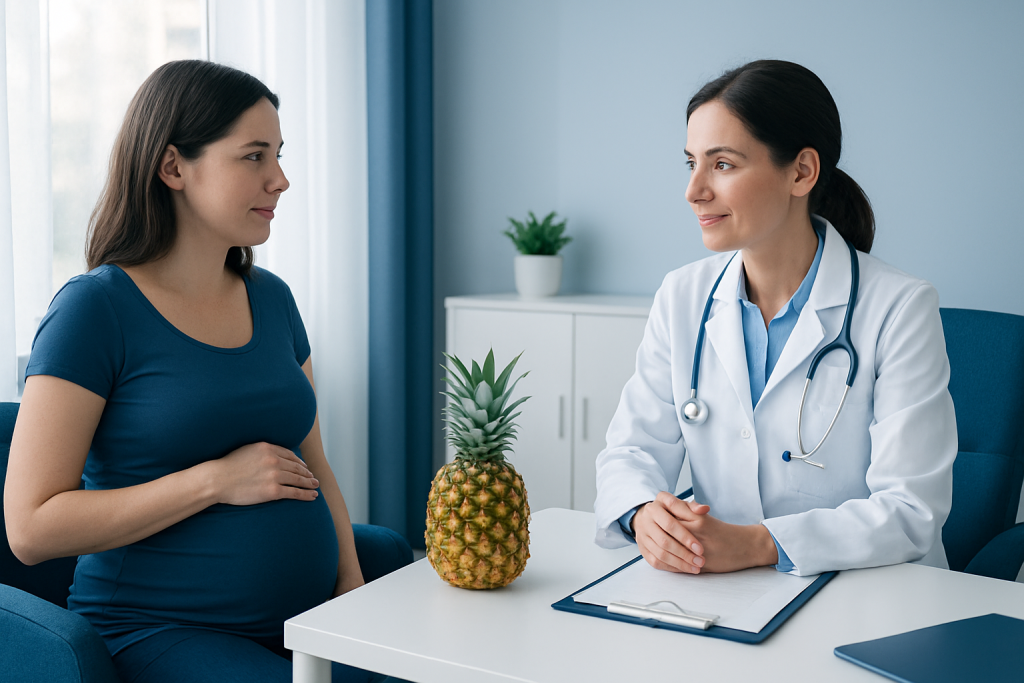
The idea that pineapple triggers labor is usually linked to bromelain. In laboratory settings, bromelain can affect proteins, which has led to speculation that it might soften the cervix or stimulate uterine activity. However, this theory does not translate well to typical eating habits, because the amount in a normal serving of pineapple is limited and digestion further reduces its potential effects.
There is also a difference between eating whole fruit and taking concentrated supplements. Bromelain supplements are not the same as food and may carry different risks or interactions. In pregnancy, supplements should not be used casually unless they have been specifically approved by a qualified doctor.
Another reason the myth persists is timing. Near the end of pregnancy, people may eat pineapple because they are hoping to encourage labor, and if labor begins naturally afterward, the fruit may seem responsible. This does not prove cause and effect. Patients with questions about overdue pregnancy, induction, or birth planning should speak with an obstetric specialist rather than relying on home food remedies.
When pineapple may cause discomfort or need caution
Even though pineapple is generally safe, it may not feel good for everyone. Its acidity can worsen heartburn, indigestion, or reflux, which are already common during pregnancy. If symptoms flare after eating pineapple, reducing the portion size, choosing it with meals, or avoiding it late in the day may help.
Some people notice tingling or irritation in the mouth after eating fresh pineapple. This can happen because of its acidity and enzymes and is not always a true allergy. Still, swelling of the lips or tongue, hives, wheezing, or trouble breathing are not typical and need prompt medical attention as possible signs of an allergic reaction.
Those with gestational diabetes or other glucose concerns do not always need to avoid pineapple completely, but portion awareness matters. Combining fruit with protein or healthy fat may reduce rapid blood sugar spikes. If pregnancy-related glucose issues are present, individualized nutritional advice is often useful, and some patients may benefit from support through gestational diabetes treatment.
Rarely, unwashed fruit can carry germs from handling or surfaces. This is why food safety matters more than the pineapple itself. Washing fresh produce under running water and using clean cutting boards can lower the risk of contamination.
Practical ways to eat pineapple safely during pregnancy
Safe preparation starts with choosing clean, good-quality fruit. Fresh pineapple should be rinsed before cutting, even though the peel is not eaten, because a knife can carry surface germs into the flesh. Frozen pineapple from reliable sources is also a practical option, and canned pineapple is generally fine if it is sealed and pasteurized.
Portion size does not need to be exact for most healthy pregnancies, but moderation is sensible. A serving as part of a meal or snack is usually well tolerated. Very large amounts of any acidic fruit may increase bloating, diarrhea, or heartburn, so comfort can be a useful guide.
Ways to include pineapple in a pregnancy diet may include:
- Mixed with plain yogurt or kefir
- Added to oatmeal or whole-grain cereal
- Blended into a smoothie with protein-rich ingredients
- Served alongside cottage cheese, nuts, or seeds
- Combined with other fruits for variety rather than eaten in very large amounts alone
Juice deserves a little more caution than whole fruit because it can be higher in sugar and lower in fiber. If juice is chosen, it is best consumed in small amounts and ideally as a pasteurized product. Whole fruit is usually the more balanced option.
How this advice changes in high-risk pregnancies
Most pregnant people can eat pineapple without concern, but high-risk pregnancies may require more individualized dietary guidance. This includes pregnancies affected by diabetes, severe reflux, significant nausea and vomiting, food allergies, digestive disorders, or medically advised activity and diet restrictions. In these cases, the issue is usually symptom management and overall nutrition rather than pineapple itself being dangerous.
Patients with recurrent contractions, cervical concerns, vaginal bleeding, or a history of pregnancy complications may understandably worry about anything thought to stimulate labor. Current evidence does not support avoiding normal pineapple servings for this reason alone. Even so, it is reasonable to ask an obstetrician for personalized advice if the pregnancy has specific risks or warning signs.
Sometimes pineapple is discussed during fertility treatment or early pregnancy after assisted reproduction, when anxiety about food choices can be high. While routine pineapple intake is not generally considered harmful, nutritional questions in these settings are best reviewed with the treating team. Patients receiving reproductive care may also learn more about IVF treatment when dietary concerns arise in that context.
If reflux, persistent nausea, or weight loss is making eating difficult, clinicians may suggest diet adjustments or evaluate whether additional treatment is needed. In some settings, coordinated care from obstetrics, nutrition, endocrinology, and gastroenterology can be helpful.
When to seek medical care
Pineapple itself is unlikely to cause a pregnancy emergency, but certain symptoms should never be explained away as a food reaction without medical assessment. A pregnant person should contact a doctor promptly if there is vaginal bleeding, regular painful contractions, leakage of fluid, severe abdominal pain, fainting, or reduced fetal movement later in pregnancy. These symptoms need proper evaluation regardless of what was eaten.
Medical advice is also important for signs of dehydration, ongoing vomiting, severe diarrhea, or inability to keep fluids down. Swelling of the face, hives, wheezing, or trouble breathing after eating pineapple may suggest an allergic reaction and need urgent care. Ongoing heartburn, poor appetite, or uncontrolled blood sugar should also be discussed with a healthcare professional.
Pregnancy nutrition questions are common and valid, especially when symptoms change from trimester to trimester. Acibadem International’s multidisciplinary specialists at JCI-accredited hospitals evaluate and treat pregnancy-related concerns for international patients, including nutritional issues and maternal-fetal conditions. If digestive symptoms are persistent or severe, some patients may also need assessment and supportive gastroenterology treatment.
Frequently asked questions
Can pineapple cause miscarriage in early pregnancy?
There is no good evidence that eating normal amounts of pineapple causes miscarriage. Most pregnant people can eat it safely as part of a balanced diet. If there is bleeding, pain, or any concern in early pregnancy, a doctor should be consulted promptly.
Is pineapple safe in the first trimester?
Yes, pineapple is generally safe in the first trimester for most people. The main issues are usually nausea, reflux, or taste aversion rather than a specific danger from the fruit. Small portions may be easier to tolerate if pregnancy symptoms are strong.
Can pineapple start labor at the end of pregnancy?
Typical servings of pineapple are not proven to start labor. The belief is linked to bromelain, but the amount consumed from eating the fruit is low and not supported by strong clinical evidence as a labor trigger. Anyone near term who has contractions or leaking fluid should seek medical advice rather than relying on food remedies.
Is canned pineapple safe during pregnancy?
Canned pineapple is usually safe if the product is commercially prepared and properly sealed. Choosing options packed in juice rather than heavy syrup may help reduce extra sugar intake. As with all foods in pregnancy, checking freshness and storage conditions is important.
What if pineapple gives heartburn during pregnancy?
Pineapple is acidic, so it can worsen heartburn in some pregnant people. Eating a smaller amount, having it with other foods, or avoiding it when reflux is active may help. If heartburn is frequent or severe, a doctor can suggest pregnancy-safe management.
Can pregnant people with gestational diabetes eat pineapple?
Often yes, but portion size and meal balance matter. Pairing pineapple with protein or fat, such as yogurt or nuts, may help reduce rapid blood sugar rises. A clinician or dietitian can give more specific guidance based on glucose readings.
References
- American College of Obstetricians and Gynecologists
- Centers for Disease Control and Prevention
- National Health Service
- World Health Organization
- Academy of Nutrition and Dietetics
This article is for general information only and is not a substitute for professional medical advice. Please consult a qualified doctor about your individual situation.
Persistent digestive symptoms? Get evaluated in Turkey
JCI-accredited · board-certified surgeons · reply within 24h
Add us as a Preferred Source to see more of our trusted health content across Google Search, AI Overviews and Discover.