Pituitary Gland Tumor Surgery: Procedure, Recovery and Results

Most pituitary tumors are benign, but they can still affect vision, hormone balance, and daily wellbeing. The usual operation reaches the pituitary gland through the nose rather than through an opening in the skull.
Key Takeaways
- Most pituitary tumors are benign, but they can still affect vision, hormone balance, and daily wellbeing.
- The usual operation reaches the pituitary gland through the nose rather than through an opening in the skull.
- Recovery varies, but many people leave hospital within several days and continue healing at home for weeks.
- Hormone testing and follow-up MRI scans are important because hormone replacement or further treatment may be needed.
- Complications are uncommon but can be serious, so surgery should be planned and followed by an experienced multidisciplinary team.
Pituitary gland tumor surgery is most often performed through the nostrils using a minimally invasive transsphenoidal approach. It may be recommended to relieve pressure on nearby structures, protect vision, control excess hormone production, or remove a tumor whose growth needs treatment.
Overview: what pituitary gland tumor surgery involves
Pituitary gland tumor surgery usually removes a tumor through the nostrils with a technique called transsphenoidal surgery. It is commonly used when a pituitary tumor is pressing on the optic nerves, causing troublesome hormone overproduction, growing despite observation, or when tissue is needed to confirm the diagnosis. The surgical plan is individualized according to the tumor’s size, location, hormone activity, and relationship to nearby structures.
The pituitary gland is a small hormone-producing gland at the base of the brain. Although most pituitary tumors are noncancerous, they may interfere with normal hormone signals or put pressure on the nerves involved in vision. A tumor may be discussed as part of the wider care pathway for a pituitary tumor, including monitoring, medicines, surgery, radiation therapy, or a combination of treatments.
For many patients, surgery can effectively reduce tumor-related pressure and improve hormone-related symptoms. However, the result depends on factors such as tumor type, whether it has extended beyond the pituitary area, and whether it can be safely removed in full. Follow-up remains essential even after a successful operation.
How doctors decide whether surgery is appropriate
Not every pituitary tumor requires an operation. Small tumors that do not cause symptoms or hormone changes may be monitored with scheduled MRI scans, visual-field testing, and blood tests. Some hormone-producing tumors, particularly certain prolactin-producing tumors, often respond well to medication and may not need surgery initially.
Surgery may be advised when a tumor affects vision or threatens the optic nerves, causes significant hormone excess, grows over time, bleeds into the tumor, or cannot be adequately managed with medicines. It can also be considered when a diagnosis remains uncertain or when medication causes unacceptable side effects or does not control hormone production.
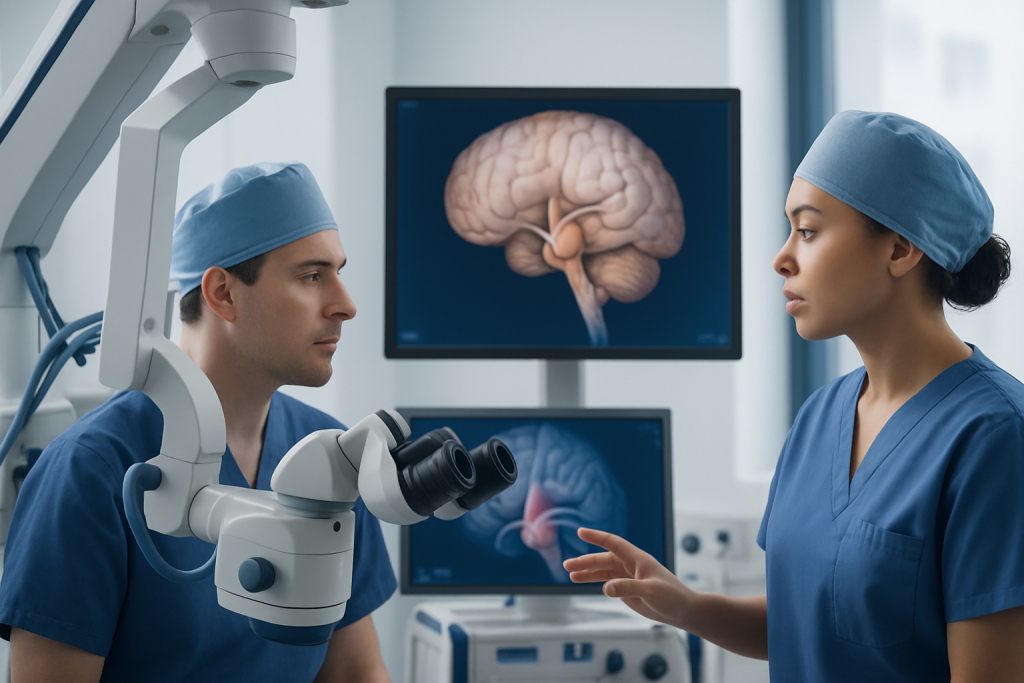
Before surgery, patients generally have pituitary hormone blood tests, MRI imaging, and a detailed eye assessment when the tumor is close to the visual pathways. The team also reviews overall health, medications, nasal anatomy, and anesthetic safety. Planning often involves neurosurgeons, endocrinologists, ear, nose and throat surgeons, neuroradiologists, ophthalmologists, and specialist nurses.
How pituitary tumor surgery works: step by step

The most common approach is endoscopic transsphenoidal surgery. Under general anesthesia, the surgeon passes a thin camera and specialized instruments through one or both nostrils, then through the sphenoid sinus, an air space behind the nose. This provides a route to the pituitary gland without a traditional opening in the skull.
High-definition imaging helps the surgical team identify the tumor and nearby structures. The surgeon removes as much tumor as can be taken out safely while protecting the normal pituitary gland, optic nerves, carotid arteries, and surrounding brain structures. If the tumor has spread into areas that cannot safely be reached, a planned partial removal may still reduce pressure or hormone excess and may be followed by medication, observation, or radiation treatment.
In selected situations, a craniotomy, involving an opening in the skull, may be needed. This is much less common and may be considered for particular tumors with extensive growth outside the usual surgical corridor. Patients can discuss the recommended technique, expected goals, and alternatives with the team providing pituitary tumor surgery.
At the end of the procedure, the surgical opening may be reconstructed using tissue or surgical materials to reduce the chance of cerebrospinal fluid leakage. Some people require temporary nasal packing, while others do not. The exact approach depends on the anatomy and extent of surgery.
Benefits and risks of pituitary gland tumor surgery
The potential benefits of surgery include relieving pressure on the optic nerves, improving or preserving vision, reducing headaches related to tumor pressure, and lowering excessive hormone levels. In some cases, surgery can lead to remission of hormone-related conditions such as Cushing disease or acromegaly. It can also provide tissue for laboratory examination when that information will guide further treatment.
As with any operation, risks should be considered carefully. Possible complications include bleeding, infection, changes in vision, damage to normal pituitary tissue, hormone deficiency, diabetes insipidus, blood clots, and anesthesia-related problems. A leak of cerebrospinal fluid, the fluid surrounding the brain and spinal cord, is an important but uncommon complication that may require additional treatment.
Removing a tumor may not immediately normalize hormone levels, and complete removal is not always possible. Some patients need hormone replacement after surgery, while others need further medical treatment or radiation therapy for remaining or recurrent tumor. The care team explains which risks are most relevant to the individual tumor and health situation.
Experienced pituitary centers use coordinated surgical, endocrine, imaging, and visual assessment to support safe decision-making. The aim is not simply to remove tumor tissue, but to balance tumor control with preservation of vision, neurological function, and hormone health.
How long does it take to heal from pituitary tumor surgery?
Initial hospital recovery after transsphenoidal surgery is often a few days, although the stay may be longer if hormone levels need close observation or if complications occur. During this period, clinicians monitor fluid balance, sodium levels, vision, headaches, nasal symptoms, and pituitary hormone function. Some people need temporary hormone medicines while the pituitary gland recovers.
Many patients feel progressively stronger over two to six weeks, but complete recovery is individual. Tiredness, nasal congestion, mild headache, and reduced stamina can persist during the early weeks. People are usually advised to avoid heavy lifting, strenuous exercise, forceful nose blowing, and straining until their surgeon confirms that these activities are safe.
Follow-up appointments commonly include blood tests within days or weeks, then repeat hormone assessment and MRI imaging at a schedule tailored to the tumor. Recovery from hormone-related symptoms may take longer than physical recovery. For example, the body may need months to adjust after successful treatment of long-standing hormone excess.
A clear nasal discharge, worsening headache, fever, confusion, marked thirst with very frequent urination, vision changes, or severe nausea after discharge should be reported urgently to the surgical team or assessed promptly by emergency services. These symptoms do not always indicate a complication, but they require timely medical evaluation.
What is life like after pituitary tumor surgery?
Life after pituitary tumor surgery varies according to the type of tumor, the success of removal, and how well the pituitary gland functions afterward. Many people return to ordinary routines, work, and physical activity after recovery, with gradual increases in activity based on surgical advice. Vision may improve quickly when pressure on the optic nerves has been relieved, although recovery can be slower if visual damage existed before surgery.
Some patients need long-term hormone follow-up because the pituitary gland controls thyroid, adrenal, reproductive, growth, and water-balance hormones. If the gland does not produce enough of one or more hormones, replacement treatment can help restore normal body functions. Regular endocrinology review helps ensure treatment remains appropriate as needs can change over time.
Follow-up imaging is also important, even when the tumor appears fully removed. Some tumors can regrow slowly, and early detection allows the team to consider monitoring or additional treatment before symptoms develop. Keeping scheduled appointments and reporting new symptoms supports long-term health.
Emotional adjustment matters as well. Changes in appearance, energy, fertility, mood, or weight related to hormone disorders can take time to improve. Patients who have concerns about mood, sleep, sexual health, or returning to work should raise them with their clinical team, as practical and medical support may be available.
Will I lose weight after a pituitary tumor is removed?
Weight changes after pituitary tumor surgery depend on the tumor’s hormone effects and on each person’s overall health. Surgery is not a weight-loss treatment, and weight loss should not be expected simply because a tumor has been removed. Some people notice gradual weight improvement when treatment corrects hormone excess that contributed to weight gain, fluid retention, or changes in body composition.
For example, successful treatment of excess cortisol production may help improve some features of Cushing disease over time, while treatment of growth hormone excess may improve metabolism and body composition. These changes are often gradual and may continue for months. Other factors, including medications, activity level, sleep, nutrition, and any ongoing hormone deficiency, also influence weight.
In some cases, weight can remain unchanged or increase temporarily during recovery because activity is lower and the body is healing. A clinician or dietitian can provide individualized guidance, particularly if there are diabetes, blood pressure, thyroid, or adrenal hormone concerns. Restrictive diets or supplements should not replace appropriate endocrine follow-up.
When to seek medical care
Anyone with a known pituitary tumor should seek medical advice if they develop new or worsening vision changes, persistent severe headaches, fainting, unexplained weakness, excessive thirst and urination, or symptoms suggestive of hormone imbalance. Sudden severe headache with vomiting, confusion, double vision, drooping eyelids, or a rapid change in vision requires emergency assessment, as it can occasionally indicate bleeding into a pituitary tumor.
After surgery, patients should contact their surgeon promptly for fever, increasing pain, persistent vomiting, a clear watery nasal discharge, worsening vision, severe tiredness, or major changes in urine output or thirst. These symptoms may have several causes, but early review is the safest approach.
Acibadem International’s multidisciplinary specialists and JCI-accredited hospitals diagnose and treat pituitary conditions for international patients. Care may include coordinated endocrine evaluation, neurosurgical planning, imaging, and structured follow-up tailored to the individual’s needs.
Frequently asked questions
How serious is a surgery to remove a pituitary tumor?
Pituitary tumor surgery is a major procedure because the pituitary gland is close to important nerves and blood vessels. However, the most common transsphenoidal approach is performed through the nose and avoids a traditional skull opening. The individual level of risk depends on tumor size, location, hormone activity, overall health, and the complexity of the planned removal.
Is pituitary gland tumor surgery performed through the nose?
Yes. Most pituitary tumors are removed using an endoscopic transsphenoidal approach through the nostrils and sphenoid sinus. This route allows access to the pituitary gland with no external scalp incision in many cases. A different approach may be needed for selected tumors with unusual size or extension.
What is life like after pituitary tumor surgery?
Many people resume normal daily activities after healing, though recovery speed differs between individuals. Ongoing hormone blood tests, MRI scans, and sometimes hormone replacement therapy may be needed. Long-term follow-up is important because pituitary function and tumor status can change over time.
How long does it take to heal from pituitary tumor surgery?
A hospital stay is often several days after a transsphenoidal procedure, while many people need two to six weeks to regain everyday energy and return gradually to usual routines. Full recovery can take longer, particularly when hormone levels are adjusting or the tumor was large. The surgeon provides individualized restrictions and a return-to-activity plan.
Will I lose weight after a pituitary tumor is removed?
Weight loss is not guaranteed after pituitary tumor removal. If the tumor caused hormone excess that contributed to weight gain or fluid retention, weight and body composition may improve gradually after successful treatment. Endocrine follow-up can identify hormone factors that may affect weight after surgery.
Can a pituitary tumor come back after surgery?
Some pituitary tumors can remain stable after complete removal, while others may regrow over time or leave a small amount of residual tissue. The likelihood depends on the tumor type, its size, and whether it extended beyond the pituitary region. Regular MRI scans and hormone testing help detect changes early.
References
- Endocrine Society
- Pituitary Society
- American Association of Neurological Surgeons
- National Institute of Neurological Disorders and Stroke
- Mayo Clinic
This article is for general information only and is not a substitute for professional medical advice. Please consult a qualified doctor about your individual situation.
Oncology care in Turkey — second opinion and treatment plan
JCI-accredited · board-certified surgeons · reply within 24h
Add us as a Preferred Source to see more of our trusted health content across Google Search, AI Overviews and Discover.