

Placental Abruption: Warning Signs, Risk Factors, and Emergency Care

Placental abruption is an obstetric emergency that needs prompt medical evaluation. Vaginal bleeding, abdominal or back pain, uterine tenderness, and contractions are common warning signs.
Key Takeaways
- Placental abruption is an obstetric emergency that needs prompt medical evaluation.
- Vaginal bleeding, abdominal or back pain, uterine tenderness, and contractions are common warning signs.
- High blood pressure, abdominal trauma, smoking, substance use, and a prior abruption can increase risk.
- Diagnosis is based on symptoms, examination, fetal monitoring, and ultrasound, although ultrasound does not rule it out completely.
- Treatment depends on how severe the separation is, how the baby is doing, and how far along the pregnancy is.
Placental abruption happens when the placenta partly or completely separates from the wall of the uterus before birth. It can threaten the health of both mother and baby, so sudden bleeding, abdominal pain, or reduced fetal movement during pregnancy should be assessed urgently.
Overview
Placental abruption is the early separation of the placenta from the inner wall of the uterus before the baby is born. The placenta supplies oxygen and nutrients to the baby and removes waste products. When it detaches too soon, that supply can be reduced, and bleeding may occur.
This condition can range from mild to severe. In a small abruption, symptoms may be limited and the pregnancy may continue with close observation. In a larger abruption, bleeding can be heavy or hidden inside the uterus, and both mother and baby may become unwell quickly.
Placental abruption most often happens in the third trimester, but it can occur any time after about 20 weeks of pregnancy. Because symptoms can overlap with other causes of pregnancy bleeding, any suspected case needs urgent medical assessment rather than home monitoring.
Symptoms and warning signs
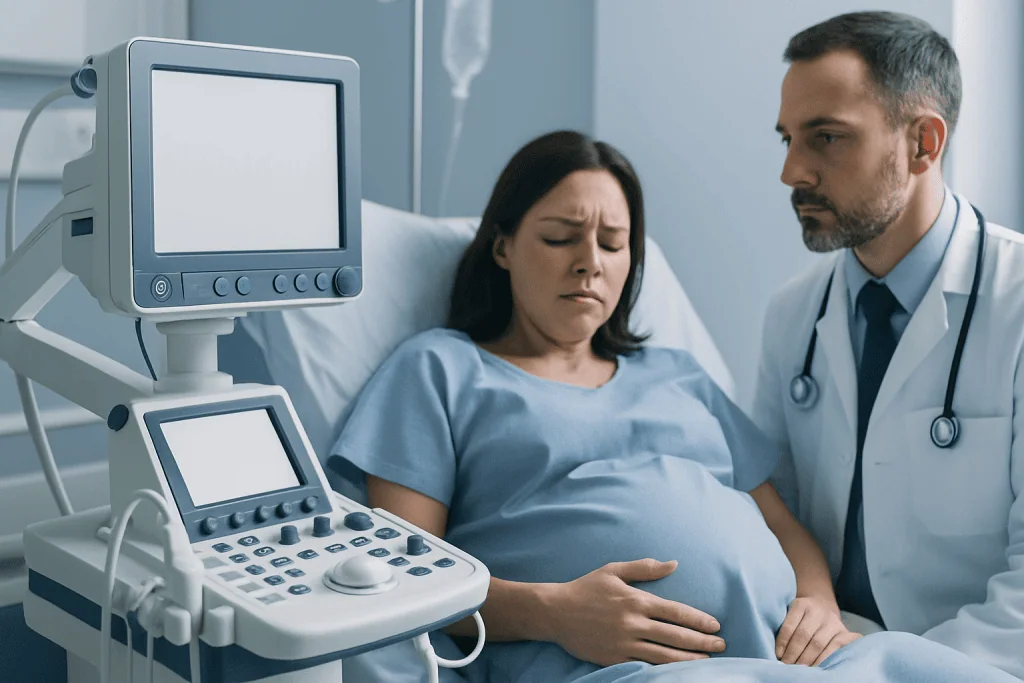
The most common symptom of placental abruption is vaginal bleeding, but bleeding is not always visible. Sometimes blood becomes trapped behind the placenta, so a person may have significant pain and uterine tenderness with little or no external bleeding.
Other symptoms can include sudden abdominal pain, back pain, a firm or tender uterus, frequent contractions, or contractions that do not relax normally between episodes. Some people also notice that the baby is moving less than usual.
Symptoms can appear suddenly or build over hours. Helpful warning signs include:
- Vaginal bleeding in the second half of pregnancy
- Sudden or constant abdominal pain
- Low back pain
- Uterine tenderness or a hard uterus
- Frequent contractions
- Reduced fetal movement
- Feeling faint, weak, or unwell if bleeding is significant
Any of these symptoms should be treated as urgent. Even when bleeding seems light, the amount of visible blood does not always reflect the seriousness of the separation.
Causes and risk factors

Placental abruption is not always preventable, and in many cases there is no single clear cause. It happens when blood vessels between the placenta and uterine wall rupture, allowing the placenta to separate partially or fully.
Several factors can make abruption more likely. High blood pressure during pregnancy or longstanding hypertension is one of the most important. Trauma to the abdomen, such as from a fall, accident, or direct blow, can also trigger separation.
Other recognized risk factors include smoking, cocaine or other stimulant use, a previous placental abruption, carrying twins or more, premature rupture of membranes, and certain disorders that affect blood clotting. The risk may also be higher with increasing maternal age or in pregnancies affected by preeclampsia.
Having one or more risk factors does not mean abruption will definitely occur. However, knowing these risks can help patients and clinicians watch more closely for warning signs and manage pregnancy conditions such as hypertension as safely as possible.
How doctors diagnose placental abruption
Diagnosis starts with symptoms, medical history, and a physical examination. A doctor will ask about bleeding, pain, contractions, trauma, blood pressure problems, and fetal movement. Because this can be an emergency, assessment usually happens in a hospital setting.
Fetal monitoring is often used to check the baby’s heart rate and look for signs of distress. The mother’s pulse, blood pressure, and general condition are also assessed carefully. Blood tests may be needed to check blood count, clotting, and blood type in case transfusion becomes necessary.
Ultrasound may help identify bleeding behind the placenta and also rule out other causes of pregnancy bleeding, such as placenta previa. However, a normal ultrasound does not completely exclude placental abruption. Doctors often make the diagnosis based on the overall clinical picture rather than imaging alone.
If bleeding occurs after trauma or with severe symptoms, doctors act quickly even while testing is still underway. Rapid assessment helps guide whether monitoring, early delivery, or urgent surgery is safest.
Treatment and emergency care
Treatment depends on how much of the placenta has separated, how heavy the bleeding is, how stable the mother is, how the baby is doing, and how advanced the pregnancy is. The main goals are to protect the mother, support the baby, and decide whether the pregnancy can continue safely.
In mild cases, especially if the pregnancy is preterm and both mother and baby are stable, the medical team may recommend hospital observation, fetal monitoring, rest, and repeat testing. If the bleeding stops and the condition remains stable, careful follow-up may continue.
In more severe cases, urgent delivery may be needed. If the baby is in distress or the mother is bleeding heavily, doctors may recommend cesarean section to deliver quickly. Some patients also need intravenous fluids, blood products, pain management, and close maternal-fetal monitoring in an obstetric unit.
When high blood pressure or related complications are present, treatment also focuses on those conditions. In selected cases, care may overlap with management used in high-risk pregnancy care. The exact plan is individualized, and timely treatment can be critical for reducing complications.
Possible complications
Placental abruption can affect both the pregnant person and the baby. For the mother, complications may include major blood loss, anemia, clotting problems, shock, and in rare cases the need for intensive care. The uterus may also become overly tense and painful.
For the baby, reduced placental blood flow can lower oxygen and nutrient delivery. This may lead to fetal distress, poor growth if the problem is chronic or recurrent, preterm birth, or stillbirth in the most severe cases.
The level of risk varies widely depending on how much of the placenta has separated and how quickly care is provided. Some abruptions are small and manageable with monitoring, while others require emergency delivery. This is why rapid evaluation matters whenever warning signs appear.
Prevention and self-care during pregnancy
There is no guaranteed way to prevent placental abruption, but some steps may lower risk and improve early detection. Attending regular prenatal visits is important because blood pressure problems, fetal growth issues, and other concerns can sometimes be identified before an emergency develops.
Patients can help protect their pregnancy by avoiding smoking, alcohol misuse, and illicit drugs, especially stimulants such as cocaine. Wearing a seat belt properly in the car and seeking assessment after any fall or abdominal injury are also sensible precautions.
For people with hypertension or a history of pregnancy complications, following the obstetric team’s advice closely is essential. Self-care may include taking prescribed medication, monitoring blood pressure if advised, and learning when to report symptoms such as bleeding, pain, or reduced fetal movement.
It is also helpful to know that not all pregnancy bleeding means abruption, but none should be ignored in later pregnancy. A qualified clinician can evaluate other causes and decide whether observation, testing, or urgent treatment is needed.
When to seek urgent medical help
Immediate medical attention is needed for vaginal bleeding in the second half of pregnancy, sudden abdominal pain, severe back pain, a hard or tender uterus, frequent contractions, or decreased fetal movement. Patients should not drive themselves if they feel faint, weak, or are bleeding heavily.
Calling emergency services or going to the nearest emergency department or labor and delivery unit is the safest choice when symptoms are severe. Early assessment allows doctors to monitor the baby, evaluate bleeding, and act quickly if the condition is worsening.
After treatment, follow-up care is also important. Patients may need extra scans, fetal monitoring, or delivery planning in a center experienced in high-risk obstetrics. Acibadem International’s multidisciplinary specialists in JCI-accredited hospitals diagnose and treat placental abruption for international patients when advanced obstetric care is needed.
Frequently asked questions
Is placental abruption always associated with heavy bleeding?
No. Some people have visible vaginal bleeding, but others have little or no external bleeding because blood can remain trapped behind the placenta. This is why severe abdominal pain or uterine tenderness in pregnancy also needs urgent medical evaluation.
Can placental abruption happen without trauma?
Yes. Although abdominal trauma can cause abruption, many cases happen without any injury. Conditions such as high blood pressure, smoking, and a previous abruption can increase the risk, and sometimes no clear cause is found.
Can a baby survive placental abruption?
Many babies do well, especially when the separation is small or when treatment is provided quickly. Outcomes depend on how much of the placenta has detached, how long the baby has had reduced oxygen supply, and how far along the pregnancy is.
Does ultrasound always detect placental abruption?
No. Ultrasound can sometimes show bleeding behind the placenta, but it may miss some cases. Doctors often diagnose placental abruption based on symptoms, examination findings, fetal monitoring, and the overall clinical picture.
Can placental abruption be treated without delivering the baby?
Sometimes. If the abruption is mild, bleeding is limited, and both mother and baby are stable, doctors may monitor the pregnancy closely and try to prolong it safely. If bleeding is heavy or the baby is in distress, urgent delivery is usually needed.
Is placental abruption likely to happen again in another pregnancy?
A previous placental abruption does increase the risk in a future pregnancy. This does not mean it will definitely recur, but it usually means the pregnancy will be monitored more closely by an obstetric specialist.
References
- American College of Obstetricians and Gynecologists
- Royal College of Obstetricians and Gynaecologists
- National Institute for Health and Care Excellence
- March of Dimes
- Merck Manual Consumer Version
This article is for general information only and is not a substitute for professional medical advice. Please consult a qualified doctor about your individual situation.
Explore treatments in Turkey — costs, top hospitals & a free quote
JCI-accredited · board-certified surgeons · reply within 24h
Add us as a Preferred Source to see more of our trusted health content across Google Search, AI Overviews and Discover.
Check your numbers in seconds
BMI, calories, due date, blood pressure and 30+ more clinical calculators — free, instant, doctor-reviewed ranges.

More from the Health Library



Related Specialists

Dr. Selçuk Cantürk
Anesthesiology
Prof. Dr. Hasan M. Tanyeri
Ear Nose & Throat
Dr. Dilara Akman
Infectious Diseases & Clinical Microbiology
Dt. Ceren Ayözger
Dentistry