Plantar Flexion: A Complete Medical Overview

Plantar flexion means pointing the foot downward at the ankle. This movement is important for walking, balance, climbing stairs, and sports.
Key Takeaways
- Plantar flexion means pointing the foot downward at the ankle.
- This movement is important for walking, balance, climbing stairs, and sports.
- Pain or weakness during plantar flexion can be linked to tendon, muscle, ligament, joint, or nerve problems.
- Doctors assess plantar flexion with a physical exam and, when needed, imaging or nerve testing.
- Treatment depends on the cause and may include rest, physiotherapy, braces, medication, or surgery.
Plantar flexion is the ankle movement that points the foot downward, such as when pressing a gas pedal or rising onto the toes. It is a normal, essential motion, but pain, weakness, stiffness, or loss of range can signal injury, nerve problems, or joint and tendon conditions that may need medical evaluation.
Overview: what plantar flexion means
Plantar flexion is the movement that points the foot downward away from the shin. It happens at the ankle joint and is used in many everyday actions, including pushing off during walking, standing on tiptoes, pressing a pedal, and jumping. In simple terms, it is the opposite of lifting the foot upward toward the leg.
This motion depends on coordinated work between the calf muscles, Achilles tendon, ankle joint, smaller foot muscles, and the nerves that control them. Because plantar flexion is part of each step, even a small loss of strength or flexibility can affect balance, comfort, and mobility.
Plantar flexion itself is not a disease. It is a normal body movement. However, when it becomes painful, limited, weak, or uneven from one side to the other, it can help doctors identify problems such as tendon inflammation, muscle strain, ligament injury, arthritis, or nerve-related conditions.
How plantar flexion works in the body
The main muscles responsible for plantar flexion are the gastrocnemius and soleus, which form the calf. These muscles connect to the heel bone through the Achilles tendon. When they contract, they pull the heel upward and point the foot downward.
Other muscles also contribute, including the tibialis posterior, flexor hallucis longus, flexor digitorum longus, and peroneal muscles. Together, these structures provide strength, control, and stability. They help the body adapt to uneven surfaces, absorb load, and generate forward movement.
The ankle joint and surrounding ligaments guide the motion, while nerves from the lower leg send signals to the muscles. If any part of this system is irritated or damaged, plantar flexion may feel stiff, painful, weak, or unstable. This is why symptoms can come from many different sources, not only the Achilles tendon.
Normal plantar flexion range varies slightly from person to person, but clinicians commonly measure it during an exam to understand whether the ankle moves as expected. Restricted movement may reflect swelling, joint stiffness, scar tissue, muscle tightness, or pain-related guarding.
Common symptoms and what they may suggest

People usually notice plantar flexion problems when everyday movements become uncomfortable or difficult. Symptoms may appear suddenly after an injury or develop gradually over time. They can affect one ankle or both, depending on the underlying cause.
Common symptoms include:
- Pain at the back of the ankle, heel, or calf
- Difficulty pushing off the ground when walking
- Weakness when trying to stand on tiptoes
- Stiffness or reduced ankle range of motion
- Swelling, tenderness, or warmth around the ankle
- A feeling of instability or loss of balance
- Numbness, tingling, or cramping in some cases
Pain during plantar flexion often points to soft tissue irritation, such as an Achilles tendon problem, calf strain, or inflammation around the ankle. If there is swelling and bruising after a twist or fall, a ligament injury may also be present. In some people, plantar flexion becomes limited because of ankle arthritis, especially when stiffness is worse after rest.
Weakness is especially important to evaluate. Trouble pushing off, repeated stumbling, or an inability to rise onto the toes can suggest significant tendon injury, muscle damage, or nerve dysfunction. When symptoms persist, a medical assessment can help find the exact cause and guide treatment safely.
Causes and risk factors
Many conditions can affect plantar flexion. Overuse is a common reason, especially in runners, dancers, athletes, and people who spend long hours standing. Repetitive loading can strain the calf muscles or irritate the Achilles tendon, leading to pain with push-off or exercise. Conditions such as Achilles tendinitis are often linked to training errors, tight calf muscles, and sudden increases in activity.
Traumatic injuries are another major cause. An ankle sprain may alter mechanics and make plantar flexion painful. A direct injury or sudden forceful movement can also cause a calf strain or, less commonly, an Achilles tendon tear. Joint injuries, fractures near the ankle, or scar tissue after previous trauma may reduce ankle movement and confidence during walking.
Degenerative and inflammatory problems can also interfere with plantar flexion. Arthritis, bursitis, tendon degeneration, and long-standing biomechanical issues may cause chronic stiffness or pain. Nerve-related disorders, including compression or neuropathy, can affect muscle control and lead to weakness. In some cases, conditions higher up the leg or in the spine may contribute.
Risk factors include poor footwear, inadequate warm-up, limited flexibility, previous ankle injury, sudden changes in exercise intensity, obesity, diabetes, and certain inflammatory conditions. Flat feet or high arches can also change the way forces pass through the ankle and foot, making some people more prone to symptoms.
How doctors assess plantar flexion problems
Assessment begins with a careful history. A doctor will usually ask when symptoms started, whether there was an injury, where the pain is felt, and what movements make it better or worse. Questions about sports, work demands, previous ankle problems, and medical conditions such as diabetes can also be relevant.
The physical exam often includes checking ankle range of motion, muscle strength, tenderness, swelling, gait, and the ability to stand on tiptoes. Comparing both sides helps identify subtle weakness or restricted movement. Specific tests can help distinguish tendon, ligament, joint, and nerve causes.
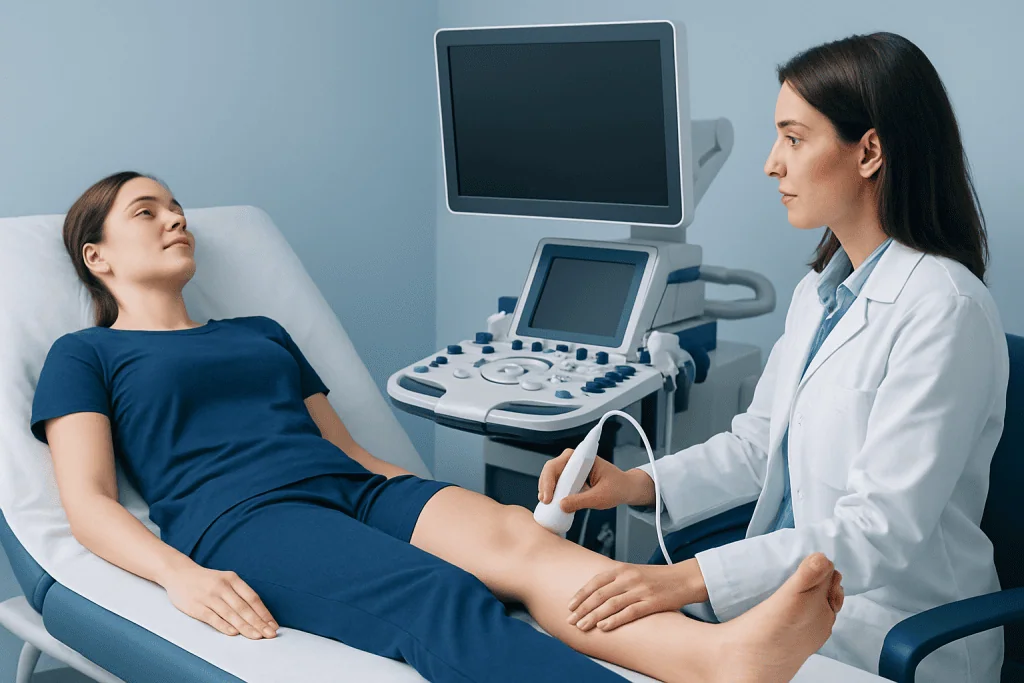
If the diagnosis is unclear or a more serious injury is suspected, imaging may be useful. X-rays can show fractures, bone spurs, or arthritis. Ultrasound can evaluate soft tissues dynamically, while MRI gives detailed information about tendons, ligaments, cartilage, and surrounding structures. Nerve studies may be considered when weakness, numbness, or tingling suggests a neurological cause.
This step-by-step approach helps avoid assumptions. Plantar flexion pain is not always caused by the same structure, so a precise diagnosis is important before treatment begins.
Treatment options for pain, weakness, or loss of motion
Treatment depends on the cause, the severity of symptoms, and how much daily activity is affected. Mild overuse problems often improve with relative rest, activity modification, ice, supportive footwear, and a gradual return to movement. Short-term use of pain-relieving or anti-inflammatory medicines may be advised by a clinician when appropriate.
Physiotherapy is commonly central to recovery. A tailored program may include calf stretching, progressive strengthening, balance training, gait correction, and exercises to restore ankle motion. For patients with tendon-related pain or weakness, structured rehabilitation is usually more helpful than prolonged complete rest. Some people benefit from braces, heel lifts, orthotics, or taping to reduce strain while healing.
When a more complex injury is present, specialist treatment may be needed. Diagnostic evaluation may include MRI when tendon rupture, cartilage injury, or deeper joint pathology is suspected. Significant soft tissue injuries may require physical therapy and rehabilitation, and some ankle conditions are managed by doctors specializing in orthopedics and traumatology.
Surgery is usually reserved for selected cases, such as complete tendon rupture, unstable injuries, or symptoms that do not improve with appropriate conservative treatment. The goal is to reduce pain, restore function, and allow a safe return to normal activities. Near the end of the care pathway, multidisciplinary specialists at Acibadem International and its JCI-accredited hospitals also diagnose and treat plantar flexion-related ankle conditions for international patients when expert evaluation is needed.
Self-care, prevention, and protecting ankle function
Good ankle health often depends on consistency rather than intensity. Warming up before exercise, increasing training gradually, and allowing time for recovery can reduce strain on the calf and Achilles tendon. Wearing supportive, activity-appropriate shoes is also important, especially for people who run, jump, or spend long hours on their feet.
Stretching and strengthening can help maintain balanced ankle function. Gentle calf flexibility work, foot and ankle strengthening, and balance exercises may improve control and reduce overload. People recovering from injury should follow a clinician’s or physiotherapist’s plan instead of returning to sport too quickly.
Weight management, blood sugar control in diabetes, and treatment of inflammatory or joint conditions may also support long-term ankle function. People with repeated symptoms may benefit from a gait or biomechanics assessment, especially if foot shape, posture, or movement patterns are contributing to excess stress.
It is generally best to avoid pushing through persistent pain. Mild muscle fatigue after activity can be normal, but pain that changes the way a person walks deserves attention. Early care often prevents a temporary strain from becoming a longer-term problem.
When to seek medical care
Medical care is advisable if plantar flexion pain lasts more than a few days, keeps returning, or interferes with walking, work, exercise, or sleep. Evaluation is also sensible if the ankle feels weak, stiff, or unstable, or if swelling does not settle with simple measures.
Prompt medical attention is especially important after a sudden injury, a popping sensation in the back of the ankle, inability to stand on tiptoes, marked swelling, visible deformity, or severe pain. These features can suggest a more significant tendon, ligament, or bone injury that should not be ignored.
Numbness, tingling, fever, spreading redness, or symptoms affecting both legs should also be assessed by a qualified doctor. A timely diagnosis can clarify whether the issue is muscular, tendinous, joint-related, or neurological, and help the person return to safe movement sooner.
Frequently asked questions
What is plantar flexion in simple terms?
Plantar flexion is the movement of pointing the foot downward at the ankle. It is used when standing on the toes, pushing off while walking, or pressing a pedal.
Is plantar flexion the same as standing on tiptoes?
Standing on tiptoes uses plantar flexion, but the term itself describes the ankle movement rather than the whole action. Tiptoe standing also requires balance, muscle strength, and coordination.
Why does plantar flexion hurt?
Pain with plantar flexion can come from several structures, including the Achilles tendon, calf muscles, ankle ligaments, joint surfaces, or nerves. Common causes include overuse, strain, tendinitis, sprain, arthritis, or injury after a sudden movement.
Can weak plantar flexion affect walking?
Yes. Plantar flexion helps the body push off the ground during each step, so weakness can make walking feel slower, less stable, or more tiring. Some people also notice difficulty climbing stairs, running, or standing on one leg.
How is plantar flexion tested by a doctor?
Doctors usually examine plantar flexion by checking ankle range of motion and asking the patient to push the foot downward against resistance. They may also watch the person walk, stand on tiptoes, or perform strength and balance tasks.
Can plantar flexion problems get better without surgery?
Many plantar flexion problems improve with non-surgical care such as rest, physiotherapy, supportive footwear, bracing, and gradual exercise. Surgery is usually considered only when there is a major structural injury or when symptoms do not improve with appropriate treatment.
This article is for general information only and is not a substitute for professional medical advice. Please consult a qualified doctor about your individual situation.
Persistent digestive symptoms? Get evaluated in Turkey
JCI-accredited · board-certified surgeons · reply within 24h
Add us as a Preferred Source to see more of our trusted health content across Google Search, AI Overviews and Discover.

More from the Health Library

Symptoms of worms in stomach in adults: A Complete Medical Guide for Patients

Semispinalis: What Patients Need to Know

Fatal Familial Insomnia: A Complete Medical Overview

Mitrofanoff: What Patients Need to Know

Leadless Pacemaker: A Complete Medical Overview