Plasmapheresis: An Evidence-Based Guide for Patients

Plasmapheresis removes and replaces plasma to reduce harmful substances in the blood. It is most often used for selected autoimmune, neurologic, kidney, and blood disorders.
Key Takeaways
- Plasmapheresis removes and replaces plasma to reduce harmful substances in the blood.
- It is most often used for selected autoimmune, neurologic, kidney, and blood disorders.
- The treatment is usually done through a vein catheter or large IV line over several sessions.
- Possible side effects include low blood pressure, tingling, bleeding risk, and infection related to vascular access.
- Plasmapheresis treats the effects of disease activity but does not cure the underlying condition on its own.
- Patients should seek medical advice promptly for breathing trouble, severe weakness, chest pain, fever, or catheter problems after treatment.
Plasmapheresis is a medical treatment that separates plasma from blood cells and replaces the removed plasma with another fluid. It is used to quickly lower harmful antibodies or proteins in certain autoimmune, neurologic, kidney, and blood-related conditions.
Overview: what plasmapheresis is and why it is used
Plasmapheresis is a treatment that filters the liquid part of the blood, called plasma, to remove substances that may be contributing to disease. In most clinical settings, the term refers to therapeutic plasma exchange, a procedure in which plasma is separated from blood cells, discarded, and replaced with a substitute fluid such as albumin or donor plasma.
Doctors use plasmapheresis when a condition is driven by harmful antibodies, immune complexes, abnormal proteins, or toxins circulating in the bloodstream. It can help reduce these substances relatively quickly, which is why it is often considered when symptoms are severe, rapidly worsening, or affecting vital organs.
Rather than being a single disease treatment on its own, plasmapheresis is usually one part of a larger care plan. It may be combined with medicines that suppress the immune system, treatments that address the underlying cause, or supportive care while the body recovers.
This procedure is used in carefully selected situations. Common examples include some neurologic autoimmune conditions, certain kidney and blood disorders, and illnesses involving abnormal plasma proteins. The exact benefit depends on the diagnosis, timing, and overall health of the patient.
Conditions that may be treated with plasmapheresis
Plasmapheresis is not used for every immune or blood disorder, but it has an established role in several conditions. In neurology, it may be used for severe weakness caused by Guillain-Barré syndrome or for selected relapses of myasthenia gravis when symptoms affect swallowing, breathing, or daily function.
It may also be considered in some kidney and autoimmune diseases where harmful antibodies injure tissues, such as anti-glomerular basement membrane disease, certain forms of vasculitis, or thrombotic microangiopathies. In blood-related conditions, plasma exchange can help remove abnormal proteins or antibodies and may be used in disorders such as thrombotic thrombocytopenic purpura.
Some people receive plasmapheresis for severe complications of autoimmune disease, while others receive it as a short-term bridge before other treatments take effect. For example, it may be used to stabilize symptoms while specialists begin immunotherapy or other disease-directed care.
Because the list of possible uses is broad and constantly refined by evidence, doctors decide on a case-by-case basis. The underlying diagnosis, severity of illness, laboratory findings, and expected response all shape whether plasmapheresis is appropriate.
How the procedure works

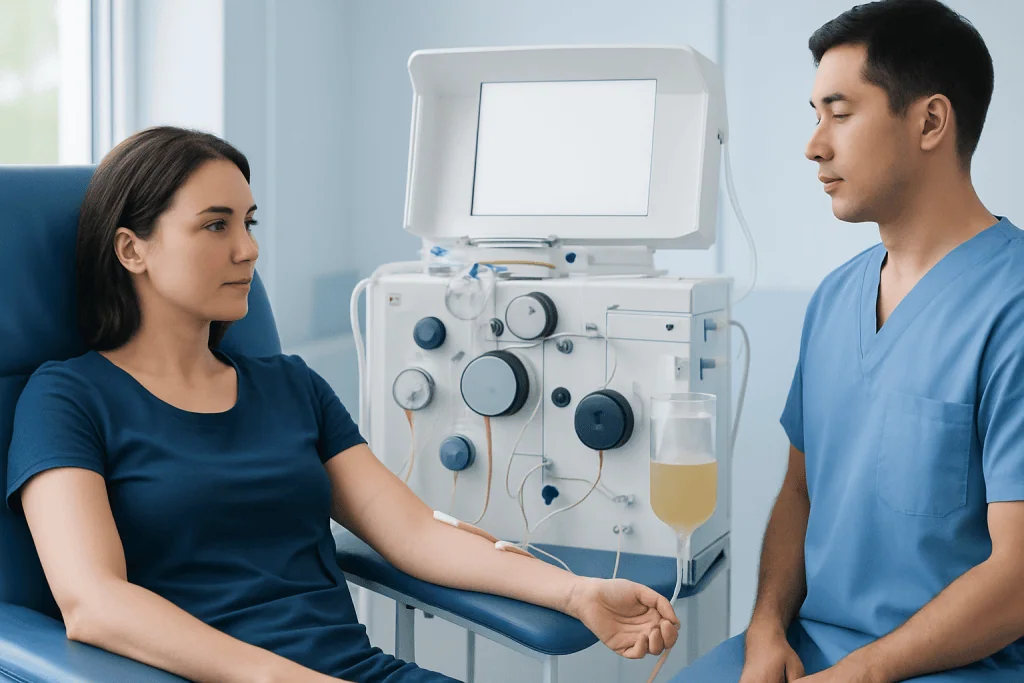
During plasmapheresis, blood is removed from the body through a vein and passed through a machine that separates plasma from blood cells. The blood cells are then mixed with replacement fluid and returned to the body. This exchange lowers the level of harmful substances carried in the plasma.
Access to the bloodstream may be through a large IV line in the arm or a temporary central venous catheter placed in a larger vein, often in the neck, chest, or groin. The type of access depends on how urgently treatment is needed, vein quality, and how many sessions are planned.
A session often lasts a few hours, and many patients need several treatments over days or weeks rather than just one. This is because the body can continue producing the antibodies or proteins that the procedure removes, so repeated sessions may be needed to maintain the effect while the underlying disease is treated.
Patients are monitored closely during treatment. Care teams check blood pressure, pulse, symptoms, and laboratory values. Depending on the condition, related care may involve hemodialysis support, blood tests, and specialist follow-up from neurology, nephrology, hematology, or intensive care teams.
What patients may feel before, during, and after treatment
Before treatment, patients usually have a medical review, blood tests, and an explanation of the procedure and possible risks. The team checks whether there are issues such as low calcium, bleeding tendency, unstable blood pressure, or infection that may affect planning.
During a session, many people are awake and able to talk, read, or rest. Some feel cool, tired, lightheaded, or notice tingling around the mouth or in the fingers. Tingling can happen when anticoagulants used in the circuit lower calcium levels temporarily, and the team can usually address this promptly.
After treatment, mild fatigue is common. Some patients feel better quickly if symptoms were caused by circulating antibodies or proteins, while others improve more gradually over several sessions. The speed of improvement depends on the condition being treated and how much organ or nerve recovery is needed.
If a central line is used, patients are given instructions on keeping the area clean and watching for infection or bleeding. Follow-up is important because plasmapheresis often works best when paired with ongoing treatment of the underlying illness, such as neurology care for autoimmune nerve or muscle disease.
Benefits, limitations, and possible risks
The main benefit of plasmapheresis is speed. It can remove disease-causing substances from the bloodstream faster than many medicines can, which is especially useful when symptoms are severe or progressing quickly. In the right situation, it may help protect organs, improve strength, or reduce dangerous complications.
At the same time, plasmapheresis has limits. It does not stop the body from making new antibodies or proteins, so it usually does not replace long-term treatment. It also may not help diseases where the main problem is inside tissues rather than circulating in plasma.
Side effects and complications are possible, though many are manageable with close monitoring. These can include low blood pressure, dizziness, nausea, allergic reactions, tingling from low calcium, bruising, bleeding problems, and problems related to vascular access such as clotting or infection.
Less commonly, more serious complications can occur, including severe allergic reactions, heart rhythm problems, or catheter-related bloodstream infection. Doctors balance these risks against the likely benefit of treatment and discuss alternatives when appropriate.
Diagnosis and planning before plasmapheresis
Plasmapheresis is usually recommended only after doctors identify or strongly suspect a condition that is known to respond to plasma exchange. Diagnosis may involve blood tests, antibody tests, imaging, nerve studies, kidney evaluation, or sometimes tissue biopsy, depending on the symptoms and organ systems involved.
The care team also evaluates whether the patient is well enough for the procedure. Important considerations include heart and blood pressure stability, blood counts, clotting status, electrolyte levels, and the safety of placing venous access if needed.
Planning includes deciding what replacement fluid to use and how many sessions may be needed. Albumin is commonly used, but donor plasma may be preferred in some disorders where specific clotting factors are important. The interval between sessions also varies by diagnosis.
Because the procedure can affect medication levels, doctors may adjust the timing of certain drugs around treatment days. Patients should tell their team about all prescription medicines, supplements, and blood thinners before starting plasmapheresis.
Recovery, self-care, and when to seek medical care
Recovery after a session is often straightforward, but patients should rest if they feel tired and drink fluids as advised by their medical team. It is sensible to avoid strenuous activity immediately after treatment if dizziness or weakness is present. Keeping follow-up appointments is important so doctors can judge whether symptoms are improving and whether more sessions are needed.
Self-care also includes watching the catheter or IV site for redness, swelling, leakage, pain, or bleeding. Patients should report new numbness, worsening weakness, unusual bruising, fever, or chills. These symptoms do not always mean there is a serious problem, but they should be checked promptly.
Medical care should be sought urgently for breathing difficulty, chest pain, fainting, severe allergic symptoms, heavy bleeding, confusion, or rapidly worsening weakness. These symptoms may relate to the underlying disease, the vascular access, or the procedure itself and should not be ignored.
For international patients needing assessment and coordinated treatment, Acibadem International offers multidisciplinary care in JCI-accredited hospitals for conditions that may require plasmapheresis and related specialist management.
Frequently asked questions
Is plasmapheresis the same as donating plasma?
No. Plasma donation is usually done for collection purposes in healthy donors, while plasmapheresis in a hospital is a therapeutic treatment used to manage disease. In therapeutic plasma exchange, the removed plasma is replaced with another fluid as part of medical care.
How many plasmapheresis sessions are usually needed?
The number of sessions varies by condition and severity. Some patients need only a few treatments over several days, while others need a longer course. The doctor decides based on symptoms, test results, and how well the patient responds.
Does plasmapheresis cure autoimmune disease?
Plasmapheresis does not usually cure the underlying autoimmune disease. It helps remove harmful substances from the bloodstream and can improve symptoms or stabilize a serious flare. Long-term treatment is often still needed to control the disease process.
Is plasmapheresis painful?
Most patients do not find the exchange itself painful, though placement of a catheter or IV line can cause temporary discomfort. During treatment, some people feel cold, tired, or lightheaded. The care team monitors symptoms closely and can often help relieve them.
What are the most common side effects of plasmapheresis?
Common side effects include fatigue, lightheadedness, tingling due to temporary low calcium, nausea, and low blood pressure. There can also be bruising or soreness around the access site. More serious complications are less common but require prompt medical attention.
Can a person eat and drink before plasmapheresis?
Instructions differ depending on the patient's condition and the hospital's protocol. Many people can eat a light meal and drink fluids unless their doctor gives different advice. It is best to follow the specific guidance from the treating team.
References
- American Society for Apheresis
- National Institute of Neurological Disorders and Stroke
- National Kidney Foundation
- Mayo Clinic
- MedlinePlus
This article is for general information only and is not a substitute for professional medical advice. Please consult a qualified doctor about your individual situation.
Explore treatments in Turkey — costs, top hospitals & a free quote
JCI-accredited · board-certified surgeons · reply within 24h
Add us as a Preferred Source to see more of our trusted health content across Google Search, AI Overviews and Discover.
Check your numbers in seconds
BMI, calories, due date, blood pressure and 30+ more clinical calculators — free, instant, doctor-reviewed ranges.

More from the Health Library

Peeing of Women: An Evidence-Based Guide for Patients

Hug Hugging: A Complete Medical Overview

Preauricular Lymph Node: A Complete Medical Overview

Wisdom Teeth — Explained by Medical Evidence, Not Myths

Best Multivitamin for Kids — Explained by Medical Evidence, Not Myths