Electrophysiology: A Complete Medical Overview

Electrophysiology evaluates how electrical signals travel through the heart. An electrophysiology study can help diagnose unexplained fast, slow, or irregular heart rhythms.
Key Takeaways
- Electrophysiology evaluates how electrical signals travel through the heart.
- An electrophysiology study can help diagnose unexplained fast, slow, or irregular heart rhythms.
- Treatment may include medicines, catheter ablation, pacemakers, or implantable defibrillators depending on the cause.
- Many rhythm disorders are manageable, especially when symptoms are assessed early.
- Fainting, chest pain, severe palpitations, or shortness of breath should prompt medical evaluation.
Electrophysiology is a medical field focused on the heart’s electrical system and the abnormal rhythms that can develop when that system misfires. It often refers to specialized testing, called an electrophysiology study, used to find the source of arrhythmias and guide treatment.
Overview: What electrophysiology means
Electrophysiology is the branch of medicine that studies the electrical activity of the heart. In everyday clinical use, the term often refers to cardiac electrophysiology and to tests that help doctors understand why a person has palpitations, fainting, dizziness, or an irregular heartbeat. It is an important part of diagnosing and treating arrhythmias, which are problems with the heart’s rhythm.
The heart beats because electrical signals travel through a highly organized pathway. These signals begin in the sinus node, move through the upper chambers, pass through the atrioventricular node, and then spread through the lower chambers to trigger a coordinated heartbeat. If that pathway is too fast, too slow, blocked, or disorganized, symptoms can appear.
An electrophysiology study, often shortened to EP study, is a specialized procedure in which thin wires called catheters are guided into the heart through blood vessels. These catheters record the heart’s electrical signals from inside the body. The test helps identify where an abnormal rhythm starts and how it travels, which can clarify the diagnosis and support treatment planning.
Why doctors use electrophysiology
Electrophysiology is used when standard testing does not fully explain symptoms or when a heart rhythm problem needs precise mapping. A person may already have had an electrocardiogram, Holter monitor, event recorder, echocardiogram, or blood tests before an EP study is considered. These noninvasive tools are often the first step, but they may not capture brief or complex rhythm problems.
The main goal is to understand the mechanism of an arrhythmia rather than only confirming that one exists. For example, two people may both feel rapid heartbeats, but one could have a harmless extra beat while another has a condition that may benefit from targeted treatment such as catheter ablation. Knowing the exact rhythm disturbance helps avoid unnecessary treatment and supports a more individualized plan.
Electrophysiology can also guide decisions about implanted devices. In some cases, the findings help doctors determine whether someone may benefit from a pacemaker or an implantable cardioverter-defibrillator. This is especially relevant when there is concern about dangerous ventricular rhythms or unexplained fainting.
Symptoms and rhythm problems it can help investigate

Electrophysiology may be considered when a person has symptoms that suggest a heart rhythm disorder. These symptoms can include a racing heartbeat, skipped beats, fluttering in the chest, fainting, near-fainting, unexplained dizziness, unusual fatigue, or shortness of breath. Some people notice symptoms only during exercise or stress, while others experience episodes at rest.
The test can help evaluate different arrhythmias, including supraventricular tachycardia, atrial fibrillation, atrial flutter, ventricular tachycardia, and certain conduction problems. It may also be helpful in people with recurrent episodes that have not been captured on external monitoring. If a diagnosis such as atrial fibrillation is already known, electrophysiology may still play a role in planning treatment.
Not every irregular beat requires an EP study. Many rhythm changes are first assessed with office-based or wearable tests, and some are benign. A cardiologist or electrophysiologist decides whether the benefits of invasive testing outweigh the risks based on the person’s symptoms, medical history, and previous test results.
- Palpitations that are frequent, troubling, or unexplained
- Fainting or near-fainting without a clear cause
- Documented arrhythmias needing precise diagnosis
- Assessment before rhythm procedures or device therapy
How an electrophysiology study is performed
An electrophysiology study is usually done in a specialized hospital laboratory. Before the procedure, the care team reviews medicines, allergies, and prior test results. Some medicines that affect heart rhythm may need to be adjusted in advance, but this should only be done under medical guidance. Patients are commonly asked not to eat or drink for a period before the test.
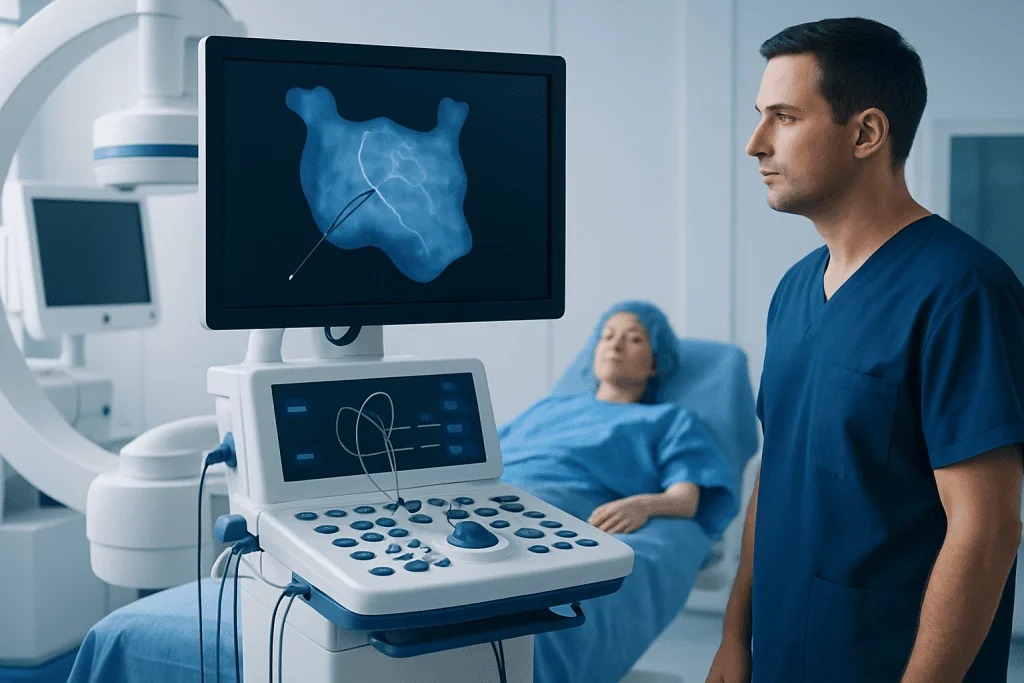
During the procedure, a doctor numbs the skin and inserts catheters into a vein, often in the groin and sometimes the neck or arm. These catheters are advanced to the heart using imaging guidance. Once in place, they record electrical signals and may deliver small impulses to safely trigger and study an abnormal rhythm under controlled conditions.
The findings show where the rhythm starts, whether extra pathways are present, and how the electrical system responds. In some cases, diagnosis and treatment happen in the same session. If the source of the rhythm problem is clearly identified, the doctor may proceed with cardiac ablation to interrupt the abnormal pathway.
After the study, the catheters are removed and pressure is applied to reduce bleeding. Most people spend several hours recovering while the team monitors heart rhythm and blood pressure. The exact recovery time depends on the type of procedure performed and whether ablation or device placement was also done.
What the results can show
EP study results help explain how electrical signals travel through the heart and whether that pathway is functioning normally. The study can reveal a tendency toward rapid rhythms, identify an area that triggers abnormal beats, or show delay or block in signal conduction. This level of detail can be difficult to obtain from surface testing alone.
Some results confirm a specific arrhythmia diagnosis, such as an extra electrical pathway causing recurrent rapid heartbeat. Others may show that symptoms are not due to a dangerous rhythm problem, which can also be reassuring and clinically useful. In people with unexplained fainting, the test may help distinguish heart rhythm causes from non-cardiac causes.
Doctors interpret the findings in the context of the person’s symptoms, medical history, and overall heart health. For example, an abnormal rhythm in a structurally normal heart may be approached differently than the same rhythm in someone with heart failure, prior heart attack, or inherited heart disease. This is why electrophysiology is not just a test, but part of a broader diagnostic process.
Treatment options after electrophysiology testing
Treatment depends on the type of rhythm disorder, how often it occurs, the severity of symptoms, and whether the rhythm poses a health risk. Some people need only observation and follow-up, while others benefit from medication to control rate or rhythm. Lifestyle factors such as caffeine intake, alcohol use, poor sleep, and unmanaged stress may also be addressed when they seem to trigger episodes.
Catheter ablation is a common treatment when a rhythm problem starts from a specific area or pathway that can be targeted. Using heat or cold energy, the doctor creates a small scar to interrupt the abnormal electrical circuit. This is often considered for recurrent supraventricular tachycardia, some cases of atrial flutter, certain ventricular arrhythmias, and selected cases of arrhythmia.
Some patients require device-based treatment instead of, or in addition to, medicines or ablation. A pacemaker may be recommended when the heart beats too slowly because of conduction disease. An implantable cardioverter-defibrillator may be advised in people at risk of dangerous ventricular arrhythmias. When symptoms are linked to poor circulation to the heart muscle, broader cardiology treatment may also be part of care.
Near the end of the evaluation pathway, patients may also benefit from coordinated follow-up with imaging, medication review, and long-term rhythm monitoring. Acibadem International’s multidisciplinary specialists and JCI-accredited hospitals diagnose and treat heart rhythm disorders for international patients when advanced assessment is needed.
Risks, prevention, and self-care
An electrophysiology study is generally considered safe when performed by experienced teams, but like any invasive procedure it carries some risk. Possible complications include bleeding, bruising, infection, blood vessel injury, abnormal rhythms triggered during the test, or, more rarely, damage to heart structures. The care team explains these risks in relation to the expected benefit before the procedure.
There is no guaranteed way to prevent every arrhythmia, because some are linked to age, inherited conditions, or underlying heart disease. Still, heart-healthy habits can lower risk and support better rhythm control. These include managing blood pressure, controlling diabetes, maintaining a healthy weight, avoiding tobacco, limiting excess alcohol, and getting enough sleep.
Self-care also includes paying attention to symptom patterns. Keeping a simple record of episodes, including when they happen and what they feel like, can help a doctor connect symptoms with possible triggers. Patients should not stop prescribed medicines on their own, especially drugs for heart rhythm, blood pressure, or blood thinning.
- Follow medical advice about medicines and follow-up visits
- Seek urgent care for severe symptoms rather than waiting for them to pass
- Reduce known triggers if they worsen palpitations
- Ask about exercise, travel, and daily activity after a procedure
When to seek medical care
Medical care should be sought promptly if a person has new or worsening palpitations, unexplained fainting, repeated near-fainting, or an irregular heartbeat that causes weakness or breathlessness. These symptoms do not always mean a dangerous condition, but they deserve professional assessment because some rhythm disorders require timely treatment.
Emergency care is especially important if symptoms occur with chest pain, severe shortness of breath, confusion, or loss of consciousness. A very fast or very slow heartbeat can reduce blood flow to the brain and other organs. Quick evaluation can help doctors identify whether the problem is due to an arrhythmia or another urgent condition.
People with known heart disease, prior stroke, heart failure, or a family history of sudden cardiac death should be particularly careful not to ignore rhythm-related symptoms. If there is uncertainty about whether symptoms are serious, the safest approach is to contact a qualified doctor or emergency service for guidance.
Frequently asked questions
What is electrophysiology in cardiology?
In cardiology, electrophysiology is the study of the heart’s electrical system and the disorders that affect heart rhythm. It includes specialized testing and procedures used to diagnose and sometimes treat arrhythmias.
Is an electrophysiology study painful?
Most people do not describe an EP study as painful, although there can be some discomfort where the catheters are inserted. Sedation and local numbing medicine are commonly used, and the care team monitors comfort throughout the procedure.
How long does an electrophysiology study take?
The length varies depending on why the test is being done and whether treatment is performed during the same session. A straightforward study may take a few hours, while a combined study and ablation can take longer.
What is the difference between an ECG and an electrophysiology study?
An ECG records the heart’s electrical activity from electrodes placed on the skin. An electrophysiology study records signals from inside the heart using catheters, which gives more detailed information about where an arrhythmia starts and how it travels.
Can electrophysiology cure an arrhythmia?
Electrophysiology itself is the diagnostic field, but procedures guided by it, especially catheter ablation, can successfully treat some arrhythmias. Whether an arrhythmia can be fully eliminated depends on the exact type of rhythm problem and the person’s overall heart health.
Who needs to see an electrophysiologist?
A person may be referred to an electrophysiologist if they have unexplained palpitations, fainting, recurrent arrhythmias, or a rhythm disorder that may need ablation or device therapy. The referral is usually made after initial evaluation by a primary doctor or cardiologist.
References
- American Heart Association
- National Heart, Lung, and Blood Institute
- Heart Rhythm Society
- Mayo Clinic
- European Society of Cardiology
This article is for general information only and is not a substitute for professional medical advice. Please consult a qualified doctor about your individual situation.
Heart care in Turkey — expert evaluation and treatment
JCI-accredited · board-certified surgeons · reply within 24h
Add us as a Preferred Source to see more of our trusted health content across Google Search, AI Overviews and Discover.

Cardiology Department
Diagnosis and treatment of heart and vascular conditions, from prevention to advanced interventional procedures.
93 specialists in this unitMore from the Health Library

Schizencephaly — Explained by Medical Evidence, Not Myths

Spirometry: A Complete Medical Overview

Healthiest Bread — Explained by Medical Evidence, Not Myths

Finger Splint: An Evidence-Based Guide for Patients

Midwife: A Complete Medical Overview