

Pneumonia in Children: Early Symptoms, Diagnosis, and Recovery
Pneumonia in children may cause cough, fever, fast breathing, chest discomfort, poor feeding, and unusual tiredness. Viruses are a common cause, but bacteria and, less often, fungi can also lead to pneumonia.
Key Takeaways
- Pneumonia in children may cause cough, fever, fast breathing, chest discomfort, poor feeding, and unusual tiredness.
- Viruses are a common cause, but bacteria and, less often, fungi can also lead to pneumonia.
- Diagnosis is based on symptoms, physical examination, and sometimes tests such as chest imaging or blood work.
- Treatment depends on the cause and severity and may include rest, fluids, fever control, antibiotics, or hospital care.
- Parents should seek urgent medical attention if a child has breathing difficulty, bluish lips, dehydration, or marked sleepiness.
Pneumonia in children is an infection of the lungs that can range from mild to serious, depending on the cause, the child’s age, and overall health. Recognizing early symptoms and getting timely medical care can help children recover safely and reduce the risk of complications.
Overview
Pneumonia in children is an infection that affects the air sacs and surrounding tissue in the lungs. The infection can make it harder for oxygen to move into the bloodstream, which is why breathing may become faster or more difficult. Pneumonia can affect babies, toddlers, school-age children, and teenagers, but signs may look different depending on age.
Some cases are mild and improve with supportive care at home, while others need antibiotics or treatment in hospital. The most common causes are viruses and bacteria. Viral infections often develop after a cold or flu-like illness, while bacterial pneumonia may start more suddenly with high fever and more obvious breathing symptoms.
Because symptoms can overlap with other respiratory illnesses, families may not always recognize pneumonia early. A child who is breathing faster than usual, working hard to breathe, or becoming unusually sleepy should be assessed by a doctor. Timely evaluation helps guide treatment and supports a safer recovery.
Symptoms of Pneumonia in Children
Common symptoms of pneumonia in children include cough, fever, chills, tiredness, and faster breathing. Some children also complain of chest pain or belly pain, especially when coughing. Babies may not cough much, but they may feed poorly, seem irritable, or breathe noisily.
Breathing changes are often especially important. Parents may notice the child is breathing rapidly, flaring the nostrils, making grunting sounds, or using the muscles between the ribs and at the neck to breathe. In young children, reduced activity, less interest in eating, and fewer wet diapers can also be warning signs of illness.
Symptoms vary with the cause. Viral pneumonia may begin with a runny nose, wheezing, and low-grade fever before the cough becomes more troublesome. Bacterial pneumonia may cause a more sudden high fever, productive cough, and a child who looks quite unwell. If symptoms appear severe, urgent medical evaluation is important.
- Cough that does not improve or gets worse
- Fever, sometimes with chills
- Fast or difficult breathing
- Chest pain or stomach pain
- Poor feeding, vomiting, or dehydration
- Unusual sleepiness or low energy
Causes and Risk Factors
Pneumonia develops when germs infect the lungs. In children, viruses are a frequent cause, especially in younger age groups. Common viral causes include respiratory syncytial virus, influenza, and other seasonal viruses. Bacteria such as Streptococcus pneumoniae can also cause pneumonia, sometimes after a viral infection has already weakened the airways.
Not every child has the same risk. Babies and young children have smaller airways and less reserve, so they may become unwell more quickly. Children born prematurely, those with asthma or chronic lung disease, or those with heart disease, weakened immunity, or certain neurological conditions may be more vulnerable to more severe illness.
Environmental and everyday factors also matter. Exposure to tobacco smoke, crowded settings, poor nutrition, and incomplete vaccination can increase the risk. Good hand hygiene, avoiding smoke exposure, and keeping routine immunizations up to date can reduce the chance of serious respiratory infections. Pneumonia may sometimes occur alongside or after conditions such as bronchitis or influenza.
How Pneumonia Is Diagnosed
Doctors diagnose pneumonia in children by combining the child’s symptoms, medical history, and physical examination. They listen to the lungs with a stethoscope and assess how fast the child is breathing, whether oxygen levels are normal, and how much effort it takes for the child to breathe. They also consider age, recent infections, vaccination history, and any chronic medical conditions.
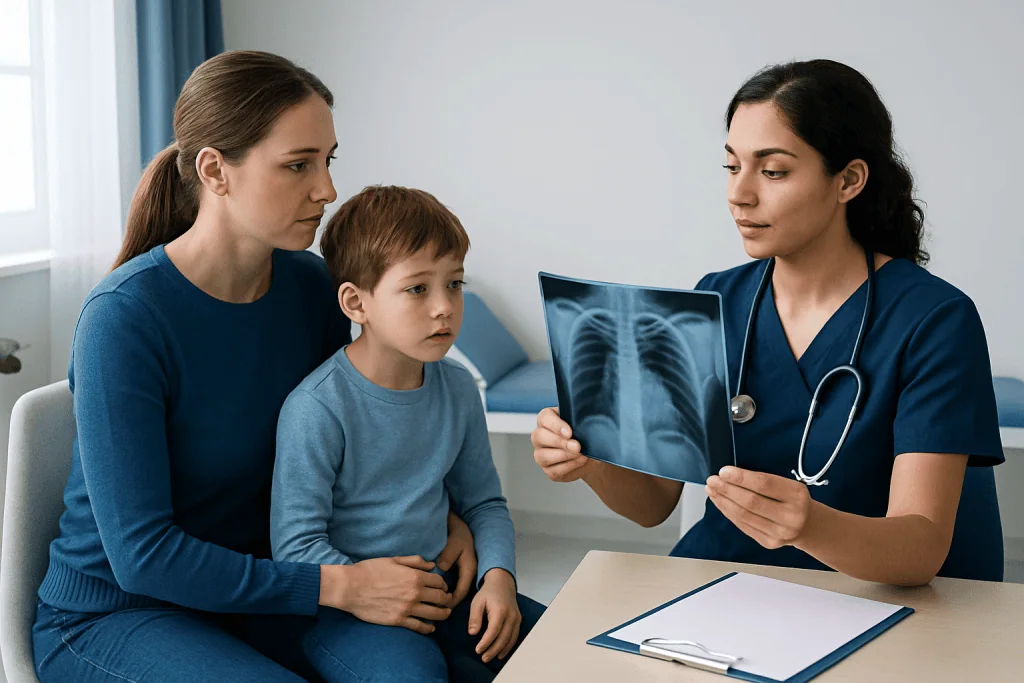
Not every child needs the same tests. In straightforward mild cases, a doctor may diagnose pneumonia based mainly on the examination. When the diagnosis is uncertain or the child looks more ill, additional tests may be helpful. These can include a chest X-ray, pulse oximetry to measure oxygen, blood tests, or swabs to check for certain viruses.
Hospital assessment is more likely if the child is very young, has low oxygen levels, struggles to drink, or shows signs of dehydration or respiratory distress. In selected cases, imaging such as a chest X-ray may help confirm the diagnosis or check for complications. Doctors may also compare pneumonia with other causes of cough and fever, including asthma flare-ups and bronchiolitis.
Treatment Options
Treatment for pneumonia in children depends on the cause, the child’s age, and how severe the illness is. Viral pneumonia often improves with supportive care such as rest, fluids, and fever management. Bacterial pneumonia may require antibiotics prescribed by a doctor. It is important for families to follow the treatment plan carefully and complete any prescribed antibiotic course unless a doctor advises otherwise.
Children with mild pneumonia can often recover at home if they are drinking enough, breathing comfortably, and staying reasonably alert. Home care usually focuses on fluids, regular temperature checks, and monitoring breathing. Cough medicines are not always recommended for young children, so parents should ask a doctor before giving over-the-counter products.
Some children need hospital care. This may be necessary if they have low oxygen levels, significant breathing difficulty, dehydration, persistent vomiting, or complications such as fluid around the lungs. In hospital, treatment may include oxygen therapy, intravenous fluids, and medicines given by mouth or through a vein. If concerns remain about the lungs, doctors may use pediatric pulmonology evaluation and, in some cases, thoracic surgery assessment for complications such as an empyema.
Recovery and Home Care
Most children begin to improve within a few days of appropriate treatment, but full recovery can take longer. Cough and tiredness may continue for days or even a few weeks after the fever settles. This can be worrying for families, but gradual improvement is common as the lungs heal.
At home, children usually benefit from rest, frequent fluids, and a calm environment. Feeding may need to be offered in smaller, more frequent amounts, especially in infants or children who tire easily. Parents can watch for signs of improvement such as easier breathing, better appetite, and more normal energy levels.
Follow-up is important if symptoms are not improving as expected. A child should be rechecked if fever continues, the cough becomes worse, breathing remains fast, or the child stops drinking well. In some cases, a doctor may recommend further review or additional testing if recovery is slower than expected.
Prevention and Self-care
Many cases of pneumonia in children cannot be completely prevented, but risk can be reduced. Routine childhood vaccinations are one of the most effective protective measures. Vaccines that help prevent infections linked to pneumonia include those for pneumococcal disease, influenza, pertussis, and measles, depending on the child’s age and local immunization schedule.
Good everyday habits also help. Handwashing, covering coughs and sneezes, cleaning commonly touched surfaces, and keeping children away from tobacco smoke can lower the chance of respiratory infections. When possible, children with fever and cough should avoid close contact with vulnerable infants or relatives with weakened immunity.
Parents can support general lung health by encouraging balanced nutrition, adequate sleep, and routine medical care. For children with underlying conditions such as recurrent wheeze or chronic respiratory disease, regular follow-up may help reduce complications during illnesses. Near the end of the care journey, families who need specialist support may seek evaluation at centers such as Acibadem International, where multidisciplinary specialists in JCI-accredited hospitals diagnose and treat pediatric respiratory conditions for international patients.
When to See a Doctor
Medical advice should be sought promptly if a child has symptoms of pneumonia, especially if the child is very young or has a chronic illness. A child should be assessed if there is persistent fever, worsening cough, poor feeding, vomiting, or signs that breathing is faster or harder than usual. Early assessment can help determine whether the illness is mild or needs closer monitoring.
Urgent care is needed if a child appears to struggle for each breath, has pauses in breathing, bluish lips or face, severe chest indrawing, confusion, or extreme sleepiness. Babies who are difficult to wake, children who are not drinking, or those with signs of dehydration also need immediate attention. If a parent feels that a child looks seriously unwell, that concern should be taken seriously.
After diagnosis, families should contact the doctor again if symptoms are not improving within the expected timeframe or if new concerns appear. Prompt review may be needed to check for complications, confirm the diagnosis, or adjust treatment. Parents do not need to wait until symptoms become severe to ask for medical help.
Frequently asked questions
What are the early symptoms of pneumonia in children?
Early symptoms often include cough, fever, tiredness, and faster breathing than usual. In babies, signs may be less specific and can include poor feeding, irritability, or fewer wet diapers.
How can a parent tell if a child’s breathing is serious?
Warning signs include very fast breathing, flaring nostrils, grunting, the skin pulling in between the ribs, or bluish lips. If a child seems to work hard for each breath or is unusually sleepy, urgent medical care is needed.
Is pneumonia in children always caused by bacteria?
No. Many cases in children are caused by viruses, especially in younger age groups. Bacterial pneumonia also occurs and may need antibiotics, which is why medical evaluation is important.
Do all children with pneumonia need a chest X-ray?
No. Many children can be diagnosed based on symptoms and examination alone. A chest X-ray is usually reserved for cases where the diagnosis is uncertain, symptoms are severe, or complications are suspected.
How long does recovery from pneumonia in children usually take?
Many children start to feel better within a few days of the right treatment, but cough and tiredness can last longer. Full recovery varies depending on the child’s age, the cause of pneumonia, and whether the illness was mild or severe.
Can a child with pneumonia be treated at home?
Yes, some children with mild pneumonia can recover at home with fluids, rest, fever management, and close monitoring. A doctor should guide treatment, and parents should seek help if breathing worsens, drinking becomes poor, or the child seems less responsive.
References
- World Health Organization
- American Academy of Pediatrics
- Centers for Disease Control and Prevention
- National Health Service
- MedlinePlus
This article is for general information only and is not a substitute for professional medical advice. Please consult a qualified doctor about your individual situation.
Pneumonia in Turkey — costs, top hospitals & a free quote
JCI-accredited · board-certified surgeons · reply within 24h
Add us as a Preferred Source to see more of our trusted health content across Google Search, AI Overviews and Discover.

More from the Health Library



Related Specialists

Dr. Aysimin Akçakaya Koraman
Pediatrics
Assoc. Prof. Dr. Umut Dişel
Internal Medicine
Dr. Mehmet Gürcan
Orthopedic Surgery & Traumatology
Dr. Sertaç Uzel
Radiology