Polysomnography: What a Sleep Study Can Show Beyond Sleep Apnea
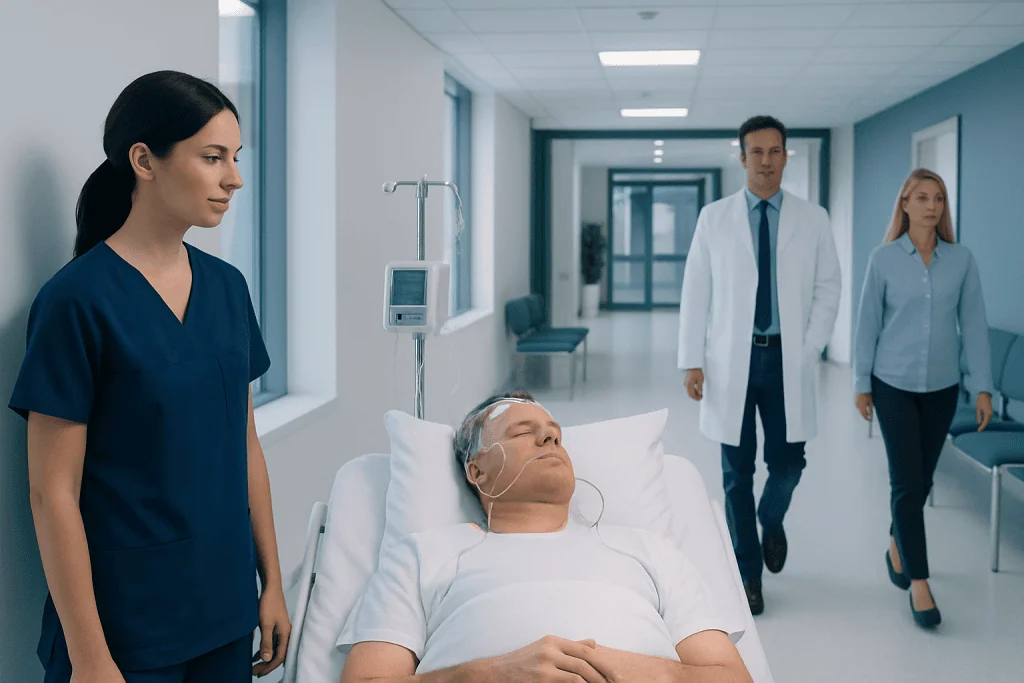
Polysomnography measures multiple body functions during sleep, not just breathing. It can help diagnose sleep apnea, restless legs-related movement patterns, unusual sleep behaviors, and some causes of daytime sleepiness.
Key Takeaways
- Polysomnography measures multiple body functions during sleep, not just breathing.
- It can help diagnose sleep apnea, restless legs-related movement patterns, unusual sleep behaviors, and some causes of daytime sleepiness.
- The test is usually painless and performed overnight in a sleep laboratory with attached sensors.
- Results are interpreted together with symptoms, medical history, and sometimes additional sleep tests.
- Treatment depends on the cause and may include lifestyle changes, devices, medications, or further specialist care.
Polysomnography is a detailed overnight sleep study that records breathing, brain activity, heart rate, oxygen levels, and body movements during sleep. It is best known for diagnosing sleep apnea, but it can also help identify many other sleep-related problems.
Overview: what polysomnography is
Polysomnography is a comprehensive sleep test that records several body functions while a person sleeps. It usually includes brain wave activity, eye movements, muscle activity, heart rhythm, airflow through the nose and mouth, breathing effort, blood oxygen levels, and leg movements. Because it gathers many measurements at the same time, it gives doctors a broad picture of how sleep is happening and what may be interrupting it.
Many people associate a sleep study only with snoring or obstructive sleep apnea. While sleep apnea is one of the most common reasons for testing, polysomnography can show much more. It may reveal repeated awakenings, sleep-related movement disorders, unusual behaviors during sleep, changes in oxygen levels, or patterns that suggest narcolepsy or other sleep-wake disorders.
The test is most often performed overnight in a dedicated sleep laboratory. In some situations, a doctor may recommend a home sleep apnea test instead, but that simpler test does not measure as many signals and is mainly designed to look for obstructive sleep apnea. When symptoms are complex or more than one sleep disorder is possible, in-laboratory polysomnography is often more helpful.
What a sleep study can show beyond sleep apnea
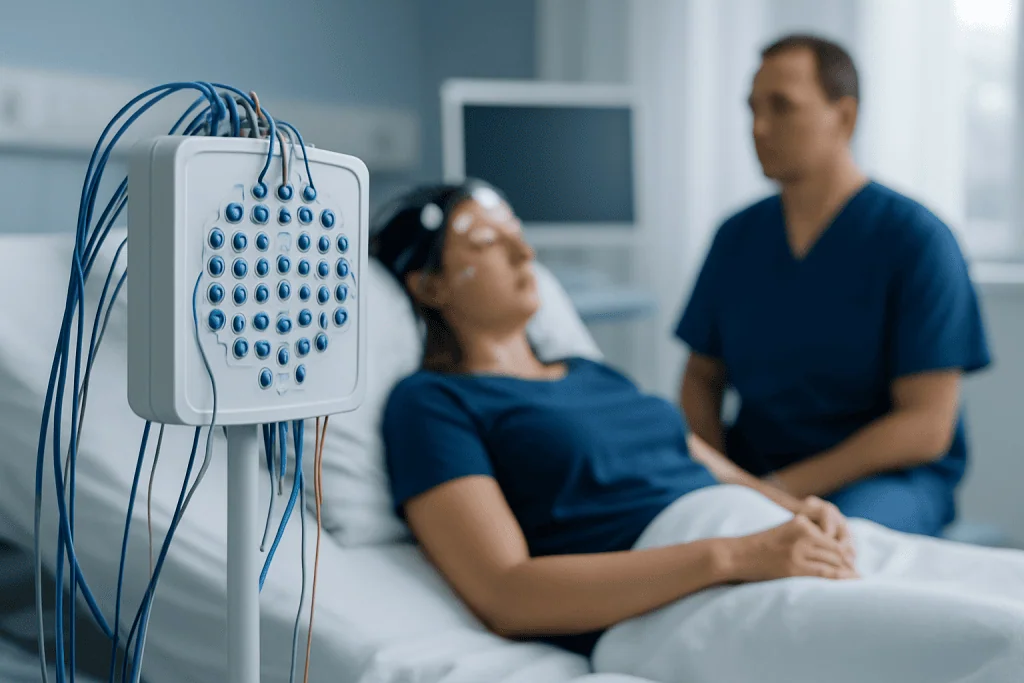
Polysomnography can identify breathing problems such as obstructive sleep apnea and, in some cases, central sleep apnea. However, it also helps detect repeated disruptions in sleep quality that are not caused by airway blockage alone. A person may spend enough hours in bed but still feel unrefreshed because sleep is fragmented by frequent arousals, limb movements, or abnormal behaviors.
One important condition a sleep study may uncover is periodic limb movement disorder, in which the legs make repetitive movements during sleep. These movements can lead to repeated micro-awakenings and poor sleep quality. Polysomnography can also support evaluation of parasomnias, such as sleepwalking, confusional arousals, or dream-enactment behaviors that may occur in rapid eye movement sleep. In selected cases, video recording during the study helps specialists understand these events more clearly.
The test can also provide clues about excessive daytime sleepiness. When combined with other evaluation, polysomnography may help assess whether poor nighttime sleep, breathing disturbances, movement-related sleep disruption, or suspected narcolepsy is contributing to symptoms. Doctors may also use it to investigate unexplained drops in oxygen during sleep, suspected nocturnal seizures, or persistent insomnia when another sleep disorder is thought to be involved.
- Sleep-related breathing disorders
- Periodic limb movements during sleep
- Parasomnias such as sleepwalking or REM sleep behavior disorder
- Some causes of excessive daytime sleepiness
- Sleep-related oxygen drops and abnormal nighttime arousals
When doctors recommend polysomnography

A doctor may recommend polysomnography when symptoms suggest that sleep quality is being disrupted by an underlying disorder. Common reasons include loud snoring, witnessed pauses in breathing, choking or gasping during sleep, waking with headaches, daytime sleepiness, difficulty staying asleep, unusual nighttime movements, or behaviors such as acting out dreams. The test may also be considered when symptoms continue despite initial treatment or when the diagnosis remains unclear.
People with certain medical conditions may also benefit from a more detailed sleep evaluation. Heart disease, neurological disorders, obesity, stroke history, chronic lung disease, and some medication effects can all influence sleep. In children, a sleep study may be used if there is concern about breathing problems during sleep, enlarged tonsils and adenoids, unusual nighttime events, or significant daytime behavioral effects from poor sleep.
Sometimes polysomnography is ordered before planning treatment, and sometimes it is used afterward to check how well treatment is working. For example, a study may be repeated during a split-night or titration protocol to determine the right settings for sleep apnea treatment such as positive airway pressure therapy. In other cases, it helps guide referral to neurology, pulmonology, ENT, or behavioral sleep specialists.
How the test is done and how to prepare
During an overnight sleep study, a technician places small sensors on the scalp, face, chest, legs, and finger or ear. These sensors are attached with adhesive or soft bands and are designed to record body signals while the person sleeps. The setup may feel unfamiliar at first, but the test is usually painless. Most people are able to sleep enough for the study to provide useful information.
In the sleep laboratory, the room is typically quiet, private, and arranged to be as comfortable as possible. A technician monitors the signals from another room and can help if a sensor becomes loose or the person needs assistance during the night. In some studies, video and audio recording are included to help document movements or unusual behaviors during sleep.
Preparation is generally simple. Patients are often advised to follow their usual sleep schedule as closely as possible, avoid excess caffeine later in the day, and ask the doctor whether to continue regular medications. Hair should usually be clean and free of heavy oils, gels, or sprays so scalp sensors can be placed securely. The care team will explain what to bring, such as comfortable sleepwear, toiletries, and a list of medicines.
How results are interpreted
After the study, a sleep specialist reviews the recording in detail. The report looks at total sleep time, the time spent in different sleep stages, breathing patterns, oxygen levels, snoring, heart rhythm, body position, and movement events. It also measures how often sleep is interrupted by arousals or awakenings. This information helps show not only whether a disorder is present, but also how severe it may be.
For breathing disorders, doctors often focus on the frequency of apneas and hypopneas, oxygen drops, and whether events occur more often in certain positions or sleep stages. For movement-related problems, they examine repetitive leg activity and its connection to arousals. For parasomnias or unusual nighttime events, they correlate brain activity, muscle signals, and observed behavior to better understand what happened.
Polysomnography results are not interpreted in isolation. A diagnosis is made by combining the test findings with symptoms, medical history, physical examination, and sometimes other tests. If excessive daytime sleepiness remains a concern, the doctor may recommend a daytime test after the overnight study, such as a multiple sleep latency test, to further evaluate disorders of sleepiness.
Treatment options after polysomnography
Treatment depends on what the sleep study shows. If obstructive sleep apnea is diagnosed, options may include weight management, sleep position strategies, oral appliances, or continuous positive airway pressure. Some people may also need evaluation for structural airway issues, and selected patients may benefit from ENT surgery or related procedures when anatomy plays an important role.
If the study points to periodic limb movements or symptoms related to restless legs syndrome, treatment may focus on reviewing medications, checking iron status when appropriate, and addressing contributing medical factors. When unusual sleep behaviors are identified, management may include making the sleep environment safer, improving sleep routines, treating related disorders, and using targeted medication only when a specialist advises it.
When poor sleep is linked to insomnia, circadian rhythm problems, neurological conditions, or multiple overlapping causes, treatment may involve more than one approach. A doctor may suggest behavioral therapy, medication review, breathing support, or further neurological assessment. If snoring and breathing issues are prominent, evaluation for sleep apnea and tailored therapy can improve both nighttime sleep and daytime function.
For international patients who need a coordinated assessment, Acibadem International offers multidisciplinary sleep-related evaluation and treatment in JCI-accredited hospitals, including access to neurology, pulmonary, and airway specialists when appropriate.
Self-care, follow-up, and when to see a doctor
A sleep study is only one part of better sleep health. Regardless of the diagnosis, healthy sleep habits remain important. These include keeping a regular sleep schedule, limiting alcohol close to bedtime, reducing evening caffeine, creating a quiet sleep environment, and discussing medications that may affect sleep. For people with breathing-related disorders, sleeping position and weight management may also matter.
Follow-up is important because treatment sometimes needs adjustment. A person using positive airway pressure may need mask fitting changes or a repeat study to confirm adequate control. Someone with persistent sleepiness, unusual behaviors, or ongoing insomnia may need further testing or referral to a specialist in sleep neurology or behavioral sleep medicine.
Medical advice should be sought if there is loud habitual snoring with breathing pauses, frequent choking at night, major daytime sleepiness, sudden sleep attacks, injury risk from sleep behaviors, or unexplained nighttime movements. Children should also be evaluated if they snore regularly, struggle with sleep, or show daytime attention or behavior problems linked to poor sleep. Prompt assessment can help identify a treatable cause and improve quality of life.
Frequently asked questions
Is polysomnography the same as a home sleep test?
No. A home sleep test is usually designed mainly to look for obstructive sleep apnea and records fewer signals. Polysomnography is more detailed and is often preferred when symptoms are complex or when doctors need to evaluate movement disorders, unusual sleep behaviors, or other sleep conditions.
Can someone still have a useful sleep study if they do not sleep normally in the lab?
Yes. Many people worry they will not sleep well in a new environment, but even partial sleep can often provide valuable information. Sleep specialists are used to interpreting studies that include some adjustment to the laboratory setting.
What conditions can polysomnography help diagnose besides sleep apnea?
It can help identify periodic limb movements during sleep, some parasomnias such as sleepwalking or dream enactment, nighttime oxygen changes, and patterns of disrupted sleep that contribute to daytime fatigue. It may also be part of the evaluation for narcolepsy or other disorders of excessive sleepiness.
Is polysomnography painful or risky?
The test is generally painless and noninvasive. Sensors are attached to the skin and hair, but they do not usually cause more than mild temporary discomfort from adhesives or wires.
How long does it take to get results from a sleep study?
Results are not usually immediate because a specialist must review many hours of recorded data. Timing varies by center, but the report is often discussed at a follow-up appointment after detailed interpretation.
Should regular medications be stopped before a sleep study?
Medications should not be stopped unless the prescribing doctor or sleep specialist specifically advises it. Some medicines affect sleep stages, breathing, or movement, so the care team needs an accurate medication list before the study.
References
- American Academy of Sleep Medicine
- National Heart, Lung, and Blood Institute
- National Institute of Neurological Disorders and Stroke
- MedlinePlus
- Centers for Disease Control and Prevention
This article is for general information only and is not a substitute for professional medical advice. Please consult a qualified doctor about your individual situation.
Sleep Apnea in Turkey — costs, top hospitals & a free quote
JCI-accredited · board-certified surgeons · reply within 24h
Add us as a Preferred Source to see more of our trusted health content across Google Search, AI Overviews and Discover.
Check your numbers in seconds
BMI, calories, due date, blood pressure and 30+ more clinical calculators — free, instant, doctor-reviewed ranges.

Otorhinolaryngology (ENT)
Care for ear, nose, throat and head-and-neck conditions, including hearing and balance disorders.
126 specialists in this unit