Poop Chart: What Patients Need to Know

The poop chart most often refers to the Bristol Stool Form Scale, which groups stool into seven types. Types 3 and 4 are usually considered the most typical or healthy stool patterns.
Key Takeaways
- The poop chart most often refers to the Bristol Stool Form Scale, which groups stool into seven types.
- Types 3 and 4 are usually considered the most typical or healthy stool patterns.
- Stool color can vary with diet and medicines, but black, red, pale, or persistently yellow stools may need evaluation.
- A short-term change in bowel habits is common, but changes lasting more than a few weeks should be discussed with a doctor.
- Hydration, fiber, physical activity, and regular toilet habits support healthy bowel movements.
- Severe pain, bleeding, black stool, dehydration, fever, or unexplained weight loss are reasons to seek medical care.
A poop chart is a simple way to describe stool shape, texture, and sometimes color so patients and doctors can discuss bowel habits more clearly. In general, smooth, soft stools are considered healthiest, while very hard stools or watery stools may suggest constipation, diarrhea, or another digestive issue.
Overview: What a poop chart shows
A poop chart is a practical visual guide that helps patients describe bowel movements in a more accurate way than words like “normal” or “bad.” In medical practice, the best-known version is the Bristol Stool Form Scale, which classifies stool into seven types based on shape and consistency. This helps identify patterns linked with healthy digestion, constipation, or diarrhea.
For most adults, stool that is easy to pass, soft, and formed is usually a sign that the bowel is moving at a healthy pace. Stools that are very hard and lumpy may suggest slow movement through the colon, while loose or watery stools often mean stool is moving too quickly for enough water to be absorbed.
A poop chart is not a diagnosis by itself. Instead, it is a communication tool that becomes more useful when combined with other details such as stool color, frequency, abdominal pain, diet changes, medications, stress, travel, and any blood or mucus in the stool.
The Bristol Stool Chart: understanding the 7 types
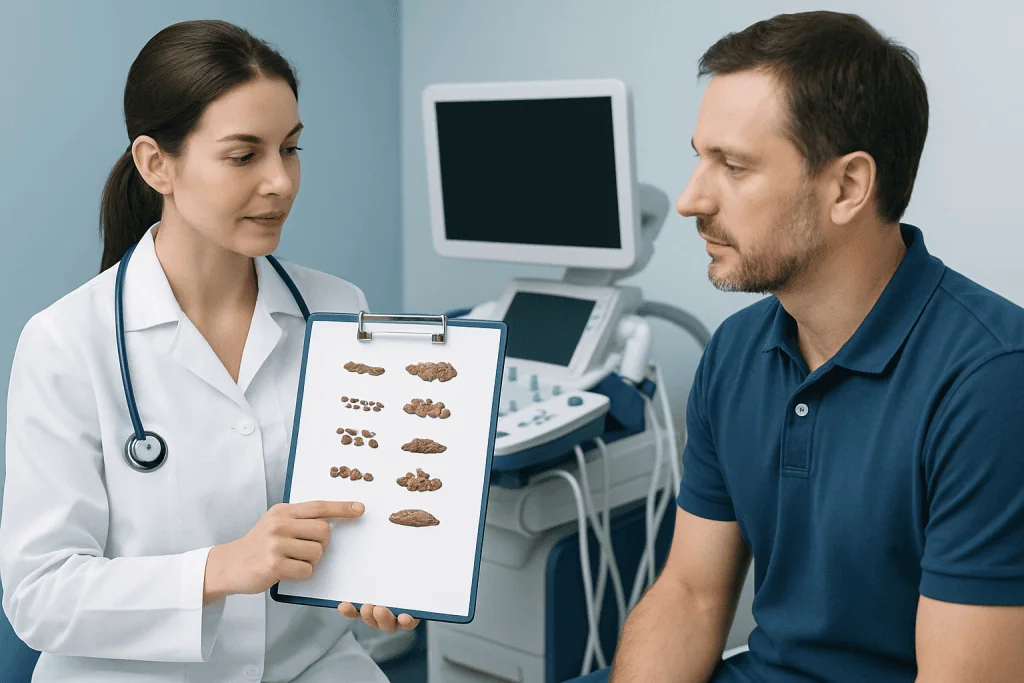
The Bristol Stool Form Scale divides stool into seven categories. It focuses on shape and texture, which are often easier to compare than frequency alone. Many healthy people do not pass stool every day, so appearance can be more informative than the number of bowel movements.
- Type 1: Separate hard lumps, often hard to pass. This commonly suggests constipation.
- Type 2: Sausage-shaped but lumpy. This also points to constipation or slow bowel movement.
- Type 3: Like a sausage with cracks on the surface. This is often within the healthy range.
- Type 4: Smooth, soft, and snake-like. This is usually considered an ideal stool form.
- Type 5: Soft blobs with clear edges. This may be normal for some people, but can also suggest a tendency toward loose stool.
- Type 6: Fluffy pieces with ragged edges, mushy stool. This often indicates mild diarrhea.
- Type 7: Entirely liquid with no solid pieces. This suggests diarrhea and can increase dehydration risk.
Types 3 and 4 are generally the main goal because they reflect a balance of water, fiber, and normal intestinal movement. However, a single bowel movement outside this range is not always a concern. Temporary changes can happen with travel, diet shifts, stress, infections, or certain medicines.
If a person regularly has Type 1 or 2 stools, constipation may need attention. If Type 6 or 7 stools continue for more than a few days, especially with weakness or dehydration, medical advice is important. Some people with alternating constipation and diarrhea may need assessment for problems such as irritable bowel syndrome.
What stool color can mean

Color is another part of a useful poop chart. Normal stool is usually brown because bile from the liver changes as it moves through the intestine. Still, stool color can vary from light brown to dark brown and remain normal, especially after certain foods.
Green stool may happen after eating leafy vegetables, food coloring, iron supplements, or when stool moves quickly through the bowel. Yellow stool can sometimes appear greasy or foul-smelling and may suggest poor fat absorption if it happens repeatedly. Pale, clay-colored, or white stool can be a sign that not enough bile is reaching the intestine.
Red stool can come from foods such as beets, but it can also mean bleeding from the lower digestive tract. Black stool may result from iron tablets or bismuth-containing medicines, but it can also signal bleeding higher in the digestive tract. When stool is black and sticky, or red without an obvious food explanation, it should be assessed promptly.
Mucus in stool can occur occasionally, but repeated mucus with pain, diarrhea, or blood may point to intestinal inflammation or infection. Ongoing changes in stool color or appearance may lead a doctor to investigate conditions involving the bowel, liver, gallbladder, or pancreas.
Why bowel movements change
Bowel habits can change for many reasons, and not all causes are serious. Common factors include low fiber intake, not drinking enough fluids, reduced physical activity, stress, travel, disrupted routines, and changes in sleep. These can all affect how quickly food moves through the gut and how much water remains in the stool.
Medications are another frequent cause. Iron supplements, some pain medicines, antacids, antibiotics, and other drugs can lead to constipation, diarrhea, or color changes. Food intolerances, viral infections, and temporary indigestion can also change stool for a short time.
Longer-lasting changes may be linked to digestive disorders. These include constipation, infectious diarrhea, inflammatory bowel disease, malabsorption, gallbladder or liver disease, and structural problems of the colon or rectum. Patients with repeated symptoms may need evaluation for conditions such as Crohn’s disease or other inflammatory bowel problems.
Age can also matter. Children, pregnant women, and older adults may have different bowel patterns, and dehydration can affect them more easily. A doctor may consider medical history, diet, symptoms, and stool appearance together rather than relying on the chart alone.
How doctors evaluate abnormal stool
When bowel changes persist, doctors usually start with a detailed history. They may ask when the change began, how often it happens, whether there is pain, bloating, fever, weight loss, urgency, incontinence, blood, or nighttime symptoms, and whether recent diet, travel, or medicines may explain it.
A physical examination may be followed by tests when needed. These can include blood work, stool tests for infection or inflammation, and imaging studies. In some cases, direct examination of the digestive tract is helpful. Depending on the symptoms, a doctor may recommend colonoscopy or endoscopy to look for bleeding, inflammation, ulcers, polyps, or other abnormalities.
Not everyone with a bowel change needs extensive testing. Short-lived symptoms after a dietary change or stomach virus often settle with time and supportive care. Testing becomes more important when there are alarm symptoms such as persistent bleeding, anemia, unexplained weight loss, severe abdominal pain, or a strong family history of bowel disease.
Treatment and self-care for healthier bowel habits
Treatment depends on the cause. For constipation, doctors often advise increasing fluids, gradually adding fiber-rich foods, staying physically active, and creating a regular time to use the toilet without rushing. Some patients may need short-term or prescription treatments, but these should be chosen with medical guidance, especially if symptoms are frequent or severe.
For diarrhea, the priority is usually hydration and identifying the trigger. Mild, short-term diarrhea may improve with rest, fluids, and a bland diet. Ongoing diarrhea may require treatment for infection, inflammation, food intolerance, or another underlying disorder. If symptoms suggest structural or persistent digestive disease, further gastroenterology care may be needed.
Helpful daily habits include responding to the urge to pass stool, limiting long periods of sitting, and paying attention to how certain foods affect the body. Keeping a brief symptom diary can help connect stool changes with meals, medications, stress, or travel. When symptoms continue despite basic measures, specialists may recommend tests and tailored care, including gastroenterology evaluation.
Near the end of the care pathway, some patients benefit from coordinated assessment across specialties. Acibadem International’s multidisciplinary specialists and JCI-accredited hospitals diagnose and treat digestive conditions for international patients when further evaluation is needed.
When to seek medical care
Most short-term stool changes are not emergencies, but some symptoms should not be ignored. Medical care is important if there is blood in the stool, black or tar-like stool, pale stool that persists, severe abdominal pain, repeated vomiting, fainting, high fever, or signs of dehydration such as dizziness, very dry mouth, or reduced urination.
A doctor should also assess bowel changes that last more than a few weeks, especially when they happen without a clear reason. Other important reasons to seek care include unexplained weight loss, new constipation in an older adult, ongoing diarrhea, nighttime bowel symptoms, or a family history of colorectal disease.
Patients should seek timely advice rather than self-treating for long periods. When stool changes are linked with long-term bowel inflammation or bleeding, early evaluation can help identify the cause and guide the right treatment plan. In selected cases, a specialist may recommend treatment for hemorrhoids or other procedures if symptoms are caused by anorectal conditions rather than a bowel disease.
Frequently asked questions
What is the poop chart called in medicine?
The poop chart most commonly used in medicine is the Bristol Stool Form Scale. It groups stool into seven types based on shape and consistency to help describe bowel habits clearly.
What type of poop is considered healthy?
Types 3 and 4 on the Bristol chart are usually considered the healthiest range. They are formed, soft, and easier to pass without straining.
How often should a person have a bowel movement?
Normal bowel frequency varies widely from person to person. Some healthy people go three times a day, while others go three times a week, as long as the pattern is comfortable and consistent for them.
Does stool color always mean something is wrong?
Not always. Foods, supplements, and medicines can change stool color, but black, red, pale, or persistently yellow stools may need medical review, especially if there are other symptoms.
When should constipation become a concern?
Constipation should be discussed with a doctor if it is persistent, painful, associated with bleeding, or represents a clear change from usual habits. New constipation with weight loss, vomiting, or abdominal swelling needs prompt medical attention.
Can stress affect the poop chart?
Yes. Stress can affect gut movement and make stool harder, looser, or more urgent in some people. Managing stress may help, but ongoing symptoms still deserve medical evaluation.
This article is for general information only and is not a substitute for professional medical advice. Please consult a qualified doctor about your individual situation.
Persistent digestive symptoms? Get evaluated in Turkey
JCI-accredited · board-certified surgeons · reply within 24h
Add us as a Preferred Source to see more of our trusted health content across Google Search, AI Overviews and Discover.

More from the Health Library

Miscarriage: A Complete Medical Overview

Thyroid Storm: A Complete Medical Overview

Tobramycin Eye Drops: An Evidence-Based Guide for Patients

Juniper Berries: An Evidence-Based Guide for Patients

Description of Borderline Personality — Explained by Medical Evidence, Not Myths