Post Mastectomy Exercises: An Evidence-Based Patient Guide
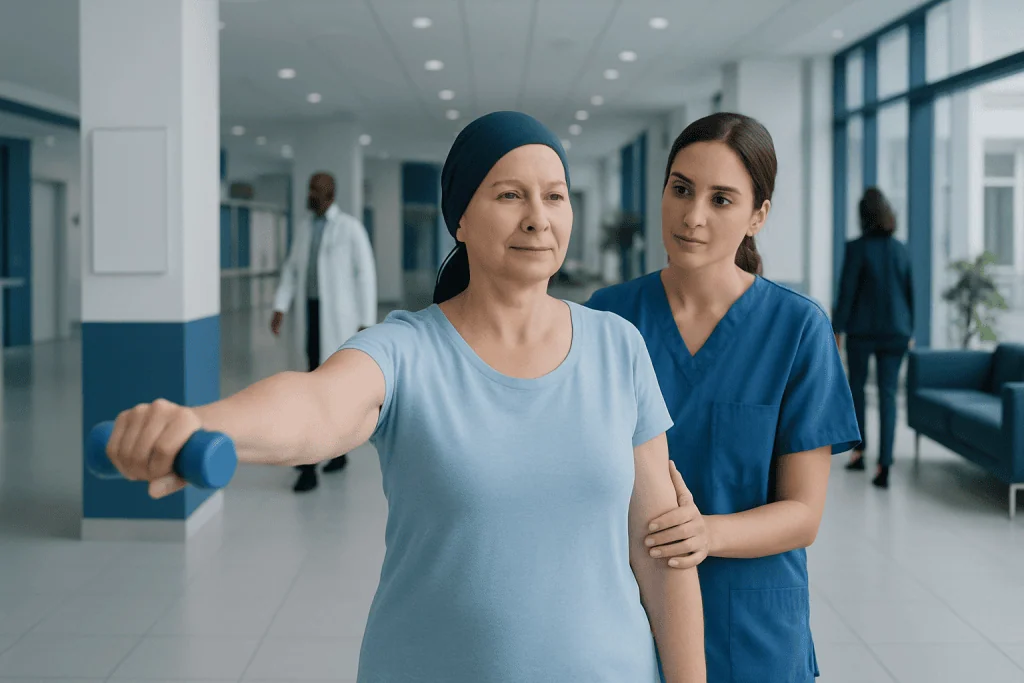
Exercises should begin only when the surgeon or physiotherapist says they are appropriate, especially while drains or reconstruction are involved. Early movements usually focus on the hand, wrist, elbow, neck and gentle shoulder motion rather than strenuous strengthening.
Key Takeaways
- Exercises should begin only when the surgeon or physiotherapist says they are appropriate, especially while drains or reconstruction are involved.
- Early movements usually focus on the hand, wrist, elbow, neck and gentle shoulder motion rather than strenuous strengthening.
- Regular, comfortable practice can reduce stiffness and help restore functional arm use after surgery.
- Pain that is sharp, increasing, or accompanied by swelling, redness, fever or wound changes needs medical assessment.
- Long-term shoulder and upper-body exercise may be useful, particularly after lymph node surgery, radiation therapy or reconstructive procedures.
Post mastectomy exercises are gentle movements that support shoulder mobility, posture, comfort and return to everyday activities after breast surgery. The right exercises, timing and progression depend on the type of surgery, drain use, reconstruction and individual healing plan.
Post Mastectomy Exercises: What They Are and Why They Matter
Post mastectomy exercises are gentle, planned movements used after removal of one or both breasts. They are designed to help restore arm and shoulder range of motion, reduce stiffness, support upright posture and make daily tasks—such as washing hair, dressing or reaching a shelf—more comfortable. They are usually introduced in stages, rather than all at once.
The surgical team decides when exercises can begin. This decision may depend on whether surgery included sentinel lymph node biopsy or axillary lymph node dissection, whether surgical drains are present, and whether immediate breast reconstruction was performed. A breast surgeon, physiotherapist or rehabilitation specialist can tailor the plan to protect healing tissues while encouraging safe movement.
Exercise is one part of recovery, alongside wound care, pain management, rest and follow-up appointments. It does not replace medical advice, and it should not be pushed through sharp pain. People recovering from breast cancer surgery may also benefit from ongoing rehabilitation support during other treatments, such as radiotherapy or systemic therapy.
How Post-Mastectomy Rehabilitation Works
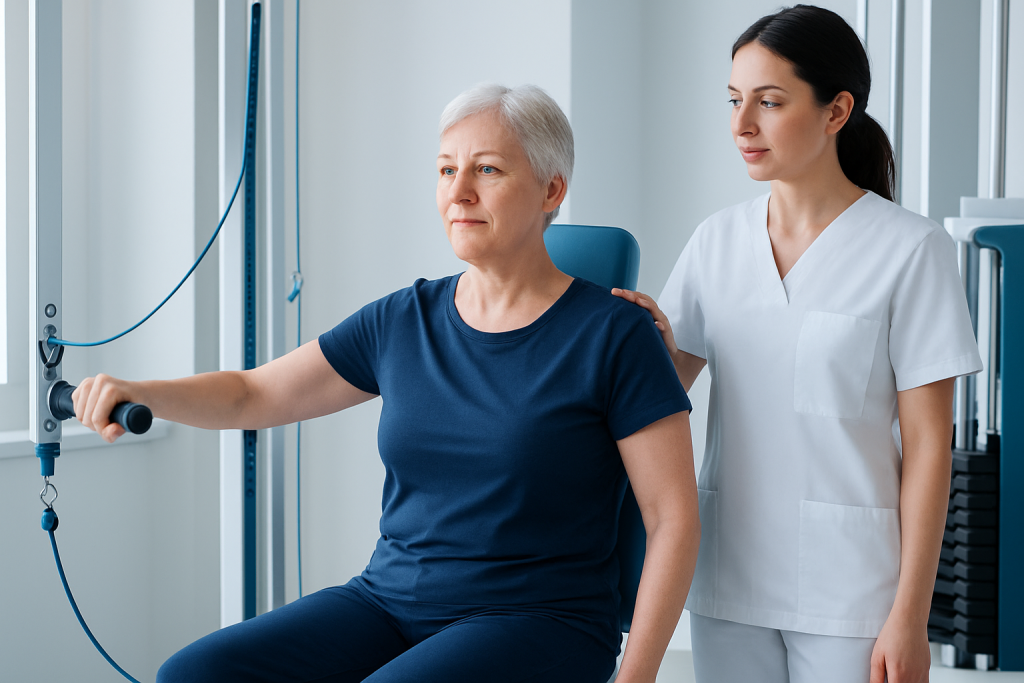
After surgery, the chest, shoulder and upper arm can feel tight because of inflammation, healing skin and scar tissue, protective posture, reduced use of the arm or treatment effects. Gentle movement keeps nearby joints moving and gradually helps the muscles and soft tissues tolerate normal daily activity again. Breathing and posture exercises may also help a person avoid rounded shoulders and chest tightness.
Rehabilitation commonly progresses from low-effort movements below shoulder level to controlled reaching exercises and, later, strengthening and aerobic activity. The pace is individual. Someone who has had a straightforward mastectomy may progress differently from someone who has had reconstruction, complications, radiation therapy or reduced shoulder mobility before surgery.
Physiotherapy can assess shoulder range, strength, scar-related tightness, posture and arm swelling. It can also provide guidance for people at risk of lymphedema, a build-up of lymph fluid that can cause swelling or heaviness in the arm, hand, chest or breast area. Gentle, progressive exercise is generally considered safe when it is introduced appropriately and monitored when needed.
What Exercises Are Recommended After a Mastectomy?
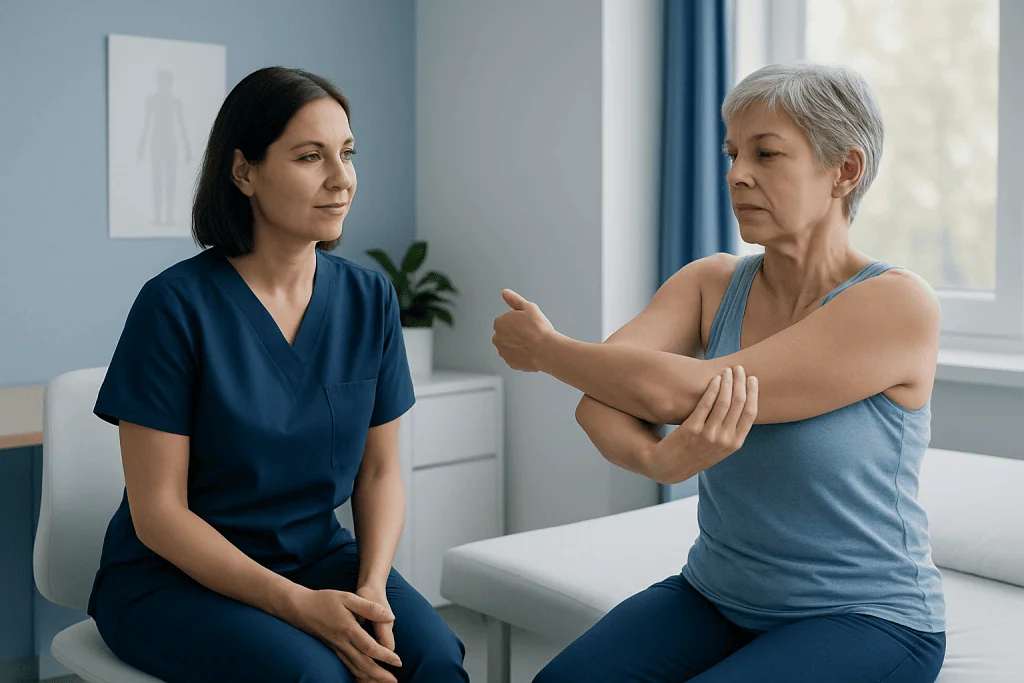
The recommended exercises are those approved by the surgical team for the individual stage of healing. In the first days after surgery, common examples may include deep breathing, gentle opening and closing of the hand, wrist circles, elbow bends and relaxed neck movements. These movements can be done while sitting comfortably and should not pull on the incision, drains or reconstructed area.
Once cleared to move the shoulder more fully, exercises may include supported shoulder rolls, gentle arm lifts, wall-assisted finger walks and slow shoulder blade squeezes. A physiotherapist may recommend a wand or stick exercise, in which the unaffected arm helps guide the operated-side arm through a comfortable range. Exercises should be smooth and controlled; bouncing, forcing a stretch or holding the breath is not helpful.
- Hand and elbow movements: help maintain circulation and mobility while shoulder movement is limited.
- Shoulder blade setting: gently draws the shoulder blades back and down to support posture.
- Wall walking: uses the fingers to gradually guide the arm upward, stopping before pain.
- Supported arm elevation: gradually restores overhead reach once approved.
- Later strengthening: may include light resistance work under professional guidance after healing is established.
There is no single routine that suits every person. For example, specific movement limits may be advised after implant-based or flap reconstruction. The surgeon’s restrictions always take priority over general exercise information.
A Step-by-Step Approach and Recovery Timeline
In the immediate postoperative period, the priority is protecting the surgical site, managing discomfort and moving safely. The care team may encourage short walks and gentle hand, wrist and elbow exercises soon after surgery, provided there are no medical reasons to avoid them. The affected arm is usually used for light daily activities as comfort allows, while lifting, repetitive reaching and strenuous activity may be temporarily restricted.
During the following days to weeks, many people begin more shoulder-focused mobility work after surgeon approval. Exercises are often performed once or more times per day in brief sessions, with rest between movements. The aim is gradual improvement, not speed. If a movement produces mild tightness that settles promptly, it may be within a normal rehabilitation range; persistent or worsening pain should be discussed with the care team.
Over the next several weeks, shoulder motion and functional activity are progressively increased. Scar massage, stretching, strengthening or more structured rehabilitation may be added only when the incision is fully healed and a clinician recommends it. Some people need a longer program because of reconstruction, radiation-related tightness, cording in the armpit or shoulder problems that existed before surgery.
Return to driving, work, exercise classes, swimming and heavier lifting should be decided with the surgeon. Readiness depends on pain control, arm movement, wound healing, medications and the physical demands of the activity. A supervised physical therapy program can help create a safe return-to-activity plan.
Can You Provide Me With a PDF of Post-Mastectomy Exercises?
A generic PDF can be a useful reminder, but it cannot account for the details of an individual operation or recovery. The safest exercise handout is one supplied or approved by the breast surgeon, reconstructive surgeon or physiotherapist, because it can include the correct start date, range-of-motion limits, drain precautions and instructions for contacting the team.
Patients can ask their care team for a printed or electronic post-mastectomy exercise plan before leaving hospital or at the first follow-up visit. Many cancer centers and national cancer organizations also provide educational handouts, but these should be compared with the personal postoperative instructions rather than used to override them.
A helpful handout should clearly state which movements are allowed, how often to perform them, which symptoms mean to stop and when stronger exercise can begin. If the instructions seem unclear or conflict with another source, the surgical team should be contacted before changing the routine.
Can You Show Me Some Pictures of Post-Mastectomy Exercises?
Illustrations can make exercise instructions easier to understand, particularly for movements such as wall walking, shoulder rolls and supported arm raises. However, images without clinical context can be misleading because the same movement may be appropriate at one stage of recovery but too early after a particular type of reconstruction or complication.
A physiotherapist can demonstrate the movement in person, check body position and confirm that the motion does not strain the chest or shoulder. They may also provide illustrated instructions that match the individual rehabilitation plan. Video consultations can be another practical option when in-person rehabilitation is not readily available.
When using any illustration, the person should move only within a comfortable range, keep the shoulders relaxed and stop if there is sharp pain, pulling at the incision, dizziness or new swelling. It is better to perform a few correct, comfortable repetitions than to force the arm higher than it is ready to go.
Benefits, Risks and Everyday Self-Care
Appropriately prescribed exercise can improve shoulder flexibility, ease stiffness, support circulation, reduce fear of movement and make everyday tasks easier. It may also help a person gradually regain confidence in using the arm on the operated side. Regular walking, balanced nutrition, adequate sleep and following wound-care instructions all support general recovery.
The main risks come from doing too much too soon, using poor technique or ignoring surgical restrictions. Overexertion can increase pain, fatigue or swelling and may put stress on healing tissues. Exercises should be paused and reviewed if symptoms clearly worsen during or after the session.
People who have had lymph node removal or radiation should be attentive to persistent arm, hand, chest or breast swelling; heaviness; tightness; or changes in skin texture. These symptoms do not always mean lymphedema, but they should be assessed promptly. A rehabilitation professional can advise on progressive activity, skin care and individualized lymphedema risk reduction.
Acibadem International’s multidisciplinary breast surgery, oncology, plastic surgery and rehabilitation specialists support international patients undergoing mastectomy and recovery in JCI-accredited hospitals. When reconstruction is planned, breast reconstruction follow-up may include specific activity restrictions and rehabilitation advice.
How Long Should You Do Exercises After a Mastectomy?
Most people benefit from gentle range-of-motion exercises for several weeks after surgery, but the exact duration varies. The initial program is often continued until comfortable shoulder movement and normal daily arm use have returned. Some exercises may be continued longer if there is tightness, reduced range of motion, radiation therapy, scar-related restriction or ongoing rehabilitation needs.
Longer-term activity is usually encouraged once the surgical team clears it. This may include walking, aerobic exercise, flexibility work and gradual upper-body strengthening. A sustainable routine is often more valuable than a short period of intense exercise, and progression should be based on healing, symptoms and professional advice.
If movement has not improved as expected, or the shoulder remains painful or difficult to raise, a physiotherapy assessment is worthwhile. Early support can address problems such as shoulder stiffness, altered posture or axillary web syndrome, sometimes called cording.
When to Seek Medical Care
Contact the surgical team promptly if there is fever, worsening redness or warmth around the incision, drainage with an unpleasant odor, wound opening, rapidly increasing pain, sudden swelling, or bleeding. New shortness of breath, chest pain, fainting or one-sided leg swelling requires urgent medical attention.
A non-urgent but timely review is also appropriate for persistent shoulder pain, reduced arm movement, numbness that is worsening, a tight cord-like feeling in the armpit or arm, or swelling and heaviness in the hand, arm, chest or breast area. These concerns are often treatable, and assessment can help ensure that rehabilitation remains safe and effective.
People should attend all planned postoperative appointments, even when recovery appears to be going well. The care team can assess healing, discuss pathology and further treatment plans, adjust activity restrictions and refer to rehabilitation services when needed.
Frequently asked questions
When can post mastectomy exercises start?
Some gentle hand, wrist, elbow and breathing movements may be recommended soon after surgery, but the timing differs between patients. Shoulder exercises and overhead reaching should start only when the surgeon or physiotherapist approves them, particularly if drains or reconstruction are involved.
Should post-mastectomy exercises hurt?
Mild stretching or temporary tightness can occur as movement returns, but sharp, severe or increasing pain is not a goal of rehabilitation. The person should stop the exercise and contact the care team if pain persists, the wound pulls, or swelling increases.
Can exercise cause lymphedema after mastectomy?
Appropriately introduced, gradual exercise is generally considered safe and can be part of healthy recovery after breast cancer surgery. However, anyone with new or persistent swelling, heaviness, tightness or skin changes in the arm or chest should seek assessment for possible lymphedema or another cause.
What should be avoided after mastectomy?
People should avoid lifting, pushing, pulling and high-impact or repetitive upper-body activity until their surgeon confirms it is safe. The exact restrictions depend on the operation, healing progress, drain use and whether breast reconstruction was performed.
Do I need physiotherapy after a mastectomy?
Not everyone needs formal physiotherapy, but it can be particularly helpful for limited shoulder movement, pain, posture changes, cording, swelling concerns or recovery after reconstruction and radiation. A clinician can determine whether referral is appropriate.
Can I exercise if I still have surgical drains?
Gentle movements may be allowed while drains are in place, but exercises that pull on the chest, shoulder or drain tubing may need to wait. The surgical team should provide specific instructions for safe movement and drain care.
References
- American Cancer Society
- National Cancer Institute
- American Society of Clinical Oncology
- Cancer Research UK
- World Health Organization
This article is for general information only and is not a substitute for professional medical advice. Please consult a qualified doctor about your individual situation.
Hair transplant in Turkey — costs, graft counts & a free assessment
JCI-accredited · board-certified surgeons · reply within 24h
Add us as a Preferred Source to see more of our trusted health content across Google Search, AI Overviews and Discover.