Postpartum Depression: When New Mothers Should Seek Professional Help

Postpartum depression is a medical condition, not a personal failure or weakness. Symptoms usually last longer and feel more intense than the baby blues.
Key Takeaways
- Postpartum depression is a medical condition, not a personal failure or weakness.
- Symptoms usually last longer and feel more intense than the baby blues.
- Early treatment may include therapy, practical support, and sometimes medication.
- Urgent help is needed if there are thoughts of self-harm, harming the baby, or severe confusion.
- Partners and family members often play an important role in recognizing symptoms and encouraging care.
Postpartum depression is more than the short-lived “baby blues.” It is a treatable mental health condition after childbirth that can affect mood, energy, bonding, sleep, and daily functioning, and professional support can make a meaningful difference.
Overview
Postpartum depression is a mood disorder that can develop after childbirth. It affects emotional well-being, thinking, energy, and daily functioning during a time that is often expected to feel joyful. While many new mothers experience mood changes, postpartum depression is more intense, lasts longer, and can interfere with caring for oneself or the baby.
It is important to distinguish postpartum depression from the “baby blues.” Baby blues are common in the first days after delivery and may include tearfulness, irritability, and emotional sensitivity. These symptoms usually improve within about two weeks. When low mood, anxiety, hopelessness, or disconnection continue beyond that period or become severe at any time, a professional assessment is appropriate.
Postpartum depression can begin within the first few weeks after birth, but it may also appear later in the first year. It can affect any new mother, regardless of age, personality, or whether the pregnancy was planned. Having postpartum depression does not mean someone does not love their baby; it means they are experiencing a real health condition that deserves care and compassion.
Symptoms of Postpartum Depression

Symptoms vary from person to person. Some mothers describe persistent sadness, crying, emptiness, guilt, or a sense of being overwhelmed. Others mainly notice anxiety, panic, irritability, anger, or feeling numb. Sleep and appetite may change, but because newborn care already disrupts routines, these signs are best interpreted together with changes in mood and functioning.
Many women also report difficulty bonding with the baby, losing interest in usual activities, struggling to concentrate, or feeling that they are not a good mother. Physical symptoms such as exhaustion, headaches, body tension, or loss of energy may also be present. These experiences can overlap with depression more broadly, but the timing after childbirth is an important clue.
Warning signs that symptoms are moving beyond normal adjustment include:
- Low mood or anxiety most of the day, nearly every day
- Symptoms lasting more than two weeks
- Difficulty caring for the baby or managing basic daily tasks
- Withdrawing from loved ones or avoiding the baby
- Feelings of worthlessness, hopelessness, or intense guilt
- Thoughts of self-harm or that the family would be better off without them
A rarer but urgent condition called postpartum psychosis can cause confusion, extreme agitation, delusions, hallucinations, or behavior that seems out of touch with reality. This is a medical emergency and needs immediate care.
Causes and Risk Factors
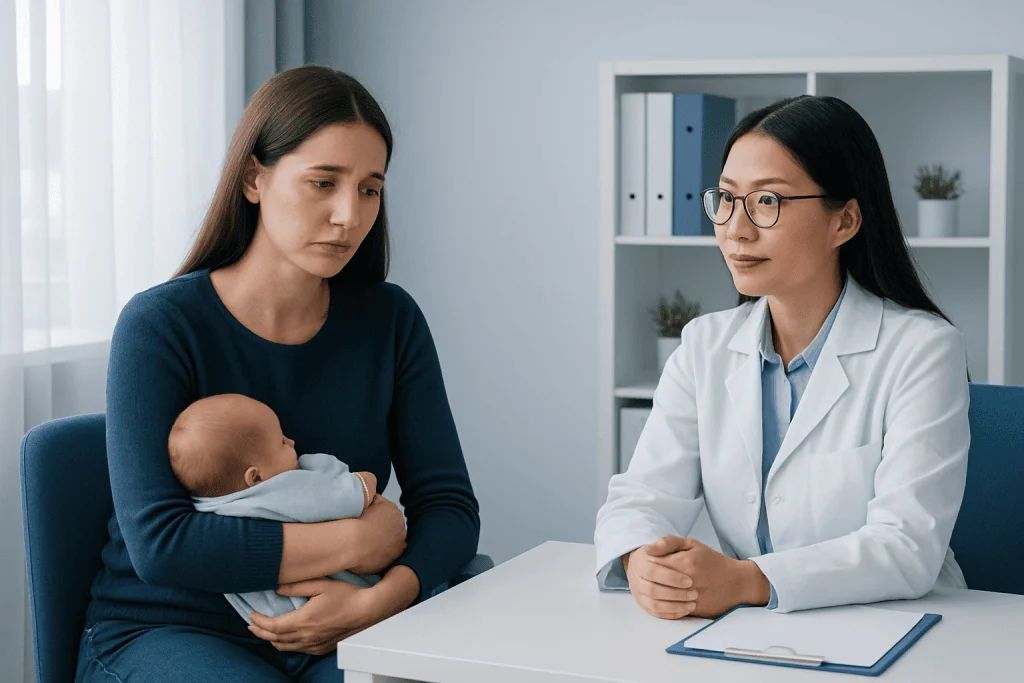
Postpartum depression does not have one single cause. It is usually linked to a combination of physical, emotional, and social factors. After delivery, levels of pregnancy-related hormones change quickly. At the same time, recovery from birth, sleep deprivation, pain, feeding challenges, and the demands of caring for a newborn can place significant stress on the body and mind.
Personal and family history also matter. A previous episode of depression, anxiety, bipolar disorder, or postpartum depression can raise the risk. Stressful life events, relationship difficulties, financial strain, lack of support, a traumatic birth experience, pregnancy complications, or a baby needing special medical care may also contribute. Some women feel isolated or disappointed when early motherhood does not match their expectations.
Risk can be higher in people with a history of anxiety or other mood conditions, but postpartum depression can occur even without any known risk factors. That is why awareness is important for every new mother and family. Recognizing symptoms early helps people seek support before distress becomes more severe.
How Postpartum Depression Is Diagnosed
Diagnosis begins with a conversation with a qualified healthcare professional, such as an obstetrician, family doctor, midwife, psychiatrist, or psychologist. The clinician will ask about mood, sleep, appetite, energy, anxiety, bonding, functioning at home, and any thoughts of self-harm. They may also use a simple screening questionnaire to better understand symptom severity.
The doctor will consider how long symptoms have lasted and whether they are affecting daily life. Because some medical problems can worsen low mood or fatigue after childbirth, evaluation may also include checking for conditions such as anemia, thyroid problems, medication effects, or complications from delivery. This helps ensure that treatable physical contributors are not missed.
It is especially important to tell a clinician about any past history of depression, bipolar disorder, panic attacks, or trauma. Bipolar disorder requires a different treatment approach than unipolar depression, and a careful history supports safe care. Honest discussion is valuable, even when symptoms feel embarrassing or difficult to describe.
If there are thoughts of self-harm, thoughts of harming the baby, severe panic, inability to sleep for extended periods, or symptoms such as hearing voices or extreme confusion, urgent assessment is needed right away.
Treatment Options and Recovery
Postpartum depression is treatable, and many women improve with the right combination of support. Treatment depends on symptom severity, personal history, breastfeeding plans, safety concerns, and what kind of help is available at home. Mild to moderate symptoms are often treated with talking therapies such as cognitive behavioral therapy or interpersonal therapy, along with practical support and close follow-up.
When symptoms are moderate to severe, a doctor may recommend medication in addition to therapy. Decisions about antidepressants are individualized, especially during breastfeeding, and should be made with a qualified clinician who can explain benefits and possible risks. In some cases, referral for psychiatric care or coordinated psychological support may be helpful.
Recovery is rarely about one step alone. Helpful measures can include protecting sleep whenever possible, accepting hands-on help with meals and baby care, reducing pressure to do everything perfectly, and staying connected with supportive people. Structured counseling, peer support groups, and regular medical follow-up often improve confidence as well as mood.
Severe depression, postpartum psychosis, or a risk of harm may require urgent hospital-based care to keep both mother and baby safe. Near the end of the care pathway, some families may also benefit from broader rehabilitation support that addresses emotional recovery, daily functioning, and adjustment after a physically and mentally demanding birth experience. Acibadem International’s multidisciplinary specialists in JCI-accredited hospitals diagnose and treat postpartum mental health conditions for international patients.
Self-care, Family Support, and Prevention
Self-care is not a replacement for treatment, but it can support recovery. New mothers may benefit from setting very small goals, such as eating regularly, taking short walks if medically cleared, resting when help is available, and speaking openly with one trusted person each day. Lowering unrealistic expectations can reduce guilt and pressure.
Partners, relatives, and friends often notice changes before the mother herself recognizes them. Practical help can be more useful than general advice. This may include holding the baby while the mother sleeps, preparing food, attending appointments together, helping with household tasks, or listening without judgment. Compassion matters; criticism usually makes symptoms harder to discuss.
Prevention is not always possible, but risk may be reduced by planning support in advance, especially for women with a prior mental health history. Discussing emotional well-being during pregnancy, arranging postpartum check-ins, learning the difference between baby blues and depression, and asking for help early can all be protective. Women with previous postpartum depression should let their care team know before delivery so they can create a monitoring plan.
When New Mothers Should Seek Professional Help
Professional help should be sought when symptoms of sadness, anxiety, hopelessness, panic, irritability, or emotional numbness last more than two weeks, are getting worse, or make daily life feel unmanageable. A mother does not need to wait until symptoms become severe. Early support often leads to a smoother recovery and less disruption to bonding, sleep, and routine.
Medical advice is also important if the mother feels disconnected from the baby, cannot enjoy anything, struggles to eat or sleep even when given the chance, or feels unable to cope. Family members should encourage evaluation if they notice marked withdrawal, frequent crying, unusual fearfulness, or comments that suggest guilt or worthlessness.
Emergency help is needed immediately if there are thoughts of suicide, thoughts of harming the baby, hearing or seeing things others do not, extreme confusion, or behavior that seems unsafe. In these situations, family members should not leave the mother alone and should contact emergency services or go to the nearest emergency department.
Seeking help is a sign of strength and care for both mother and child. With timely assessment, evidence-based treatment, and family support, most women improve and regain a sense of stability, confidence, and connection.
Frequently asked questions
How is postpartum depression different from the baby blues?
The baby blues usually begin soon after birth and often improve within about two weeks. Postpartum depression lasts longer, feels more intense, and can interfere with sleep, bonding, self-care, or daily responsibilities. If symptoms persist or worsen, a professional assessment is recommended.
Can postpartum depression start months after giving birth?
Yes. Although it often begins in the first weeks after delivery, postpartum depression can develop later in the first year. A mother should seek help whenever symptoms appear, even if the baby is no longer a newborn.
Is postpartum depression caused by being a bad mother?
No. Postpartum depression is a medical condition influenced by hormonal changes, sleep disruption, stress, and personal vulnerability. It is not a sign of weakness, failure, or lack of love for the baby.
Can breastfeeding mothers receive treatment for postpartum depression?
Yes. Many breastfeeding mothers can be treated safely with therapy, support strategies, and, when needed, medication chosen with a doctor’s guidance. Treatment decisions are individualized to balance the mother’s health needs and feeding plans.
What should a partner or family member do if they are worried?
They should speak gently, listen without judgment, and encourage the mother to contact a healthcare professional. Practical support, such as helping with baby care, meals, and appointments, can make it easier to accept help. If there are safety concerns, urgent medical care is needed immediately.
When is postpartum depression an emergency?
It is an emergency if there are thoughts of self-harm, thoughts of harming the baby, hallucinations, severe confusion, or behavior that seems disconnected from reality. These symptoms may signal postpartum psychosis or severe depression and require immediate medical attention.
References
- World Health Organization
- American College of Obstetricians and Gynecologists
- National Institute of Mental Health
- Centers for Disease Control and Prevention
- Royal College of Psychiatrists
This article is for general information only and is not a substitute for professional medical advice. Please consult a qualified doctor about your individual situation.
Depression in Turkey — costs, top hospitals & a free quote
JCI-accredited · board-certified surgeons · reply within 24h
Add us as a Preferred Source to see more of our trusted health content across Google Search, AI Overviews and Discover.