POTS: Fast Heart Rate on Standing, Causes, and Treatment Options

POTS causes an unusually fast heart rate after moving to an upright position. Common symptoms include dizziness, palpitations, fatigue, weakness, and trouble concentrating.
Key Takeaways
- POTS causes an unusually fast heart rate after moving to an upright position.
- Common symptoms include dizziness, palpitations, fatigue, weakness, and trouble concentrating.
- Diagnosis is based on symptoms, heart rate changes with standing, and tests to rule out other causes.
- Treatment often includes fluids, salt intake guidance, compression garments, exercise, and sometimes medication.
- Most people need an individualized care plan because symptoms and triggers vary from person to person.
POTS, or postural orthostatic tachycardia syndrome, is a condition in which the heart rate rises abnormally after standing up. It can cause dizziness, fatigue, palpitations, and brain fog, but many people improve with a combination of lifestyle changes, rehabilitation, and medical care.
Overview
POTS stands for postural orthostatic tachycardia syndrome. It is a disorder of the autonomic nervous system, the system that helps regulate automatic body functions such as heart rate, blood pressure, breathing, and digestion. In POTS, the heart rate increases too much when a person stands up, often leading to symptoms that can affect daily life.
Many people with POTS describe feeling unwell when upright and better when lying down. Symptoms can range from mild to quite disruptive, and they may come and go. Although POTS is not simply “feeling faint,” it can overlap with lightheadedness and exercise intolerance and may be confused with anxiety, dehydration, or other heart and nervous system conditions.
POTS can affect teenagers and adults, and it is seen more often in females. Some people develop symptoms after a viral illness, surgery, pregnancy, or a period of inactivity, while others have a more gradual onset. Because symptoms vary widely, a careful medical assessment is important.
With the right diagnosis and a structured treatment plan, many patients learn to manage POTS successfully. Care usually focuses on improving circulation, reducing triggers, building physical tolerance, and addressing any related medical problems.
Symptoms of POTS
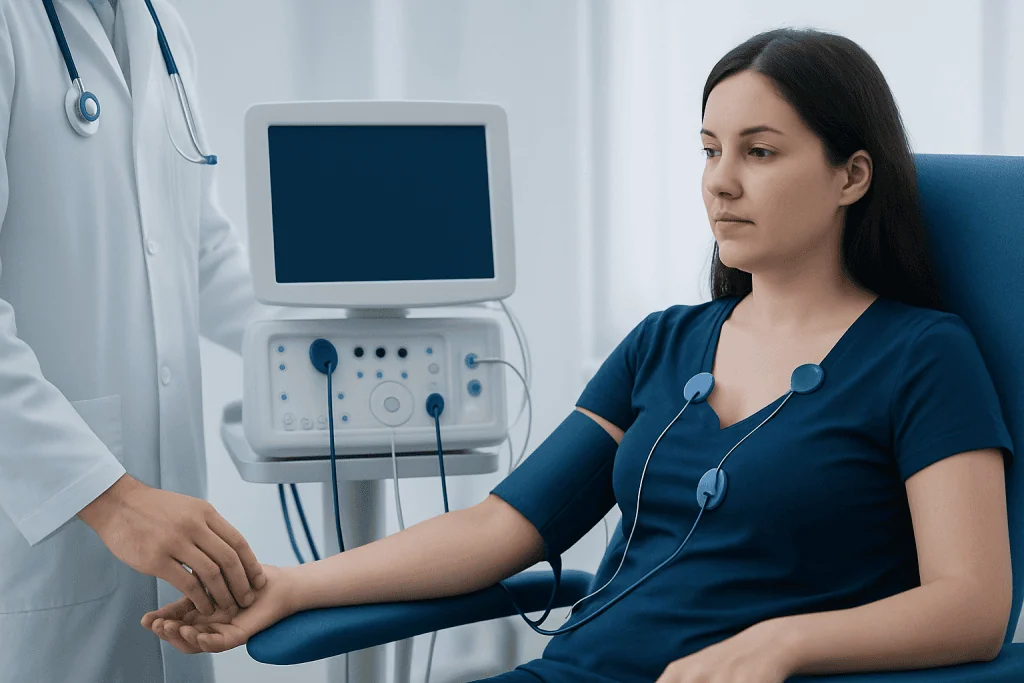
The hallmark feature of POTS is a fast heart rate after standing. This may happen within a few minutes of getting up from bed, standing in a queue, showering, or remaining upright for too long. The increase in heart rate can be accompanied by a wide range of symptoms, some of which are not obviously related to the heart.
Common symptoms include dizziness, lightheadedness, palpitations, shakiness, weakness, unusual fatigue, and shortness of breath. Many people also experience “brain fog,” meaning difficulty concentrating, thinking clearly, or remembering information. Headaches, nausea, exercise intolerance, blurred vision, chest discomfort, and feeling close to fainting may also occur.
Symptoms often worsen with heat, dehydration, long periods of standing, large meals, alcohol, stress, or illness. Some people have true fainting, but many do not. Others may notice changes in digestion, sweating, sleep, or temperature regulation, which can reflect broader autonomic dysfunction.
- Rapid heartbeat after standing
- Dizziness or near-fainting
- Fatigue and reduced stamina
- Brain fog and poor concentration
- Palpitations, tremor, or weakness
- Symptoms that improve when lying down
Causes and Risk Factors

POTS is not a single disease with one cause. Instead, it is considered a syndrome, meaning a group of symptoms that can arise from different underlying mechanisms. In some people, the problem involves abnormal regulation of blood vessel tone, causing blood to pool in the legs and lower body on standing. In others, low blood volume, increased adrenaline activity, deconditioning, or changes in nerve function may play a role.
POTS may begin after a trigger such as a viral infection, surgery, trauma, pregnancy, or a long period of bed rest. Some patients have associated conditions such as joint hypermobility syndromes, migraine, autoimmune disorders, chronic fatigue symptoms, or digestive motility problems. In certain cases, POTS can develop alongside or after other conditions affecting the autonomic nervous system.
Risk factors do not mean that a person will definitely develop POTS, but they can make the condition more likely. These include adolescence or young adulthood, female sex, recent illness, dehydration, and prolonged inactivity. Certain medications may worsen symptoms by lowering blood pressure, increasing heart rate, or causing fluid loss.
Because symptoms can overlap with other causes of rapid heartbeat or dizziness, doctors often evaluate for anemia, thyroid disease, heart rhythm disorders, medication side effects, and anxiety-related symptoms. Related autonomic conditions may also need consideration, including dysautonomia.
How POTS Is Diagnosed
Diagnosing POTS starts with a detailed medical history and physical examination. The doctor will ask when symptoms occur, what makes them worse or better, whether there has been fainting, and whether there are possible triggers such as infection or prolonged inactivity. Medication use, fluid intake, menstrual history, and related symptoms such as headaches, digestive problems, or joint hypermobility may also be discussed.
A key part of diagnosis is measuring heart rate and blood pressure when lying down and then after standing. In general, POTS is considered when symptoms of orthostatic intolerance are present and the heart rate rises significantly within 10 minutes of standing without a major drop in blood pressure that would suggest classic orthostatic hypotension. Doctors may use an active stand test or a tilt table test to assess this response more precisely.
Additional tests are often used to rule out other causes. These may include blood tests for anemia, thyroid function, inflammation, electrolytes, and vitamin deficiencies, as well as an electrocardiogram. Depending on symptoms, further evaluation might involve heart rhythm monitoring, echocardiography, or autonomic testing. If there are persistent palpitations or concern about rhythm problems, assessment may overlap with work-up for arrhythmia.
Because POTS can look different from one patient to another, diagnosis may take time. It is helpful for patients to keep a symptom diary, note posture-related triggers, and record fluid intake and daily functioning. This information can support a clearer and more individualized diagnosis.
Treatment Options
Treatment for POTS is individualized and often combines non-drug and drug approaches. The main goals are to improve symptoms, help the body tolerate upright posture better, and support a return to everyday activities. Doctors usually begin with conservative measures, especially if symptoms are strongly linked to dehydration, low conditioning, or prolonged standing.
Non-drug treatment often includes increasing fluid intake and, when appropriate, increasing salt intake under medical guidance to help expand blood volume. Compression stockings or abdominal compression garments may reduce blood pooling in the lower body. Patients are usually advised to rise gradually, avoid prolonged standing, and identify triggers such as heat, alcohol, and very large meals.
Structured exercise is one of the most important parts of care. Many programs begin with recumbent or semi-recumbent exercise, such as cycling, rowing, or swimming, then progress slowly to upright activity. This kind of graded conditioning can improve circulation and stamina over time and may be supported through cardiac rehabilitation or guided physical therapy in selected patients.
Medication may be considered when lifestyle measures alone are not enough. Depending on the patient, doctors may use medicines that help retain fluid, tighten blood vessels, slow the heart rate, or reduce excessive adrenaline effects. The choice depends on symptoms, blood pressure, heart rate pattern, and other health conditions. When diagnosis is uncertain or symptoms involve prominent palpitations, evaluation by specialists in cardiology or electrophysiology can help tailor treatment safely.
Prevention and Self-care
There is no guaranteed way to prevent POTS, because it can follow many different triggers and may be related to underlying autonomic dysfunction. However, self-care plays a major role in reducing symptom flares and improving day-to-day function. Building regular habits can make the condition more manageable, especially during busy periods, travel, or hot weather.
Practical steps often include drinking enough fluids throughout the day, following a clinician’s advice on salt intake, and avoiding situations that trigger symptoms. Some people do better with smaller, more frequent meals rather than large heavy meals. Getting up slowly from bed, crossing the legs while standing, and tightening the leg muscles can sometimes reduce lightheadedness.
Regular exercise is important, but it usually needs to be gradual and realistic. Starting too fast can worsen symptoms and be discouraging. Many patients benefit from a paced approach that prioritizes consistency over intensity. Good sleep habits, stress management, and treatment of related issues such as migraine, anemia, or digestive symptoms can also support recovery.
It can be helpful to plan ahead for school, work, or travel. Carrying water, taking breaks from standing, wearing compression garments, and using cooling strategies in hot environments may reduce symptom episodes. A healthcare professional can help adapt these measures to the patient’s age, occupation, and overall health.
When to See a Doctor
Anyone who has ongoing dizziness, a racing heartbeat on standing, near-fainting, fainting, or unexplained fatigue should seek medical advice. These symptoms are not always due to POTS, and some causes need prompt assessment. A doctor can check for other conditions such as heart rhythm problems, low blood pressure, anemia, thyroid disorders, or medication side effects.
Urgent medical attention is important if symptoms are accompanied by chest pain, severe shortness of breath, injury from fainting, new neurological symptoms, or a very irregular heartbeat. It is also important to seek care if symptoms suddenly become much worse or interfere significantly with hydration, mobility, school, or work.
Because POTS can overlap with heart, nerve, and circulation disorders, patients may benefit from multidisciplinary care. Near the end of the diagnostic process or when symptoms are complex, specialist review can help clarify the plan. Acibadem International’s multidisciplinary specialists and JCI-accredited hospitals diagnose and treat POTS for international patients when coordinated specialty care is needed.
Early evaluation can be reassuring as well as practical. Even when symptoms are persistent, many people improve with a clear diagnosis, attention to triggers, and a treatment plan that is adjusted over time.
Frequently asked questions
What does POTS feel like?
POTS often feels like a racing heart, dizziness, weakness, or shakiness after standing up. Many people also describe fatigue, brain fog, nausea, or feeling better when they lie down.
Is POTS a heart disease?
POTS is not usually considered a structural heart disease. It is more often a disorder of autonomic regulation that affects heart rate and circulation when a person is upright.
Can POTS go away?
Some people improve substantially over time, especially with treatment and careful self-management. Others continue to have symptoms for longer periods, but many still achieve better daily functioning with an individualized plan.
How is POTS different from low blood pressure?
In POTS, the main feature is an excessive rise in heart rate after standing. Some people may also have changes in blood pressure, but the condition is not defined simply by low blood pressure alone.
What can make POTS symptoms worse?
Common triggers include dehydration, heat, long periods of standing, illness, alcohol, and large meals. Lack of sleep, stress, and sudden increases in activity can also make symptoms more noticeable.
Do all people with POTS faint?
No, not everyone with POTS faints. Many people feel lightheaded or close to fainting without actually losing consciousness.
References
- National Institutes of Health
- Centers for Disease Control and Prevention
- American Heart Association
- National Institute of Neurological Disorders and Stroke
- Heart Rhythm Society
This article is for general information only and is not a substitute for professional medical advice. Please consult a qualified doctor about your individual situation.
Heart care in Turkey — expert evaluation and treatment
JCI-accredited · board-certified surgeons · reply within 24h
Add us as a Preferred Source to see more of our trusted health content across Google Search, AI Overviews and Discover.
Check your numbers in seconds
BMI, calories, due date, blood pressure and 30+ more clinical calculators — free, instant, doctor-reviewed ranges.