Preauricular Lymph Node: A Complete Medical Overview

The preauricular lymph node sits in front of the ear and helps filter lymph fluid from nearby tissues. Swelling often happens because of minor infections or inflammation affecting the ear, eye, scalp, or skin of the face.
Key Takeaways
- The preauricular lymph node sits in front of the ear and helps filter lymph fluid from nearby tissues.
- Swelling often happens because of minor infections or inflammation affecting the ear, eye, scalp, or skin of the face.
- A doctor focuses on the cause of the swelling, not just the lymph node itself.
- Lymph nodes that are very painful, keep growing, feel hard and fixed, or last several weeks should be assessed medically.
- Treatment may include observation, medicines for infection or inflammation, and tests when the cause is unclear.
A preauricular lymph node is a small immune-system gland located just in front of the ear. It can become tender or enlarged when the body is reacting to infection or inflammation in nearby areas such as the ear, scalp, face, eyelids, or eyes, and it is usually a sign to look for an underlying cause rather than a problem by itself.
What the Preauricular Lymph Node Is
The preauricular lymph node is a small lymph node located just in front of the ear. Lymph nodes are part of the body’s immune and drainage system. They filter lymph fluid and help the immune system recognize infections, inflammation, and other changes in nearby tissues.
In practical terms, a preauricular lymph node may become noticeable when it enlarges. Many people first find it as a small lump near the front of the ear, often while washing the face, applying skincare products, or touching an area that feels sore. In many cases, the lump itself is not the primary problem; it is a clue that the body is responding to something in the region it drains.
This node typically drains areas around the outer ear, eyelids, conjunctiva, temple, and nearby facial skin. Because of that, swelling may be linked to common conditions such as an eye infection, irritated scalp, ear inflammation, or a minor skin infection. Understanding this local drainage pattern helps explain why a doctor asks about symptoms beyond the lump itself.
How It May Feel and What Symptoms Can Happen
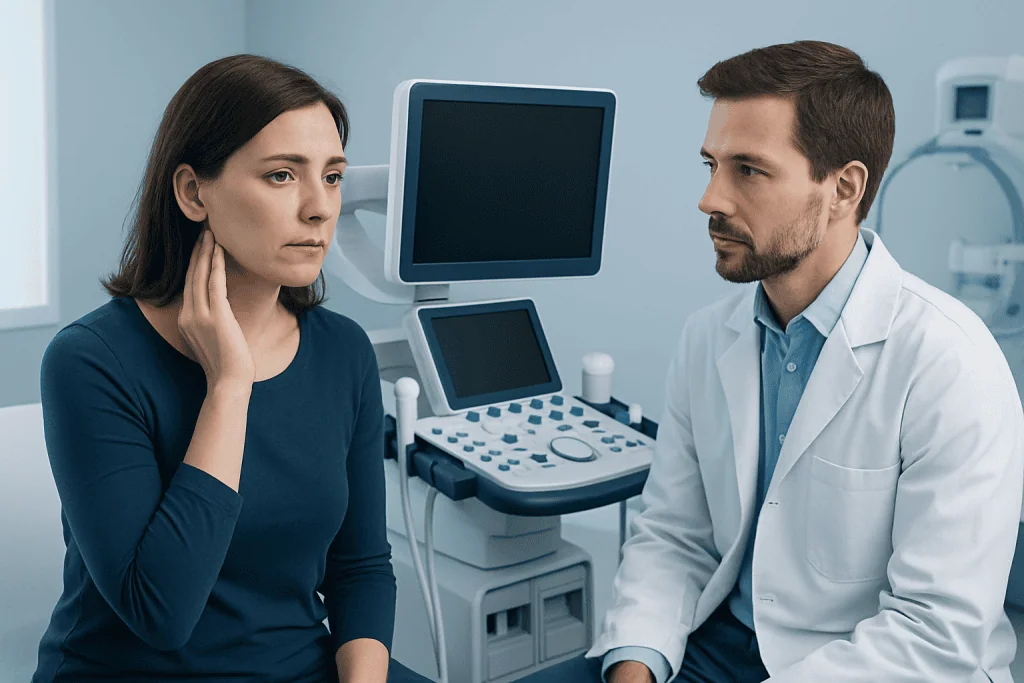
A swollen preauricular lymph node may feel like a small, round or oval bump in front of the ear. It can be soft, rubbery, or slightly firm. Some people notice tenderness when touching it, while others have no pain at all. The size may range from barely noticeable to more obvious depending on the underlying cause.
Symptoms often come from the condition that triggered the swelling rather than from the lymph node itself. There may be ear pain, a sore throat, redness of the eye, crusting of the eyelids, scalp irritation, acne-like lesions, or a skin rash on the face. Fever, tiredness, or general discomfort can occur when an infection is more active.
A careful symptom review can be helpful. Common features include:
- Tenderness or sensitivity in front of the ear
- A movable small lump near the ear
- Redness, warmth, or swelling of nearby skin
- Eye irritation, discharge, or pink eye symptoms
- Ear discomfort or signs of local infection
- Scalp sores, insect bites, or skin inflammation
If the node is enlarged without any clear local symptoms, a clinician may consider a wider range of possible causes and may examine other lymph node areas as well.
Why a Preauricular Lymph Node Swells

The most common reason for preauricular lymph node swelling is a nearby infection or inflammatory process. Viral illnesses can trigger mild enlargement, especially if the eyes, nose, throat, or upper respiratory tract are involved. Bacterial skin infections, inflamed hair follicles, or irritation around the ear and temple can also cause the node to react.
Eye-related conditions are a classic cause because the preauricular area helps drain tissues around the eyelids and conjunctiva. Viral or bacterial conjunctivitis, eyelid inflammation, and infections of nearby skin may lead to a small, tender node in front of the ear. Ear conditions may also be involved, particularly when there is external ear irritation or local infection. Broader ENT problems are sometimes evaluated alongside symptoms related to ear infection.
Less commonly, persistent enlargement may be related to autoimmune disease, unusual infections, or, in some cases, cancer affecting lymphatic tissue or nearby structures. This does not mean that every enlarged node is serious. Most are caused by benign and short-lived conditions. However, a node that is hard, fixed in place, steadily enlarging, or associated with unexplained weight loss, night sweats, or prolonged fever deserves prompt medical evaluation.
How Doctors Evaluate It
Evaluation starts with a medical history and physical examination. A doctor usually asks when the swelling began, whether it is painful, whether it changes in size, and whether there are symptoms involving the eye, ear, scalp, face, teeth, or throat. Recent colds, skin irritation, insect bites, scratches, travel, and new medications may also be relevant.
During the examination, the clinician assesses the size, texture, mobility, and tenderness of the node. Nearby tissues are checked for infection or inflammation, and other lymph node regions in the neck, under the jaw, and elsewhere may also be examined. This helps determine whether the issue is localized or part of a broader process.
If the cause is not obvious or if symptoms suggest a more complex problem, tests may be recommended. These can include blood tests, throat or eye swabs, or imaging such as ultrasound to look at the node and surrounding tissues in more detail. In selected cases, a doctor may arrange advanced imaging or a tissue sample if the node stays enlarged or has concerning features.
Treatment Depends on the Underlying Cause
There is no single treatment for a preauricular lymph node because the node is reacting to another condition. If the cause is a mild viral illness, the best approach may simply be watchful waiting, rest, fluids, and symptom relief while the body recovers. The node may take some time to return to its usual size even after the original illness improves.
If a bacterial infection is suspected, a doctor may prescribe antibiotic treatment. When swelling is linked to inflammation of the skin, scalp, or eyelids, treatment may include local skin care, warm compresses, or medicines targeted to the affected area. If eye symptoms are present, assessment by an eye specialist may be appropriate, especially if there is pain, discharge, or vision change.
Persistent or unclear cases may need more focused investigation. Imaging, specialist ENT review, or additional procedures can help identify uncommon causes. If a lump appears to arise from salivary tissue, skin structures, or deeper neck tissue rather than a lymph node, doctors may consider related conditions such as parotid gland tumor and tailor care accordingly.
At the appropriate stage, treatment might involve coordinated care across ENT, infectious disease, dermatology, ophthalmology, or surgery. If a concerning mass needs further assessment, options such as biopsy may be discussed to clarify the diagnosis.
Self-Care, Monitoring, and Prevention
For a mild, recently swollen node with a clear short-term cause, gentle self-care may be enough while waiting for improvement. It is best not to squeeze, repeatedly press, or massage the area, as this can increase irritation and make it harder to tell whether the node is naturally improving. A warm compress may help with local discomfort if recommended by a clinician.
Preventive steps focus on reducing infections and inflammation in the areas the node drains. Good hand hygiene, avoiding touching the eyes with unwashed hands, managing scalp and skin irritation early, and treating ear or eyelid symptoms promptly can all be helpful. People who wear contact lenses should follow hygiene guidance carefully to lower the risk of eye infections.
Monitoring matters. A person can note whether the node is shrinking, staying the same, or enlarging over time, and whether new symptoms appear. Acibadem International’s multidisciplinary specialists and JCI-accredited hospitals diagnose and treat conditions affecting lymph nodes, the ear, eye, skin, and nearby structures for international patients.
When to Seek Medical Care
Medical care is recommended if a preauricular lymph node is very painful, rapidly enlarging, or associated with significant redness and warmth of the overlying skin. A doctor should also assess swelling accompanied by high fever, worsening illness, eye pain, vision changes, or ear discharge, since these symptoms may point to a condition that needs timely treatment.
It is also sensible to seek care if the lump lasts more than a few weeks, keeps returning, or feels hard and fixed rather than soft and movable. General warning signs include unexplained weight loss, night sweats, persistent fever, or enlarged lymph nodes in multiple parts of the body. These features do not confirm a serious disease, but they do mean the cause should be evaluated carefully.
When the diagnosis is uncertain, doctors may combine examination with imaging or other tests to guide next steps. Early assessment is especially helpful when the swelling is affecting daily comfort or when there are symptoms involving the eye, ear, or surrounding facial tissues.
Frequently asked questions
Is a preauricular lymph node normal to have?
Yes. Preauricular lymph nodes are a normal part of the lymphatic system and are located in front of the ear. They often go unnoticed unless they become enlarged while responding to infection or inflammation nearby.
What causes a swollen lymph node in front of the ear?
Common causes include infections or irritation involving the eye, eyelids, outer ear, scalp, or nearby facial skin. Viral illnesses, bacterial skin infections, and conjunctivitis are frequent examples. Less often, persistent swelling may need evaluation for other inflammatory or more serious causes.
How long can a swollen preauricular lymph node last?
It may improve within days to a few weeks, depending on the cause. Sometimes the underlying infection resolves first and the node takes longer to return to its usual size. If it remains enlarged beyond several weeks or continues to grow, medical review is important.
Is a swollen preauricular lymph node always a sign of infection?
No. Infection is common, but inflammation, immune reactions, and other local conditions can also enlarge the node. In a smaller number of cases, doctors investigate for less common causes if the swelling is persistent or has concerning features.
Should a person touch or massage the lump to help it go away?
Usually not. Repeated pressing or massaging can irritate the area and make the swelling feel worse. It is generally better to monitor the lump gently and seek advice if it is painful, growing, or not improving.
When is a preauricular lymph node concerning?
It is more concerning when it is hard, fixed, rapidly enlarging, or associated with fever, weight loss, night sweats, eye pain, or vision change. A node that persists for several weeks without a clear explanation should also be examined by a qualified doctor.
References
- American Academy of Otolaryngology–Head and Neck Surgery
- Cleveland Clinic
- MedlinePlus
- National Health Service
- Merck Manual Consumer Version
This article is for general information only and is not a substitute for professional medical advice. Please consult a qualified doctor about your individual situation.
Hair transplant in Turkey — costs, graft counts & a free assessment
JCI-accredited · board-certified surgeons · reply within 24h
Add us as a Preferred Source to see more of our trusted health content across Google Search, AI Overviews and Discover.

Plastic, Reconstructive & Aesthetic Surgery
Reconstructive and aesthetic procedures for the face and body, performed by experienced surgeons.
35 specialists in this unitMore from the Health Library



Related Specialists

Assoc. Prof. Dr. Fatih Aygün
Pediatric Intensive Care Unit
Prof. Dr. Fuat Demirkıran
Gynecology & Obstetrics
Dr. Burcu Uprak
Internal Medicine
Dr. Hatem Doğu
Anesthesiology