Preparing for a Neurology Sleep Appointment: Do You Need to Sleep Less First?

A routine neurology sleep consultation usually does not require intentional sleep deprivation. Some sleep tests, especially a multiple sleep latency test, may involve special instructions about sleep beforehand.
Key Takeaways
- A routine neurology sleep consultation usually does not require intentional sleep deprivation.
- Some sleep tests, especially a multiple sleep latency test, may involve special instructions about sleep beforehand.
- Patients should follow the exact directions from their sleep clinic rather than general advice from the internet.
- A sleep diary, medication list, and symptom history often help more than trying to change sleep the night before.
- If instructions are unclear, contacting the clinic in advance is the safest way to prepare.
Most people do not need to sleep less before a neurology sleep appointment unless their doctor or sleep lab gives specific instructions. Preparation depends on whether the visit is a consultation, an overnight sleep study, or a daytime nap test.
Overview: Do people need to sleep less before a neurology sleep appointment?
In most cases, the answer is no. For a standard neurology sleep appointment, patients are usually advised to keep their usual routine and arrive ready to discuss their symptoms, sleep habits, medical history, and any concerns about daytime sleepiness, snoring, insomnia, unusual movements, or possible breathing problems during sleep.
The advice can be different if the appointment includes a sleep test. Overnight polysomnography, home sleep apnea testing, electroencephalography, or a daytime multiple sleep latency test may each have their own preparation rules. In some situations, a clinic may ask a patient to avoid naps, limit caffeine, or follow a carefully monitored sleep schedule for several days before testing.
Trying to sleep less without being told to do so can sometimes make results harder to interpret. Intentional sleep deprivation may increase fatigue, affect attention and mood, and change the appearance of certain sleep symptoms. For that reason, it is usually best to avoid major changes unless a clinician specifically recommends them.
If a person is being evaluated for symptoms such as loud snoring, gasping during sleep, restless legs, abnormal sleep behaviors, or extreme daytime sleepiness, the main goal is to capture typical sleep patterns rather than an artificially disrupted night. A sleep apnea evaluation, for example, is often most useful when the patient follows their normal routine as closely as possible.
What happens at a neurology sleep appointment?
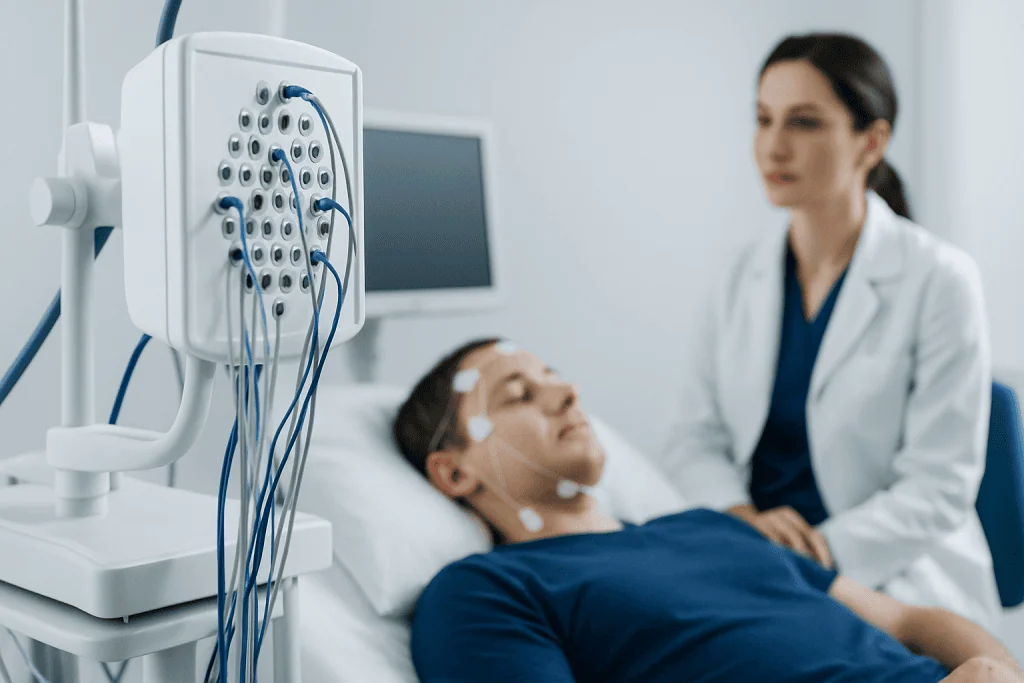
A neurology sleep appointment often starts with a detailed conversation. The clinician may ask when symptoms began, whether they happen every night or only sometimes, and how sleep affects daytime function, memory, concentration, mood, and safety. Bed partners or family members may be helpful because they sometimes notice snoring, pauses in breathing, leg movements, or dream-enactment behaviors that the patient does not remember.
The appointment may also include a neurological examination and a review of medicines, supplements, caffeine intake, alcohol use, work schedule, and sleep environment. A doctor may ask about headaches, seizures, fainting, anxiety, depression, chronic pain, or other conditions that can influence sleep.
Depending on the symptoms, the next step may be a sleep diary, actigraphy, blood tests, an overnight study, or another assessment. Some patients are referred for an overnight sleep study if there is concern about breathing changes, unusual nighttime events, or unexplained daytime sleepiness. Others may need EEG testing if episodes during sleep could be related to seizures rather than a primary sleep disorder.
Because several conditions can overlap, the appointment is often less about one single test and more about understanding the full picture. Sleep neurologists consider the brain, breathing, movement, behavior, and daily rhythm together when deciding what type of evaluation is most appropriate.
When sleep restriction might be recommended

Although most people should not purposely sleep less before a visit, there are a few situations in which a clinic may give structured instructions. These instructions are typically designed for a specific test and are meant to improve the accuracy of the results. They should come directly from the sleep center or treating clinician.
For example, a patient being evaluated for narcolepsy or severe daytime sleepiness may be asked to keep a regular sleep schedule for one to two weeks before testing, often with a sleep diary or actigraphy. If a multiple sleep latency test is planned after an overnight study, the clinic may ask the patient to avoid caffeine, alcohol, or naps for a certain period. The goal is not casual sleep deprivation but a controlled preparation process.
Sometimes people with chronic insomnia are told to follow a form of sleep restriction therapy, but this is a treatment strategy rather than a general rule for appointment preparation. It is carefully individualized and should not be started independently the night before an evaluation. In fact, abruptly cutting back sleep can worsen fatigue and make it harder to describe usual symptoms clearly.
If a patient has received written instructions that seem confusing, the safest approach is to call the clinic. It is especially important to clarify directions if the person has a neurological condition, uses sedating medication, has a seizure disorder, or needs to drive a long distance to the appointment.
How to prepare the right way
The most helpful preparation is practical rather than dramatic. Patients should bring a list of symptoms, medications, vitamins, and supplements; details about bedtime and wake time; and notes about naps, snoring, witnessed breathing pauses, nightmares, unusual movements, or episodes of confusion at night. If available, a short phone recording of snoring or sleep behaviors can sometimes be useful, as long as it is safe and respectful.
Keeping a one- to two-week sleep diary is often valuable. This can include the time a person went to bed, how long it took to fall asleep, how often they woke up, when they got out of bed, and how sleepy they felt during the day. A diary helps the clinician see patterns that may point toward insomnia, circadian rhythm problems, sleep apnea, or a hypersomnia disorder.
Unless told otherwise, it is usually best to maintain a normal sleep schedule before the appointment. Patients should not stop prescription medicines on their own. Some drugs affect sleep stages or alertness, but changing them without medical guidance can be risky and may confuse the evaluation even more.
For testing, clinics may ask patients to arrive with clean, dry hair and no heavy styling products so sensors can be applied more easily. Depending on the reason for evaluation, a patient may also be assessed for conditions such as epilepsy or referred for a neurological assessment as part of broader sleep-neurology care.
What to avoid before the visit or sleep test
Without specific instructions, patients should avoid making last-minute changes that are likely to alter their usual sleep. Staying up unusually late, using more caffeine than normal, drinking alcohol to “sleep better,” or taking extra sleep aids can all change symptoms and may affect test interpretation. The aim is to show the care team what sleep is typically like, not what it looks like under unusual circumstances.
It is also wise to avoid relying on internet advice that treats every sleep appointment the same. Preparation differs between a simple office consultation, home testing, in-lab polysomnography, and daytime sleepiness testing. What is appropriate for one person may be unhelpful or even unsafe for another.
If the patient uses CPAP, a night guard, hearing aids, glasses, or other medical devices, the clinic should be asked whether to bring them. People with diabetes, heart disease, Parkinsonism, seizure disorders, or mobility limitations may need additional planning so the visit and any testing can be carried out comfortably and safely.
Driving while intentionally sleep deprived can be dangerous. If a person has accidentally slept very little before the appointment and feels too drowsy to drive safely, it is better to arrange transport or contact the clinic than to push through the trip.
Questions patients may want to ask the clinic
Patients often feel more prepared when they ask a few clear questions ahead of time. Helpful topics include whether the appointment is only a consultation or includes testing, whether they should keep their normal schedule, whether they should avoid naps, and whether caffeine, alcohol, or nicotine should be limited on the day of testing.
It can also help to ask whether routine medications should be taken as usual, whether a bed partner can come, how long the visit will last, and what to bring for an overnight stay. If there is any chance that symptoms are related to seizures, abnormal movements, or dream-enactment behaviors, patients may ask whether additional neurological monitoring is expected.
Another useful question is what outcome the team is trying to measure. Some tests look for breathing events, some for abnormal brain activity, and others for how quickly a person falls asleep during the day. Knowing the purpose of the test often makes the preparation instructions feel more logical and easier to follow.
For international patients or those with complex symptoms, coordinated care can be especially important. Near the end of the evaluation pathway, patients may choose centers such as Acibadem International, where multidisciplinary specialists in JCI-accredited hospitals diagnose and treat sleep-related neurological conditions for international patients.
When to contact a doctor sooner
Some sleep symptoms deserve timely medical attention rather than waiting for a routine appointment. Patients should seek prompt advice if they have severe daytime sleepiness that affects driving or work safety, repeated choking or gasping during sleep, episodes of confusion or injury at night, suspected seizures, or sudden weakness triggered by emotions. These features may point to conditions that need earlier assessment.
Urgent evaluation is also important when sleep problems appear together with chest pain, fainting, new neurological symptoms, major behavior changes, or signs of a serious breathing problem. Children, older adults, and people with significant heart, lung, or neurological disease may need more individualized guidance about timing and testing.
For many people, however, a sleep appointment is a calm and step-by-step process. The most reassuring approach is to follow the clinic’s instructions, keep sleep as typical as possible unless told otherwise, and come prepared with information that helps the care team understand the whole pattern.
If there is uncertainty about whether to sleep less before the visit, the simplest rule is this: do not intentionally restrict sleep unless the sleep specialist or testing center has specifically asked for it. A quick phone call can prevent confusion and help the appointment go smoothly.
Frequently asked questions
Should someone stay awake late before a neurology sleep appointment?
Usually no. For a routine consultation, most patients should keep their normal sleep schedule unless the clinic gives different instructions. Deliberately staying awake late can make symptoms less typical and may increase fatigue the next day.
Is it different for a sleep study than for an office visit?
Yes, it can be. An office visit often needs no special preparation, while a sleep study may come with instructions about caffeine, naps, medications, hair products, or arrival time. The sleep center’s directions should always take priority.
Do patients need to avoid naps before sleep testing?
Sometimes, but only if the clinic tells them to. Certain daytime sleepiness tests are more accurate when naps are limited beforehand, while other evaluations do not require this. If instructions are unclear, the patient should ask before the test day.
Should regular medications be stopped before the appointment?
Patients should not stop prescription medications on their own. Some medicines can affect sleep or alertness, but sudden changes may be unsafe and can interfere with proper interpretation. The best approach is to review all medicines with the clinic in advance.
What should a patient bring to a neurology sleep appointment?
Helpful items include a medication list, sleep diary, notes on symptoms, and any prior sleep test results if available. For overnight testing, the clinic may also recommend comfortable sleepwear and personal essentials. A bed partner’s observations can be useful as well.
What if the person accidentally slept very little the night before?
They should still contact the clinic and explain what happened, especially if testing is planned. The team can decide whether to continue, reschedule, or adjust the interpretation. If the person feels too sleepy to drive safely, they should arrange another way to travel.
References
- American Academy of Sleep Medicine
- National Institute of Neurological Disorders and Stroke
- National Heart, Lung, and Blood Institute
- Mayo Clinic
- MedlinePlus
This article is for general information only and is not a substitute for professional medical advice. Please consult a qualified doctor about your individual situation.
Explore treatments in Turkey — costs, top hospitals & a free quote
JCI-accredited · board-certified surgeons · reply within 24h
Add us as a Preferred Source to see more of our trusted health content across Google Search, AI Overviews and Discover.