

Preparing for a Sleep Neurology Appointment: What to Track and What to Expect

A sleep diary for 1-2 weeks can help show patterns in sleep timing, awakenings, naps, and symptoms. Patients should bring a full medication and supplement list, along with any prior sleep study or medical test results.
Key Takeaways
- A sleep diary for 1-2 weeks can help show patterns in sleep timing, awakenings, naps, and symptoms.
- Patients should bring a full medication and supplement list, along with any prior sleep study or medical test results.
- The appointment often includes a detailed review of sleep habits, daytime symptoms, medical history, and a focused neurological exam.
- Family or bed partner observations can be valuable, especially for snoring, pauses in breathing, unusual movements, or dream enactment.
- Further testing may include sleep studies, actigraphy, blood tests, or neurological evaluations, depending on symptoms.
Preparing for a sleep neurology appointment can help the visit feel more organized and productive. Tracking sleep patterns, symptoms, medications, and daily habits gives the specialist useful information to understand possible sleep and neurological causes.
Overview: Why Preparation Matters
A sleep neurology appointment looks at sleep symptoms through both a sleep medicine and nervous system lens. This can be helpful when a person has concerns such as persistent insomnia, excessive daytime sleepiness, unusual movements during sleep, vivid dream enactment, morning headaches, suspected sleep apnea, or symptoms that may be linked with headaches, seizures, movement disorders, or other neurological conditions.
Preparing ahead of time gives the specialist a clearer picture of what is happening at night and during the day. Sleep problems often develop gradually, vary from one night to another, and may be affected by stress, work schedules, medications, pain, or underlying medical issues. A few simple notes collected over several days can reveal patterns that are hard to remember during a clinic visit.
Good preparation does not need to be complicated. The main goal is to bring practical information: when sleep happens, what symptoms occur, what may trigger them, and how those symptoms affect daily life. This helps the clinician decide whether the issue may involve circadian rhythm changes, breathing-related sleep problems, restless legs, parasomnias, narcolepsy, or a related neurological sleep disorder.
What to Track Before the Appointment
A sleep diary is often the most useful tool before a sleep neurology appointment. For about 1 to 2 weeks, it can help to write down bedtime, how long it seems to take to fall asleep, how many times a person wakes during the night, final wake-up time, naps, and how rested they feel in the morning. Notes about shift work, jet lag, or irregular schedules are also important because body clock changes can strongly affect sleep.
Symptoms should be tracked in plain, simple terms. Helpful details include loud snoring, pauses in breathing noticed by another person, gasping, leg discomfort, kicking, sleepwalking, talking during sleep, acting out dreams, teeth grinding, morning headaches, nighttime sweating, bedwetting, confusion on waking, or overwhelming sleepiness during the day. If symptoms do not happen every night, recording when they occur can still be valuable.
Daytime effects matter just as much as nighttime symptoms. The specialist may want to know about difficulty concentrating, memory lapses, low mood, irritability, drowsy driving, trouble staying awake during meetings, and reduced work or school performance. It also helps to track habits that influence sleep, such as caffeine, alcohol, nicotine, exercise, screen use before bed, and use of sleep aids.
- Bedtime and wake time on workdays and days off
- Night awakenings and possible triggers
- Naps and daytime sleepiness
- Snoring, breathing pauses, unusual behaviors, or movements
- Caffeine, alcohol, nicotine, and sleep medication use
- How sleep affects mood, concentration, and safety
Health Information to Bring

Bringing the right records can make the appointment more efficient. A complete list of prescription medicines, over-the-counter products, vitamins, and herbal supplements is especially important because many substances can affect sleep quality, alertness, breathing, muscle tone, or dream activity. If possible, patients should note when they take each item and whether it changed around the time symptoms began.
It is also useful to bring prior medical records related to sleep, breathing, and neurology. These may include results from a previous sleep study, CPAP reports, brain imaging, EEG testing, blood work, heart evaluations, or clinic notes from a neurologist, pulmonologist, psychiatrist, or primary care doctor. If records are not available, even a simple written summary of past diagnoses and treatments can help.
Family and bed partner observations can provide information that the patient may not notice alone. A bed partner may describe snoring, breathing pauses, repeated leg movements, dream enactment, confusion episodes, or unusual sounds during sleep. If safe and comfortable, a short phone video of an event can sometimes be helpful, especially for movements or behaviors that are hard to explain in words.
Questions the Specialist May Ask
During the visit, the specialist usually asks detailed questions about the pattern of symptoms. These may include when the sleep problem started, whether it is getting worse, how many nights per week it happens, and whether it changes with stress, travel, illness, work hours, or menstrual cycles. They may also ask about bedtime routines, bedroom environment, and whether sleep feels unrefreshing even after enough time in bed.
Questions often explore neurological symptoms as well. The clinician may ask about headaches, fainting, memory concerns, numbness, weakness, seizures, tremor, balance problems, autonomic symptoms, or changes in smell, mood, or behavior. This is because some sleep conditions overlap with neurological disorders, and some neurological conditions can disturb sleep in specific ways.
Medical history is another key part of the evaluation. Conditions such as obesity, high blood pressure, reflux, chronic pain, depression, anxiety, thyroid disease, pregnancy, menopause, and nasal obstruction can all influence sleep. The doctor may also ask about family history of sleep apnea, restless legs syndrome, narcolepsy, epilepsy, or neurodegenerative conditions. Answering as accurately as possible helps guide the next steps.
What to Expect During the Appointment
Most sleep neurology appointments begin with a conversation and review of the sleep diary, symptoms, and medical background. The specialist may use questionnaires that measure daytime sleepiness, insomnia severity, sleep behaviors, or risk factors for breathing-related sleep disorders. These tools do not replace a diagnosis, but they can help organize symptoms and identify which problems need closer evaluation.
A physical examination may follow. This may include checking blood pressure, weight, neck and airway features, heart and lung findings, and signs related to nasal blockage or enlarged tonsils. Because this is a neurology-focused visit, the clinician may also perform a brief neurological exam that looks at eye movements, muscle strength, reflexes, coordination, sensation, gait, or signs of movement disorders.
Not every patient needs testing right away. In some cases, the specialist may first recommend better sleep tracking, changes in routine, or review of current medications. In other situations, further studies are needed to clarify whether the person may have sleep apnea, insomnia, restless legs syndrome, parasomnia, narcolepsy, or another condition affecting sleep and daytime function.
Possible Tests After the Visit
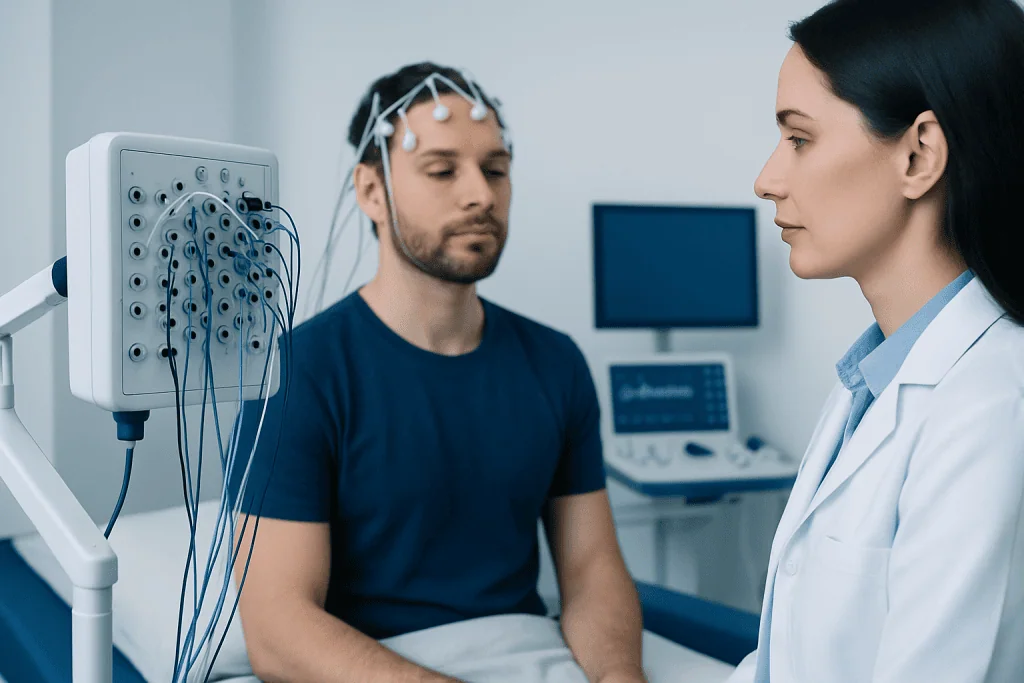
If the specialist thinks more information is needed, the next step may be a sleep study. This can be done in a sleep laboratory or, for selected patients, at home. A sleep study can measure breathing, oxygen levels, heart rhythm, leg movements, brain activity, and sleep stages. It may help confirm conditions such as sleep apnea, periodic limb movement disorder, certain parasomnias, or other causes of disrupted sleep.
Some patients may need additional testing, depending on their symptoms. Actigraphy, which uses a wearable device to track movement and sleep-wake patterns over time, can be useful for suspected circadian rhythm disorders or irregular sleep schedules. Blood tests may be ordered to look for contributors such as iron deficiency, thyroid problems, or other medical issues. In selected cases, imaging or EEG testing may be appropriate if seizures or structural neurological causes are a concern.
Treatment planning depends on the diagnosis. This may include lifestyle changes, cognitive behavioral therapy for insomnia, medication adjustments, positive airway pressure therapy, or condition-specific care. If a breathing-related sleep disorder is found, the specialist may discuss sleep apnea treatment. If upper airway anatomy seems to play a role, some patients may also be referred for ENT evaluation and treatment as part of a broader care plan.
How to Prepare the Day Before and Day Of
In the day or two before the appointment, it helps to organize notes into a simple timeline: when symptoms started, what changed around that time, and which symptoms are most disruptive now. Patients may want to write down their top three concerns and any questions they do not want to forget. This can make the visit feel calmer and more focused.
On the day of the appointment, bringing glasses, hearing aids, medication lists, prior reports, and device data can be useful. If a person uses CPAP, a mandibular advancement device, or a wearable sleep tracker, the specialist may want to review that information. A family member or bed partner can be especially helpful when symptoms occur during sleep and are not fully remembered by the patient.
Patients do not need to prepare perfect answers. It is completely normal not to remember every detail. Honest, practical information is enough. The purpose of the visit is not to test the patient, but to build a clear picture of sleep and neurological health so the next steps can be tailored safely and appropriately.
When to Seek Medical Advice Promptly
Some sleep symptoms should not wait too long for medical review. Prompt assessment is important if a person has severe daytime sleepiness that affects driving or work safety, repeated choking or gasping during sleep, violent dream enactment with risk of injury, sudden weakness triggered by emotion, possible seizures during sleep, or rapidly worsening confusion or memory problems. These symptoms do not always mean a serious condition, but they deserve timely attention.
Medical advice is also important when poor sleep is persistent and affecting quality of life. Ongoing insomnia, loud snoring, morning headaches, leg discomfort at night, frequent awakenings, or non-restorative sleep can often be evaluated and treated. Early care may reduce strain on mood, concentration, relationships, and overall health.
If specialist care is needed, a center with coordinated expertise can be helpful. Acibadem International’s multidisciplinary specialists and JCI-accredited hospitals evaluate and treat sleep-related neurological conditions for international patients, including diagnostic testing and follow-up planning. In some cases, care may involve related services such as neurology evaluation when broader nervous system symptoms are present.
Frequently asked questions
How long should someone track sleep before a sleep neurology appointment?
About 1 to 2 weeks is often enough to show useful patterns. If symptoms are infrequent, tracking for a little longer may provide a clearer picture. Even a shorter diary can still help if symptoms are severe or changing quickly.
Should a person bring data from a smartwatch or sleep app?
Yes, it can be brought as extra information, especially if it shows sleep timing patterns over many days. However, consumer devices do not diagnose sleep disorders on their own. The specialist will interpret that information together with symptoms, examination findings, and any formal testing.
Is it helpful to bring a bed partner or family member?
Often, yes. Another person may notice snoring, pauses in breathing, kicking, sleepwalking, confusion, or dream enactment that the patient does not remember. Their observations can make the history more complete and may help guide testing.
Will everyone need a sleep study?
No. Some people can begin with sleep hygiene changes, medication review, or further observation before testing is arranged. A sleep study is usually recommended when symptoms suggest breathing-related sleep disorders, unusual nighttime behaviors, movement-related sleep problems, or other conditions that need objective measurement.
What if the main problem is daytime sleepiness rather than trouble sleeping?
Daytime sleepiness is still an important reason to see a sleep neurologist. The cause may be disrupted sleep, sleep apnea, circadian rhythm changes, medication effects, narcolepsy, or another medical or neurological issue. Tracking when sleepiness happens and how it affects daily life can be very helpful.
Should medications or supplements be stopped before the appointment?
People should not stop prescribed medicines unless a qualified clinician has advised them to do so. Many medications affect sleep, but the safest approach is to bring a full list and discuss concerns during the visit. If any changes are needed, the specialist can explain how to do that safely.
References
- American Academy of Sleep Medicine
- National Institute of Neurological Disorders and Stroke
- National Heart, Lung, and Blood Institute
- Centers for Disease Control and Prevention
- Mayo Clinic
This article is for general information only and is not a substitute for professional medical advice. Please consult a qualified doctor about your individual situation.
Sleep Neurology in Turkey — costs, top hospitals & a free quote
JCI-accredited · board-certified surgeons · reply within 24h
Add us as a Preferred Source to see more of our trusted health content across Google Search, AI Overviews and Discover.

More from the Health Library



Related Specialists

Dr. Mahmut Yarimay
Anesthesiology
Dr. Ercan Paşaoğlu
Ophthalmology
Beyza Nur Gündüz
Physical Medicine & Rehabilitation
Prof. Dr. Ahmet Demirkaya
Thoracic Surgery