Procedure for Giving Blood: An Evidence-Based Patient Guide

Whole-blood donation commonly takes only several minutes, although the full visit is longer because of screening and recovery. Eligibility depends on local rules, overall health, hemoglobin level, weight, travel history, medicines, and recent procedures or illnesses.
Key Takeaways
- Whole-blood donation commonly takes only several minutes, although the full visit is longer because of screening and recovery.
- Eligibility depends on local rules, overall health, hemoglobin level, weight, travel history, medicines, and recent procedures or illnesses.
- O-positive blood is valuable but is not compatible with every recipient because ABO and Rh blood-group matching still matters.
- Hydration, a balanced meal, rest, and avoiding strenuous activity afterward can support a comfortable recovery.
- People who feel unwell after donating or have persistent symptoms should seek medical advice.
The procedure for giving blood usually involves registration, a health and hemoglobin check, collection of blood through a needle in the arm, and a short recovery period with refreshments and observation. Donation centers use established safety procedures to protect both the donor and the person who may receive the blood.
Overview: How Blood Donation Helps
Blood donation is a carefully controlled process in which an eligible person gives blood that may later be separated into components, such as red blood cells, plasma, and platelets. These components can be used to support people having surgery, receiving cancer treatment, managing severe anemia, recovering from trauma, or living with certain blood disorders.
Before each donation, trained staff review the donor’s health information and perform basic safety checks. The exact requirements, donation intervals, and testing practices vary by country and blood service, so the donation center’s instructions should always take priority.
Giving blood is voluntary. A potential donor may be deferred temporarily or permanently if donation could be unsafe for them or if their blood may not be appropriate for transfusion. Deferral is a safety measure rather than a judgment about a person’s health or lifestyle.
What's the Procedure for Giving Blood?
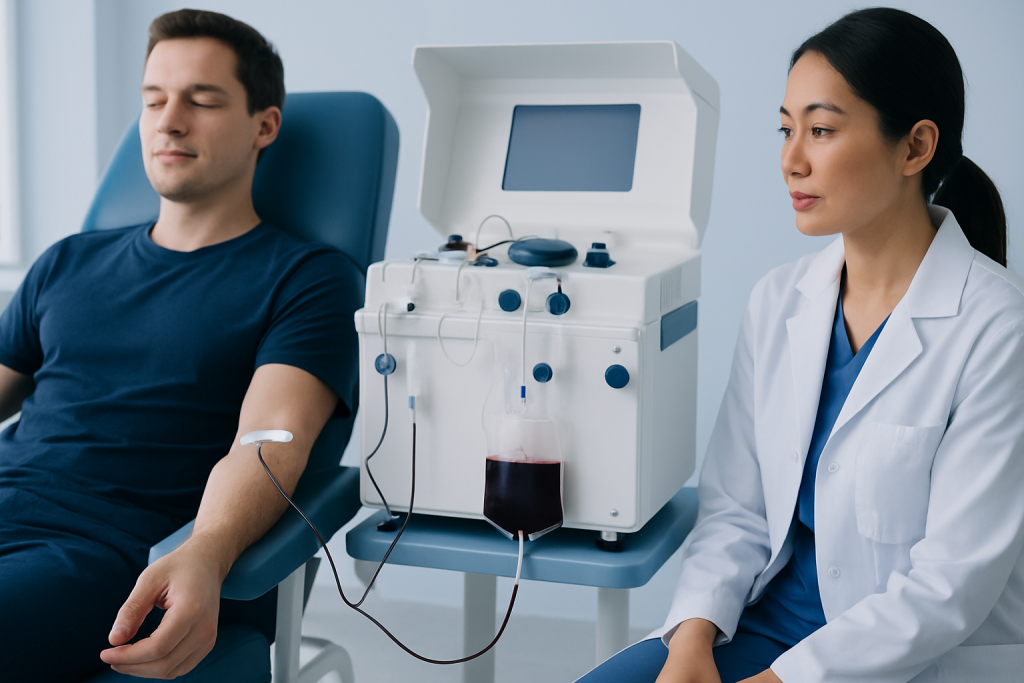
The procedure for giving blood begins with registration and identity verification. The donor completes a confidential health questionnaire covering current health, medicines, travel, previous procedures, and factors that can affect transfusion safety. Staff then usually check temperature, pulse, blood pressure, and hemoglobin or iron status with a small finger-prick sample.
If the donor is eligible, they sit or lie comfortably while a trained professional cleans the skin at the inside of the elbow and places a sterile, single-use needle into a vein. Blood flows into a collection bag designed for that specific donation. For a standard whole-blood donation, the collection itself is usually brief; platelet or plasma donations may use an apheresis machine and can take longer.
After the collection is complete, the needle is removed and pressure is applied to the site. The donor is asked to rest briefly, drink fluids, and eat a snack before leaving. The collected blood is labeled, processed, and tested according to the blood service’s protocols before it can be considered for clinical use.
A person considering donation because of anemia, a bleeding condition, or a known blood disorder should first discuss it with a clinician. Conditions affecting blood production or clotting may need specialist assessment, such as evaluation for anemia.
Who Can Give Blood and What Disqualifies You From Donating Blood?

Most blood services require donors to meet minimum age and weight requirements and to be in generally good health on the day of donation. They also assess hemoglobin levels, because donating blood when hemoglobin is low may worsen fatigue or anemia. Requirements differ between services, including for younger donors and older adults, so individuals should check local eligibility guidance before attending.
Temporary deferrals are common and may occur after a fever or infection, a recent vaccination, dental treatment, surgery, tattooing or piercing, pregnancy, childbirth, international travel, or use of certain medicines. A person may also need to wait after receiving a blood transfusion, having an endoscopic procedure, or being exposed to a possible infection risk.
Some conditions may prevent donation for longer periods or permanently, depending on local policy. Examples can include certain cancers, serious heart or lung disease, some bleeding disorders, specific infectious diseases, and illnesses that affect immune function. People taking anticoagulants or other medicines that influence bleeding should ask the donation service or their prescribing clinician for individualized guidance.
Eligibility decisions are based on protecting donors and recipients. It is important to answer screening questions honestly, even when an issue feels minor, because the staff can explain whether a deferral is needed and when donation may be possible again.
Why Can't O+ Donate to Everyone?
O-positive blood is common and often needed, but it cannot be given to everyone. Red blood cells carry blood-group markers called antigens. People with different ABO and Rh blood groups may have antibodies that react with unfamiliar antigens, which can cause a serious transfusion reaction if incompatible blood is given.
O-positive red blood cells do not carry A or B antigens, but they do carry the Rh(D) antigen. They are generally compatible with recipients who are Rh-positive and have an appropriate ABO group, such as O-positive, A-positive, B-positive, or AB-positive recipients. They are not routinely suitable for Rh-negative recipients because of the Rh(D) antigen.
O-negative red cells are often described as more broadly compatible in emergencies, but even these are not automatically appropriate for every situation. Hospitals perform blood typing, antibody screening, and crossmatching whenever possible to select the safest product for each patient.
What Should You Not Do Before Giving Blood?
Potential donors should not attend if they are feeling unwell, have a fever, or are recovering from an acute infection. They should avoid donating while dehydrated or after skipping meals, as this may increase the chance of dizziness or fainting. Drinking water and eating a regular, nourishing meal beforehand are usually sensible steps unless the donation center gives different instructions.
It is also wise to avoid alcohol before donation, as alcohol can contribute to dehydration and may affect how well a person feels during the visit. Very strenuous exercise immediately before donating may leave someone more tired or dehydrated. Donors should tell staff about all prescription medicines, over-the-counter products, supplements, and recent treatments rather than stopping medicines on their own.
Foods high in fat are often best limited shortly before a donation because a very fatty meal can sometimes interfere with laboratory testing of the blood sample. Smoking or nicotine use should be avoided immediately before and shortly after donation where possible, as nicotine can contribute to light-headedness in some people.
Recovery Timeline, Benefits, and Possible Risks
Most donors can return to usual light activities soon after leaving the donation center. They are commonly advised to keep the bandage on for several hours, drink extra nonalcoholic fluids, eat regular meals, and avoid heavy lifting or intense physical activity with the donation arm for the rest of the day. A small bruise or mild soreness at the needle site can occur and generally settles on its own.
Short-lived light-headedness, nausea, sweating, or fainting can happen, particularly in first-time donors or people who are anxious, tired, or dehydrated. Staff are trained to recognize and manage these reactions. Sitting or lying down promptly, drinking fluids, and informing staff about early symptoms can help prevent injury from a faint.
The main benefit of donating blood is helping maintain supplies for patients who need transfusion support. Donors also receive a basic pre-donation health check, although this is not a substitute for preventive healthcare, medical assessment, or blood testing ordered by a doctor.
Rarely, a donor may have prolonged bleeding, significant bruising, nerve irritation, or persistent pain at the needle site. These events should be assessed by a healthcare professional, particularly if symptoms are worsening or do not improve.
When to Seek Medical Care
Medical advice should be sought promptly if there is ongoing bleeding that does not stop with firm pressure, increasing arm pain or swelling, numbness or weakness in the arm or hand, redness and warmth spreading from the needle site, or signs of infection such as fever. Urgent assessment is also appropriate for chest pain, difficulty breathing, severe weakness, or loss of consciousness.
People who continue to feel unusually tired, dizzy, or short of breath after donation should contact a clinician, especially if symptoms persist beyond a short recovery period or if there is a history of anemia, heavy menstrual bleeding, gastrointestinal bleeding, or chronic illness. A clinician may consider blood testing to identify causes of low hemoglobin or iron stores.
Acibadem International’s multidisciplinary specialists and JCI-accredited hospitals can assess anemia, bleeding concerns, and other blood-health issues for international patients. When a medical evaluation is needed, a doctor may recommend blood tests to assess hemoglobin, iron status, and other relevant markers.
Frequently asked questions
How long does the procedure for giving blood take?
The blood collection part of a whole-blood donation is often completed within several minutes. The entire appointment takes longer because it includes registration, health screening, hemoglobin testing, collection, and a short period of rest afterward.
Does giving blood hurt?
Most people feel a brief pinch when the needle is inserted. Some mild tenderness or bruising afterward is possible, but significant pain is not expected and should be reported to donation staff or a clinician.
Can someone donate blood while taking medication?
Some medicines do not prevent donation, while others require a waiting period or may make donation unsuitable. Donors should provide a complete medication list to the blood service and should never stop prescribed treatment solely to become eligible.
Can you exercise after giving blood?
Light activity is usually acceptable after the recovery period, but strenuous exercise, heavy lifting, and endurance training are commonly postponed until the next day. This helps reduce the chance of dizziness, dehydration, and bleeding from the needle site.
How often can a person donate blood?
The allowed interval depends on the type of donation and the rules of the local blood service. Whole-blood, platelet, and plasma donations have different schedules because the body replaces their components at different rates.
Can a person with low iron donate blood?
A person with low iron or low hemoglobin may be deferred because blood donation can further reduce iron stores. They should discuss the cause of low iron with a healthcare professional and follow the donation center’s guidance before trying again.
References
- World Health Organization
- American Red Cross
- U.S. Food and Drug Administration
- NHS Blood and Transplant
- AABB
This article is for general information only and is not a substitute for professional medical advice. Please consult a qualified doctor about your individual situation.
Oncology care in Turkey — second opinion and treatment plan
JCI-accredited · board-certified surgeons · reply within 24h
Add us as a Preferred Source to see more of our trusted health content across Google Search, AI Overviews and Discover.
Check your numbers in seconds
BMI, calories, due date, blood pressure and 30+ more clinical calculators — free, instant, doctor-reviewed ranges.

More from the Health Library



Related Specialists

Prof. Dr. Erkin Aribal
Breast Clinic Clinical Service
Assoc. Prof. Dr. Gökhan Ergene
Thoracic Surgery
Dyt. Menekşe Feyzanur Koral
Nutrition & Diet
Prof. Dr. Reha Baran
Pulmonology