

Progesterone Otc Supplement: Benefits, Risks, and Safe Use

In many countries, including the United States, progesterone used as a medicine is generally available by prescription rather than as a standard over-the-counter drug. Products sold as OTC progesterone creams or supplements may vary greatly in ingredients, hormone content, absorption, and quality.
Key Takeaways
- In many countries, including the United States, progesterone used as a medicine is generally available by prescription rather than as a standard over-the-counter drug.
- Products sold as OTC progesterone creams or supplements may vary greatly in ingredients, hormone content, absorption, and quality.
- Evidence does not support using nonprescription progesterone products to diagnose or self-treat menopause, fertility problems, abnormal bleeding, or other hormonal conditions.
- Progesterone and related products can cause drowsiness, dizziness, breast tenderness, mood changes, and irregular bleeding, and may interact with medicines.
- People with unexplained vaginal bleeding, a history of hormone-sensitive cancer, blood clots, liver disease, or pregnancy concerns should seek medical advice before using hormonal products.
A progesterone OTC supplement is often marketed for menopause, sleep, mood, or menstrual symptoms, but many products are not the same as prescription progesterone and may not have reliable evidence of benefit. Hormonal symptoms deserve an individualized medical assessment, especially when symptoms are new, severe, or occur after menopause.
Overview: What Is a Progesterone OTC Supplement?
A progesterone OTC supplement is a nonprescription product marketed as containing progesterone, supporting progesterone levels, or easing symptoms sometimes attributed to “low progesterone.” These products may be sold as creams, lotions, capsules, drops, or products made from wild yam. They should not automatically be considered equivalent to prescription progesterone, which is a regulated medicine used for specific clinical reasons.
In the United States, FDA-approved progesterone medicines, including oral micronized progesterone, generally require a prescription. Regulations differ internationally, but a product’s availability without a prescription does not prove that it is effective, consistently absorbed, or appropriate for a particular symptom. Labels can also be confusing: a product marketed as “natural” may contain plant-derived ingredients, but this does not establish safety or clinical benefit.
Some topical products may contain progesterone, while many herbal or “hormone balance” supplements contain no progesterone at all. Wild yam contains diosgenin, a plant compound that can be chemically converted into progesterone in a laboratory. The human body does not reliably convert wild yam into progesterone, so wild-yam supplements should not be expected to raise progesterone levels in the same way as prescribed progesterone.
What Clinical Evidence Supports—and Does Not Support

Prescription progesterone has well-established roles in selected settings. For example, a progestogen is commonly used with systemic estrogen therapy in a person who still has a uterus, because it helps protect the uterine lining from estrogen-related overgrowth. Progesterone may also be used in some fertility and pregnancy-care protocols, or for particular menstrual conditions, under specialist guidance. The correct product, dose, route, and duration depend on the clinical situation.
Evidence for nonprescription progesterone creams and supplements is much less certain. Studies of topical progesterone products have produced inconsistent findings, partly because products differ in their formulations and because absorption through the skin can be unpredictable. There is not strong evidence that OTC products reliably treat hot flashes, night sweats, mood changes, weight gain, fatigue, premenstrual symptoms, or sleep difficulties.
Hormone testing marketed directly to consumers may also be difficult to interpret. Progesterone naturally changes across the menstrual cycle, and a single test does not necessarily explain symptoms or confirm a need for treatment. Menopause symptoms, irregular periods, acne, hair changes, low mood, and sleep problems can have several causes, including thyroid disorders, anemia, medication effects, stress, and conditions such as polycystic ovary syndrome.
- Evidence supports prescribed hormone treatment for carefully assessed medical indications.
- Evidence is limited and inconsistent for OTC creams and dietary supplements marketed for “hormone balance.”
- No OTC product should be used as a substitute for evaluation of infertility, abnormal bleeding, or significant menopausal symptoms.
Why People Consider These Products
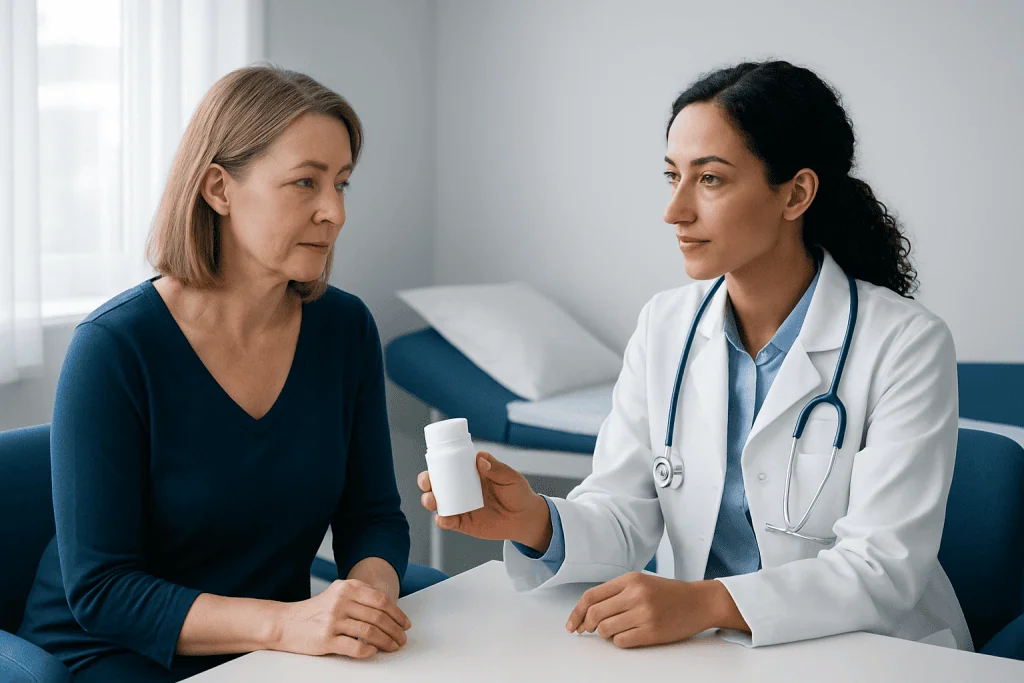
People may seek a progesterone OTC supplement when they have menstrual changes, breast tenderness, premenstrual symptoms, poor sleep, hot flashes, night sweats, low mood, or concerns about perimenopause. These symptoms can be disruptive, and it is understandable to look for accessible options. However, symptoms alone cannot determine whether progesterone is low or whether progesterone treatment would help.
During perimenopause, hormone levels fluctuate naturally and periods may become irregular. Some people experience hot flashes, sleep disruption, or changes in mood at this stage. Menopausal hormone therapy can be helpful for appropriate patients, but it requires a discussion of personal health history, treatment goals, risks, and alternatives. An OTC cream is not a reliable replacement for a clinician-guided hormone plan.
People trying to conceive may also encounter claims that progesterone products support implantation or prevent miscarriage. Progesterone can be clinically important in selected fertility or pregnancy situations, but self-treatment is not advised. Fertility concerns, recurrent pregnancy loss, missed periods, or bleeding in pregnancy should be assessed promptly by a qualified clinician.
Side Effects, Interactions, and Product Quality
Even when a product is described as natural or plant-based, it can cause side effects. Possible effects of progesterone or progesterone-like products include sleepiness, dizziness, headache, nausea, bloating, breast tenderness, mood changes, acne, and changes in menstrual bleeding. Drowsiness or dizziness can affect driving, work, and fall risk, particularly in older adults or when combined with alcohol or sedating medicines.
Supplements are not reviewed in the same way as prescription medicines before they reach the market in many countries. The actual ingredient amount may differ from the label, and contaminants or undeclared ingredients are possible. Hormone creams may also transfer to another person through close skin contact before the product has dried, creating an avoidable exposure risk for children, partners, or pets.
Interactions depend on the ingredient and formulation. A person should speak with a pharmacist or doctor before combining a progesterone-containing product with medicines that cause sedation, including some sleep medicines, anxiety medicines, opioid pain medicines, or antihistamines. It is also important to review all prescription medicines, herbal products, and alcohol use, because some substances may affect hormone metabolism or increase side effects.
Stopping or starting a hormone-related product can change bleeding patterns. New bleeding, prolonged bleeding, bleeding after sex, or any vaginal bleeding after menopause should not be managed with an OTC supplement. These symptoms need medical assessment to identify the cause.
Who Should Avoid Self-Treatment?
People with unexplained vaginal bleeding should not begin a progesterone OTC supplement without medical advice. This includes heavy periods, bleeding between periods, and bleeding after menopause. Although many causes are benign, bleeding can sometimes be linked to conditions that need targeted care, and taking a hormone product may delay an accurate diagnosis.
A clinician should also be consulted before using progesterone-related products in people with a personal history of breast cancer or another hormone-sensitive cancer, blood clots, stroke, liver disease, migraine with neurological symptoms, or significant depression. Individual risks vary, and the safety of a product cannot be determined from advertising claims alone.
Pregnant people, those who may be pregnant, and those who are breastfeeding should not self-prescribe hormonal products. Progesterone may be used in selected pregnancy-related circumstances, but the decision should be made by an obstetrician, gynecologist, or fertility specialist. It is also not a dependable form of contraception and should never be used in place of effective birth control.
Adolescents and people with new menstrual irregularities should seek professional advice rather than using supplements for presumed hormonal imbalance. Irregular cycles can be part of normal development, but they can also reflect pregnancy, thyroid disease, eating disorders, high exercise load, polycystic ovary syndrome, or other health concerns.
Safer Decisions About Hormonal Symptoms
Before using any OTC hormone-related product, it is helpful to identify the symptom, its timing, and its effect on daily life. A simple diary of periods, bleeding, hot flashes, sleep, mood, medicines, and supplements can give a clinician useful information. Bringing the exact product container or a clear photograph of the ingredient label to an appointment can help distinguish progesterone from herbal products or other hormone-containing preparations.
For bothersome menopause symptoms, treatment options may include lifestyle measures, nonhormonal medicines, and prescription hormone therapy for suitable patients. Sleep concerns may improve with regular sleep timing, reduced evening alcohol and caffeine, management of hot flashes, and assessment for anxiety, depression, pain, or sleep disorders. The most suitable approach depends on the person’s symptoms and medical history rather than a single hormone level.
Consumers who still choose a supplement should avoid combining multiple “hormone balance” products and should not exceed label directions. Choosing products that have undergone independent quality testing may reduce, but cannot eliminate, concerns about ingredient accuracy. Any new side effect, mood change, rash, dizziness, or unusual bleeding should prompt discontinuation and advice from a healthcare professional.
For patients traveling for care, Acibadem International’s multidisciplinary specialists and JCI-accredited hospitals can assess menstrual, menopause, and reproductive hormone concerns and discuss evidence-based treatment options for international patients.
When to Seek Medical Care
Medical care is recommended for persistent or disruptive menstrual, menopause, sleep, or mood symptoms rather than relying on a progesterone OTC supplement alone. A doctor can review possible causes, check whether testing is useful, and discuss treatments with known benefits and risks. This is particularly important when symptoms begin suddenly or differ from previous patterns.
Urgent assessment is needed for very heavy vaginal bleeding, fainting, severe pelvic pain, chest pain, shortness of breath, one-sided leg swelling, sudden severe headache, weakness, trouble speaking, or vision changes. These symptoms are not expected effects to manage at home and require prompt medical evaluation.
Anyone with vaginal bleeding after menopause should contact a doctor without delay. A person who is pregnant or may be pregnant should also seek prompt advice for bleeding, pelvic pain, severe abdominal pain, dizziness, or concerns about miscarriage or ectopic pregnancy. Early assessment can clarify what is happening and guide appropriate care.
Frequently asked questions
Can progesterone be bought over the counter?
Availability varies by country, but in the United States, FDA-approved progesterone medicines are generally prescription-only. Products sold over the counter may be creams or dietary supplements, and they are not necessarily equivalent to regulated prescription progesterone. A pharmacist can help clarify what a particular product contains.
Do wild yam supplements increase progesterone?
Wild yam contains diosgenin, which laboratories can use to make progesterone. However, the body does not reliably convert diosgenin from wild yam supplements into progesterone. Therefore, wild-yam products should not be assumed to correct low progesterone or treat hormonal symptoms.
Can OTC progesterone cream help menopause symptoms?
Research on nonprescription progesterone creams is limited and inconsistent, and absorption can vary substantially between products and users. These creams should not replace an evidence-based discussion of menopause treatment. A clinician can help determine whether hormone therapy, nonhormonal treatment, or another approach is appropriate.
Is progesterone safe to take for sleep?
Prescription progesterone may affect sleep in some clinical contexts, but this does not mean an OTC product is safe or effective for insomnia. Progesterone can cause drowsiness and dizziness and may interact with sedating medicines or alcohol. Persistent insomnia should be assessed for contributing causes and safer treatment options.
Can a progesterone OTC supplement regulate periods?
It should not be used to self-treat irregular, heavy, or missed periods. Menstrual changes can have many causes, including pregnancy, perimenopause, thyroid conditions, polycystic ovary syndrome, and medication effects. A clinician can evaluate the pattern and recommend treatment if needed.
Who should not use progesterone products without medical advice?
People with unexplained vaginal bleeding, current or past hormone-sensitive cancer, blood-clotting conditions, liver disease, or pregnancy concerns should seek medical guidance first. Medical advice is also important for people taking regular medicines, especially medicines that cause drowsiness. Any bleeding after menopause requires evaluation rather than self-treatment.
References
- U.S. Food and Drug Administration
- The North American Menopause Society
- American College of Obstetricians and Gynecologists
- National Center for Complementary and Integrative Health
- National Institutes of Health Office of Dietary Supplements
This article is for general information only and is not a substitute for professional medical advice. Please consult a qualified doctor about your individual situation.
Explore treatments in Turkey — costs, top hospitals & a free quote
JCI-accredited · board-certified surgeons · reply within 24h
Add us as a Preferred Source to see more of our trusted health content across Google Search, AI Overviews and Discover.

More from the Health Library


Related Specialists
Assoc. Prof. Dr. Suna Yapalı
Gastroenterology
Fzt. Dilek Küçükvardar
Physical Medicine & Rehabilitation
Asst. Prof. Dr. Harika Bodur Öztürk
Gynecology & Obstetrics
Assoc. Prof. Dr. Cem Gün
Emergency Service