Prostate Nodule: A Complete Medical Overview

A prostate nodule is a clinical finding, not a diagnosis on its own. Many prostate nodules are not cancer, but medical assessment is important.
Key Takeaways
- A prostate nodule is a clinical finding, not a diagnosis on its own.
- Many prostate nodules are not cancer, but medical assessment is important.
- PSA testing, prostate MRI, and sometimes a biopsy help clarify the cause.
- Most prostate nodules do not cause symptoms and may be found during a routine examination.
- Treatment depends on the underlying cause, overall health, and personal preferences.
A prostate nodule is an area of firmness, thickening, or irregular shape felt in the prostate, usually during a digital rectal examination. It can have several causes, including benign changes and inflammation, but it should be evaluated because it may sometimes be associated with prostate cancer.
What Is a Prostate Nodule?
A prostate nodule is a localized area of unusual firmness, thickening, or uneven texture within the prostate gland. It is most often identified when a clinician performs a digital rectal examination (DRE), in which a gloved, lubricated finger is gently inserted into the rectum to feel the back surface of the prostate. The finding may be described as a lump, hard spot, asymmetry, or irregular contour.
A nodule is not automatically cancer, and it does not provide a diagnosis by itself. Benign prostate enlargement, inflammation, past infection, scarring, stones or calcifications, and less commonly cancer can alter how the gland feels. Because a nodule may occasionally be linked with a clinically important prostate cancer, it should be assessed promptly and thoughtfully rather than ignored.
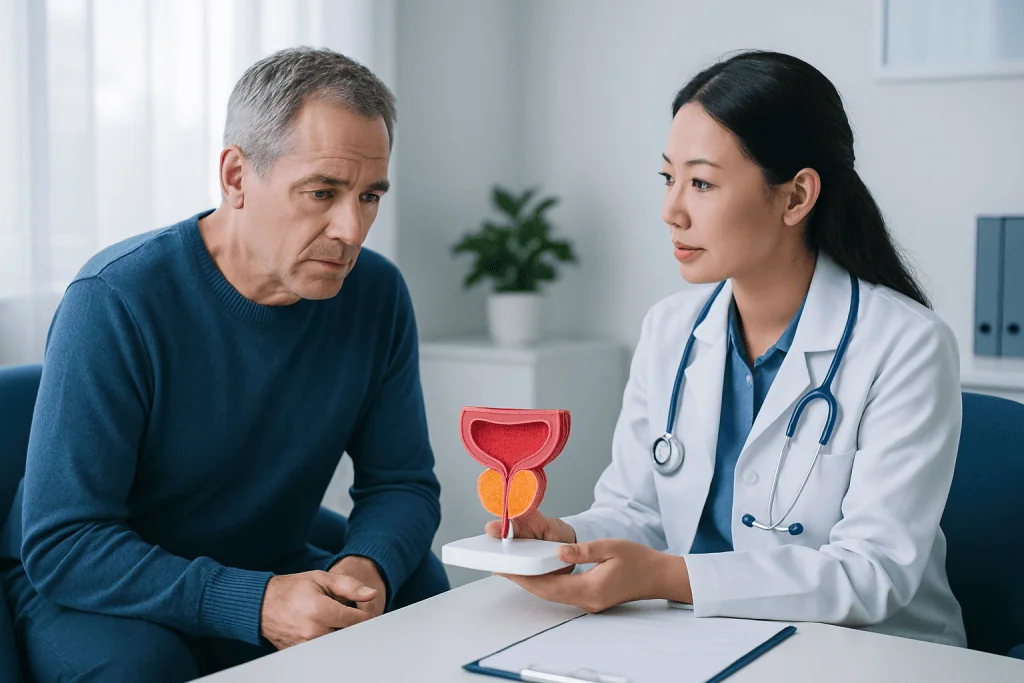
The prostate is a walnut-sized gland below the bladder that surrounds part of the urethra, the tube that carries urine out of the body. It contributes fluid to semen. Changes in the prostate can affect urinary function, sexual health, or fertility, although many people with a prostate nodule feel entirely well.
Symptoms and What a Nodule May Feel Like

Most people cannot feel a prostate nodule themselves. The prostate is located deep in the pelvis, so nodules are usually discovered during an examination or while investigating an elevated prostate-specific antigen (PSA) blood test. A nodule does not reliably cause pain, urinary symptoms, or sexual symptoms.
When symptoms are present, they may relate to an underlying prostate condition rather than the nodule itself. Possible urinary changes include a weak or interrupted stream, difficulty starting urination, frequent urination, urgency, waking at night to urinate, or a feeling that the bladder does not empty fully. These symptoms are common in benign prostate enlargement and do not by themselves indicate cancer.
Inflammation or infection of the prostate may cause pelvic discomfort, burning during urination, pain with ejaculation, fever, or chills. Blood in urine or semen, unexplained weight loss, persistent bone pain, or new difficulty urinating warrant medical review. However, these symptoms have many possible causes, and a clinician can help determine the appropriate tests.
Possible Causes and Risk Factors
Benign prostatic hyperplasia (BPH), also called benign prostate enlargement, is a frequent cause of prostate changes as people age. Although BPH more often causes generalized enlargement than a distinct hard nodule, an uneven gland can sometimes be felt on examination. Prostatitis, which is inflammation that may or may not be caused by infection, can also make the prostate tender, swollen, or irregular.
Other non-cancerous explanations include prostate cysts, fibrous scar tissue, prior inflammation, and calcifications. Calcifications are small mineral deposits that can occur with age or after inflammation. A doctor considers the nodule’s size, location, firmness, and whether the gland is tender, alongside PSA results and other information.
Prostate cancer is an important possibility to rule out, particularly when a firm, fixed, or irregular area is found. Risk increases with age, a family history of prostate cancer, and certain inherited genetic changes. People of African ancestry may also have a higher risk of developing prostate cancer and may develop it at a younger age. Having risk factors does not mean that a nodule is cancerous, but it can influence when and how evaluation is carried out.
How a Prostate Nodule Is Evaluated
Assessment begins with a medical history and physical examination. A clinician may ask about urinary symptoms, pelvic pain, infections, medications, family history, and previous PSA values. During a DRE, the clinician checks the prostate for enlargement, tenderness, asymmetry, and areas that feel harder or more irregular than expected.
A PSA blood test is often part of the evaluation. PSA can rise with prostate cancer, but it can also be increased by benign enlargement, inflammation, infection, urinary retention, and recent prostate manipulation. For this reason, a PSA result is interpreted in context rather than used alone to diagnose cancer. A repeat test may be appropriate in some circumstances, especially if a temporary cause of PSA elevation is possible.
If concern remains, multiparametric magnetic resonance imaging (MRI) of the prostate may provide detailed images and identify areas that need closer assessment. MRI can help clinicians decide whether a biopsy is needed and can guide targeted sampling. Depending on the situation, urine testing, kidney function tests, or imaging of the urinary tract may also be considered.
A prostate biopsy is the only way to confirm or exclude prostate cancer with certainty. Small tissue samples are collected, often using ultrasound and MRI guidance, then examined by a specialist pathologist. Before recommending a biopsy, the care team discusses potential benefits and risks, including bleeding, discomfort, temporary urinary symptoms, and infection.
Treatment Depends on the Underlying Cause
No treatment is directed at a prostate nodule until its cause is understood. If testing suggests a benign condition and there is no concerning evidence of cancer, a clinician may recommend monitoring with symptom review, repeat PSA testing, examination, or imaging at appropriate intervals. The follow-up plan should be individualized rather than based on one test result alone.
For benign prostate enlargement, treatment may include lifestyle measures, medication to improve urinary symptoms, or procedures if symptoms are significant or complications occur. If bacterial prostatitis is diagnosed, antibiotics may be prescribed; non-bacterial prostatitis and chronic pelvic pain may be managed with a combination of symptom-focused treatments, physical therapy, and other individualized approaches.
If biopsy confirms prostate cancer, treatment depends on the cancer’s grade and stage, PSA level, imaging findings, age, general health, and the person’s priorities. Options may include active surveillance for selected low-risk cancers, surgery, radiation therapy, hormone-based therapy, or other systemic treatments for more advanced disease. A multidisciplinary discussion helps people understand the likely benefits, side effects, and practical implications of each option.
For international patients, Acibadem International’s multidisciplinary specialists and JCI-accredited hospitals can support the diagnosis and treatment of prostate conditions, including coordinated assessment when a prostate nodule requires further investigation.
Supporting Prostate Health and Preparing for Tests
There is no proven home method to determine whether a prostate nodule is harmless or cancerous. A balanced diet, regular physical activity, maintaining a healthy weight, not smoking, and managing long-term conditions support overall health, but they do not replace medical evaluation. Anyone with new urinary symptoms should avoid assuming they are simply a normal part of ageing.
Before a PSA test, it is useful to tell the clinician about urinary infections, recent catheter use, prostate procedures, and medicines, as these can affect interpretation. The clinician may also advise whether to avoid activities that can temporarily affect PSA levels before testing. People should follow the instructions provided by their own medical team rather than stopping prescribed medicines on their own.
Keeping a brief record of urinary symptoms can be helpful before an appointment. This may include daytime and nighttime frequency, urgency, stream changes, leakage, pain, and any visible blood in urine. Bringing previous PSA results, scan reports, and information about family history can also make the assessment more efficient.
When to Seek Medical Care
A person should arrange a medical appointment if a clinician has found a prostate nodule, even if there are no symptoms. Timely evaluation allows the cause to be clarified and helps avoid unnecessary worry. A primary care doctor or urologist can determine whether PSA testing, MRI, repeat examination, or another step is appropriate.
Medical review is also advised for persistent urinary changes, pelvic pain, pain with ejaculation, recurrent urinary infections, or blood in the urine or semen. Urgent medical care is needed for inability to pass urine, fever or chills with urinary symptoms, severe pelvic pain, or feeling significantly unwell, as these may indicate urinary retention or an infection requiring prompt treatment.
It is understandable to feel concerned after hearing the word “nodule.” Most evaluations proceed step by step, and not every nodule leads to a cancer diagnosis or biopsy. Clear communication with a qualified clinician can help each person understand their individual level of risk and make informed decisions about follow-up.
Frequently asked questions
Does a prostate nodule always mean cancer?
No. A prostate nodule can result from benign enlargement, inflammation, scarring, calcifications, or other non-cancerous changes. However, because cancer is one possible cause, a nodule should be assessed by a qualified clinician.
Can a prostate nodule disappear?
Some changes related to inflammation or infection may improve after the underlying condition settles or is treated. A nodule caused by scarring, calcification, or another structural change may remain. Follow-up depends on the examination findings, PSA level, imaging, and overall clinical picture.
Is a high PSA the same as having prostate cancer?
No. PSA can be elevated for several reasons, including benign prostate enlargement, prostatitis, urinary infection, and recent prostate procedures. PSA is a useful risk marker, but it must be interpreted together with examination findings, repeat testing when appropriate, imaging, and sometimes biopsy.
Will everyone with a prostate nodule need a biopsy?
Not always. A clinician may first consider PSA results, prostate MRI findings, medical history, and the characteristics of the nodule on examination. A biopsy is recommended when the overall assessment suggests that tissue testing is needed to clarify whether cancer is present.
Can prostatitis cause a lump in the prostate?
Prostatitis can make the prostate swollen, tender, or irregular on examination, and may sometimes contribute to a localized abnormal area. Symptoms can include pelvic discomfort, urinary burning, fever, or pain with ejaculation, although presentations vary. Testing helps distinguish inflammation from other causes.
What happens after a prostate MRI?
The MRI is reviewed for any areas that appear suspicious and for the overall appearance of the prostate. If there is a concerning area, the clinician may recommend a targeted biopsy, often combined with standard tissue samples. If MRI findings are reassuring, the next step may be monitoring rather than immediate biopsy, depending on PSA and other risk factors.
References
- American Urological Association
- European Association of Urology
- National Cancer Institute
- National Health Service
- World Health Organization
This article is for general information only and is not a substitute for professional medical advice. Please consult a qualified doctor about your individual situation.
Oncology care in Turkey — second opinion and treatment plan
JCI-accredited · board-certified surgeons · reply within 24h
Add us as a Preferred Source to see more of our trusted health content across Google Search, AI Overviews and Discover.

More from the Health Library



Related Specialists

Dr. Aynur Göksel
Physical Medicine & Rehabilitation
Dr. Nejmiye Tunçay
Radiology
Dr. Yasemin Dilek Soysal
Pediatric Gastroenterology
Dr. Abdullah Yener İnce
Orthopedic Surgery & Traumatology