Prostate Procedure: An Evidence-Based Patient Guide

A prostate procedure can address benign prostate enlargement, suspected cancer or confirmed prostate cancer, but the procedures are not interchangeable. Minimally invasive procedures may improve urinary flow while preserving the prostate; radical prostatectomy removes the prostate to treat selected cancers.
Key Takeaways
- A prostate procedure can address benign prostate enlargement, suspected cancer or confirmed prostate cancer, but the procedures are not interchangeable.
- Minimally invasive procedures may improve urinary flow while preserving the prostate; radical prostatectomy removes the prostate to treat selected cancers.
- Recovery varies by procedure, but temporary urinary changes and activity restrictions are common.
- Potential effects on continence, erections and ejaculation should be discussed before treatment.
- Age alone does not determine whether prostate surgery is appropriate; fitness, life expectancy, disease severity and personal priorities are important.
A prostate procedure may relieve urinary symptoms caused by an enlarged prostate or treat prostate cancer. The right approach depends on the underlying condition, prostate size, cancer features, overall health and the outcomes that matter most to the individual.
Overview: what a prostate procedure is and why it may be recommended
A prostate procedure is an operation or minimally invasive treatment performed on the prostate gland, usually to relieve urinary obstruction from benign prostatic hyperplasia (BPH) or to treat prostate cancer. The prostate sits below the bladder and surrounds part of the urethra, the tube that carries urine out of the body. When it enlarges or contains cancer, it can affect urination and, in some cases, require treatment.
There is no single “prostate procedure.” Treatments range from medication-supported monitoring and office-based procedures to endoscopic surgery through the urethra and major surgery to remove the prostate. A urologist helps match the approach to the diagnosis, severity of symptoms, test results, anatomy and the person’s preferences.
For urinary symptoms without cancer, the aim is usually to improve urine flow and reduce problems such as repeated retention, infections, bladder stones or kidney effects. For prostate cancer, the aim may be cure, long-term control or symptom relief. A careful diagnosis is essential because similar urinary symptoms can have different causes.
How prostate procedures differ: treating enlargement versus cancer
Benign prostatic hyperplasia is a noncancerous enlargement that becomes more common with age. It may cause a weak stream, straining, frequent urination, urgency, waking at night, or a sensation that the bladder does not empty. If medication is not effective or complications occur, procedures can remove, vaporize, shrink or retract obstructing prostate tissue while leaving the gland largely in place.
Common endoscopic options for BPH include transurethral resection of the prostate (TURP), laser procedures such as holmium laser enucleation, and selected minimally invasive approaches. These are usually performed through the urethra, without an incision in the lower abdomen. The best method depends on prostate size, anatomy, bleeding risk, the need for tissue testing and the availability of expertise.
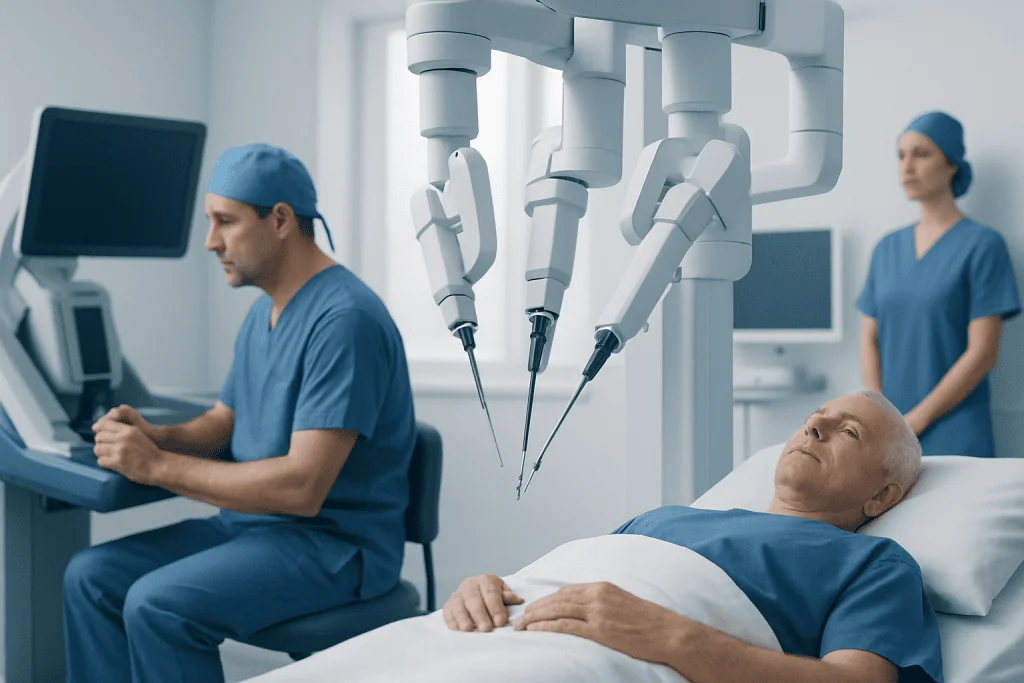
For localized prostate cancer, a radical prostatectomy removes the prostate gland and seminal vesicles, with nearby lymph nodes assessed or removed in some situations. It may be performed through open, laparoscopic or robot-assisted techniques. Radiation therapy, active surveillance and other treatments can also be appropriate, so surgery is one option within a broader treatment plan for prostate cancer.
Because prostate enlargement and cancer can coexist, clinicians may use a prostate-specific antigen blood test, examination, imaging and sometimes biopsy before recommending a procedure. A procedure for BPH does not automatically treat prostate cancer, and prostate cancer surgery is not routinely needed for ordinary urinary enlargement.
Candidacy and assessment before a prostate procedure

Before recommending treatment, the urology team reviews symptoms, medical history, medicines and goals. Useful tests may include a physical examination, urine testing, blood tests, measurement of urine flow and residual urine after voiding, ultrasound, magnetic resonance imaging or cystoscopy. The tests chosen depend on whether the main concern is urinary obstruction, bleeding, infection or cancer.
For BPH, a procedure may be considered when symptoms substantially affect daily life despite medication, when medication is poorly tolerated, or when there are complications such as recurrent urinary retention, repeated urinary infections, bladder stones, persistent bleeding from the prostate or reduced kidney function linked to obstruction. Some people with mild symptoms can safely continue monitoring.
For prostate cancer, candidacy for surgery depends on the cancer grade, stage, PSA level, imaging findings, estimated life expectancy and general fitness for anesthesia and recovery. The care team also considers urinary function, sexual function and whether radiation or surveillance may better align with the person’s circumstances.
Blood thinners, heart or lung disease, diabetes, prior pelvic surgery, neurological conditions and frailty can affect preparation and procedure choice. They do not always prevent treatment, but they may require coordinated planning with anesthesia, cardiology, geriatrics or other specialists.
What happens during the procedure and early recovery
The steps vary by technique. Before surgery, patients typically have pre-anesthesia assessment and instructions about eating, drinking and medicines. Blood-thinning medicines should never be stopped without advice from the prescribing clinician and surgical team. Most prostate procedures use general or spinal anesthesia, so the patient is comfortable during treatment.
During an endoscopic BPH procedure, the urologist passes a small instrument through the urethra to view and treat prostate tissue. Tissue may be resected, vaporized or enucleated, depending on the technique. A urinary catheter is commonly left in place temporarily to drain urine and allow healing.
During radical prostatectomy, the surgeon removes the prostate and reconnects the bladder to the urethra. A catheter is left in place while this connection heals. When appropriate and safe from a cancer-control perspective, surgeons may try to preserve the nerves involved in erections. This cannot be guaranteed because it depends on the cancer’s location and individual anatomy.
Recovery after a smaller BPH procedure may involve going home the same day or after a short hospital stay. Recovery after radical prostatectomy often requires several weeks before energy and routine activity feel more normal. Light walking is usually encouraged, while heavy lifting, strenuous exercise and sexual activity are resumed only when the surgeon advises.
- Burning, urgency, blood-tinged urine or frequent urination can occur temporarily after transurethral procedures.
- After prostatectomy, catheter care and pelvic-floor rehabilitation may be part of early recovery.
- Fever, worsening pain, inability to pass urine after catheter removal, heavy bleeding or signs of a blood clot require prompt medical advice.
Benefits, risks and effects on quality of life
The expected benefit of a BPH procedure is improved urinary flow and reduced obstruction-related symptoms. The degree and speed of improvement differ between procedures and between individuals. A procedure may reduce reliance on medication, but follow-up remains important because urinary symptoms can also arise from bladder conditions, infection or other causes.
Possible risks of transurethral procedures include bleeding, urinary tract infection, temporary difficulty urinating, scarring in the urethra or bladder neck, and the need for further treatment. Retrograde ejaculation, where semen travels into the bladder rather than out through the penis during orgasm, is common after several tissue-removing BPH operations. It is not usually harmful but affects fertility and may matter to sexual wellbeing.
Radical prostatectomy can be highly effective for appropriately selected localized prostate cancer, but it carries distinct risks. Urinary leakage is common early in recovery and often improves over time, though some men have persistent incontinence. Erectile dysfunction can occur because nerves near the prostate may be affected, and orgasm may feel different after surgery. Because the prostate and seminal vesicles are removed, ejaculation no longer occurs and natural fertility is lost.
Every procedure also has general surgical risks, including anesthetic complications, infection and blood clots. The clinician should explain likely benefits, alternatives and individualized risks before consent. It can be helpful for patients to ask how the proposed option may affect urinary control, sexual function, ejaculation, recovery time and future cancer monitoring.
What is the most successful prostate procedure?
The most successful prostate procedure is the one that best addresses the person’s specific condition and treatment goals with acceptable risks. For urinary blockage from BPH, success may mean durable improvement in urine flow and symptoms. TURP and laser enucleation are established options, while other minimally invasive methods may be suitable for selected prostates and priorities.
For localized prostate cancer, radical prostatectomy can offer excellent cancer control for suitable patients, but radiation therapy or active surveillance may be equally appropriate in particular situations. “Success” should include cancer outcomes as well as continence, sexual health, recovery and quality of life.
There is no universal best technique based only on a procedure name. A urologist considers prostate size, anatomy, symptom burden, cancer risk category, age, other medical conditions and patient preferences when recommending treatment.
Should a 77 year old man have prostate surgery?
A 77-year-old man may be a candidate for prostate surgery, but age alone should not decide the issue. The decision is based on physical fitness, heart and lung health, frailty, expected life expectancy, the seriousness of urinary obstruction or cancer, and what the person hopes to achieve from treatment.
For troublesome BPH, less invasive options or an endoscopic procedure may be considered if symptoms are severe or complications develop. For prostate cancer, active surveillance, radiation therapy, hormonal treatment or surgery may each be appropriate depending on the cancer’s behavior and the individual’s overall health.
A shared decision-making conversation is especially valuable. The patient and clinician should weigh likely benefits against recovery demands and possible effects on urinary and sexual function, while considering family support and personal priorities.
Do you have to wear a bag if your prostate is removed?
After radical prostatectomy, patients usually have a temporary urinary catheter: a thin tube that drains urine from the bladder into a collection bag. The bag is worn while the connection between the bladder and urethra heals, often for a short period determined by the surgical team.
Most people do not need a permanent urine collection bag after prostate removal. After the catheter is removed, some urinary leakage is common at first and absorbent pads may be useful while continence improves. Pelvic-floor exercises and guidance from the care team can support recovery.
A permanent external urine bag is generally only needed in unusual circumstances, such as certain complex urinary problems or additional reconstructive surgery. The surgeon can explain the expected catheter plan before the operation.
What is the 2 week rule for prostate cancer?
The “2 week rule” usually refers to an urgent referral pathway used in some health systems. It aims to help people with symptoms or test findings that could suggest cancer see a specialist promptly, often within about two weeks. It is a referral target, not a rule that confirms cancer or requires treatment within two weeks.
Many symptoms that prompt evaluation, such as urinary changes or an elevated PSA level, are caused by noncancerous conditions. The specialist may arrange further tests, including repeat blood tests, imaging or biopsy, to clarify the diagnosis.
Once prostate cancer is diagnosed, the pace of treatment depends on its risk level and symptoms. Many prostate cancers can be assessed thoughtfully over weeks, while urgent symptoms such as inability to urinate, severe uncontrolled pain, new weakness in the legs or loss of bowel control need immediate medical attention.
When to seek medical care and how to plan next steps
Medical assessment is advised for persistent changes in urination, blood in the urine or semen, repeated urinary infections, pelvic discomfort, unexplained weight loss or new erectile difficulties that are concerning to the patient. Sudden inability to pass urine, fever with urinary symptoms, severe pain, heavy bleeding, or new leg weakness and bowel or bladder control changes should be assessed urgently.
People considering a prostate procedure can prepare by listing symptoms, current medicines, previous test results and questions about alternatives. They may also wish to ask about expected catheter use, recovery support, the chance of needing further treatment, and how the procedure could affect continence, erections and ejaculation.
For men diagnosed with prostate cancer, a discussion of prostate cancer treatment options can clarify whether surgery, radiation, surveillance or systemic treatment is most appropriate. Decisions should be made with a qualified urologist and, when needed, an oncology team.
Acibadem International’s multidisciplinary specialists and JCI-accredited hospitals diagnose and treat prostate conditions for international patients, with care plans based on individual clinical assessment.
Frequently asked questions
How long does it take to recover from a prostate procedure?
Recovery depends on the procedure. Some minimally invasive BPH treatments allow return to light activity within days, while recovery after radical prostatectomy commonly takes several weeks. Urinary and sexual function can continue improving for months after surgery.
Is prostate surgery always needed for an enlarged prostate?
No. Many people with an enlarged prostate improve with lifestyle measures, monitoring or medication. A procedure is usually considered when symptoms remain troublesome, medication is unsuitable, or complications such as urinary retention or recurrent infections occur.
Can prostate surgery cause erectile dysfunction?
Yes, especially after radical prostatectomy, because nerves important for erections lie close to the prostate. The likelihood depends on age, erectile function before treatment, cancer location, the type of surgery and whether nerve-sparing surgery is possible. Treatments and rehabilitation options may help some patients recover sexual function.
Will urinary incontinence after prostate removal improve?
Urinary leakage is common soon after catheter removal following radical prostatectomy and often improves over time. Pelvic-floor exercises, guided rehabilitation and follow-up with the surgical team can help. Persistent or severe leakage should be discussed with a urologist because additional treatments are available.
Can a prostate procedure affect ejaculation?
Many procedures for enlarged prostate can cause retrograde ejaculation, meaning semen enters the bladder during orgasm rather than leaving through the penis. Radical prostatectomy removes the structures that produce and transport semen, so ejaculation does not occur afterward. Orgasm may still be possible, although the experience can change.
What tests are done before prostate surgery?
Testing may include urine studies, blood tests, prostate-specific antigen testing, urine-flow measurement, ultrasound, cystoscopy, magnetic resonance imaging or biopsy. The exact tests depend on whether the concern is benign enlargement, cancer or another urinary condition. The team also assesses anesthesia and surgical fitness.
References
- American Urological Association
- European Association of Urology
- National Cancer Institute
- National Health Service
- World Health Organization
This article is for general information only and is not a substitute for professional medical advice. Please consult a qualified doctor about your individual situation.
Oncology care in Turkey — second opinion and treatment plan
JCI-accredited · board-certified surgeons · reply within 24h
Add us as a Preferred Source to see more of our trusted health content across Google Search, AI Overviews and Discover.