Prostate Surgical: Procedure, Recovery and Results

Prostate surgery may remove the whole prostate, remove part of it, or widen the channel through it to improve urine flow. Radical prostatectomy is mainly used for selected cases of prostate cancer, while procedures such as TURP commonly treat urinary obstruction from an enlarged prostate.
Key Takeaways
- Prostate surgery may remove the whole prostate, remove part of it, or widen the channel through it to improve urine flow.
- Radical prostatectomy is mainly used for selected cases of prostate cancer, while procedures such as TURP commonly treat urinary obstruction from an enlarged prostate.
- A urinary catheter is usually needed temporarily after surgery, and urinary control can take weeks to months to improve.
- Potential benefits include cancer control or better urinary flow; important risks include bleeding, infection, leakage, urinary incontinence and sexual side effects.
- Recovery instructions vary by procedure, but gradual walking, avoiding strain and attending follow-up appointments are central to safe healing.
Prostate surgical procedures are used to treat prostate cancer or urinary symptoms caused by an enlarged prostate. The operation, recovery time and expected results depend on the reason for surgery and the technique used, so a urologist helps select the safest, most suitable approach.
Overview: what prostate surgical treatment involves
Prostate surgical treatment describes operations performed on the prostate gland, a small gland below the bladder that surrounds part of the urethra. Surgery may be recommended to remove prostate cancer, relieve blockage caused by non-cancerous enlargement, treat repeated bleeding or infections, or address complications such as bladder stones or kidney strain from poor urine drainage.
The term does not refer to one single operation. A radical prostatectomy removes the prostate and usually the seminal vesicles for cancer treatment. Procedures for an enlarged prostate, including transurethral resection of the prostate (TURP), laser techniques and other endoscopic operations, remove or reshape obstructing tissue while leaving much of the gland in place.
The expected result depends on the underlying condition. Cancer surgery aims to remove the cancer while preserving function where safely possible. Surgery for urinary obstruction aims to improve urine flow, reduce straining and lower the risk of bladder or kidney complications. A urologist can explain which outcome is realistic for the individual situation.
How surgery works and who may be a candidate
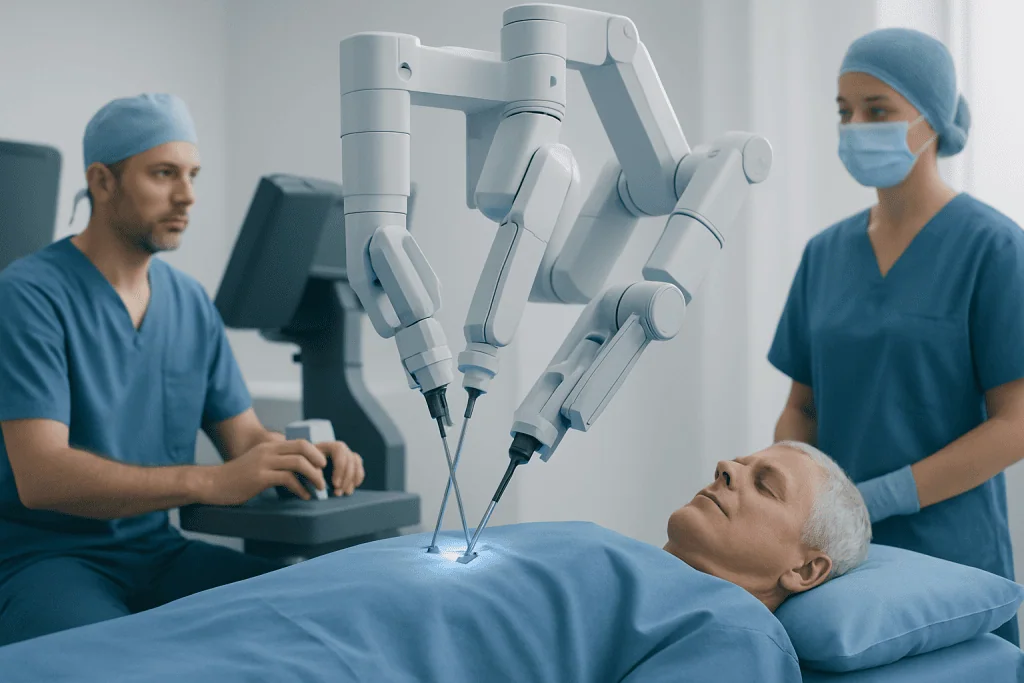
The prostate can be reached through small abdominal incisions, a single lower abdominal incision, or through the urethra using a slim camera and surgical instruments. The route is chosen according to the diagnosis, prostate size, previous treatments, anatomy, general health and the surgeon’s assessment.
People with localized prostate cancer may be considered for radical prostatectomy when surgery is likely to provide effective cancer control and they are well enough for an operation. The decision also considers cancer grade and stage, prostate-specific antigen (PSA) results, imaging, life expectancy, personal priorities and alternatives such as radiotherapy or active surveillance. Related information about prostate cancer may help patients understand the broader diagnostic and treatment pathway.
For benign prostatic enlargement, surgery is usually considered when medicines have not adequately controlled symptoms or when complications occur. These can include recurrent urinary retention, repeated urinary infections, recurrent visible blood in urine, bladder stones, or impaired kidney function linked to obstruction. Assessment may also explore whether another urinary condition is contributing to symptoms.
- Medical history, medication review and physical examination
- Urine testing and blood tests, including kidney function when appropriate
- PSA testing and prostate imaging or biopsy when cancer is suspected
- Urine-flow measurement, ultrasound and assessment of residual urine after voiding
- Discussion of goals, alternatives and possible effects on continence and sexual function
Step by step: what happens during prostate surgery

Before surgery, the team reviews medicines that may affect bleeding, checks for infection and discusses fasting and anaesthesia instructions. The procedure is performed under general anaesthesia in most cases, although some endoscopic prostate operations may use spinal anaesthesia. The exact plan should be confirmed with the surgical and anaesthesia teams.
During radical prostatectomy, the surgeon separates and removes the prostate, then reconnects the bladder to the urethra. Nearby lymph nodes may be removed for testing in selected cases. Open, laparoscopic and robotic-assisted approaches may be used; the approach itself is only one part of achieving a safe and appropriate operation. Robotic prostatectomy may be an option for some patients, depending on the cancer and local surgical expertise.
During TURP and similar transurethral procedures, instruments pass through the urethra rather than through an external incision. The surgeon removes or vaporizes the prostate tissue that is narrowing the urine channel. Fluid may be used to irrigate the bladder during and shortly after the procedure, and removed tissue may be examined in a laboratory when relevant.
At the end of either type of operation, a catheter is usually placed to drain urine while tissues heal. The hospital team monitors pain, urine output, bleeding, mobility and any early complications. The length of stay and catheter duration vary substantially by operation and by the person’s recovery.
Benefits, limits and possible risks
For cancer, prostate surgery can be a potentially curative treatment when disease is confined to or near the prostate and surgery is appropriate. The final pathology report provides detailed information about the removed tissue and may help guide whether further monitoring or treatment is needed. PSA is generally followed after radical prostatectomy to monitor for signs of recurrence.
For urinary obstruction, many patients experience stronger urine flow, less straining and fewer episodes of retention after healing. However, surgery does not treat every cause of urinary symptoms. Overactive bladder, infection, neurological conditions and other urinary tract problems may need separate evaluation or treatment.
All surgery carries some risk. Possible complications include bleeding, blood clots, infection, anaesthesia-related problems, urinary tract injury, temporary urinary burning, scar narrowing at the surgical connection, and a need for additional treatment. After prostate cancer surgery, urinary leakage and erectile dysfunction are important possible effects. Nerve-sparing techniques may be considered when medically safe, but they cannot guarantee preservation of erections.
After endoscopic surgery for enlargement, retrograde ejaculation is common: semen enters the bladder during orgasm rather than leaving through the penis. This is generally not harmful, but it can affect fertility. Patients should discuss fertility preservation, erectile function, continence and personal goals before making a treatment decision.
How many days should I rest after prostate surgery?
Most people need a period of reduced activity after prostate surgery, but complete bed rest is not usually recommended. Gentle walking is often encouraged as soon as the care team says it is safe because it supports circulation, lung function and bowel movement. The amount of rest needed depends on whether the procedure was a radical prostatectomy, TURP or another technique, as well as the person’s overall health and any complications.
After minimally invasive radical prostatectomy, many people can do light daily tasks within around one to two weeks, although fatigue may continue for several weeks. Return to desk-based work may be possible after two to four weeks for some people, while physically demanding work usually requires longer. Recovery after TURP or other transurethral procedures may be quicker, but urinary irritation and tiredness can still persist for a few weeks.
Heavy lifting, strenuous exercise, cycling, running and activities that strain the abdomen or pelvic floor are commonly restricted for several weeks. The surgical team provides the most reliable timetable because restrictions vary with the operation and healing progress. A gradual return to normal activity is safer than trying to resume all activities at once.
How long does it take to pee normally after prostate surgery?
Urination often changes temporarily after prostate surgery. A catheter drains the bladder for a short period, and people may have burning, urgency, frequency, mild blood in the urine or a slower return to comfortable voiding after it is removed. These symptoms often improve as swelling settles and tissues heal, but the timeline differs by procedure.
After TURP or a similar operation for prostate enlargement, urine flow may improve promptly after catheter removal, although bladder irritation can take several weeks to settle. Some people who had severe long-term obstruction may need more time for bladder muscle function to recover. Drinking adequate fluids, unless restricted for another medical reason, can help keep urine flowing and reduce clot formation.
After radical prostatectomy, urine flow through the newly connected bladder and urethra may be satisfactory when the catheter is removed, but control of urine can take longer. Leakage with coughing, standing or activity is common initially. Pelvic-floor exercises, when advised by the clinical team, can support continence recovery; improvement may continue for months.
Inability to pass urine, worsening lower abdominal pain, large blood clots, fever or rapidly worsening bleeding should be reported urgently. These symptoms need clinical assessment rather than waiting for a routine appointment.
What not to do after prostate surgery?
After prostate surgery, patients should not lift heavy objects, perform intense exercise, strain during bowel movements, drive while taking sedating pain medicines, or return to sexual activity until the surgeon confirms it is safe. These precautions help protect healing tissues and reduce the likelihood of bleeding, wound problems or discomfort. Exact restrictions depend on the operation and should always take priority over general advice.
Patients should avoid constipation, which can cause painful straining. The care team may recommend fluids, fibre-rich foods, gentle movement or a short-term bowel regimen. They should also avoid smoking and nicotine products, as these can impair healing and increase surgical risks.
It is important not to stop or restart prescribed medicines, including blood thinners, without medical guidance. Alcohol may interact with pain medicines and can worsen dehydration or constipation, so patients should ask their clinician when it is appropriate to resume it. Follow-up visits are essential for catheter removal, pathology discussion where applicable, symptom review and planning of rehabilitation.
Acibadem International’s multidisciplinary specialists and JCI-accredited hospitals diagnose and treat prostate conditions for international patients, with care plans tailored to the diagnosis and recovery needs. Prostate surgery treatment planning should include a clear discussion of the procedure, alternatives and aftercare.
When to seek medical care
Urgent medical advice is needed after prostate surgery for fever, chills, worsening pain, inability to pass urine after catheter removal, a blocked or dislodged catheter, foul-smelling urine, increasing redness or drainage from an incision, chest pain, shortness of breath, or one-sided leg swelling. These symptoms can have different causes, but prompt assessment helps identify complications early.
Some light blood staining in urine can occur during recovery, particularly after transurethral surgery or increased activity. However, bright-red bleeding that does not settle, large clots, persistent heavy bleeding or dizziness should be assessed promptly. Patients should use the emergency contact details provided by their hospital or seek urgent local care if they cannot reach their surgical team.
Non-urgent follow-up is also important for persistent leakage, erectile concerns, bothersome urgency, pain with urination, constipation, emotional distress or questions about returning to work, exercise and intimacy. Urology, pelvic-floor physiotherapy, sexual-health support and oncology follow-up can all be useful parts of recovery when needed.
Frequently asked questions
Is prostate surgery a big surgery?
It can be, depending on the type of operation. Radical prostatectomy is a major operation because it removes the prostate and reconnects the urinary tract, while TURP and other transurethral procedures are less invasive but still require anaesthesia and careful recovery. A urologist can explain the expected complexity and risks for the planned technique.
How many days should I rest after prostate surgery?
Most people need several days of substantial rest combined with short, gentle walks. Light activities may gradually resume over one to two weeks for some patients, but full recovery and return to strenuous work can take several weeks or longer. The surgeon's instructions should guide timing because recovery varies by procedure.
How long does it take to pee normally after prostate surgery?
After surgery for enlarged prostate, urine flow may improve soon after the catheter is removed, although burning, urgency or frequency can continue for several weeks. After radical prostatectomy, bladder control often improves gradually over weeks to months. Inability to urinate, worsening pain or heavy bleeding needs prompt medical review.
What not to do after prostate surgery?
Patients should avoid heavy lifting, strenuous exercise, cycling, straining with bowel movements and sexual activity until their surgical team says these are safe. They should not drive while taking sedating pain medicine or change blood-thinning medicines without medical advice. Smoking should also be avoided because it can delay healing.
Will prostate surgery affect erections?
Erectile dysfunction can occur after prostate cancer surgery because nerves involved in erections run close to the prostate. The likelihood and degree of recovery depend on age, erectile function before surgery, cancer location, whether nerve-sparing surgery is possible and other health factors. Recovery may take months, and treatments or rehabilitation may help.
Will I need a catheter after prostate surgery?
Most patients have a catheter immediately after surgery to allow urine to drain while tissues heal. The duration varies from a short period after some transurethral procedures to about one or more weeks after radical prostatectomy. The care team will explain catheter care and arrange removal when it is safe.
References
- American Urological Association
- European Association of Urology
- National Cancer Institute
- National Health Service
- Mayo Clinic
This article is for general information only and is not a substitute for professional medical advice. Please consult a qualified doctor about your individual situation.
Oncology care in Turkey — second opinion and treatment plan
JCI-accredited · board-certified surgeons · reply within 24h
Add us as a Preferred Source to see more of our trusted health content across Google Search, AI Overviews and Discover.

More from the Health Library



Related Specialists
Prof. Dr. Hakan Özveri
Urology
Assoc. Prof. Dr. İmam Bakır Batı
Liver Transplant Center
Dt. Sıdıka Yaşar
Oral & Dental Health
Prof. Dr. Kerem Bilsel
Orthopedic Surgery & Traumatology