PRP for Hair Loss: Evidence, Results Timeline, and Who It Helps

PRP is most often used for pattern hair loss and works best when hair follicles are still active. It does not create entirely new follicles; it aims to support and strengthen existing ones.
Key Takeaways
- PRP is most often used for pattern hair loss and works best when hair follicles are still active.
- It does not create entirely new follicles; it aims to support and strengthen existing ones.
- Visible improvement usually takes several months and often requires repeated sessions.
- A medical evaluation is important because nutritional, hormonal, autoimmune, and scalp conditions can also cause hair loss.
- PRP is often combined with other treatments rather than used alone.
prp hair treatment uses a person’s own platelet-rich plasma, prepared from a blood sample and injected into the scalp, to support hair follicles in selected types of hair loss. It may improve hair density and shedding over time, especially in pattern hair loss, but results are gradual and depend on the cause of thinning, the stage of hair loss, and the overall treatment plan.
Overview: What PRP Hair Treatment Is and What It Can Do
prp hair treatment is a non-surgical procedure that uses platelet-rich plasma taken from the patient’s own blood. After a small blood sample is collected, it is processed to concentrate platelets, which contain growth factors and signaling proteins. This platelet-rich plasma is then injected into selected areas of the scalp.
The goal is not to “grow hair overnight” or replace completely inactive follicles. Instead, PRP aims to support the environment around hair follicles, improve their function, and help extend the growth phase of hair. For some people, this can lead to reduced shedding, thicker hair shafts, and improved density over time.
Evidence is strongest for androgenetic alopecia, also called pattern hair loss, in both men and women. In this setting, PRP is usually considered an adjunct treatment, meaning it is often combined with medical therapies and long-term scalp care rather than used as a stand-alone cure. It may also be discussed as part of an overall restoration plan that includes hair transplant treatment for carefully selected patients.
Who PRP May Help Most
PRP tends to help most when hair thinning is relatively early or moderate and follicles are still alive but underperforming. This is why it is commonly offered to people with male or female pattern hair loss rather than advanced baldness with smooth, shiny scalp areas where follicles may no longer be functioning.
It may be a reasonable option for people who want a minimally invasive treatment, are not ready for surgery, or wish to support the results of other therapies. In some practices, it is also used after hair restoration procedures to support healing and follicle function, though protocols vary.
PRP is not equally effective for every cause of hair loss. Conditions such as alopecia are not a single disease but a broad group of disorders with different mechanisms. Some inflammatory or scarring forms of hair loss need specific medical treatment first, because PRP alone may not address the underlying problem.
People with sudden shedding, patchy bald spots, scalp pain, scaling, or signs of hormonal or nutritional imbalance should have a medical assessment before deciding on PRP. In these cases, identifying the cause is often more important than starting a procedure quickly.
Evidence: What Research Suggests

Clinical studies suggest that PRP can improve hair count, hair thickness, and patient satisfaction in many people with androgenetic alopecia. Reviews of the literature generally find a positive signal, but also note that study methods are not fully standardized. Different clinics may use different blood-processing systems, platelet concentrations, injection depths, session intervals, and combination treatments, which makes direct comparison difficult.
Even with these limitations, the overall evidence supports PRP as a reasonable option for selected patients with pattern hair loss. The best outcomes are often reported when treatment begins before extensive miniaturization or permanent follicle loss has occurred. This is one reason early evaluation of hair loss can be helpful.
Research is less clear for other causes of hair loss, such as telogen effluvium, alopecia areata, or scarring alopecias. Some patients with these conditions may still be considered for PRP, but expectations should be more cautious and the underlying diagnosis should guide treatment. Good evidence-based care starts with a scalp and hair examination, not with assuming all shedding behaves the same way.
In practice, dermatologists and hair specialists usually present PRP as a supportive treatment with variable but meaningful potential benefit. It is not guaranteed to work, and its effects may need maintenance over time.
Results Timeline: When Changes May Be Noticeable
PRP does not usually produce immediate visible growth. Hair follicles cycle slowly, so most people need time to see whether treatment is helping. In the first weeks, there may be no obvious change, and some people mainly notice that shedding seems to stabilize before any increase in density is visible.
Many treatment plans involve an initial series of sessions spaced over several weeks, followed by maintenance sessions at longer intervals. Although protocols vary, clinicians typically evaluate progress over a period of months rather than days. Early signs may include less daily shedding, a healthier scalp feel, or subtle thickening of existing hair.
More visible changes, when they occur, are usually gradual. Patients may notice improved fullness in photographs, easier styling, or better coverage in thinning areas after several months. Because hair grows slowly, the final cosmetic effect can take longer to appreciate than the procedure itself.
Results also depend on the starting point. PRP is more likely to strengthen miniaturized hair than to restore a fully bald area. People with more advanced thinning may be advised to combine PRP with other medical options or discuss restorative procedures such as hair transplantation if appropriate.
How Doctors Evaluate Hair Loss Before PRP
A careful diagnosis is one of the most important parts of deciding whether PRP is suitable. Hair loss can result from genetics, iron deficiency, thyroid disorders, hormonal shifts, autoimmune disease, stress-related shedding, scalp inflammation, traction, and certain medications. Treating without identifying the cause may lead to disappointment.
Evaluation often begins with a medical history and scalp examination. A doctor may ask when the shedding started, whether it is diffuse or localized, whether there is itching or scaling, and whether there is a family history of pattern hair loss. Examination may include looking for miniaturization, inflammation, broken hairs, or signs of scarring.
In some patients, blood tests are recommended to look for contributing factors such as low iron stores, thyroid imbalance, or nutritional issues. If there is uncertainty, dermoscopy or, less commonly, a scalp biopsy may be used. This step helps distinguish pattern hair loss from other conditions that need different treatment approaches.
Once the cause is clearer, PRP can be placed in context. For example, people with pattern hair loss may also discuss supportive scalp therapies or other medical treatments, while people with inflammatory scalp disease may need the inflammation controlled first.
What the Procedure and Recovery Are Like
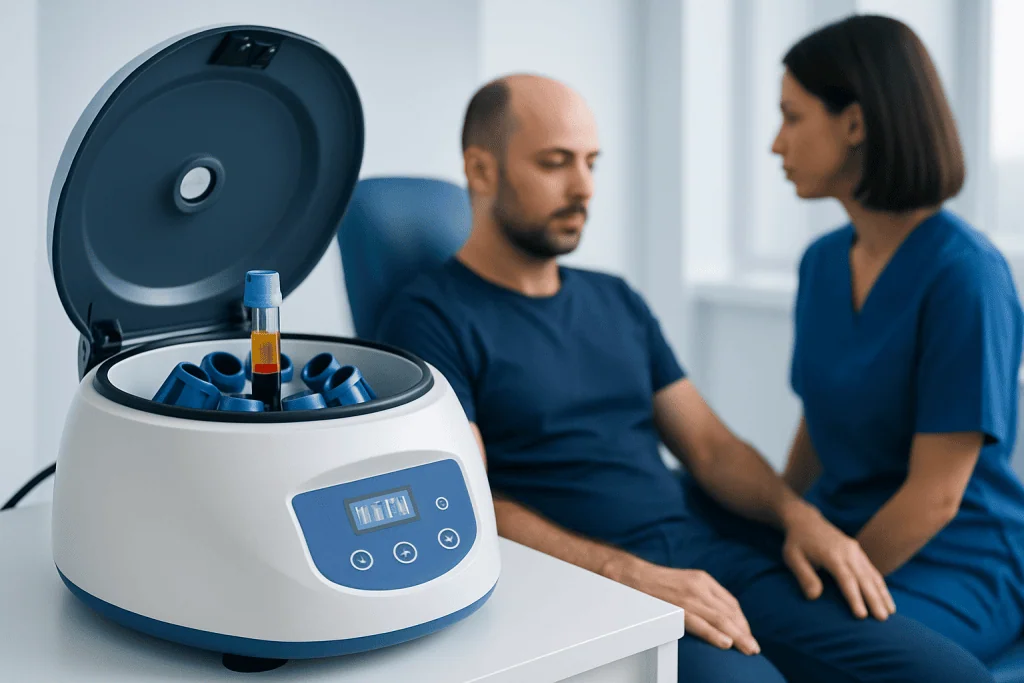
PRP treatment usually starts with drawing a small amount of blood from the arm. The sample is placed in a centrifuge to separate and concentrate the platelet-rich portion. This prepared plasma is then injected into targeted scalp areas using multiple small injections.
The procedure is usually done in an outpatient setting. The scalp may be cleaned first, and some clinics use cooling, vibration, or local numbing methods to improve comfort. Because the material comes from the patient’s own blood, allergic reactions are generally not expected, though temporary tenderness, redness, swelling, or pinpoint bleeding can happen.
Most people return to normal daily activities soon afterward. Doctors often give short-term aftercare instructions, such as when to wash the hair, when to resume exercise, and whether to pause certain scalp products for a brief period. Following the treating clinician’s instructions matters because aftercare can vary by technique.
PRP is often tolerated well, but it is still a medical procedure and should be performed by qualified professionals. People with certain blood disorders, active scalp infection, uncontrolled medical conditions, or medications that affect platelets may need individualized advice or may not be suitable candidates.
Treatment Options Beyond PRP and Long-Term Self-Care
PRP is only one part of hair-loss management. For pattern hair loss, evidence-based treatment often includes medications, correction of nutritional deficiencies when present, and attention to scalp health. Combining treatments can sometimes produce better results than relying on one method alone, especially when the goal is to preserve existing hair.
Self-care also matters. Gentle hair care, avoiding excessive traction from tight hairstyles, managing scalp conditions such as dandruff, and maintaining good general health can all support treatment outcomes. Severe dieting, untreated illness, and ongoing scalp inflammation can work against hair recovery.
People considering more than one option may benefit from structured guidance about medical treatment for hair loss and, when appropriate, surgical restoration. An individualized plan is especially important because goals vary: one person may want to slow shedding, while another may want denser coverage in specific areas.
Near the end of the treatment journey, some patients seek multidisciplinary assessment to understand how diagnosis, medical treatment, and procedural options fit together. Acibadem International’s multidisciplinary specialists in JCI-accredited hospitals diagnose and treat hair-loss conditions for international patients as part of personalized care planning.
When to Seek Medical Care
Medical evaluation is advisable before PRP if hair loss is sudden, rapidly worsening, patchy, or accompanied by scalp redness, pain, scaling, or pus. These features can point to causes that need prompt diagnosis and targeted treatment.
It is also sensible to seek care if thinning is associated with fatigue, menstrual changes, major weight loss, recent illness, new medications, or a history of autoimmune disease. These clues may suggest internal factors contributing to shedding.
After PRP, patients should contact their doctor if they develop significant swelling, increasing pain, fever, drainage, or any unexpected reaction. Although serious complications are uncommon, new or worsening symptoms should always be assessed by a qualified clinician.
Frequently asked questions
Does PRP hair treatment really work?
PRP hair treatment can help some people, especially those with androgenetic alopecia or pattern hair loss. It appears to work best when follicles are still active and treatment starts before extensive permanent hair loss has occurred.
How long does it take to see PRP results for hair loss?
Results are usually gradual rather than immediate. Many people need several months before they can judge whether shedding has decreased or hair density has improved.
Is PRP better than a hair transplant?
They are different treatments for different goals. PRP aims to support existing follicles, while a hair transplant moves follicles into areas with significant loss, so the best option depends on the pattern and stage of hair loss.
Can PRP regrow hair in completely bald areas?
PRP is less likely to help in areas where follicles are no longer functioning. It tends to be more useful for thinning hair than for smooth, long-standing bald patches.
Is PRP for hair loss safe?
Because PRP uses the patient’s own blood, allergic reactions are not usually expected. Even so, it is still a medical procedure, and temporary discomfort, swelling, redness, or tenderness can occur.
Who should not have PRP for hair loss without medical advice?
People with active scalp infection, unexplained sudden hair loss, certain blood disorders, or significant medical conditions should first be assessed by a doctor. A proper diagnosis helps determine whether PRP is suitable and whether another treatment should come first.
References
- American Academy of Dermatology
- National Institute for Health and Care Excellence
- British Association of Dermatologists
- Cochrane
- National Library of Medicine
This article is for general information only and is not a substitute for professional medical advice. Please consult a qualified doctor about your individual situation.
PRP for Hair Loss in Turkey — costs, top hospitals & a free quote
JCI-accredited · board-certified surgeons · reply within 24h
Add us as a Preferred Source to see more of our trusted health content across Google Search, AI Overviews and Discover.