PSMA PET Scan for Prostate Cancer: When It Is Used and What It Can Show

PSMA PET combines a PET scan with a tracer that attaches to PSMA, a protein commonly found on prostate cancer cells. It is especially useful for initial staging in certain patients and for detecting recurrence when PSA rises after treatment.
Key Takeaways
- PSMA PET combines a PET scan with a tracer that attaches to PSMA, a protein commonly found on prostate cancer cells.
- It is especially useful for initial staging in certain patients and for detecting recurrence when PSA rises after treatment.
- The scan can reveal cancer in the prostate, lymph nodes, bones, and other areas of the body.
- Results help doctors choose or adjust treatment, but the scan is not needed for every person with prostate cancer.
- Preparation is usually simple, and most people can return to normal activities shortly after the test.
A PSMA PET scan for prostate cancer is an advanced imaging test that can help doctors find prostate cancer cells more accurately than many conventional scans. It is often used to stage newly diagnosed cancer, look for recurrence, and guide treatment decisions.
Overview: What a PSMA PET Scan Is
A PSMA PET scan for prostate cancer is a type of molecular imaging test. It combines positron emission tomography, known as PET, with CT or sometimes MRI to create detailed pictures of the body. Before the scan, a small amount of radioactive tracer is injected into a vein. This tracer is designed to attach to prostate-specific membrane antigen, or PSMA, a protein that is often present in higher amounts on prostate cancer cells.
Once the tracer circulates through the body, the scanner can detect areas where it has collected. These areas may suggest the presence of prostate cancer cells. Because the scan looks at biological activity rather than only anatomy, it can sometimes show disease that is too small or too subtle to be seen on standard imaging alone.
PSMA PET is not the same as a routine screening test. It is usually performed after prostate cancer has already been diagnosed or strongly suspected. In many cases, it is used to answer specific questions such as whether the cancer has spread, whether it has returned after treatment, or where the disease is located before treatment planning begins.
When It Is Used
Doctors may recommend a PSMA PET scan for prostate cancer in several common situations. One important use is initial staging, which means checking whether a newly diagnosed prostate cancer is confined to the prostate or has spread to lymph nodes, bones, or other tissues. This can be especially helpful in people with features that suggest a higher-risk cancer.
Another major use is biochemical recurrence. This term refers to a rise in prostate-specific antigen, or PSA, after treatment such as surgery or radiation. In this setting, PSMA PET may help locate where the cancer has returned, even when the PSA level is relatively low and standard scans do not show a clear answer.
The scan may also be used to support treatment planning. For example, if disease is found only in a limited number of places, doctors may tailor radiation or other therapies more precisely. In advanced cases, PSMA PET can also help determine whether a patient may be suitable for certain targeted treatments, including radionuclide therapy, depending on the full clinical picture.
Not every person with prostate cancer needs this scan. The decision depends on factors such as PSA level, biopsy findings, Gleason grade group, stage, previous treatment, and the question the doctor is trying to answer.
What the Scan Can Show

The main value of a PSMA PET scan for prostate cancer is that it can show where prostate cancer cells may be located in the body. It may identify cancer within the prostate itself, nearby tissues, pelvic lymph nodes, distant lymph nodes, bones, and sometimes organs such as the liver or lungs. This wider view can be important when deciding between local treatment and treatment aimed at disease throughout the body.
Compared with some conventional imaging methods, PSMA PET can be more sensitive for detecting small sites of disease. In practical terms, this means it may find spread that is not visible on a standard CT scan or bone scan. It can also sometimes show that an abnormality seen on another scan is less likely to be cancer, although scan findings still need careful medical interpretation.
Even so, the scan has limits. Not every prostate cancer cell shows PSMA strongly, and some benign conditions or other cancers can also take up the tracer. Inflammation, healing tissues, and certain noncancerous findings may occasionally appear suspicious. For that reason, doctors interpret PSMA PET together with PSA results, pathology, medical history, and other imaging such as MRI scan or PET/CT imaging.
How to Prepare and What Happens During the Test
Preparation for a PSMA PET scan is usually straightforward. The imaging team will provide instructions, which may vary slightly depending on the tracer used and the center performing the test. Patients are often advised to stay well hydrated and to tell the team about medications, allergies, kidney problems, recent procedures, or whether they may have difficulty lying still.
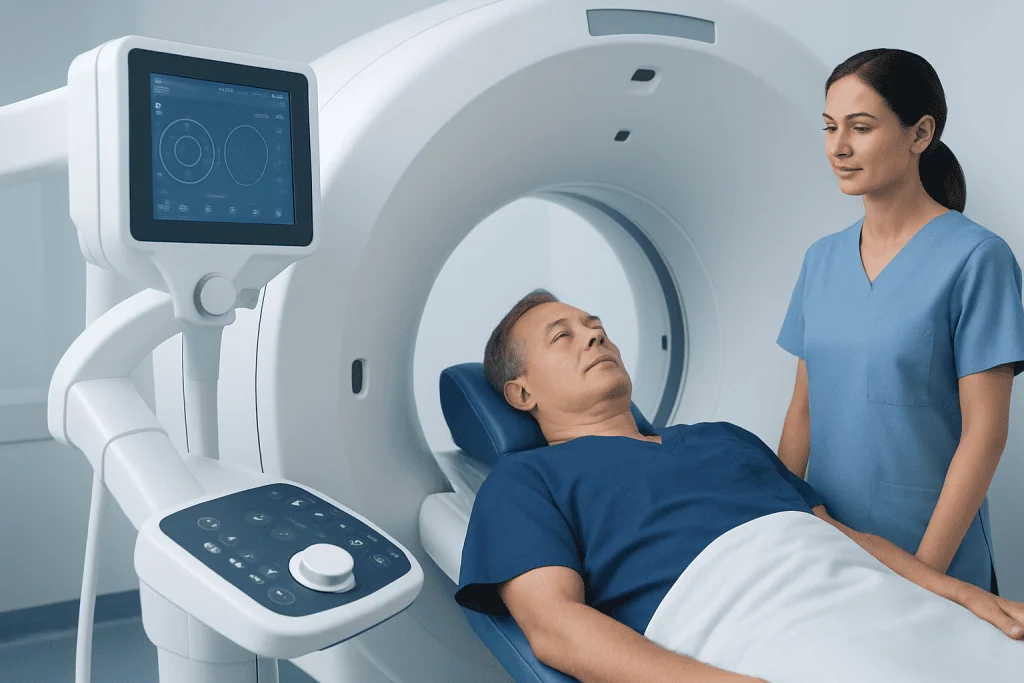
At the appointment, a small intravenous line is placed and the tracer is injected. There is then a waiting period while the tracer circulates through the body. After that, the patient lies on the scanning table while the machine takes images. The test itself is painless, though remaining still can be uncomfortable for some people.
The full visit often takes longer than the scan itself because of the injection and uptake time. Most people can go home the same day and return to usual activities. Drinking fluids afterward may be recommended to help clear the tracer from the body. Radiation exposure is generally considered low and medically justified when the scan is used appropriately.
Benefits, Limits, and Possible Risks
The main benefit of PSMA PET is more precise information. Better imaging can improve staging, clarify whether a rising PSA reflects local recurrence or more distant disease, and help doctors choose the most suitable treatment. For some patients, this may reduce uncertainty and avoid treatments that are unlikely to help.
However, no imaging test is perfect. A PSMA PET scan may miss very tiny deposits of cancer, particularly if PSA is extremely low or if the tumor expresses little PSMA. It can also show findings that look suspicious but are not actually prostate cancer. This means a scan result does not always provide a final answer on its own.
Risks are usually minimal. The radioactive tracer is used in a very small amount, and serious reactions are uncommon. Some people may feel mild discomfort from the IV needle or from lying still during imaging. In selected cases, doctors may recommend additional tests, follow-up imaging, or biopsy to confirm what the scan shows.
How Results Influence Treatment Decisions
PSMA PET findings can significantly shape the next steps in care. If imaging suggests that the cancer is confined to the prostate or nearby area, treatment may focus on local control with surgery, radiation, or both. If the scan shows spread to distant sites, the care plan may shift toward systemic therapy or a combined approach.
In people with recurrence after surgery or radiation, the scan can help identify whether treatment should be directed to the prostate bed, a few metastatic spots, or more widespread disease. This can affect the timing and type of therapies used. It may also help the team monitor whether known disease is changing over time.
PSMA PET is only one part of decision-making. Doctors also consider symptoms, PSA trend, biopsy results, general health, and personal preferences. Management may include options such as robotic urologic surgery or radiation oncology treatment, depending on the stage and goals of care. Related information about prostate cancer can also help patients understand the broader treatment pathway.
Near the end of the evaluation process, some patients seek care in centers with coordinated imaging, urology, medical oncology, radiation oncology, and nuclear medicine services. Acibadem International’s multidisciplinary specialists and JCI-accredited hospitals diagnose and treat prostate cancer for international patients as part of this team-based approach.
Questions to Ask the Doctor and When to Seek Medical Advice
Patients often benefit from asking why the scan is being recommended and what clinical question it is meant to answer. It can also help to ask how the result may change treatment, whether other scans are needed, and what the possible next steps are if the findings are positive, negative, or unclear.
Medical advice should be sought promptly if there are new or worsening symptoms such as bone pain, unexplained weight loss, urinary obstruction, weakness, or severe fatigue. These symptoms do not always mean the cancer has advanced, but they do need professional assessment. It is also important to contact the care team if there are concerns after the scan, such as an unexpected reaction at the injection site or confusion about follow-up.
For many people, hearing that a new imaging test is needed can be stressful. Clear communication with the care team can make the process easier. A qualified doctor can explain whether a PSMA PET scan for prostate cancer is appropriate, how to interpret the findings, and how those findings fit into an overall treatment plan.
Frequently asked questions
Is a PSMA PET scan better than a regular CT scan or bone scan?
A PSMA PET scan can provide more detailed information about prostate cancer in many situations, especially when doctors are looking for small areas of spread or recurrence. However, it is not automatically better for every patient or every purpose. The most useful test depends on the clinical question, cancer stage, and prior treatment.
Can a PSMA PET scan detect early recurrence after prostate cancer treatment?
Yes, it is often used when PSA rises after surgery or radiation to look for recurrence. It may find disease even when conventional imaging is negative. Even so, very small or low-PSMA tumors may still be missed, so results must be interpreted carefully.
Does a PSMA PET scan confirm prostate cancer by itself?
No. It can strongly suggest where prostate cancer may be present, but it does not replace biopsy or pathology when tissue confirmation is needed. Doctors use it together with PSA levels, biopsy results, physical examination, and other imaging.
How long does a PSMA PET scan take?
The scan itself is usually fairly short, but the total visit is longer because time is needed for the tracer injection and uptake period. Many appointments last a few hours from start to finish. The exact timing varies by center and the tracer protocol used.
Are there side effects from the tracer?
Side effects are uncommon, and most people tolerate the tracer well. The amount of radioactivity is small, and serious reactions are rare. Patients should still tell the medical team about allergies, medical conditions, and any past reactions to imaging agents.
Will the scan result change my treatment plan?
It can. If the scan shows cancer only in one area, local treatment may be emphasized, while more widespread disease may lead to a different plan. The doctor will combine the scan result with other clinical information before making recommendations.
References
- National Cancer Institute
- American Cancer Society
- European Association of Urology
- National Comprehensive Cancer Network
- Society of Nuclear Medicine and Molecular Imaging
This article is for general information only and is not a substitute for professional medical advice. Please consult a qualified doctor about your individual situation.
Prostate Cancer in Turkey — costs, top hospitals & a free quote
JCI-accredited · board-certified surgeons · reply within 24h
Add us as a Preferred Source to see more of our trusted health content across Google Search, AI Overviews and Discover.