Psoriasis Pictures: A Complete Medical Overview

Psoriasis often appears as well-defined red, pink, violet, or brownish plaques with silvery scale, but the look varies by skin tone. Plaque psoriasis is the most common type, though scalp, nail, guttate, inverse, pustular, and erythrodermic forms can also occur.
Key Takeaways
- Psoriasis often appears as well-defined red, pink, violet, or brownish plaques with silvery scale, but the look varies by skin tone.
- Plaque psoriasis is the most common type, though scalp, nail, guttate, inverse, pustular, and erythrodermic forms can also occur.
- Photos can guide recognition, but psoriasis may resemble eczema, fungal infections, seborrheic dermatitis, or other skin conditions.
- Diagnosis is usually clinical, based on skin, scalp, and nail examination; some people may need a skin biopsy.
- Treatment ranges from moisturizers and medicated creams to light therapy and systemic medicines, depending on severity and body area involved.
- Medical assessment is important if symptoms are widespread, painful, rapidly changing, or associated with joint pain.
Psoriasis pictures can help people recognize common patterns such as thick scaly plaques, scalp flaking, nail changes, or smooth inflamed patches in skin folds. However, psoriasis can look different across skin tones and body areas, so diagnosis should be confirmed by a qualified doctor, usually a dermatologist.
What Psoriasis Pictures Can and Cannot Show
Psoriasis pictures usually show patches of inflamed skin with clearly defined borders and a dry, flaky, or silvery surface. In many people, these plaques develop on the elbows, knees, scalp, lower back, hands, feet, or nails. Looking at images can be useful for understanding common patterns, but pictures alone cannot confirm a diagnosis.
One reason is that psoriasis does not look exactly the same in every person. On lighter skin, plaques may appear pink or red with white-silver scale. On darker skin, they may look violet, purple, grayish, or dark brown, and scaling may be less obvious in photos. After a flare settles, the skin can also show lingering light or dark marks.
Another limitation is that several skin conditions can resemble psoriasis. Eczema, seborrheic dermatitis, fungal infections, contact dermatitis, and some drug eruptions may cause redness, itching, and scaling. A clinician considers the pattern, body location, nail findings, symptoms, and medical history rather than relying on appearance alone.
Psoriasis is a chronic inflammatory skin disease, not an infection, and it is not contagious. It tends to come and go over time, with periods of worsening called flares and quieter periods when the skin improves.
How Psoriasis Commonly Looks on the Skin
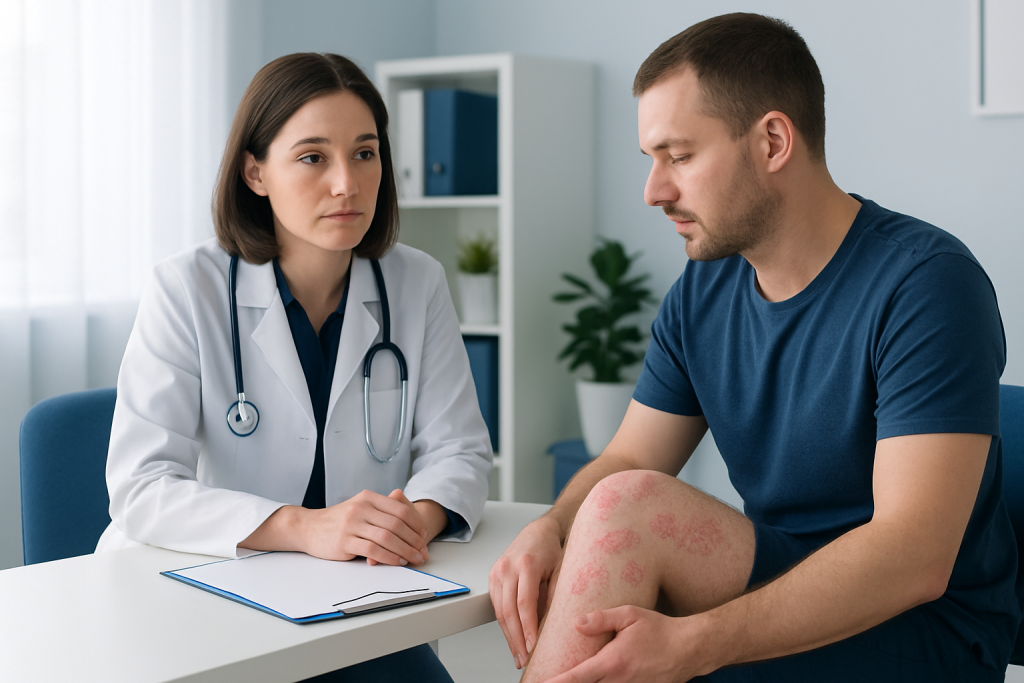
The most familiar psoriasis pictures are those of plaque psoriasis, the commonest form. These plaques are usually raised, sharply outlined, and covered with dry scale. They may itch, sting, crack, or bleed, especially if the skin becomes very dry or is scratched.
Common body sites include the elbows, knees, scalp, and lower back, but plaques can develop almost anywhere. Some people have a few small patches, while others have larger areas that join together. Friction and pressure can influence where lesions appear, which is why areas such as the waistline or skin under a watch strap may become involved.
Psoriasis can also affect the nails. Pictures may show tiny pits in the nail surface, yellow-brown discoloration, thickening, crumbling, or lifting of the nail away from the nail bed. Nail involvement can be a clue that the underlying diagnosis is psoriasis rather than another rash.
In skin of color, psoriasis may appear less bright red and more hyperpigmented or violaceous. That difference matters because psoriasis can be under-recognized when people expect it to match the appearance seen in lighter skin. Good clinical evaluation takes skin tone into account.
Types of Psoriasis and Their Typical Appearance
Different types of psoriasis create different picture patterns. Plaque psoriasis is the best-known type, but it is not the only one. Understanding these variations helps explain why some people have flaking, others have smooth shiny patches, and others notice small droplet-like spots.
- Plaque psoriasis: Thick, well-defined, scaly patches on the elbows, knees, scalp, trunk, or limbs.
- Scalp psoriasis: Flaking and scaling on the scalp, sometimes extending onto the forehead, behind the ears, or the neck. It may resemble severe dandruff.
- Guttate psoriasis: Many small, drop-shaped spots, often appearing suddenly after a throat infection, especially in children and young adults.
- Inverse psoriasis: Smooth, red or darker inflamed patches in body folds such as the armpits, groin, under the breasts, or between the buttocks. Scale may be minimal because of moisture and friction.
- Pustular psoriasis: White or yellowish pustules on inflamed skin. This form needs medical assessment because it can be more serious.
- Erythrodermic psoriasis: Widespread redness and scaling over large areas of the body. This is uncommon but urgent.
Some people also have associated psoriatic arthritis, which can cause joint pain, swelling, or stiffness along with skin or nail changes. When psoriasis pictures are reviewed in a medical setting, clinicians also ask about joint symptoms because the skin and joints can be affected together.
If the diagnosis is uncertain, a dermatologist may compare the appearance with conditions such as eczema or fungal rashes, especially when lesions are in skin folds or on the scalp.
What Causes Psoriasis and What Triggers Flares
Psoriasis develops because of an overactive immune response that speeds up skin cell turnover. Instead of maturing and shedding at a usual pace, skin cells build up too quickly, creating thickened, scaly areas. Genetics also play a role, which is why psoriasis sometimes runs in families.
Although the exact cause differs from person to person, several triggers are well recognized. Skin injury, infections such as streptococcal throat infection, emotional stress, smoking, heavy alcohol use, and some medications can contribute to flares. Dry weather may also worsen symptoms in some people.
Body weight, metabolic health, and coexisting inflammatory conditions may influence disease severity. Psoriasis is more than a superficial skin problem for some patients, and doctors may consider overall health when planning treatment. This broader view helps identify factors that can aggravate the disease or affect quality of life.
Triggers do not cause psoriasis in everyone, and avoiding them does not always prevent flares completely. Still, identifying personal patterns can help patients and clinicians build a more effective long-term management plan.
How Doctors Diagnose Psoriasis
Diagnosis usually starts with a careful history and skin examination. A doctor looks at the shape, border, thickness, scale, body distribution, scalp involvement, and any nail changes. They also ask about itching, pain, family history, previous flares, infections, medications, and whether there is any joint stiffness or swelling.
In many cases, psoriasis can be diagnosed clinically without extensive testing. If the appearance is unusual or overlaps with another condition, a small skin biopsy may be recommended. Under the microscope, psoriasis has characteristic changes that can help confirm the diagnosis.
Additional evaluation may be needed if symptoms suggest complications or related conditions. For example, people with joint complaints may benefit from assessment for inflammatory arthritis, and widespread or difficult disease may require a broader review of general health before treatment decisions are made.
Patients who are concerned after comparing their skin to psoriasis pictures should not self-diagnose only from online images. A confirmed diagnosis matters because treatments for look-alike conditions can differ significantly.
Treatment Options for Psoriasis
Treatment depends on the type of psoriasis, the body area affected, the amount of skin involved, the severity of symptoms, and how much the condition affects daily life. For many people with mild disease, basic skin care and prescription topical medicines are the foundation of treatment. These may include medicated creams, ointments, lotions, or scalp preparations that reduce inflammation and scaling.
Regular moisturizing is important because it helps reduce dryness, itch, and cracking. In thicker plaques, clinicians may use medicines that soften scale or improve the penetration of topical treatment. Sensitive areas such as the face, genitals, or skin folds need special care because stronger preparations are not suitable for every location.
For more extensive or persistent disease, doctors may recommend phototherapy to slow excessive skin cell turnover and calm inflammation. Some patients with moderate to severe psoriasis may need oral or injectable systemic treatments, including modern biologic therapies used as part of individualized dermatology care. If nails are significantly affected or symptoms overlap with arthritis, treatment planning may involve more than one specialist.
Because not every rash is psoriasis, treatment should match the correct diagnosis. If a fungal infection, seborrheic dermatitis, or contact reaction is present instead, management will be different. In selected cases with joint symptoms, coordinated rheumatology evaluation may also be appropriate.
Self-care, Skin Care, and Flare Prevention
Good daily skin care can support medical treatment and may reduce discomfort between flares. Fragrance-free moisturizers, gentle cleansers, and lukewarm rather than very hot showers are often helpful. Rubbing, scratching, and picking at plaques can worsen irritation and sometimes trigger new lesions in vulnerable skin.
Keeping the scalp and body well moisturized may make scale less noticeable and improve comfort. Some people find that cold, dry seasons worsen their psoriasis, so indoor humidity and consistent emollient use become even more important during winter months. Sun exposure should be approached carefully; while controlled light can help some patients, unprotected sunburn can trigger a flare.
Lifestyle measures also matter. Smoking cessation, moderation in alcohol use, stress management, regular exercise, and attention to weight and general metabolic health may all support better long-term control. These steps do not replace prescribed treatment, but they can be part of a practical prevention plan.
Patients should be cautious with unverified home remedies. Products that heavily irritate the skin or promise a cure can worsen symptoms. A doctor or pharmacist can advise which over-the-counter products are most suitable for sensitive or inflamed skin.
When to Seek Medical Care
Medical assessment is advisable when a persistent scaly rash does not improve, spreads, becomes painful, or interferes with sleep, work, or daily comfort. A doctor should also evaluate symptoms if the rash involves the face, genitals, hands, feet, or nails, since these areas can require more tailored treatment.
Prompt care is especially important if there is widespread redness, pustules, fever, skin cracking with significant pain, or a rapidly worsening flare. Joint pain, morning stiffness, swollen fingers or toes, or heel pain should also be discussed because they may suggest psoriatic arthritis.
For international patients seeking specialist care, Acibadem International’s multidisciplinary teams in JCI-accredited hospitals evaluate and treat psoriasis and related inflammatory conditions. A structured review by dermatology and, when needed, other specialties can help confirm the diagnosis and guide long-term management safely.
Even if psoriasis pictures seem to match a person’s symptoms, a qualified clinician is the best source for diagnosis and treatment advice. Early evaluation can prevent unnecessary discomfort and help patients find a plan that fits their skin type, disease pattern, and lifestyle.
Frequently asked questions
What do psoriasis pictures usually look like?
Psoriasis pictures often show sharply bordered patches of inflamed skin covered with dry, silvery scale. The color may look red or pink on lighter skin and purple, grayish, or dark brown on darker skin. Common sites include the elbows, knees, scalp, and lower back.
Can psoriasis be diagnosed from pictures alone?
No, pictures can help with recognition but cannot confirm the diagnosis. Psoriasis can resemble eczema, dandruff, fungal infections, and other rashes. A doctor usually makes the diagnosis by examining the skin, scalp, and nails and reviewing symptoms and history.
Is psoriasis always itchy?
Not always. Many people do feel itching, burning, or soreness, but some have little discomfort and mainly notice scale or visible plaques. Symptom intensity varies widely from person to person and from one flare to another.
How is scalp psoriasis different from dandruff in pictures?
Scalp psoriasis often forms thicker, more defined plaques with noticeable scale and may extend beyond the hairline. Dandruff or seborrheic dermatitis usually causes finer flaking and less sharply bordered inflammation. Because the two can overlap, clinical evaluation can be helpful.
What are the first signs of psoriasis?
Early signs may include a small scaly patch, persistent scalp flaking, itch, or nail pitting. Some people first notice drop-like spots after an infection, while others develop slowly enlarging plaques over time. The first symptoms depend on the type of psoriasis.
When should someone worry about a psoriasis-like rash?
A doctor should assess a rash that is persistent, spreading, painful, or affecting sensitive areas such as the face, genitals, hands, feet, or nails. Urgent evaluation is needed for widespread redness, pustules, fever, or severe skin pain. Joint pain or morning stiffness should also be discussed promptly.
References
- American Academy of Dermatology
- National Institute of Arthritis and Musculoskeletal and Skin Diseases
- National Health Service
- Mayo Clinic
- World Health Organization
This article is for general information only and is not a substitute for professional medical advice. Please consult a qualified doctor about your individual situation.
Hair transplant in Turkey — costs, graft counts & a free assessment
JCI-accredited · board-certified surgeons · reply within 24h
Add us as a Preferred Source to see more of our trusted health content across Google Search, AI Overviews and Discover.

More from the Health Library

Military Press: An Evidence-Based Guide for Patients

Stridor: An Evidence-Based Guide for Patients

Myers Cocktail IV — Explained by Medical Evidence, Not Myths

Coccyx: What Patients Need to Know

Oas Allergy: An Evidence-Based Guide for Patients