Psychosis or Neurological Disease? When Neuropsychiatry Adds Answers

Psychosis can arise from psychiatric illness, neurological disease, medical conditions, substances, or a combination of factors. Warning signs such as sudden confusion, seizures, weakness, fever, or major personality change may suggest a neurological or medical cause.
Key Takeaways
- Psychosis can arise from psychiatric illness, neurological disease, medical conditions, substances, or a combination of factors.
- Warning signs such as sudden confusion, seizures, weakness, fever, or major personality change may suggest a neurological or medical cause.
- Neuropsychiatry combines neurological and psychiatric assessment to understand symptoms affecting both brain function and behavior.
- Diagnosis may involve history-taking, neurological examination, blood tests, brain imaging, and sometimes EEG or lumbar puncture.
- Treatment depends on the cause and may include medications, management of an underlying neurological disorder, and supportive therapy.
- Early professional assessment can improve safety, symptom control, and long-term planning.
Psychosis is not always caused by a primary mental health condition. Neuropsychiatry helps clarify whether symptoms may be linked to a neurological, medical, or psychiatric disorder so treatment can be better targeted.
Overview: Why the Question Matters
Psychosis describes a group of symptoms in which a person has difficulty distinguishing what is real from what is not. This may include hallucinations, delusions, disorganized thinking, unusual behavior, or marked confusion. Although many people associate psychosis with psychiatric conditions such as schizophrenia or severe mood disorders, it can also be caused by neurological disease or other medical problems.
This is where neuropsychiatry becomes especially helpful. Neuropsychiatry looks at the connection between brain function, emotions, thinking, and behavior. When symptoms overlap between mental health and neurology, a neuropsychiatric assessment can help answer an important question: is the problem primarily psychiatric, primarily neurological, or a mixture of both?
The distinction matters because treatment can be very different depending on the cause. For example, psychosis related to epilepsy, autoimmune brain inflammation, dementia, substance use, or infection needs a different approach than psychosis caused by a primary psychiatric illness. A careful evaluation can reduce delays in care and help patients and families better understand what is happening.
Symptoms That May Suggest Psychosis
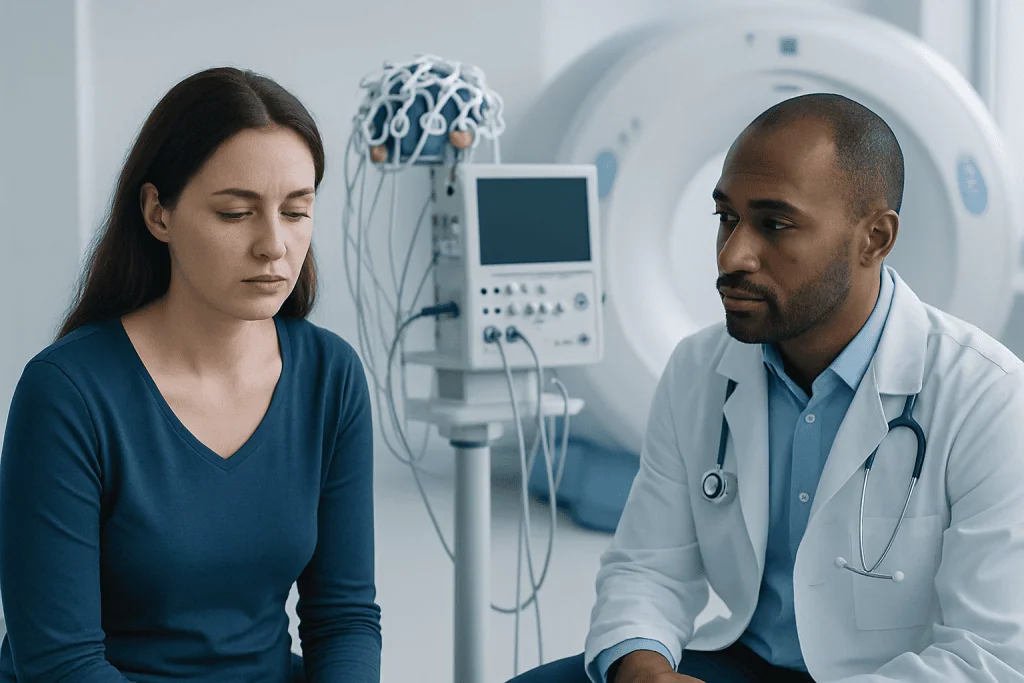
Psychosis itself is a symptom pattern rather than a single disease. Common features include hearing or seeing things that others do not, strongly held false beliefs, suspiciousness, disorganized speech, agitation, social withdrawal, and a decline in daily functioning. Some people also show sleep disturbance, anxiety, depression, or emotional blunting.
Not every unusual thought or behavior means psychosis. Symptoms usually become concerning when they are persistent, interfere with work, school, relationships, or self-care, or create safety concerns. Loved ones may notice changes before the affected person does, especially when insight is reduced.
Certain features may raise suspicion that a neurological or medical condition is involved rather than a primary psychiatric disorder alone. These can include:
- Sudden onset of symptoms over hours or days
- Fluctuating alertness or confusion
- Memory loss or new cognitive decline
- Seizures, fainting, or unusual movements
- Weakness, numbness, balance problems, or speech changes
- Headache, fever, or recent infection
- Symptoms starting later in life with no prior psychiatric history
These signs do not confirm a neurological disease, but they do suggest the need for broader assessment. Conditions affecting the brain can sometimes first appear as changes in mood, behavior, or perception before more obvious neurological symptoms develop.
When a Neurological Disease Can Look Like Psychosis
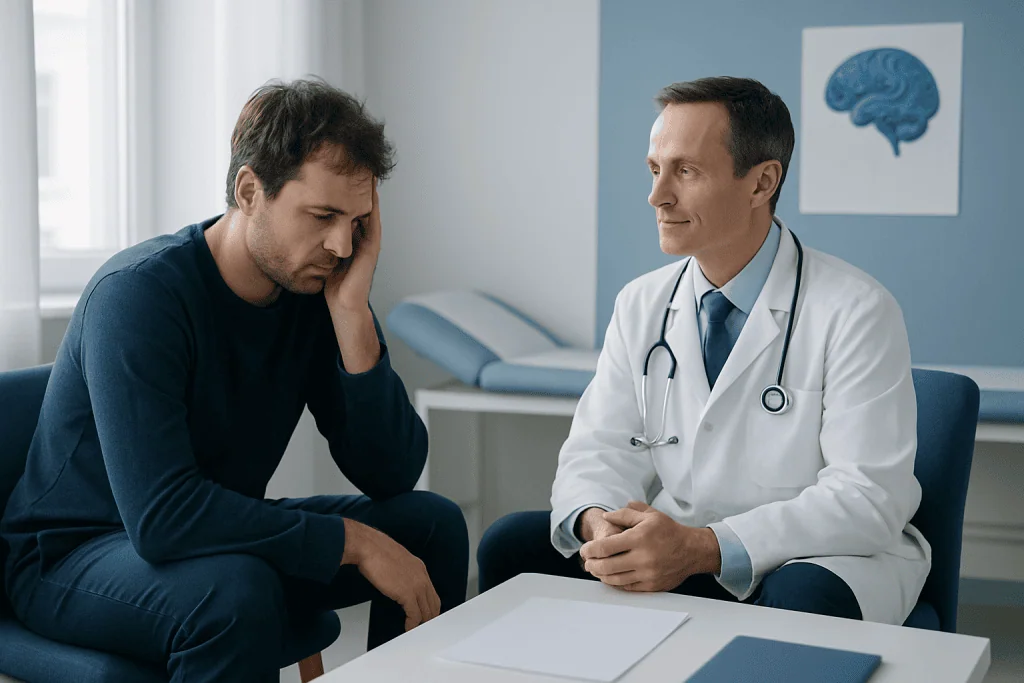
Several neurological conditions can produce psychotic symptoms. Seizure disorders, especially temporal lobe epilepsy, may cause unusual perceptions, fear, déjà vu, confusion, or episodes that resemble psychiatric illness. Autoimmune encephalitis can lead to sudden behavioral change, hallucinations, memory problems, seizures, and reduced awareness. Neurodegenerative disorders, including some forms of dementia and Parkinson-related conditions, may also affect perception and thinking.
Brain tumors, stroke, traumatic brain injury, central nervous system infections, multiple sclerosis, Wilson disease, thyroid disease, and severe metabolic disturbances can also contribute to psychosis. In some cases, substance use, medication side effects, or withdrawal may be the main trigger. Examples include stimulants, cannabis in vulnerable individuals, corticosteroids, and some Parkinson medications.
The reverse is also true: a primary psychiatric illness can sometimes look neurological. Severe depression, bipolar disorder, schizophrenia spectrum disorders, and functional neuropsychiatric conditions may involve speech changes, slowed movement, poor concentration, or apparent cognitive problems. Because the overlap is real, the goal is not to guess based on one symptom but to look at the whole clinical picture.
Neuropsychiatry is particularly useful when symptoms are complex or unexplained. A team may also consider related conditions such as epilepsy or dementia when the pattern suggests a broader brain-based disorder.
How Neuropsychiatry Approaches Diagnosis
Diagnosis begins with a detailed clinical history. Doctors ask when symptoms started, how quickly they developed, whether they come and go, and whether there are triggers such as infection, sleep loss, injury, or substance use. Family members are often important sources of information, especially if the person is confused, distressed, or has limited insight.
A neuropsychiatric assessment usually includes both a mental state examination and a neurological examination. The clinician looks at attention, memory, language, thought process, mood, perception, and judgment, while also checking movement, reflexes, coordination, sensation, and signs of focal brain dysfunction. This combined approach can reveal clues that might be missed if only one specialty perspective is used.
Depending on the situation, tests may include blood work, toxicology screening, brain imaging such as MRI or CT, and an EEG to assess for seizure activity. In selected cases, lumbar puncture, autoimmune testing, neuropsychological assessment, or sleep studies may be needed. Imaging and advanced diagnostic tools such as MRI scanning can help identify structural or inflammatory causes, while EEG testing may be useful when episodes suggest seizures.
The aim is not simply to label symptoms, but to understand the underlying cause as accurately as possible. Some people receive a clear diagnosis quickly. Others need follow-up over time, because early symptoms can evolve and become easier to interpret as more information emerges.
Treatment Options Depend on the Cause
Treatment for psychosis is guided by the underlying diagnosis, symptom severity, and safety needs. If the cause is a primary psychiatric disorder, care may involve antipsychotic medication, treatment for mood symptoms, psychotherapy, family education, and regular follow-up. If there is a neurological or medical cause, treatment focuses first on managing that condition while also relieving distressing psychiatric symptoms.
For example, seizure-related symptoms may improve with epilepsy treatment, while psychosis caused by autoimmune inflammation may need immunotherapy under specialist care. If a medication is contributing to symptoms, adjusting or stopping it under medical supervision may help. In substance-related cases, detoxification support and relapse prevention are often important parts of recovery.
Supportive care matters in all cases. Good sleep, a calm environment, hydration, treatment adherence, and involvement of trusted family members can make a meaningful difference. Occupational therapy, cognitive rehabilitation, and psychological support may help patients return to daily routines after the acute phase.
Because some treatments that help one cause of psychosis may be less suitable for another, specialist guidance is important. For example, some neurological disorders require extra caution with certain psychiatric medications because of side effects on movement, alertness, or seizure threshold.
Prevention, Self-care, and Living With Uncertainty
Not all causes of psychosis can be prevented, but some practical steps may reduce risk or support earlier recognition. These include avoiding recreational drugs, taking prescribed medications only as directed, managing chronic conditions such as diabetes or thyroid disease, and seeking care for significant sleep loss, head injury, or new neurological symptoms.
Families often play a central role in noticing changes. Keeping a simple record of symptoms can be useful, especially if episodes are intermittent. Notes about timing, sleep, recent illness, medication changes, substance use, and unusual behaviors may help the medical team identify patterns.
Living with uncertain symptoms can be stressful. It is common for patients and relatives to want immediate answers, but careful diagnosis sometimes takes time. Regular follow-up, honest communication with clinicians, and asking for clarification about the working diagnosis can make the process feel more manageable.
If symptoms involve memory, concentration, or behavior change over time, clinicians may recommend broader evaluation through services such as neurology assessment or cognitive testing. The goal is to support function and quality of life while continuing to refine the diagnosis when needed.
When to See a Doctor Urgently
Urgent medical assessment is important if psychotic symptoms appear suddenly, especially when they are accompanied by confusion, fever, seizure-like episodes, new severe headache, weakness, difficulty speaking, or reduced consciousness. These combinations can point to a brain or body condition that needs immediate treatment.
Emergency help is also needed if the person is at risk of harming themselves or others, cannot care for basic needs, becomes severely agitated, or is not eating or drinking adequately. Safety comes first. Family members should not try to manage a severe crisis alone.
Even when symptoms are less dramatic, it is wise to seek professional evaluation if there is no previous psychiatric history, if symptoms begin later in life, or if there is a rapid change from the person’s usual personality or functioning. Early assessment can prevent complications and support more accurate treatment planning.
For international patients seeking coordinated evaluation, Acibadem International’s multidisciplinary specialists and JCI-accredited hospitals assess complex neuropsychiatric symptoms with input from neurology, psychiatry, imaging, and laboratory teams.
Frequently asked questions
Can psychosis be caused by something other than a psychiatric illness?
Yes. Psychosis can be linked to neurological disease, infections, autoimmune conditions, metabolic problems, medications, or substance use as well as primary psychiatric disorders. That is why a broad medical assessment is sometimes needed, especially when symptoms are sudden or unusual.
What is the difference between psychiatry and neuropsychiatry?
Psychiatry focuses on mental health conditions affecting mood, thought, and behavior. Neuropsychiatry looks more specifically at symptoms that may relate to both brain function and mental health, especially when neurological and psychiatric features overlap.
Are hallucinations always a sign of schizophrenia?
No. Hallucinations can occur in several conditions, including severe mood disorders, dementia, epilepsy, sleep-related disorders, substance effects, and some medical illnesses. The meaning of hallucinations depends on the full clinical context.
Which tests are commonly used when doctors suspect a neurological cause?
Doctors may use blood tests, brain imaging such as MRI or CT, and an EEG if seizures are a concern. Some patients also need spinal fluid testing, autoimmune studies, or detailed cognitive assessment depending on their symptoms.
Is sudden psychosis more concerning than gradual psychosis?
A very sudden onset can be an important clue to a medical or neurological cause, especially if confusion, fever, or seizures are also present. It does not always mean a dangerous condition, but it should be assessed promptly.
Can neurological disease and psychiatric illness happen together?
Yes. A person may have a neurological condition and also develop anxiety, depression, or psychosis, or they may have a psychiatric illness with symptoms that resemble neurological problems. This overlap is one reason multidisciplinary evaluation can be helpful.
References
- World Health Organization
- National Institute of Mental Health
- National Institute of Neurological Disorders and Stroke
- American Psychiatric Association
- American Academy of Neurology
This article is for general information only and is not a substitute for professional medical advice. Please consult a qualified doctor about your individual situation.
Neuropsychiatry in Turkey — costs, top hospitals & a free quote
JCI-accredited · board-certified surgeons · reply within 24h
Add us as a Preferred Source to see more of our trusted health content across Google Search, AI Overviews and Discover.