Pulmonary Function Tests: What They Measure and What Results Mean
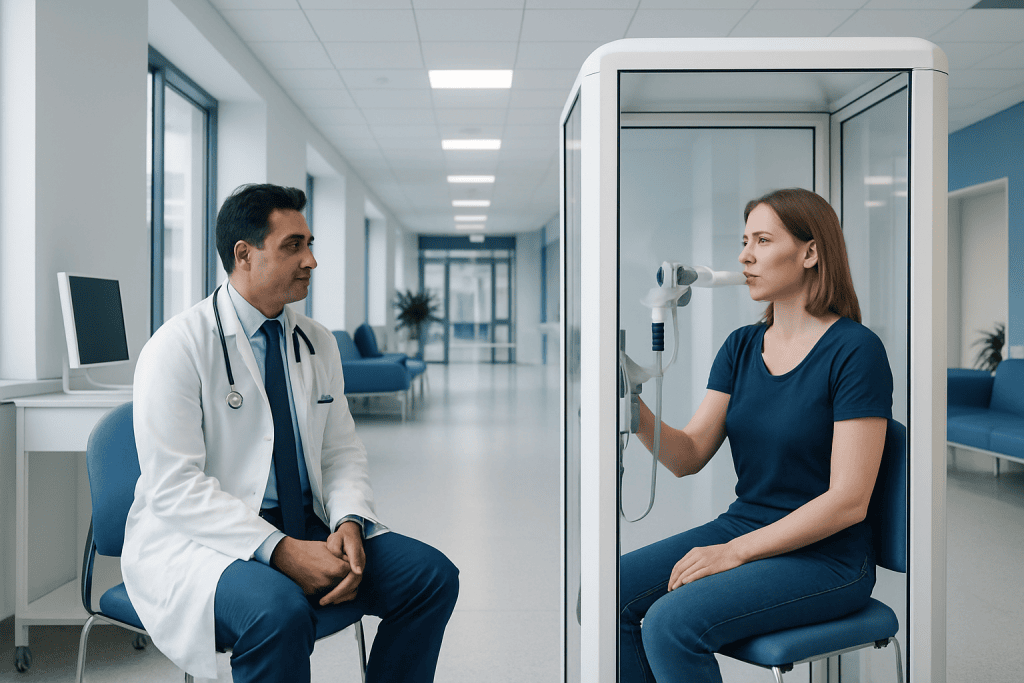
Pulmonary function tests evaluate how much air the lungs can hold, how quickly air moves, and how effectively oxygen passes into the blood. Spirometry is the most common pulmonary function test and is often used to assess asthma, COPD, and unexplained shortness of breath.
Key Takeaways
- Pulmonary function tests evaluate how much air the lungs can hold, how quickly air moves, and how effectively oxygen passes into the blood.
- Spirometry is the most common pulmonary function test and is often used to assess asthma, COPD, and unexplained shortness of breath.
- Results are interpreted together with symptoms, medical history, examination findings, and sometimes imaging or blood tests.
- These tests are generally safe, noninvasive, and may be repeated over time to monitor disease or response to treatment.
- Preparation may include avoiding certain inhalers, smoking, heavy meals, or strenuous exercise before the test, depending on the doctor's instructions.
Pulmonary function tests are breathing tests that show how well the lungs work. They help doctors assess airflow, lung volume, and gas exchange to diagnose respiratory conditions and guide treatment.
Overview of Pulmonary Function Tests
Pulmonary function tests, often called PFTs, are a group of tests that measure how well the lungs are working. They help assess how air flows in and out of the lungs, how much air the lungs can hold, and how well oxygen moves from the lungs into the bloodstream. Doctors commonly use these tests when a person has symptoms such as shortness of breath, wheezing, chronic cough, or reduced exercise tolerance.
These tests do not usually diagnose a condition on their own. Instead, they provide objective measurements that support a broader clinical assessment. The results may help identify patterns seen in conditions such as asthma, chronic obstructive pulmonary disease, interstitial lung disease, or respiratory muscle weakness.
Some pulmonary function tests are simple office-based breathing tests, while others are more detailed and performed in a specialized lung laboratory. Together, they can help doctors confirm a diagnosis, judge severity, monitor changes over time, and evaluate how well treatments are working.
What Pulmonary Function Tests Measure
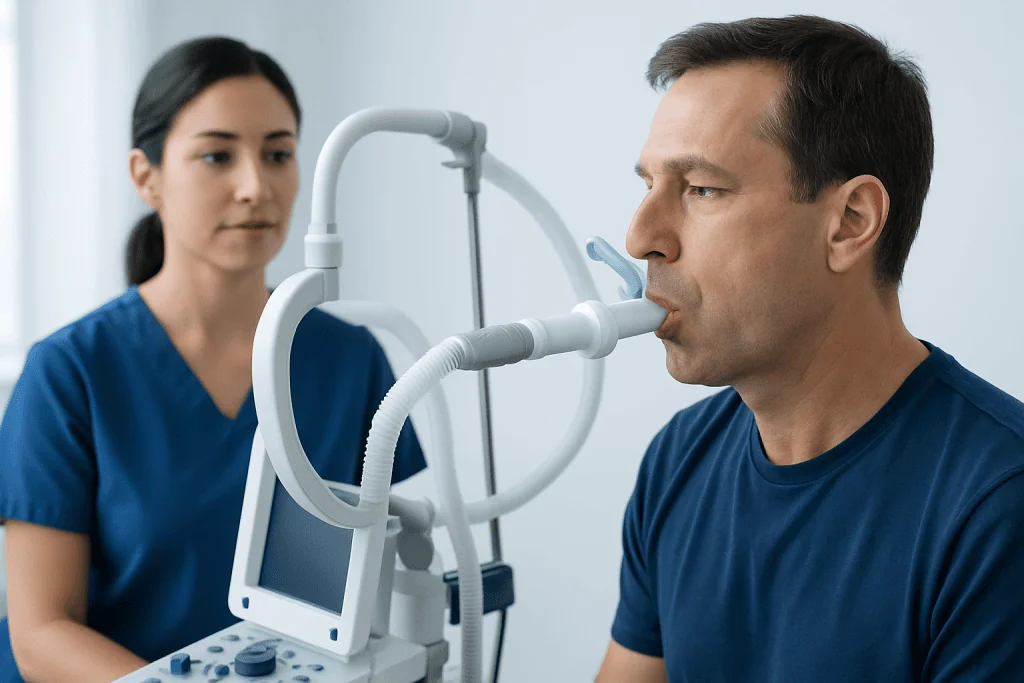
Different pulmonary function tests measure different aspects of lung performance. The most common is spirometry, which evaluates airflow by measuring how much air a person can breathe out and how quickly. A person is asked to take a deep breath and then blow out forcefully into a device. This test provides values such as forced vital capacity (FVC) and forced expiratory volume in one second (FEV1).
Another group of tests measures lung volumes. These show the total amount of air in the lungs and how much remains after exhalation. Lung volume testing can help distinguish between obstructive conditions, in which air has trouble flowing out, and restrictive conditions, in which the lungs cannot fully expand.
Diffusing capacity testing, often called DLCO, measures how well gases pass from the air sacs of the lungs into the blood. This can be useful when evaluating breathlessness, certain smoking-related lung diseases, or scarring conditions affecting lung tissue. Some people may also have pulse oximetry or arterial blood gas testing to assess oxygen levels more directly.
Common measurements may include:
- Airflow rates, such as FEV1
- Total volume of air inhaled and exhaled, such as FVC
- Lung capacity and residual volume
- Gas exchange efficiency, such as DLCO
- Response to a bronchodilator medication
Why Doctors Order These Tests

Doctors may recommend pulmonary function tests for several reasons. One common reason is to investigate symptoms such as unexplained cough, wheezing, chest tightness, or shortness of breath. The tests may also be used when a chest X-ray or CT scan suggests a possible lung problem, or when a patient has a known respiratory condition that needs regular follow-up.
PFTs are frequently used to support the diagnosis of obstructive diseases such as COPD and asthma. They can also help evaluate restrictive patterns caused by lung scarring, chest wall disorders, obesity, or certain neuromuscular conditions. In some cases, they are part of a preoperative evaluation, especially before lung surgery or other major procedures.
These tests may also help monitor the effects of medications or exposure to environmental and occupational irritants. For example, a doctor may compare current results with previous results to see whether lung function is stable, improving, or declining. This information is helpful for long-term treatment planning.
How the Tests Are Performed and How to Prepare
Most pulmonary function tests are noninvasive and are performed while the person is awake and seated. A technician explains each step carefully, since good effort and correct technique are important for accurate results. A mouthpiece is used, and a nose clip may be placed so that all breathing goes through the mouth. Some parts of the test involve normal breathing, while others require deep inhalation or forceful exhalation.
During spirometry, a doctor may repeat the test after giving an inhaled bronchodilator. This shows whether airflow improves with medication, which can help distinguish different lung conditions. More advanced testing may involve sitting in a transparent booth to measure lung volumes or breathing in a small amount of test gas to assess diffusing capacity.
Preparation instructions vary, so patients should follow the advice given by their healthcare team. In general, they may be asked to avoid smoking, strenuous exercise, heavy meals, or certain inhalers for a period before the test. Comfortable clothing is helpful because tight garments around the chest or abdomen can make deep breathing harder.
Patients should tell the medical team if they have recently had chest pain, eye surgery, abdominal surgery, a respiratory infection, or severe dizziness with breathing maneuvers. Although these tests are generally safe, the team may postpone testing or adapt the approach if needed.
What the Results Mean
Pulmonary function test results are compared with expected values based on factors such as age, sex, height, and sometimes ethnicity, depending on the reference standard used by the laboratory. A result lower or higher than expected does not always mean serious disease, but it can indicate a pattern that needs clinical interpretation. The most meaningful reading comes from reviewing the entire set of measurements rather than focusing on one number alone.
In general, an obstructive pattern means that air has difficulty flowing out of the lungs. This is often seen in asthma and COPD and may show a reduced FEV1 and a lower FEV1/FVC ratio. A restrictive pattern means the lungs may not expand fully, leading to lower lung volumes. Reduced diffusing capacity may suggest problems affecting the air sacs, blood vessels, or supporting lung tissue.
Doctors also look at whether lung function improves after a bronchodilator. Improvement may support a diagnosis involving reversible airway narrowing, although it is only one part of the overall picture. Test quality matters too, because poor seal around the mouthpiece, coughing during the maneuver, or incomplete effort can affect accuracy.
Because interpretation can be complex, results are usually discussed alongside symptoms, physical examination, imaging, and sometimes blood tests. If needed, a specialist may recommend additional evaluation, such as bronchoscopy or a sleep-related breathing assessment, to clarify the cause of ongoing respiratory symptoms.
Treatment Decisions and Follow-Up After Testing
Pulmonary function tests help guide treatment, but they are not a treatment themselves. If the results suggest asthma, COPD, or another breathing disorder, the doctor may recommend inhaled medications, pulmonary rehabilitation, smoking cessation support, vaccination review, or further testing. When symptoms and test results do not fully match, additional evaluation may be needed before making a final diagnosis.
Follow-up testing is often useful because lung function can change over time. Repeat spirometry may show whether an inhaler is helping, whether symptoms are progressing, or whether exposure to triggers is affecting breathing. Tracking trends over months or years can be more informative than a single test result.
People with chronic respiratory disease may benefit from care plans that combine medication, breathing techniques, exercise guidance, and trigger avoidance. In selected situations, doctors may also assess related issues such as sleep apnea, heart disease, anemia, or reflux, because these can contribute to shortness of breath.
For patients who need more comprehensive evaluation, care may involve specialists in pulmonology, imaging, rehabilitation, and thoracic procedures. Acibadem International’s multidisciplinary specialists and JCI-accredited hospitals diagnose and treat respiratory conditions for international patients, including when advanced testing or procedures such as EBUS or lung-related specialty treatment are appropriate.
When to See a Doctor and Practical Self-Care
A person should seek medical advice if breathing symptoms are new, persistent, or worsening. This includes ongoing cough, wheezing, breathlessness with daily activities, frequent chest infections, or reduced exercise capacity. Early assessment can help identify treatable causes and prevent unnecessary delays in care.
Urgent medical attention is important for severe shortness of breath, bluish lips, confusion, chest pain, or sudden worsening of breathing. These symptoms can have several causes and should not be assessed by home monitoring alone. A doctor can decide whether immediate treatment or emergency evaluation is needed.
Self-care supports lung health even when formal treatment is needed. Helpful steps may include avoiding tobacco smoke, reducing exposure to dust and irritants, staying physically active within safe limits, following prescribed inhaler technique, and keeping up with vaccinations recommended by a healthcare professional.
For people preparing for pulmonary function tests, practical steps include asking which medicines to take on the day of testing, arriving rested, and informing staff about recent illnesses or surgeries. Clear communication helps make the results as accurate and useful as possible.
Frequently asked questions
Are pulmonary function tests painful?
Pulmonary function tests are usually not painful. Most involve breathing into a mouthpiece, although some people may feel temporary lightheadedness, fatigue, or chest tightness from repeated deep breaths. The medical team monitors the patient throughout the test.
How long do pulmonary function tests take?
The timing depends on which tests are ordered. Simple spirometry may take only a short time, while a full pulmonary function assessment can take longer because several breathing measurements are performed. Extra time may be needed if the test is repeated after a bronchodilator.
Can pulmonary function tests diagnose asthma?
They can strongly support the diagnosis, especially when spirometry shows airflow limitation that improves after a bronchodilator. However, asthma is diagnosed using a combination of symptoms, history, examination, and sometimes additional testing. Normal results do not always rule it out.
Should inhalers be stopped before the test?
Sometimes, but only if the doctor or testing center specifically advises it. Certain inhalers can affect the results, so the healthcare team may give instructions about when to pause them before testing. Patients should not stop prescribed medication without medical guidance.
What does a low FEV1 mean?
A low FEV1 means less air is exhaled in the first second of a forced breath than expected. This can happen when the airways are narrowed or obstructed, but the significance depends on the FEV1/FVC ratio, lung volumes, symptoms, and the overall clinical picture.
Can pulmonary function tests be normal even if someone feels short of breath?
Yes. Shortness of breath can come from many causes, including heart conditions, anemia, deconditioning, anxiety, or problems that are not detected on routine PFTs. If symptoms persist despite normal results, the doctor may recommend other tests.
References
- American Thoracic Society
- European Respiratory Society
- National Heart, Lung, and Blood Institute
- Centers for Disease Control and Prevention
- National Health Service
This article is for general information only and is not a substitute for professional medical advice. Please consult a qualified doctor about your individual situation.
Persistent digestive symptoms? Get evaluated in Turkey
JCI-accredited · board-certified surgeons · reply within 24h
Add us as a Preferred Source to see more of our trusted health content across Google Search, AI Overviews and Discover.