Pyloric Stenosis Surgery: Procedure, Recovery and Results

Pyloric stenosis is usually treated with pyloromyotomy after dehydration and electrolyte changes have been corrected. The operation splits the thickened pyloric muscle so milk can pass from the stomach into the small intestine.
Key Takeaways
- Pyloric stenosis is usually treated with pyloromyotomy after dehydration and electrolyte changes have been corrected.
- The operation splits the thickened pyloric muscle so milk can pass from the stomach into the small intestine.
- Some vomiting during the first days after surgery can be normal, but persistent vomiting should be assessed by the care team.
- Most babies stay in hospital for a short period and return to regular feeding over the following days.
- Pyloromyotomy has a very high success rate, and recurrence after successful surgery is uncommon.
Pyloric stenosis surgery, called pyloromyotomy, treats a narrowed muscle at the outlet of a baby’s stomach that causes forceful vomiting. Most infants begin feeding again soon after surgery and make a full recovery with appropriate hospital monitoring and follow-up.
Overview: What Is Pyloric Stenosis Surgery?
Pyloric stenosis surgery is the standard treatment for infantile hypertrophic pyloric stenosis, a condition in which the muscle between the stomach and small intestine becomes unusually thick. This narrowing prevents milk from leaving the stomach normally and can lead to progressive, forceful vomiting after feeds. The surgery is called a pyloromyotomy.
During pyloromyotomy, a pediatric surgeon carefully divides the outer thickened muscle of the pylorus without opening the inner lining of the stomach. This releases the blockage and allows food to move into the intestine again. The operation does not remove part of the stomach, and it is designed to preserve normal digestion.
Pyloric stenosis most often develops in the first weeks of life. Because repeated vomiting can cause dehydration and changes in blood salts, babies are usually stabilised with intravenous fluids before surgery. Once hydration and blood test results are appropriate, surgery can be performed safely.
How the Procedure Works and Who Is a Candidate
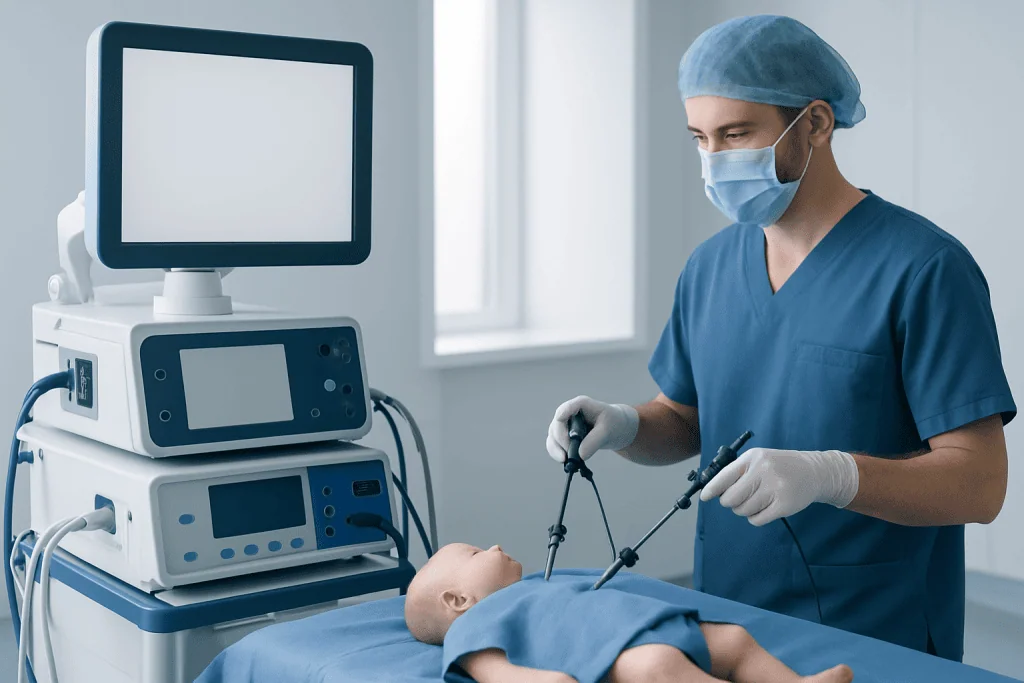
A baby may be considered for pyloric stenosis surgery when symptoms, examination findings and imaging support the diagnosis. Typical features include increasing non-bilious vomiting after feeds, ongoing hunger after vomiting, fewer wet diapers, weight concerns or signs of dehydration. Ultrasound is commonly used to look at the thickness and length of the pyloric muscle.
Not every vomiting infant has pyloric stenosis. Reflux, feeding difficulties, infections and other digestive conditions can also cause vomiting, so careful assessment is important. Green vomit is not typical of pyloric stenosis and requires urgent medical evaluation because it may indicate another form of intestinal blockage.
Before surgery, clinicians assess hydration, weight, electrolyte levels and acid-base balance. Correcting dehydration and electrolyte disturbances is an important part of treatment rather than an avoidable delay. The pediatric surgery, anesthesia, neonatology or pediatric, nursing and nutrition teams work together to prepare the baby and support feeding afterward.
Pyloromyotomy: Step by Step

The operation is performed under general anesthesia, so the baby is asleep and does not feel pain during the procedure. A pediatric anesthesiologist monitors breathing, heart rate, oxygen levels, temperature and other vital signs throughout. Parents are given instructions about when their baby should stop feeding before anesthesia.
The surgeon reaches the pylorus through a small incision in the upper abdomen or, in selected cases, through minimally invasive laparoscopic surgery using small instruments and a camera. The surgeon identifies the thickened muscle and makes a lengthwise cut through its outer layers. The stomach lining beneath the muscle is left intact.
After checking that the muscle has been adequately separated and the lining has not been injured, the incision is closed. The procedure itself is generally brief, although total time away from parents also includes anesthesia preparation and recovery room monitoring. The approach chosen depends on the baby’s health, anatomy and the surgeon’s assessment.
Parents should feel comfortable asking the surgical team why a particular approach is recommended, what feeding plan will be used and what signs they should watch for after discharge. Clear communication is especially helpful when families are caring for a young infant who cannot describe symptoms.
What Should I Expect After Pyloric Stenosis Surgery?
After pyloric stenosis surgery, the baby is observed as anesthesia wears off and is monitored for breathing, comfort, hydration and readiness to feed. Feeding is commonly restarted gradually, following the hospital’s protocol and the baby’s tolerance. Some babies take small, frequent feeds initially before returning to their usual feeding pattern.
A small amount of vomiting or spit-up can occur during the first day or two as the stomach and feeding pattern settle. This does not necessarily mean the procedure has failed. However, repeated, forceful or worsening vomiting, difficulty feeding, a swollen abdomen, fever or fewer wet diapers should be reported to the medical team promptly.
The incision may be mildly tender and can have a small dressing or skin adhesive. Caregivers receive instructions on keeping the area clean and dry, bathing, lifting the baby and attending follow-up. Most babies are discharged once they are feeding adequately, keeping feeds down sufficiently and showing no concerning clinical signs.
Pyloric stenosis surgery recovery for infants includes more than wound healing: restoring normal feeding, hydration and weight gain are also important. Follow-up with the surgeon or pediatrician helps confirm that recovery is progressing as expected.
How Painful Is Pyloric Stenosis Surgery?
Babies are under general anesthesia during pyloric stenosis surgery and do not experience pain during the operation. Afterward, it is normal for an infant to have temporary discomfort from the incision, abdominal handling and the effects of anesthesia. The care team assesses comfort regularly using age-appropriate observations such as crying, movement, sleep and feeding behavior.
Pain is usually managed with carefully selected medicines and non-medicine comfort measures, such as swaddling, holding and feeding when medically appropriate. The specific plan is individualized according to the baby’s age, health and hospital protocols. Parents should ask the care team how pain will be monitored and what medicines, if any, will be needed at home.
Ongoing inconsolable crying, marked sleepiness, poor feeding or a change in breathing should not be assumed to be ordinary postoperative discomfort. These symptoms should be discussed with a clinician, particularly in a young infant.
How Long Does It Take for a Baby to Recover From Pyloric Stenosis Surgery?
Many babies begin feeding again within hours after pyloromyotomy and are able to leave hospital within a short period once feeding and hydration are satisfactory. The exact pyloric stenosis surgery recovery time varies. It can depend on how dehydrated the baby was before surgery, how quickly feeding improves and whether vomiting continues briefly during the early recovery period.
At home, many infants steadily return to their usual feeding rhythm over several days. Weight gain may take a little longer to catch up, particularly if vomiting and reduced intake occurred for some time before diagnosis. Parents should attend scheduled follow-up and continue routine pediatric care.
For pyloric stenosis surgery recovery in babies, the most useful signs are improving feeds, regular wet diapers, alert periods and gradual weight gain. The surgical wound also generally heals quickly, but caregivers should follow the team’s instructions regarding skin care and activity. Individual recovery plans take priority over general timelines.
How Successful Is Pyloric Stenosis Surgery? Benefits and Risks
Pyloromyotomy is a well-established operation with a very high rate of relieving the obstruction caused by pyloric stenosis. Once feeding settles, most babies can digest milk normally and go on to feed, grow and develop without long-term digestive limitations from the condition or surgery. The operation is generally considered definitive treatment.
As with any procedure involving anesthesia and surgery, there are possible risks. These include bleeding, infection, reactions or complications related to anesthesia, injury to the stomach lining, incomplete division of the muscle and persistent vomiting. If the stomach lining is unintentionally opened during surgery, it can usually be repaired during the same operation, though recovery may require additional observation.
Vomiting that continues beyond the expected early postoperative period may need reassessment. It can result from temporary stomach irritation, reflux, feeding intolerance or, rarely, an ongoing obstruction. The care team may recommend an examination, feeding review, ultrasound or other tests depending on the situation.
For international families, Acibadem International’s multidisciplinary specialists and JCI-accredited hospitals diagnose and treat pediatric surgical conditions, coordinating evaluation, surgery and follow-up for eligible patients.
When to Seek Medical Care
Parents should seek prompt medical advice if a young baby has repeated forceful vomiting after feeds, appears hungry immediately afterward, has fewer wet diapers, seems unusually sleepy or is not gaining weight. Early evaluation can identify dehydration and determine whether pyloric stenosis or another condition may be responsible.
Urgent assessment is important if vomit is green, contains blood, or occurs with a swollen abdomen, fever, breathing difficulty, marked lethargy or signs of significant dehydration such as a very dry mouth, no tears when crying or very few wet diapers. These signs can have causes other than pyloric stenosis and should not be managed at home without medical guidance.
After surgery, families should contact their surgical or pediatric team for persistent forceful vomiting, a refusal to feed, worsening redness or drainage at the incision, fever, poor urine output or any concern that the baby is not acting as expected. When in doubt, seeking professional advice is the safest course.
Frequently asked questions
What is the operation for pyloric stenosis called?
The operation is called pyloromyotomy. A pediatric surgeon divides the thickened outer muscle of the pylorus so milk can pass from the stomach into the small intestine. The inner lining of the stomach is kept intact.
Can pyloric stenosis be treated without surgery?
Surgery is the usual definitive treatment for infantile hypertrophic pyloric stenosis. Intravenous fluids and correction of electrolyte changes are essential before surgery, but they do not remove the muscle narrowing. A pediatric surgical team can explain the safest timing for each baby.
Will a baby vomit after pyloric stenosis surgery?
Some vomiting or spit-up may occur during the first day or two after surgery as feeding resumes. It should generally improve rather than become more frequent or forceful. Persistent vomiting, poor feeding or reduced wet diapers should be reported to the care team.
How long will my baby stay in hospital after pyloric stenosis surgery?
Many babies have a short hospital stay and go home once they are adequately hydrated and feeding sufficiently. The length of stay varies according to feeding tolerance, preoperative dehydration and the baby’s overall condition. The surgical team will provide a discharge plan tailored to the infant.
Does pyloric stenosis come back after surgery?
Recurrence after a successful pyloromyotomy is uncommon. If vomiting continues or returns, doctors assess for several possible causes, including normal early postoperative vomiting, reflux, feeding issues or, rarely, incomplete relief of the obstruction. Follow-up is important if symptoms persist.
Will pyloric stenosis surgery affect a child’s long-term development?
Most children recover fully after pyloromyotomy and do not have long-term feeding or developmental problems caused by the surgery. Restoring hydration and nutrition promptly supports healthy growth. Routine pediatric visits remain important for monitoring growth and development.
References
- American Academy of Pediatrics
- American College of Surgeons
- National Institute of Diabetes and Digestive and Kidney Diseases
- MedlinePlus
- NHS
This article is for general information only and is not a substitute for professional medical advice. Please consult a qualified doctor about your individual situation.
Persistent digestive symptoms? Get evaluated in Turkey
JCI-accredited · board-certified surgeons · reply within 24h
Add us as a Preferred Source to see more of our trusted health content across Google Search, AI Overviews and Discover.
Check your numbers in seconds
BMI, calories, due date, blood pressure and 30+ more clinical calculators — free, instant, doctor-reviewed ranges.