Que Es Endoscopista: Preparation, Procedure and Results

An endoscopist is specially trained to perform and interpret endoscopic examinations. Preparation depends on the body area being examined and is essential for clear, accurate results.
Key Takeaways
- An endoscopist is specially trained to perform and interpret endoscopic examinations.
- Preparation depends on the body area being examined and is essential for clear, accurate results.
- Endoscopy can help investigate symptoms, diagnose conditions, collect biopsies, and remove some abnormal tissue.
- Most procedures are completed as outpatient care, often with sedation and a short recovery period.
- Serious complications are uncommon, but patients should understand warning signs and discuss individual risks with their doctor.
“Que es endoscopista” means “what is an endoscopist?” An endoscopist is a physician, often a gastroenterologist, who uses a thin flexible instrument with a camera to examine parts of the digestive tract and, when appropriate, take samples or provide treatment.
Overview: What Is an Endoscopist?
An endoscopist is a doctor who performs endoscopy: a procedure that uses an endoscope, a slim flexible tube containing a light and camera, to look inside the body. In digestive care, endoscopists commonly examine the esophagus, stomach, small intestine, colon, or rectum. Many are gastroenterologists with additional procedural training, although doctors in other specialties may perform endoscopy in areas such as the airways, bladder, joints, or female reproductive system.
The camera sends detailed images to a monitor, allowing the doctor to assess the lining of an organ without major surgery. Small instruments can pass through the endoscope to take a biopsy, remove a polyp, control bleeding, widen a narrowed area, or complete other selected treatments. The exact purpose and type of endoscopy depend on the symptoms and the part of the body being assessed.
An endoscopy is usually planned as an outpatient procedure. Patients receive clear instructions in advance, including whether fasting, bowel cleansing, medication changes, or an accompanying adult are needed. The endoscopist reviews findings after the examination, although biopsy results often take longer because they must be examined in a laboratory.
Why Would a Doctor Order an Endoscopy?
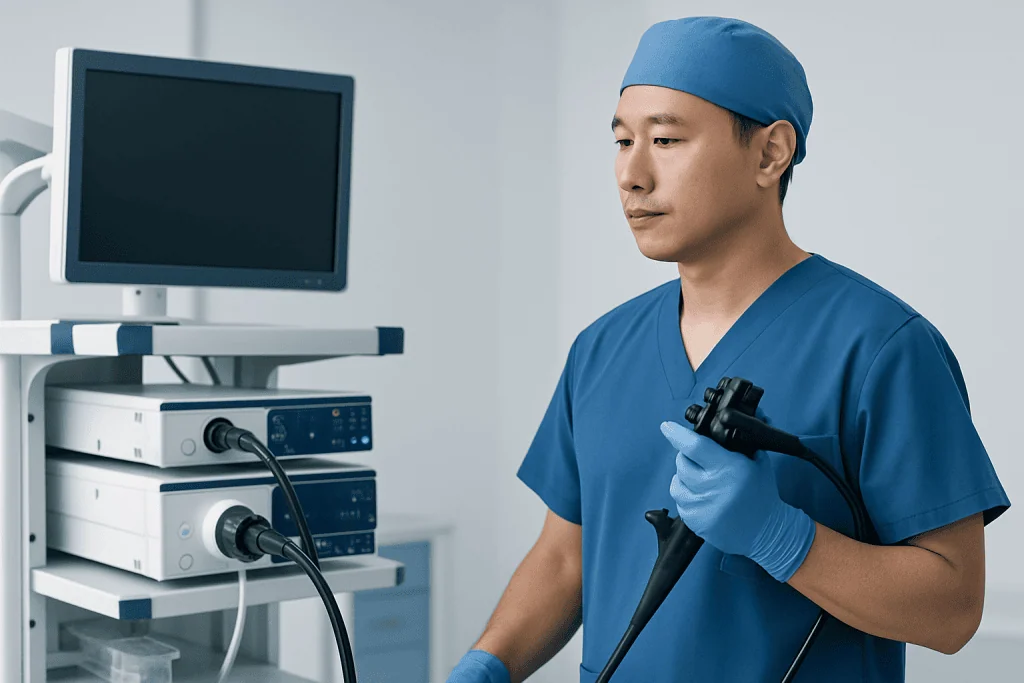
A doctor may order an endoscopy when symptoms suggest that direct examination could provide useful information. For example, upper endoscopy may be used to investigate ongoing swallowing difficulty, persistent upper abdominal discomfort, nausea or vomiting, unexplained anemia, or signs of bleeding. Colonoscopy, a type of lower endoscopy, may be recommended for bowel changes, rectal bleeding, certain screening needs, or follow-up after previous polyps.
Endoscopy can also help monitor known digestive conditions or clarify results from blood tests, stool tests, or imaging. It may be appropriate when a doctor needs a tissue sample to distinguish inflammation, infection, a benign growth, precancerous change, or cancer. A biopsy does not necessarily mean cancer is suspected; it is often the most reliable way to identify the cause of an abnormal-looking area.
Some endoscopic procedures are therapeutic as well as diagnostic. Depending on the clinical situation, an endoscopist may remove polyps, treat bleeding, retrieve a swallowed object, or relieve certain blockages. The doctor should explain why endoscopy is recommended, what alternatives exist, and what information the procedure is expected to provide.
What Can Be Detected During an Endoscopy?
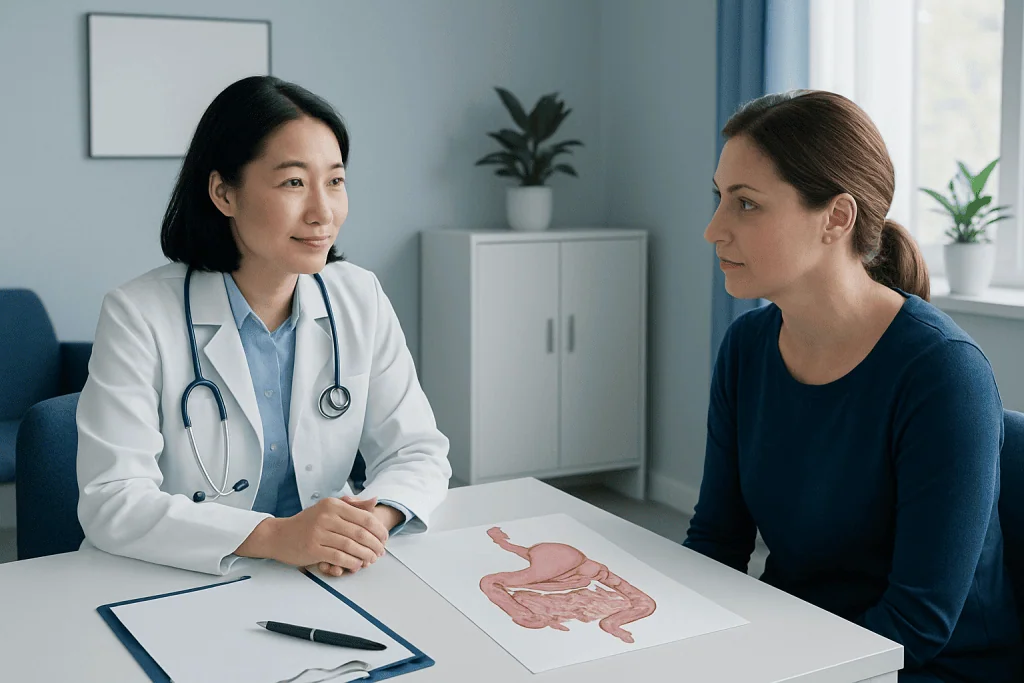
Endoscopy can reveal visible changes in the lining and structure of the digestive tract. During an upper endoscopy, possible findings include inflammation of the esophagus or stomach, ulcers, reflux-related injury, narrowing of the esophagus, varices, or changes associated with conditions such as celiac disease. A colonoscopy may identify inflammation, diverticular disease, hemorrhoids, polyps, or abnormalities that need biopsy.
A normal-looking examination can be reassuring, but it does not explain every symptom. Some conditions affect function rather than the visible surface of an organ, and others may require blood tests, imaging, motility testing, or different specialist evaluation. Conversely, an abnormal finding may need pathology confirmation before a final diagnosis can be made.
If a polyp is found, the endoscopist may be able to remove it during the same examination. This is one reason endoscopy can play an important role in prevention as well as diagnosis. The doctor will discuss whether follow-up testing or surveillance is needed based on the findings, pathology report, personal history, and family history.
How to Prepare for an Endoscopic Procedure?
Endoscopic preparation procedures vary by test. For many upper endoscopies, patients must avoid food for a period before the appointment so the stomach is empty and sedation is safer. For colonoscopy, preparation endoscopy procedure instructions include a prescribed bowel-cleansing plan, a temporary diet adjustment, and drinking clear liquids as directed. A clean bowel is crucial because it allows the doctor to inspect the colon accurately.
Patients should carefully read the individual instructions provided by their care team rather than relying on a general endoscopy procedure preparation PDF found online. They should tell the doctor about all medicines, supplements, allergies, pregnancy, diabetes, heart or lung conditions, sleep apnea, kidney disease, and any history of problems with anesthesia or sedation. Medications such as blood thinners, diabetes medicines, and iron supplements may require individualized advice; they should not be stopped without guidance.
In practical terms, endoscopy procedure prepare steps may include arranging transportation home if sedation is planned, wearing comfortable clothing, leaving valuables at home, and following instructions about liquids, food, and medicines. An adult should usually accompany a sedated patient and stay available afterward, as driving, operating machinery, signing important documents, and drinking alcohol may be unsafe until the effects of sedation have fully worn off.
What Happens During the Procedure?
Before the procedure, the clinical team confirms the patient’s identity, medical history, medications, allergies, and consent. A nurse may check blood pressure, pulse, oxygen level, and blood sugar when relevant. The endoscopist explains the plan and answers remaining questions. Sedation is commonly used for digestive endoscopy to promote comfort and relaxation, although the type of sedation and monitoring are tailored to the procedure and the patient’s health.
For an upper endoscopy, a mouth guard is placed and the endoscope passes through the mouth into the esophagus, stomach, and first part of the small intestine. It does not block breathing. During colonoscopy, the scope is gently introduced through the rectum and advanced through the colon. Air or carbon dioxide may be used to expand the area slightly for a clearer view, which can cause temporary pressure or bloating.
The procedure time varies, especially if samples are taken or treatment is needed. Biopsies are typically painless because the digestive lining does not sense cutting in the same way as skin. The endoscopist may take photographs, obtain tissue samples, or remove a polyp when this has been discussed and is clinically appropriate.
Recovery, Results, Benefits and Risks of Endoscopy
After endoscopy, patients recover in a monitored area until they are alert and stable. Mild bloating, gas, a sore throat after upper endoscopy, or brief cramping after colonoscopy can occur and usually improve within hours. Most people return home the same day. The care team will provide instructions on eating, activity, medicines, and when usual daily routines can resume.
Initial results are often discussed on the day of the procedure. If biopsies were taken, final results may take several days or longer depending on the laboratory process. It is helpful for patients to ask who will contact them, when to expect results, and what follow-up is recommended. The benefits of endoscopy include direct visualization, accurate tissue sampling, and the ability to treat some problems without open surgery.
What are the risks of endoscopy? Complications are uncommon, but they can include a reaction to sedation, bleeding, infection, aspiration, damage to a tooth or throat, and perforation, which is a tear in the wall of the digestive tract. The risk may be higher when treatment such as polyp removal or dilation is performed, or in people with certain medical conditions. The endoscopist discusses individual risks before consent and uses safety monitoring throughout the procedure.
Patients should follow their discharge instructions and contact the care team promptly if they develop severe or worsening abdominal or chest pain, fever, repeated vomiting, black stools, heavy rectal bleeding, shortness of breath, fainting, or difficulty swallowing that does not improve. These symptoms do not always indicate a complication, but they require timely medical assessment.
When to Seek Medical Care
Medical review is important for persistent digestive symptoms that affect daily life or do not improve as expected. A doctor can determine whether endoscopy is useful or whether another test is more appropriate. Symptoms that may warrant assessment include ongoing swallowing problems, persistent vomiting, unexplained weight loss, recurrent abdominal pain, long-lasting bowel habit changes, anemia, or blood in vomit or stool.
Urgent medical care is needed for vomiting blood, black tar-like stools, large amounts of rectal bleeding, severe abdominal pain, fainting, chest pain, or signs of dehydration. These symptoms can have different causes and should not be self-diagnosed. Emergency services should be used when symptoms are severe, sudden, or accompanied by weakness, breathing difficulty, or loss of consciousness.
For international patients who need digestive evaluation, Acibadem International’s multidisciplinary specialists and JCI-accredited hospitals provide assessment and endoscopic care based on individual clinical needs. A qualified doctor can help patients understand whether endoscopy, another diagnostic test, or symptom-focused treatment is the most suitable next step.
Frequently asked questions
What does an endoscopist do?
An endoscopist uses a camera-equipped instrument to examine the inside of an organ or body passage. In digestive medicine, the doctor may inspect the upper digestive tract or colon, take biopsies, remove polyps, or treat certain causes of bleeding or narrowing.
Is an endoscopy painful?
Most digestive endoscopies are not described as painful, particularly when sedation is used. Patients may feel temporary pressure, bloating, or cramping, and an upper endoscopy can leave a mild sore throat for a short time afterward.
How long does it take to recover after an endoscopy?
Many people go home the same day and feel substantially better within several hours. Sedation can affect alertness for the rest of the day, so patients generally need someone to take them home and should follow the discharge instructions provided by their care team.
Can an endoscopist tell if cancer is present?
An endoscopist may see an area that looks abnormal and can take a biopsy during the procedure. However, cancer cannot usually be confirmed by appearance alone; laboratory examination of tissue is needed for a definitive diagnosis.
Can patients eat before an endoscopy?
This depends on the type of examination. Upper endoscopy commonly requires fasting, while colonoscopy requires a specific bowel preparation and diet plan. Patients should follow the instructions from their endoscopy unit because timing can differ between procedures and individuals.
What should patients do after an endoscopy if they have pain?
Mild gas, bloating, or throat discomfort can be expected and often settles quickly. Severe, persistent, or worsening pain, fever, heavy bleeding, vomiting, chest pain, fainting, or breathing problems should be reported urgently to the medical team or evaluated in emergency care.
References
- American Society for Gastrointestinal Endoscopy
- National Institute of Diabetes and Digestive and Kidney Diseases
- National Health Service
- Mayo Clinic
This article is for general information only and is not a substitute for professional medical advice. Please consult a qualified doctor about your individual situation.
Persistent digestive symptoms? Get evaluated in Turkey
JCI-accredited · board-certified surgeons · reply within 24h
Add us as a Preferred Source to see more of our trusted health content across Google Search, AI Overviews and Discover.