Ghosting Types: What Patients Need to Know

Vision ghosting may appear as a shadow, halo, repeated outline, or partially overlapping second image. Monocular ghosting continues when one eye is open and often relates to the cornea, lens, tear film, or glasses prescription.
Key Takeaways
- Vision ghosting may appear as a shadow, halo, repeated outline, or partially overlapping second image.
- Monocular ghosting continues when one eye is open and often relates to the cornea, lens, tear film, or glasses prescription.
- Binocular ghosting improves when either eye is covered and can result from eye-muscle, nerve, or neurological alignment problems.
- Sudden double vision, especially with weakness, severe headache, facial drooping, or speech difficulty, needs urgent medical assessment.
- A detailed eye examination can identify many treatable causes of ghosting, including dry eye, refractive errors, cataracts, and eye alignment disorders.
Ghosting in vision describes a faint duplicate, shadow, or overlapping image seen beside an object. Ghosting types are commonly grouped by whether the symptom remains when one eye is covered, which can help doctors identify whether the cause is within one eye or related to eye alignment or the nervous system.
Overview: What Are Ghosting Types?
Ghosting is a visual symptom in which a person sees a second faint image, shadow, edge, or outline near the main image. It may occur while reading, looking at lights, using digital screens, or viewing distant objects. Some people describe it as letters appearing to have a duplicate, headlights having a tail, or faces looking slightly doubled.
The most useful way to describe ghosting types is by testing whether the symptom changes when one eye is covered. If the extra image remains when only one eye is open, it is called monocular ghosting. If it disappears when either eye is covered, it is called binocular ghosting or binocular double vision. This distinction does not provide a diagnosis by itself, but it gives an eye specialist important clinical information.
Ghosting is not always a sign of a serious condition. It can occur with common and treatable concerns such as dry eyes, an uncorrected vision prescription, astigmatism, or cataracts. However, new, persistent, or sudden double vision should be assessed, particularly when it occurs with other neurological symptoms.
How Monocular and Binocular Ghosting Differ
Monocular ghosting is present when the affected eye is open on its own. For example, if a person covers the left eye and still sees a shadow image through the right eye, the symptom is monocular in the right eye. It usually reflects the way light is entering, focusing within, or scattering inside that eye rather than a problem with coordination between the eyes.
Binocular ghosting occurs only when both eyes are open and usually resolves when either eye is covered. It happens when the eyes are not pointing at exactly the same target. The brain then receives two slightly different images that it cannot combine into one clear image. The two images may be side by side, one above the other, diagonal, or separated more noticeably in certain directions of gaze.
Some people use the word ghosting for symptoms that are not true double vision, such as glare around lights or a mild blurred shadow after prolonged screen use. Careful description matters. A clinician may ask whether the second image is distinct or translucent, whether it is constant, and whether it appears near or far away.
- Monocular: persists with one eye open; often an optical or surface issue within that eye.
- Binocular: disappears when either eye is covered; often related to eye alignment.
- Glare or halos: may accompany ghosting but can have different causes, including light scatter or refractive changes.
Common Causes of Monocular Ghosting

Monocular ghosting often develops when the eye does not focus light evenly on the retina. Dry eye disease is a frequent cause because an unstable tear film can make the front surface of the eye irregular, especially later in the day, in air-conditioned environments, or after extended screen use. Blinking may briefly improve the image when dryness is contributing.
Refractive errors can also cause ghost images. Astigmatism, nearsightedness, farsightedness, and an outdated glasses or contact lens prescription may leave a second edge around letters or objects. Irregularities of the cornea, including scarring or conditions such as keratoconus, can affect the shape of the eye’s focusing surface and lead to more pronounced distortion.
Changes in the natural lens of the eye are another possible cause. Cataracts may scatter light, create glare, reduce contrast, and produce ghost images, particularly in dim lighting or while driving at night. Less commonly, retinal conditions can alter central vision and cause distortion. An eye examination is important because treatment depends on the exact source of the symptom.
Common Causes of Binocular Ghosting
Binocular ghosting is usually caused by a small or larger misalignment between the eyes. This may be due to a longstanding eye alignment condition that becomes more noticeable with fatigue, illness, or aging. It can also develop when one or more eye muscles do not move normally or when the nerves controlling those muscles are affected.
Potential contributors include thyroid eye disease, diabetes-related nerve changes, head injury, migraine-associated visual symptoms, muscle disorders, and conditions affecting the brainstem or nerves. In children, eye misalignment may be noticed as an eye turning inward, outward, upward, or downward. In adults, a newly developed alignment change should be evaluated rather than assumed to be due to tiredness.
The direction and timing of double vision can help guide assessment. For instance, symptoms that worsen when looking to one side, looking up or down, or viewing distant objects may provide clues about the muscles and nerves involved. A doctor may examine eye movements, eyelid position, pupil responses, visual acuity, and neurological function, and may arrange further testing when appropriate.
How Doctors Assess Vision Ghosting
An ophthalmologist or optometrist will usually begin by asking when ghosting started, whether it is constant or intermittent, and whether it affects one eye or both. Patients can safely check this at the time symptoms occur by covering one eye and then the other, without pressing on the eye. It can be helpful to note whether the symptom is worse at night, during reading, after screen use, or in a particular direction of gaze.
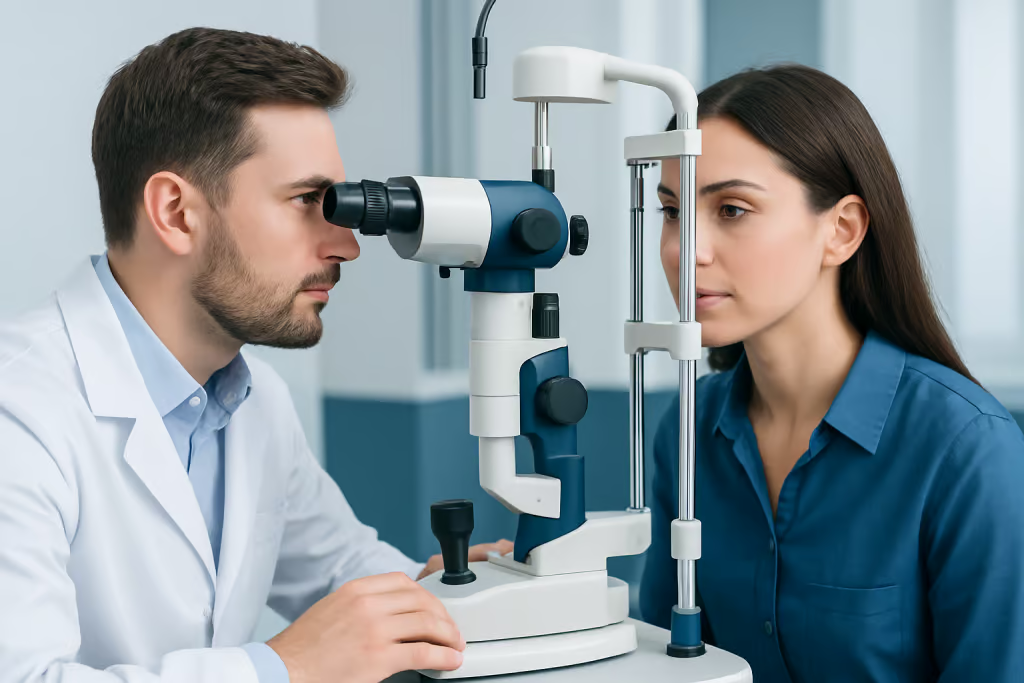
The eye examination may include a refraction test to measure the glasses prescription, assessment of the tear film and cornea, slit-lamp examination of the lens, measurement of eye pressure, and a dilated examination of the retina when needed. For suspected binocular double vision, the clinician may use alignment tests, prisms, or eye-movement assessments.
Imaging studies or blood tests are not necessary for every person with ghosting. They may be considered when the history or examination suggests a nerve, muscle, thyroid, inflammatory, vascular, or neurological cause. Prompt evaluation helps distinguish common eye-surface and focusing problems from conditions that require more urgent treatment.
Treatment Options and Everyday Self-Care
Treatment for ghosting is based on the cause rather than the appearance of the image alone. When dry eye is contributing, clinicians may recommend steps to support the tear film, such as lubricating eye drops, managing eyelid inflammation, taking regular visual breaks, and reducing exposure to dry air or smoke. It is best to use eye drops as advised by an eye-care professional, especially if symptoms are frequent.
Updated glasses, properly fitted contact lenses, or treatment for astigmatism may improve ghosting caused by refractive errors. Cataract-related symptoms may be managed initially with changes in lighting or prescription, while cataract surgery may be considered when vision changes interfere with daily activities. Corneal conditions and retinal problems require individualized care from an ophthalmologist.
For binocular ghosting, options can include treating the underlying condition, temporary occlusion of one lens, prism lenses, eye exercises in selected situations, botulinum toxin in specific cases, or eye-muscle surgery. The appropriate approach depends on the cause, severity, and duration of the misalignment. Patients should avoid driving or operating machinery if double vision makes it difficult to judge distance or direction safely.
At Acibadem International, multidisciplinary eye, neurology, and related specialists in JCI-accredited hospitals evaluate and treat vision symptoms such as persistent ghosting for international patients when appropriate.
When to Seek Medical Care
A routine eye appointment is appropriate for ghosting that is gradual, recurrent, linked to reading or screen use, or accompanied by blurred vision, glare, dry-eye symptoms, or difficulty with an existing glasses prescription. An assessment is also recommended when symptoms persist despite rest and basic eye-surface care, or when vision changes affect work, driving, or everyday activities.
Urgent medical evaluation is important for sudden-onset binocular double vision, particularly if it follows a head injury or occurs with a severe or unusual headache, weakness, numbness, trouble speaking, facial drooping, loss of balance, confusion, a drooping eyelid, unequal pupils, or sudden vision loss. These symptoms can occasionally indicate a neurological or vascular emergency and should not be managed by waiting for a routine appointment.
People with diabetes, thyroid disease, autoimmune conditions, or a history of stroke should report new double vision promptly. Seeking care does not mean a serious cause is likely; it allows clinicians to identify the reason for the symptom and provide appropriate treatment or reassurance.
Frequently asked questions
What is the difference between ghosting and double vision?
Ghosting often describes a faint shadow or partially overlapping second image, while double vision usually refers to seeing two more distinct images. In practice, people may use the terms interchangeably. An eye-care professional can determine whether the symptom is monocular or binocular and identify the likely cause.
Why do I see ghost images around lights at night?
Nighttime ghosting may occur because the pupil enlarges in low light, making refractive errors or irregularities in the cornea more noticeable. Dry eyes, astigmatism, contact lens issues, and cataracts can also contribute to glare or duplicate images around lights. A vision examination can clarify whether a prescription change or other treatment may help.
Can dry eyes cause ghosting vision?
Yes. The tear film forms the smooth optical surface at the front of the eye, and dryness can make that surface uneven. This may cause fluctuating blur, glare, or a shadow image that can improve temporarily after blinking or using appropriate lubricating drops.
Does ghosting always mean cataracts?
No. Cataracts are one possible cause, particularly when ghosting occurs with glare, fading contrast, or increasing difficulty driving at night. However, dry eye, astigmatism, corneal irregularities, and eye alignment problems are also common reasons for this symptom.
How can someone test whether ghosting is monocular or binocular?
While looking at the object that appears doubled, the person can cover one eye and then the other without pressing on the eyelid. If the extra image remains with either eye individually open, it is monocular ghosting in the eye that still has the symptom. If it disappears whenever either eye is covered, it is binocular and should be assessed for an alignment issue.
Can screen time cause vision ghosting?
Screen use can contribute indirectly by reducing blinking and worsening dry-eye symptoms, which may make vision fluctuate or create shadow images. Screen time does not usually cause persistent true binocular double vision. Regular breaks, comfortable screen positioning, and an eye examination for ongoing symptoms are sensible steps.
References
- American Academy of Ophthalmology
- National Eye Institute
- Mayo Clinic
- NHS
- American Optometric Association
This article is for general information only and is not a substitute for professional medical advice. Please consult a qualified doctor about your individual situation.
Explore treatments in Turkey — costs, top hospitals & a free quote
JCI-accredited · board-certified surgeons · reply within 24h
Add us as a Preferred Source to see more of our trusted health content across Google Search, AI Overviews and Discover.