Radiation and Renal Cancer: How It Works, Results and What to Expect
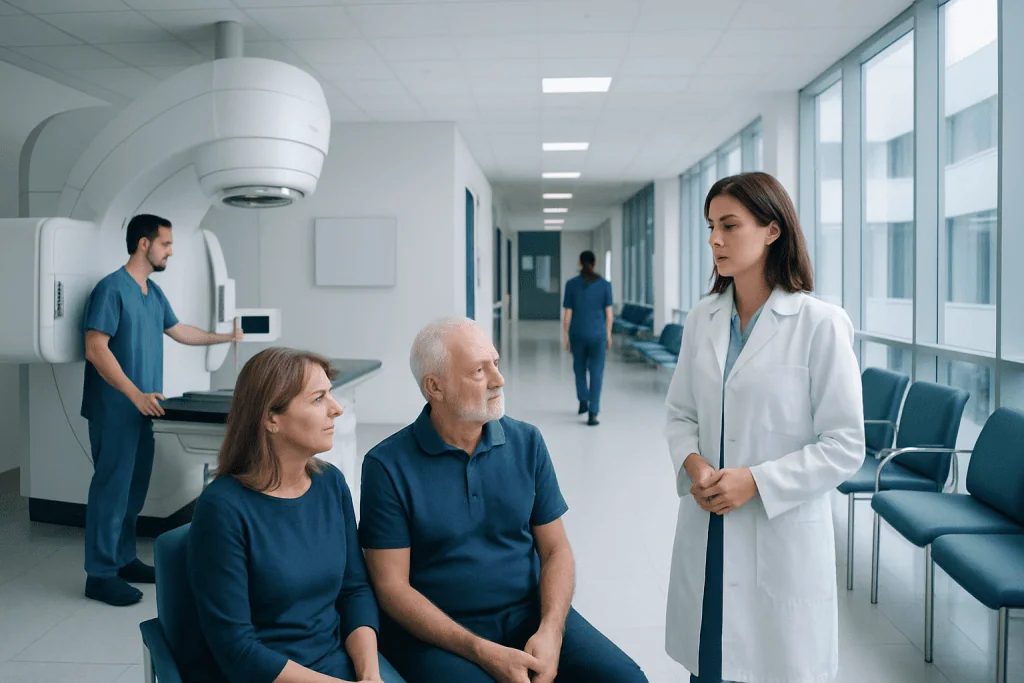
Kidney cancer has historically been less responsive to conventional radiation, but high-dose focused techniques can be effective in selected situations. Radiation may be used for a kidney tumor, cancer spread to another area, or symptom relief such as pain or bleeding.
Key Takeaways
- Kidney cancer has historically been less responsive to conventional radiation, but high-dose focused techniques can be effective in selected situations.
- Radiation may be used for a kidney tumor, cancer spread to another area, or symptom relief such as pain or bleeding.
- Treatment planning is individualized and considers tumor size, location, kidney function, overall health, and other treatments.
- Side effects depend mainly on the area being treated and are often temporary, but follow-up remains important.
- Survival statistics describe groups of people and cannot predict an individual person’s outlook.
Radiation and renal cancer care may be used to precisely treat a kidney tumor when surgery is not suitable, or to control cancer that has spread and relieve symptoms. Modern techniques such as stereotactic body radiotherapy can deliver focused radiation while limiting exposure to nearby healthy tissues.
Overview: Radiation and Renal Cancer
Radiation and renal cancer treatment can be used to control a tumor in the kidney, treat cancer that has spread, or ease symptoms when surgery is not appropriate. Although renal cell carcinoma, the most common kidney cancer, was once considered relatively resistant to standard radiation schedules, modern image-guided treatments can deliver higher, more precise doses to selected tumors.
Radiation therapy uses high-energy beams to damage cancer cell DNA so the cells can no longer keep dividing. It is usually delivered from a machine outside the body, called external-beam radiation therapy. The goal may be curative local control, durable control of a metastatic site, or palliation—relieving symptoms and supporting quality of life.
Radiation is not automatically the best first treatment for every kidney cancer. Surgery, active surveillance, ablation, systemic medicines, or a combination of approaches may be more suitable depending on the disease. A multidisciplinary team can help match the treatment plan to the individual person’s cancer and health needs.
How Radiation Therapy Works for Kidney Cancer
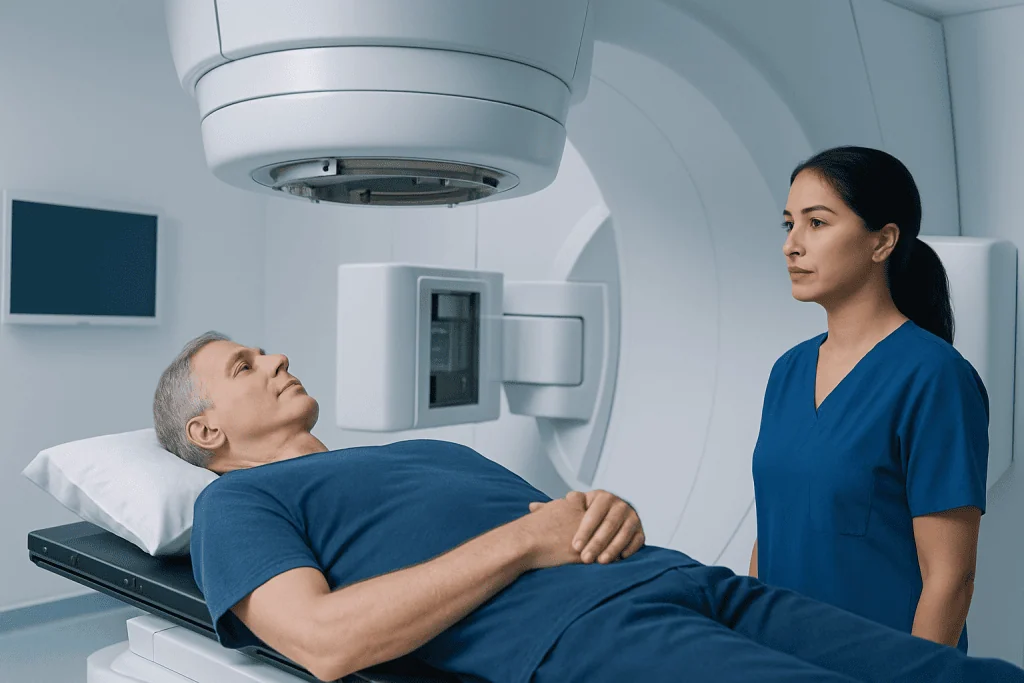
Radiation affects cells in the treatment field. Cancer cells are often less able than normal cells to repair radiation-related DNA damage. The effect develops over time: damaged cells may continue to exist briefly but lose their ability to reproduce, and the treated tumor may gradually stop growing or shrink.
For kidney tumors, stereotactic body radiotherapy (SBRT), also called stereotactic ablative radiotherapy, is increasingly used in carefully selected patients. SBRT delivers a high dose with great accuracy in a small number of sessions. Detailed imaging, immobilization devices, and motion-management methods are used because the kidneys move slightly as a person breathes.
Radiation may also be directed at sites where renal cancer has spread, including bone, brain, lymph nodes, lungs, or other organs. In this setting, it can help control a specific growing area, reduce pain, lower the risk of complications, or complement systemic treatments such as immunotherapy or targeted therapy.
Who May Be a Candidate for Radiation?

A radiation oncologist considers radiation when a kidney tumor cannot be safely removed, when an individual is not well enough for surgery, or when preserving kidney tissue is particularly important. It may also be an option for people who prefer a non-surgical local treatment after a careful discussion of alternatives, benefits, and uncertainties.
Suitability depends on the size and position of the tumor, whether it is close to the bowel or other sensitive organs, kidney function, the condition of the other kidney, prior treatments, and the presence or absence of metastatic disease. Small, localized tumors are generally more technically suitable for focused radiation than large tumors extending into nearby structures.
For advanced renal cell carcinoma, radiation is often used to treat one or a few problematic metastatic sites rather than as the only treatment for disease throughout the body. Medical oncologists, urologists, radiologists, and radiation oncologists coordinate care to determine whether local treatment, systemic therapy, or both are appropriate.
- Localized tumor when surgery or ablation is unsuitable
- Residual, recurrent, or progressing disease in a limited area
- Painful bone metastases or sites at risk of causing symptoms
- Brain metastases requiring highly focused treatment
- Bleeding, pressure, or pain caused by a tumor
What Happens Before, During, and After Radiation?
Before treatment, the person meets the radiation oncology team to review medical history, scans, medications, kidney function, and treatment goals. Planning typically includes a CT simulation scan, sometimes combined with MRI or PET imaging. The team identifies the tumor and nearby organs, then designs a plan intended to deliver radiation accurately while protecting healthy tissue as much as possible.
At each session, the person lies on a treatment table in the planned position. The machine moves around the body but does not touch the person, and treatment itself is painless. Imaging is usually performed before or during treatment to confirm positioning. A focused kidney radiation course may be completed in a few sessions, while treatment for other sites may follow a different schedule.
Most people return home the same day and do not become radioactive after external-beam radiation. Follow-up imaging is arranged to assess the treated area, although the tumor may change slowly. The team also monitors kidney function, symptoms, and any need for further treatment.
How Successful Is Radiation for Kidney Cancer?
Radiation can be highly effective at controlling a carefully selected kidney tumor or a limited site of spread, particularly when SBRT is used. However, success has different meanings: it may mean preventing local tumor growth, reducing pain, shrinking a lesion, delaying the need for another intervention, or helping maintain quality of life. It does not necessarily mean that radiation alone will cure cancer that has spread widely.
For localized renal tumors treated with modern focused radiation, published studies have reported strong local control in selected patients. Results vary because studies include different tumor sizes, radiation schedules, patient health profiles, and lengths of follow-up. Surgery remains a standard curative approach for many operable localized kidney cancers, so radiation decisions should be personalized rather than based on one outcome figure.
For metastatic renal cancer, radiation is especially valuable for controlling individual lesions and relieving symptoms. The overall outlook depends largely on how extensive the cancer is, its biology, response to systemic therapy, and the person’s general health. The care team can explain the intended benefit in the context of the individual treatment plan.
What Is the Average 5-Year Survival Rate for Patients With Renal Cell Carcinoma?
Five-year survival for renal cell carcinoma varies substantially according to the stage at diagnosis. Population-based data from the United States indicate that people whose kidney cancer is confined to the kidney have a much more favorable five-year relative survival than those with cancer that has spread to distant organs. Across all stages combined, the reported five-year relative survival is approximately three-quarters, but this is an average across many different circumstances.
These figures are not a personal forecast. They are based on people diagnosed in earlier years and may not fully reflect improvements in imaging, surgery, focused radiation, immunotherapy, and targeted medicines. Individual outlook is influenced by stage, tumor type and grade, kidney function, treatment options, response to treatment, and other health conditions.
A treating oncology team is best placed to discuss prognosis using current scans, pathology findings, and the person’s overall situation. Asking what the treatment is intended to achieve and how response will be measured can make prognosis discussions clearer and more useful.
How Long Does It Take Radiation to Start Killing Cancer?
Radiation begins causing DNA damage in cancer cells from the first treatment, but the visible effect is usually not immediate. Cells may take days or weeks to stop dividing, and the immune and tissue-repair responses around a tumor can continue for months. For this reason, early imaging may not show substantial shrinkage even when treatment has been effective.
Symptoms can improve on different timelines. Pain from a bone metastasis, for example, may improve over days to several weeks, while a kidney tumor may remain visible and change gradually on scans. The medical team selects the timing of follow-up imaging based on the treatment site and reason for radiation.
A stable treated lesion can be a favorable outcome, especially when the aim is local control. Imaging interpretation after SBRT requires experience because inflammation and treatment-related changes can sometimes resemble persistent or growing cancer. New or worsening symptoms should still be reported promptly rather than waiting for the next scheduled scan.
Benefits, Risks, and What I Wish I Knew Before Radiation
Before radiation, it can help to know that planning is a major part of treatment. The scans, positioning, and safety checks are designed to make radiation as precise as possible. The actual treatment sessions are generally brief and painless, but appointments may take longer because careful alignment and imaging are essential.
Potential benefits include non-invasive local treatment, the ability to treat areas that are difficult to operate on, symptom relief, and the possibility of preserving kidney tissue in selected cases. Focused radiation may be completed in relatively few visits. It can also be used alongside other treatments when a multidisciplinary team considers that approach appropriate.
Side effects vary by the treated site and radiation dose. Fatigue is common and usually improves after treatment. When the kidney area is treated, possible effects can include temporary nausea, changes in bowel habits, skin irritation in the beam path, and, less commonly, injury to nearby bowel, liver, or remaining kidney tissue. Serious complications are uncommon but should be discussed clearly, especially for people with reduced kidney function or a single functioning kidney.
People may wish to ask about the goal of radiation, the expected schedule, how breathing motion will be managed, possible effects on kidney function, which symptoms should be reported urgently, and how treatment response will be assessed. Practical arrangements for transport, work, meals, medications, and support at home can also make the treatment period easier.
Recovery, Follow-Up, and When to Seek Medical Care
Recovery after external-beam radiation is usually outpatient-based. Many people continue ordinary daily activities, adjusting their pace if fatigue develops. Drinking fluids as advised by the clinical team, eating regular nourishing meals, taking prescribed medicines, and attending scheduled blood tests or imaging appointments can support recovery. No special isolation is needed after external-beam radiation.
Medical care should be sought promptly for severe or worsening pain, persistent vomiting, inability to keep fluids down, fever, heavy bleeding in the urine, new confusion, weakness, seizures, sudden shortness of breath, or a significant reduction in urine output. These symptoms may have causes other than radiation, but they need timely assessment.
Follow-up care includes imaging and, when appropriate, blood tests to monitor kidney function. The schedule differs according to whether radiation treated a primary kidney tumor or metastatic disease. Acibadem International’s multidisciplinary specialists and JCI-accredited hospitals diagnose and treat kidney cancer for international patients, coordinating radiation care with urology and medical oncology when needed.
Frequently asked questions
Can radiation cure renal cell carcinoma?
Focused radiation may provide long-term control of selected localized kidney tumors, particularly when surgery is not suitable. Whether it can be considered curative depends on the stage, tumor features, treatment field, and whether cancer is present elsewhere in the body. A specialist team can explain the realistic goal for an individual case.
Why is radiation not always used first for kidney cancer?
Surgery has long been a standard local treatment for many operable kidney cancers, and some tumors can also be monitored or treated with ablation. Renal cell carcinoma is less responsive to conventional low-dose radiation schedules than some other cancers. Modern SBRT has expanded radiation options, but it is still selected based on tumor location, health status, and treatment goals.
Does radiation for kidney cancer hurt?
External-beam radiation does not hurt while it is being delivered. A person must remain still on the treatment table, and positioning may occasionally be uncomfortable. Side effects, if they occur, generally develop over days or weeks and should be discussed with the treatment team.
Can radiation damage the kidneys?
Radiation planning aims to limit dose to healthy kidney tissue and nearby organs. There can still be a risk of reduced kidney function, particularly when a person already has impaired kidney function, one functioning kidney, or a tumor near sensitive structures. The team evaluates these factors carefully before recommending treatment.
Can immunotherapy and radiation be given for renal cancer?
In some circumstances, radiation and systemic treatments such as immunotherapy may both be part of a treatment plan. The timing and sequence depend on the cancer’s extent, the treatment goal, possible side effects, and the medicines being used. Coordination between medical and radiation oncologists is important.
What follow-up is needed after kidney radiation?
Follow-up commonly includes clinical reviews, imaging scans, and tests of kidney function when appropriate. The first scan may show slow or complex changes because treated tumors do not always shrink quickly. The oncology team will set an individualized schedule and explain which symptoms should be reported between appointments.
References
- National Cancer Institute
- American Cancer Society
- European Association of Urology
- American Society for Radiation Oncology
- National Comprehensive Cancer Network
This article is for general information only and is not a substitute for professional medical advice. Please consult a qualified doctor about your individual situation.
Oncology care in Turkey — second opinion and treatment plan
JCI-accredited · board-certified surgeons · reply within 24h
Add us as a Preferred Source to see more of our trusted health content across Google Search, AI Overviews and Discover.

More from the Health Library



Related Specialists

Prof. Dr. Hakan Coşkun
Otorhinolaryngology
Dr. Özgür Yaşar
Internal Medicine
Assoc. Prof. Dr. Özgüç Takmaz
Gynecology & Obstetrics
Prof. Dr. İbrahim Bildirici
Gynecology & Obstetrics