

Radiation Therapy for Nasopharyngeal Cancer: How It Works, Results and What to Expect
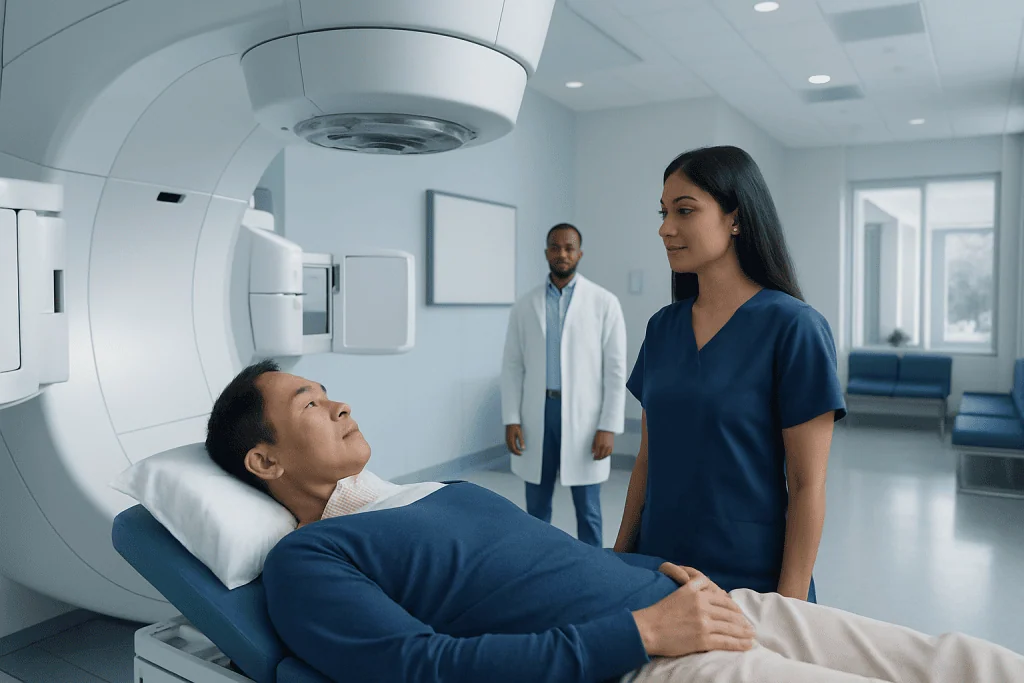
Radiation therapy is the cornerstone of treatment for most nasopharyngeal cancers. Intensity-modulated radiation therapy (IMRT) can shape radiation closely around the tumor and nearby lymph nodes.
Key Takeaways
- Radiation therapy is the cornerstone of treatment for most nasopharyngeal cancers.
- Intensity-modulated radiation therapy (IMRT) can shape radiation closely around the tumor and nearby lymph nodes.
- Chemotherapy may be given before, during, or after radiation depending on the cancer stage and individual health.
- Treatment is usually delivered on weekdays over several weeks and requires careful planning before it begins.
- Side effects such as mouth soreness, dry mouth, swallowing difficulty, skin changes, and fatigue are common but can often be managed with supportive care.
- Regular follow-up is essential because treatment response may continue to develop for months after radiation ends.
Radiation therapy for nasopharyngeal cancer is the main local treatment because this cancer is often difficult to remove surgically and usually responds well to radiation. Modern planning techniques, commonly combined with chemotherapy for more advanced disease, aim to treat the tumor and affected lymph nodes while limiting exposure to healthy tissues.
Overview: how radiation therapy treats nasopharyngeal cancer
Radiation therapy for nasopharyngeal cancer uses high-energy beams to damage cancer-cell DNA, preventing the cells from growing and dividing. It is the central treatment for most people because the nasopharynx sits deep behind the nose, close to important nerves, blood vessels, the skull base, and other structures that can make surgery difficult or unsuitable as the first approach.
External-beam radiation is delivered from a machine outside the body. Today, many patients receive intensity-modulated radiation therapy (IMRT), a highly planned form of treatment that adjusts the intensity and direction of the beams. This helps the radiation team cover the tumor and areas at risk of microscopic disease while reducing dose to nearby organs such as the salivary glands, spinal cord, brainstem, eyes, and inner ears.
Radiation may be used alone for selected early-stage tumors. For locally advanced cancer, it is commonly combined with chemotherapy because chemotherapy can make cancer cells more sensitive to radiation and can help address disease beyond the primary tumor. The best plan depends on tumor stage, lymph-node involvement, pathology, imaging, Epstein-Barr virus-related testing when appropriate, prior health conditions, and the person’s preferences.
Who may be a candidate and how the plan is chosen
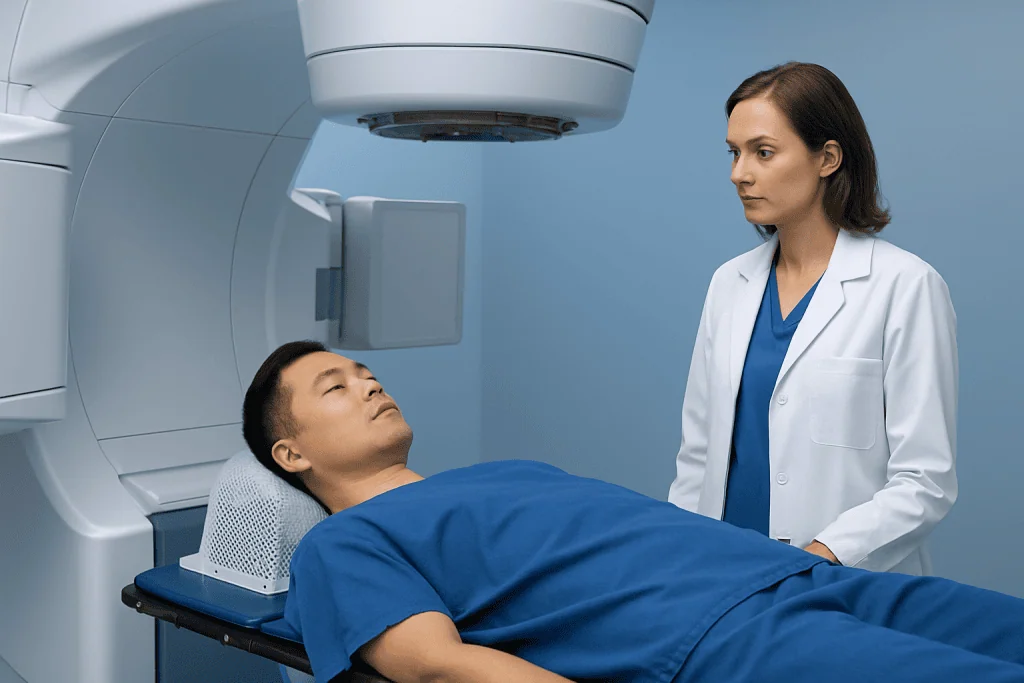
Most people with non-metastatic nasopharyngeal cancer are considered for curative-intent radiation therapy. The oncology team evaluates where the tumor has grown, whether lymph nodes in the neck are involved, and whether cancer has spread elsewhere. Evaluation typically includes a nasoendoscopy, biopsy confirmation, MRI or CT imaging of the head and neck, and imaging to assess the chest and other areas when indicated.
A radiation oncologist works with medical oncologists, ear, nose and throat specialists, radiologists, pathologists, dentists, dietitians, speech and swallowing therapists, and nursing teams. This multidisciplinary approach is important because treatment affects areas involved in eating, speaking, hearing, and dental health.
Before treatment, the team reviews kidney function, hearing, nutrition, dental condition, and other medical issues that may influence chemotherapy or supportive care. People who smoke or use tobacco are encouraged to stop, as this can support healing and overall health. The care team can help with cessation strategies and symptom management.
People with recurrent disease or cancer that has spread may still receive radiation in selected situations, such as for local control or symptom relief. Re-irradiation is more complex because healthy tissues have already received radiation, so the potential benefits and risks need especially detailed discussion.
What happens step by step during radiation therapy
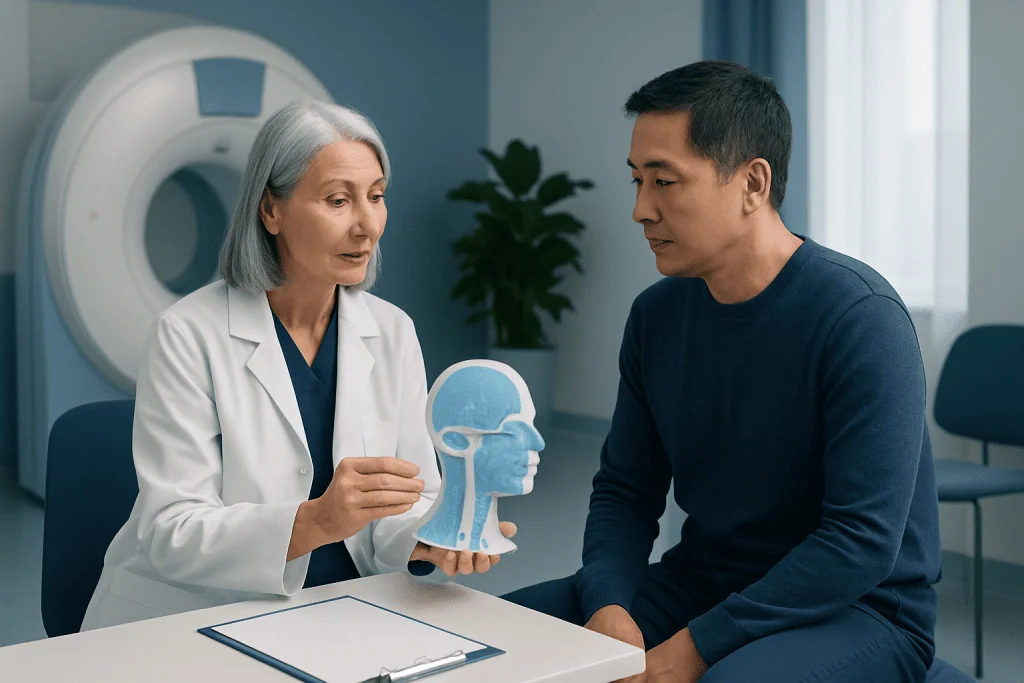
Planning begins with a simulation appointment. The patient lies on a treatment table while a custom thermoplastic mask is made to keep the head, neck, and shoulders in the same position each day. The mask is fitted closely but has openings for breathing. A planning CT scan is then performed, often with MRI and PET/CT information incorporated to define the treatment areas precisely.
The radiation plan is individualized. The radiation oncologist outlines the visible tumor, involved lymph nodes, and nearby areas at risk. Medical physicists and dosimetrists create a plan that balances thorough tumor coverage with protection of normal tissue. Quality checks are completed before the first treatment.
Daily treatment is brief and painless. Most courses are given Monday through Friday for several weeks. At each visit, therapists position the patient with the mask and use image guidance to confirm alignment. The machine moves around the patient but does not touch them. The actual beam-on time is usually only a few minutes, although the appointment takes longer for positioning and imaging.
The patient is not radioactive after external-beam radiation and can safely be around family members, including children and pregnant people. Weekly appointments with the radiation oncology team allow symptoms, weight, nutrition, and blood tests to be monitored. When chemotherapy is part of care, its timing may vary: it may be delivered before radiation, at the same time, or afterward.
Benefits, side effects, and recovery timeline
The main benefit of radiation is its ability to treat the primary tumor and the lymph-node regions at the same time without removing structures in the face or throat. IMRT has improved the ability to spare some healthy tissues compared with older radiation approaches, but side effects remain possible because the treatment area is close to the mouth, throat, salivary glands, ears, and skin.
During treatment, common effects include tiredness, dry mouth, thick saliva, changes in taste, sore throat or mouth, pain with swallowing, skin redness or darkening in the treated area, nasal congestion, and temporary changes in hearing. Symptoms often build gradually during the course and may peak in the first one to two weeks after treatment finishes. The team may recommend pain relief, mouth-care products, skin-care advice, hydration support, nutritional supplements, and swallowing exercises.
Recovery is gradual. Many acute side effects begin improving over several weeks, while taste, saliva production, energy, and swallowing may take months to recover. Some people have longer-lasting dry mouth, dental problems, hearing changes, thyroid changes, neck stiffness, or swallowing difficulties. Rare but serious late effects can occur, which is why careful planning and long-term follow-up are important.
Dental assessment before treatment is an important safety step. Patients should tell their dentist and oncology team about any planned dental work after radiation, as procedures involving the jaw may need special precautions. Maintaining oral hygiene, attending recommended dental reviews, eating enough protein and calories, and continuing prescribed swallowing exercises can support recovery.
Can nasopharyngeal cancer be cured completely?
Nasopharyngeal cancer can be cured in many people, particularly when it is diagnosed before it has spread to distant organs. Radiation therapy, often combined with chemotherapy for more advanced local or regional disease, is designed to eliminate the tumor and reduce the chance of recurrence.
However, no clinician can promise a cure for an individual person. Outlook depends on the stage, tumor characteristics, response to treatment, overall health, and whether cancer is found outside the nasopharynx and neck lymph nodes. The oncology team can explain how these factors apply to the individual situation.
Even after successful treatment, follow-up remains essential. Visits may include examinations of the nose and throat, imaging when needed, blood tests in selected cases, and assessment of swallowing, hearing, thyroid function, dental health, and treatment-related symptoms. Ongoing follow-up helps identify recurrence or late effects early, when management options may be available.
What I wish I knew before radiation?
Many patients find it helpful to know that radiation treatment itself is painless, but side effects usually develop gradually rather than immediately. The daily schedule can feel demanding, especially because symptoms may become more noticeable later in the course. Planning ahead for transport, rest, soft foods, hydration, and help with daily tasks can make the process easier.
Nutrition and swallowing support should begin early, not only after weight loss or severe discomfort develops. A dietitian can suggest foods and drinks that are easier to manage, while a speech and swallowing therapist can teach exercises intended to preserve swallowing function. Patients should report mouth pain, reduced intake, dizziness, fever, worsening skin reactions, or difficulty swallowing medicines promptly rather than trying to manage severe symptoms alone.
It is also useful to understand that side effects can change after treatment ends. The final radiation session is an important milestone, but healing continues afterward. Bringing a written list of symptoms and questions to weekly appointments can help the team adjust supportive care quickly.
- Complete recommended dental checks before treatment begins.
- Ask which symptoms should prompt an urgent call to the care team.
- Discuss work, travel, fertility, hearing, nutrition, and emotional support before treatment starts.
- Tell the team about all medicines, supplements, and pre-existing conditions.
How long before you know if radiation therapy is working?
Radiation continues to affect cancer cells after the last treatment session, so response is not always clear immediately. Symptoms such as nasal blockage, bleeding, ear pressure, or neck swelling may improve during or after treatment, but symptom changes alone cannot reliably measure treatment success.
The oncology team commonly schedules the first formal response assessment after enough time has passed for inflammation and normal-tissue healing to settle. The timing and type of assessment vary, but may include a clinical examination, nasoendoscopy, MRI, CT, PET/CT, and selected blood tests. Imaging too soon can be difficult to interpret because treatment-related inflammation can resemble residual disease.
Some tumors continue shrinking for months. If an examination or scan shows an uncertain area, the team may repeat imaging, perform a targeted examination, or recommend a biopsy when appropriate. Patients should continue follow-up even when they feel well, as surveillance is part of effective cancer care.
Does nasopharyngeal cancer spread fast? When to seek medical care
Nasopharyngeal cancer does not behave identically in every person. Some tumors may grow gradually, while others can involve neck lymph nodes or spread beyond the original site earlier in their course. Its behavior depends on the tumor subtype, stage, and biology, so it is not possible to predict the pace of spread from symptoms alone.
Medical evaluation is important for symptoms that persist or do not have a clear explanation, especially a painless neck lump, one-sided blocked nose, recurring nosebleeds, hearing loss or fullness in one ear, persistent headaches, facial numbness, double vision, or trouble swallowing. These symptoms are often caused by non-cancerous conditions, but persistent concerns should be assessed by a qualified clinician or ear, nose and throat specialist.
Anyone receiving radiation should contact their oncology team promptly for inability to drink enough fluids, severe or escalating swallowing pain, fever, confusion, breathing difficulty, uncontrolled vomiting, significant bleeding, or rapidly worsening weakness. These symptoms do not necessarily mean the cancer is worsening, but they may require timely assessment and supportive treatment.
Acibadem International’s multidisciplinary specialists and JCI-accredited hospitals provide assessment and treatment planning for international patients with nasopharyngeal cancer, including coordinated radiation oncology, medical oncology, ENT, nutrition, and rehabilitation support.
Frequently asked questions
Is radiation therapy the main treatment for nasopharyngeal cancer?
Yes. Radiation therapy is the main local treatment for most nasopharyngeal cancers because the tumor is located deep in the head and neck and is often sensitive to radiation. Chemotherapy is commonly added for cancers that are more advanced or involve lymph nodes.
How many radiation treatments are usually needed?
The number of treatments depends on the stage, treatment goal, and whether other therapies are being used. Curative treatment is commonly delivered on weekdays over several weeks. The radiation oncologist provides an individualized schedule after planning is complete.
Will radiation therapy hurt?
The radiation beam does not cause pain while it is being delivered. However, side effects such as mouth soreness, throat pain, dry mouth, and skin irritation can develop gradually during treatment. The care team can offer medication and supportive measures to help manage these effects.
Can I eat normally during radiation for nasopharyngeal cancer?
Some people can maintain a near-normal diet early in treatment, but swallowing discomfort and changes in taste may make this harder over time. Soft, moist, high-protein foods and nutritional drinks may be easier to tolerate. A dietitian can provide practical guidance based on individual symptoms and weight changes.
Are long-term side effects possible after head and neck radiation?
Yes. Possible longer-term effects include dry mouth, changes in taste or swallowing, dental problems, hearing changes, neck stiffness, and thyroid dysfunction. Modern techniques such as IMRT aim to reduce these risks, and regular follow-up helps identify and manage late effects.
Can nasopharyngeal cancer come back after radiation therapy?
Recurrence is possible, even after treatment that initially appears successful. Follow-up visits, examinations, and imaging when indicated are used to monitor for recurrence and treatment-related effects. If cancer returns, the team discusses options based on its location, extent, prior treatments, and overall health.
References
- National Cancer Institute
- American Cancer Society
- European Society for Medical Oncology
- National Comprehensive Cancer Network
- International Agency for Research on Cancer
This article is for general information only and is not a substitute for professional medical advice. Please consult a qualified doctor about your individual situation.
Radiation Therapy in Turkey — costs, top hospitals & a free quote
JCI-accredited · board-certified surgeons · reply within 24h
Add us as a Preferred Source to see more of our trusted health content across Google Search, AI Overviews and Discover.

Radiation Oncology
Precision radiotherapy and radiosurgery using advanced linear accelerators and image-guided techniques.
26 specialists in this unitMore from the Health Library


Related Specialists

Assoc. Prof. Dr. Ürün Özer Ağırbaş
Psychiatry
Prof. Dr. Pervin İşeri
Neurology
Fzt. Murat Özel
Physical Medicine & Rehabilitation
Dr. Muhammet Buğra Karaaslan
Cardiology