Radio Frequency Skin Tightening — Explained by Medical Evidence, Not Myths

Radio frequency skin tightening works by heating deeper skin layers to support collagen remodeling. Results are usually subtle to moderate, not dramatic, and often require a series of sessions.
Key Takeaways
- Radio frequency skin tightening works by heating deeper skin layers to support collagen remodeling.
- Results are usually subtle to moderate, not dramatic, and often require a series of sessions.
- The treatment is generally well tolerated, with temporary redness, warmth, or swelling being the most common short-term effects.
- Best candidates usually have mild skin laxity and realistic expectations about gradual improvement.
- A qualified clinician should assess skin type, treatment area, medical history, and goals before treatment.
Radio frequency skin tightening is a non-surgical treatment that uses controlled heat to stimulate collagen and elastin in the skin. Medical evidence suggests it can provide mild to moderate tightening and texture improvement for selected patients, but it does not replace surgery and results develop gradually.
Overview: what radio frequency skin tightening really does
Radio frequency skin tightening is a cosmetic, non-surgical procedure that delivers controlled thermal energy into the skin. The goal is to heat deeper layers without significantly injuring the surface, encouraging collagen remodeling and, over time, some degree of firmer-looking skin. It is commonly used on the face, jawline, neck, and body areas with mild looseness.
From a medical perspective, the treatment is best understood as a collagen-stimulation procedure rather than an instant lifting method. Existing evidence supports improvement in skin texture and mild to moderate laxity in appropriately selected patients, especially when the device is used by trained professionals. However, outcomes vary based on age, baseline skin quality, device type, and the number of sessions.
A common myth is that radio frequency skin tightening can create the same result as a surgical facelift or body lift. In reality, it cannot remove large amounts of excess skin or reposition deeper tissues in the way surgery can. It may still be a helpful option for people seeking a less invasive approach with little downtime and more subtle, natural-looking change.
How radio frequency skin tightening works
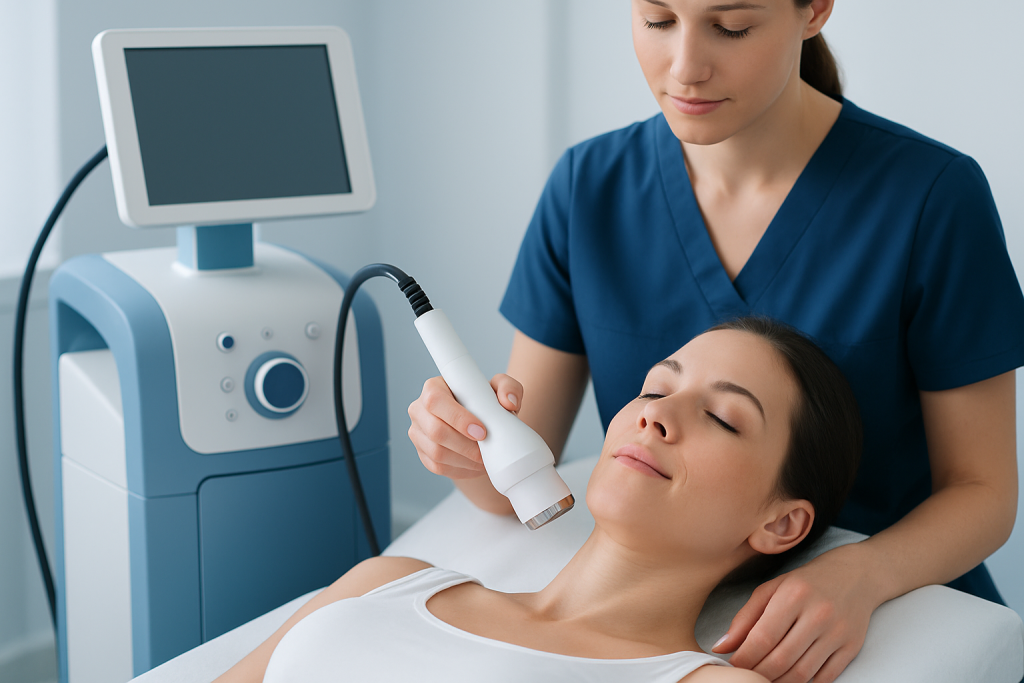
Radio frequency energy produces heat as it passes through tissue. In skin tightening treatments, that heat is directed into the dermis and sometimes the tissue just below it. This controlled warming can cause existing collagen fibers to contract slightly and can also trigger the skin’s healing response, leading to new collagen production over the following weeks and months.
Collagen is a structural protein that helps skin feel firm and resilient. As people age, collagen and elastin gradually decrease, and the skin may become looser or thinner. By stimulating remodeling rather than cutting or ablating tissue, radio frequency treatment aims to improve skin support with minimal recovery time.
There are different device designs, including monopolar, bipolar, multipolar, and microneedling-assisted radio frequency systems. Although the underlying principle is similar, the depth of energy delivery, sensation during treatment, and expected results may differ. Some patients considering broader rejuvenation options may also discuss medical aesthetics and cosmetic dermatology with a clinician to compare suitable treatments.
- It does not rely on surgery or large incisions.
- It usually causes a warming sensation during the session.
- Improvement tends to appear gradually rather than immediately.
- More than one treatment is often recommended for best effect.
What medical evidence suggests about results

Clinical studies and expert reviews generally suggest that radio frequency skin tightening can improve mild to moderate skin laxity, fine texture changes, and overall skin quality in some patients. The most consistent finding is gradual improvement rather than dramatic transformation. People with early signs of looseness often notice better results than those with advanced sagging or significant excess skin.
Results depend on several factors, including the device used, the treatment settings, the operator’s experience, and individual biology. Age, sun damage, smoking history, and baseline collagen levels can all influence response. Because different studies use different devices and assessment methods, comparing one treatment protocol with another is not always straightforward.
Another important evidence-based point is that maintenance matters. Collagen continues to change with time, so the effect of treatment is not permanent in the same way as a surgical procedure. Some people choose repeat sessions after an initial series to help maintain the result. A dermatologist or plastic surgeon can explain whether RF alone is suitable or whether another approach may fit the skin concern more closely.
Who may benefit, and who may not be the best candidate
Radio frequency skin tightening is usually best suited to adults with mild to moderate skin laxity who want a non-surgical option and understand that results are modest and progressive. It may appeal to people who prefer little downtime, are not ready for surgery, or want to support overall skin rejuvenation as part of a broader treatment plan.
It may be less effective for severe sagging, heavy jowling, or large amounts of loose skin after major weight loss. In such cases, other procedures may provide more meaningful correction. Depending on the area and concern, a specialist might discuss alternatives such as plastic and reconstructive surgery if the goal is stronger lifting or tissue removal.
Suitability also depends on safety considerations. A medical consultation is important for people with active skin infection, open wounds, certain implanted electronic devices, a tendency to scar abnormally, or recent use of treatments that may have made the skin more sensitive. Patients with pigment-related concerns or chronic inflammatory skin disease may benefit from evaluation for related dermatologic conditions before proceeding.
What happens before, during, and after treatment
Before treatment, a clinician reviews the person’s goals, medical history, medications, and skin characteristics. The treatment area is examined to assess the degree of laxity, skin thickness, sun damage, and whether another procedure may be more appropriate. Standardized photos may be taken to help compare changes over time.
During the session, the skin is cleaned and the device is applied to the target area. Many patients describe a feeling of warmth or brief heat pulses. Session length depends on the size of the treatment area and the type of device. Some systems include built-in cooling or temperature monitoring to improve comfort and safety.
Afterward, temporary redness, mild swelling, warmth, or tenderness can occur, but these effects usually settle within hours to a few days. Patients are commonly advised to use gentle skin care, avoid excessive heat exposure for a short time, and apply sun protection. Full results are not immediate because collagen remodeling takes time, so improvement may continue over several weeks or months.
Risks, limitations, and common myths
Radio frequency skin tightening is often described as low downtime, but that does not mean it is risk-free. Potential side effects include temporary redness, swelling, sensitivity, and less commonly blistering, burns, uneven contour, or pigment changes. The chance of complications is lower when treatment is planned carefully and performed by experienced professionals using appropriate settings.
One common myth is that higher heat always means better results. In practice, treatment must balance effectiveness and safety. Excessive heating can increase the risk of skin injury without guaranteeing a better cosmetic outcome. Another myth is that one session works for everyone. Many patients need repeated sessions because skin quality, treatment area, and age-related changes vary greatly.
It is also important to understand what RF does not treat well. It does not remove deep wrinkles caused mainly by muscle movement, replace volume loss, or correct marked drooping in the way surgery can. In some cases, clinicians may recommend combining therapies, and selected patients may discuss options such as specialist skin procedures if an examination identifies lesions or other skin findings needing medical attention rather than cosmetic treatment.
Self-care, realistic expectations, and when to seek medical care
Healthy skin habits can support treatment outcomes. Daily sunscreen, avoiding smoking, staying well hydrated, and following a gentle skin-care routine may help preserve skin quality over time. Weight stability is also useful, as repeated large weight changes can contribute to skin laxity.
Expectation-setting is one of the most important parts of care. Radio frequency skin tightening can be worthwhile for subtle refinement, but patients should not expect the same degree of change as with a surgical lift. Asking to see how success will be assessed, how many sessions may be needed, and what degree of change is realistic can make decision-making clearer and more satisfying.
Medical care should be sought promptly if there is significant pain, blistering, prolonged swelling, increasing redness, discharge, fever, or darkening or lightening of the skin that does not improve. Evaluation is also important if a new lump, persistent rash, changing mole, or unexplained skin lesion is noticed in the treatment area, because these findings should be medically assessed before or after cosmetic procedures.
Near the end of the decision process, some international patients choose assessment at centers such as Acibadem International, where multidisciplinary specialists and JCI-accredited hospitals evaluate skin concerns and treatment options in a structured, patient-focused way.
Frequently asked questions
Does radio frequency skin tightening really work?
It can work for mild to moderate skin laxity by stimulating collagen remodeling in deeper skin layers. Most people should expect gradual, subtle to moderate improvement rather than a dramatic lift.
How long do radio frequency skin tightening results last?
Results vary by age, skin quality, treatment area, and the device used. Improvement may last for months, but natural aging continues, so maintenance sessions are often considered.
Is radio frequency skin tightening painful?
Many patients describe the treatment as a warming or hot sensation rather than strong pain. Comfort depends on the device, treatment settings, area treated, and individual sensitivity.
How many sessions are usually needed?
Some people notice change after one session, but a series of treatments is often recommended for better results. The exact number depends on the device and the degree of skin laxity being treated.
Can radio frequency skin tightening replace a facelift?
No. It may improve mild looseness and skin texture, but it does not remove excess skin or reposition tissues like surgery does.
Who should avoid radio frequency skin tightening?
People with active skin infections, open wounds, certain implanted electronic devices, or other medical issues affecting treatment safety may not be suitable candidates. A qualified clinician should review medical history and examine the skin before treatment.
References
- American Academy of Dermatology
- American Society for Dermatologic Surgery
- International Society of Aesthetic Plastic Surgery
- Mayo Clinic
- National Institutes of Health
This article is for general information only and is not a substitute for professional medical advice. Please consult a qualified doctor about your individual situation.
Explore treatments in Turkey — costs, top hospitals & a free quote
JCI-accredited · board-certified surgeons · reply within 24h
Add us as a Preferred Source to see more of our trusted health content across Google Search, AI Overviews and Discover.

More from the Health Library

Dry Nose: A Complete Medical Overview

LDL Cholesterol: An Evidence-Based Guide for Patients

Ankle Ligaments: A Complete Medical Overview

Lock Toe: A Complete Medical Overview

Hot Spoon Mosquito Bite: What Patients Need to Know