Radiotherapy for Pituitary Tumours: How It Works, Results and What to Expect
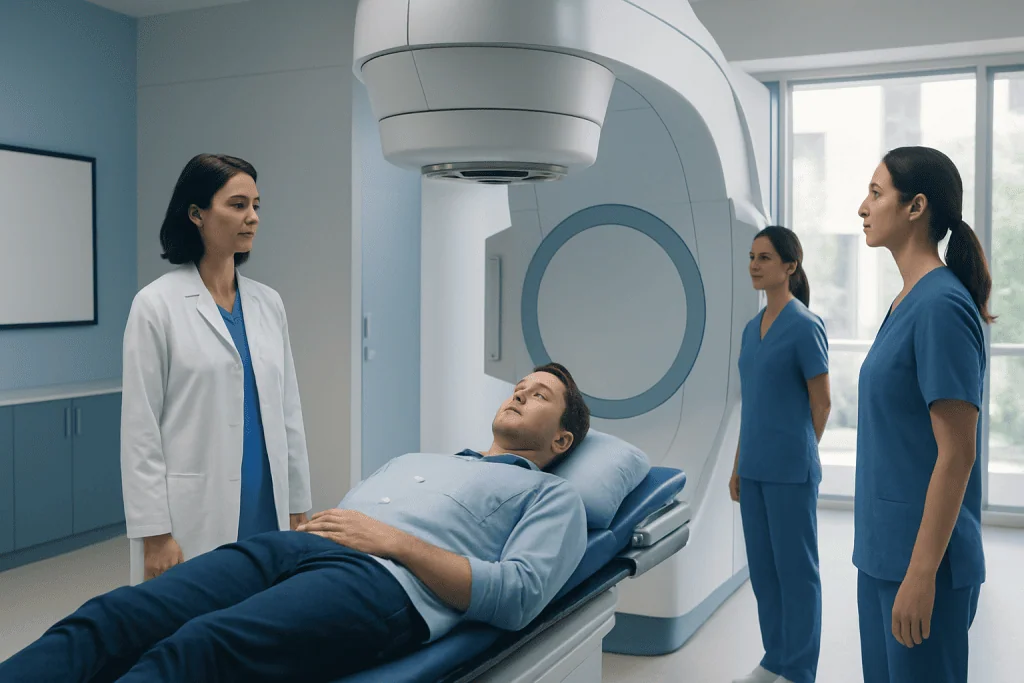
Radiotherapy is usually used for pituitary tumours that remain, return or continue to produce excess hormones after other treatment. Treatment may be delivered over several daily sessions or as a highly focused single-session procedure, depending on tumour size and location.
Key Takeaways
- Radiotherapy is usually used for pituitary tumours that remain, return or continue to produce excess hormones after other treatment.
- Treatment may be delivered over several daily sessions or as a highly focused single-session procedure, depending on tumour size and location.
- Tumour control is commonly gradual, and hormone levels can take months or years to improve after radiation.
- The most important long-term risk is reduced pituitary hormone production, so lifelong endocrine follow-up may be needed.
- Planning scans and precise positioning help protect nearby structures, especially the optic nerves and normal brain tissue.
Radiotherapy for pituitary tumours is a carefully planned treatment that uses focused radiation to slow or stop tumour growth and, in some cases, reduce excess hormone production. It is most often considered when surgery and medicines have not fully controlled a tumour, or when an operation is not suitable.
Overview: how radiotherapy for pituitary tumours works
Radiotherapy for pituitary tumours uses high-energy radiation to damage the DNA of tumour cells, limiting their ability to divide and grow. The pituitary gland sits at the base of the brain, close to the optic nerves, normal brain tissue and important blood vessels. For this reason, treatment planning is highly precise and is performed by a team that may include an endocrinologist, neurosurgeon, radiation oncologist, neuroradiologist and medical physicist.
Most pituitary tumours are pituitary adenomas, which are usually non-cancerous. Even so, they can cause important health problems if they press on nearby structures or make too much hormone. Radiation is not usually the first treatment for every person. Surgery, medication, observation, or a combination of these approaches may be more appropriate depending on the tumour’s type, size, hormone activity, symptoms and growth pattern.
The goal of radiation is typically long-term control rather than immediate tumour disappearance. It may help prevent further growth of tissue left after surgery, treat a tumour that has returned, or support control of hormone-producing tumours when medication and surgery have not achieved the desired result. Care should be individualized, particularly for people with pituitary adenoma and related hormone concerns.
Who may be a candidate for treatment?
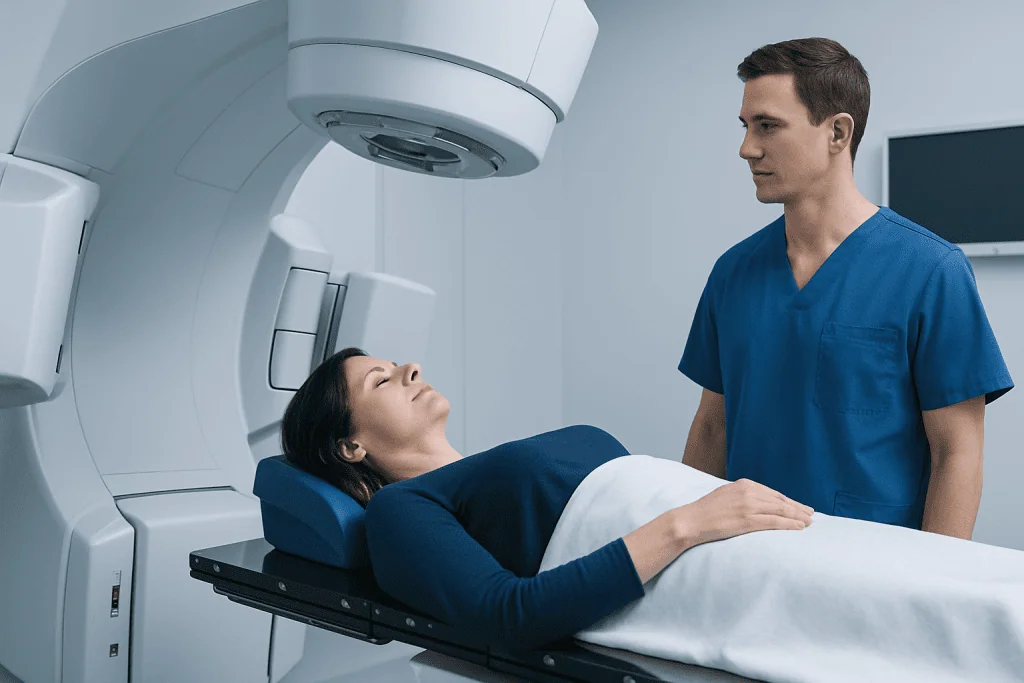
A specialist team may discuss radiotherapy when a pituitary tumour remains visible or continues to grow after surgery, when it comes back after a period of stability, or when it cannot be safely removed completely. It can also be considered for functioning tumours that continue to release too much hormone despite surgery and appropriate medication.
Whether radiation is suitable depends on several details. These include the distance between the tumour and the optic nerves, the tumour’s shape and size, past treatments, vision test findings, hormone levels, age, general health and personal priorities. Radiation is often postponed in children and young adults unless clearly needed because its potential long-term effects require especially careful consideration.
Some people are candidates for stereotactic radiosurgery, a highly focused form of radiation often delivered in one session or a few sessions. Others need fractionated radiotherapy, in which a smaller dose is given at each visit over several weeks. Fractionated treatment can be preferred when the tumour is larger, irregularly shaped or too close to the optic pathways for a single high-dose treatment.
Before making a decision, the team reviews MRI images, visual-field testing where appropriate, and a detailed pituitary hormone assessment. This evaluation helps clarify what radiation can realistically achieve and how it fits with medication, surgery, surveillance and long-term endocrine care.
What happens during the procedure?

Radiotherapy begins with a planning appointment. A customized mask or head-support device is made to help the person remain in the same position for each treatment. Planning CT imaging is usually combined with recent MRI scans so the treatment team can define the tumour and identify nearby sensitive structures as accurately as possible.
Specialized software then creates a treatment plan that directs radiation at the target while reducing exposure to the optic nerves, brain and other surrounding tissue. This planning process may take several days. The patient may also have blood tests, vision assessments and consultations with endocrinology and neurosurgery before treatment starts.
At each appointment, the person lies on a treatment table while the positioning device is secured. Imaging checks are commonly performed before radiation is delivered. The machine moves around the patient without touching them, and the radiation itself cannot be felt. Treatment is painless, and the actual delivery usually lasts minutes, although the full visit may take longer for setup and verification.
External-beam radiation does not make a person radioactive. They can safely be around family members, including children and pregnant people, after each session. The radiation oncology team will explain the chosen approach, whether it is a multi-session course or focused stereotactic radiosurgery, and provide practical instructions for the treatment days.
Benefits, effectiveness and expected results
Is radiation therapy effective for treating pituitary tumors? Yes, radiation therapy can be effective for long-term control of many pituitary tumours, particularly residual or recurrent tumours after surgery. It can stop further growth in a high proportion of appropriately selected cases, but results vary according to the tumour type, size, prior treatment and radiation technique.
For hormone-producing tumours, radiation may gradually lower excess hormone levels and support disease control. This response is usually slower than the effect of surgery or medication. It may take months to several years before hormone production reaches a satisfactory level, and some people continue medication while waiting for the full benefit of radiation.
Follow-up MRI scans do not always show a rapid decrease in tumour size. Stable imaging can be a successful outcome when the goal is to prevent additional growth. Regular blood tests are equally important because treatment decisions are often guided by hormone levels as well as imaging and symptoms.
Radiation is one component of a broader care plan. Depending on the tumour, a person may need ongoing pituitary surgery assessment, hormone-directed medication, visual monitoring or hormone replacement. The treating team can explain expected control rates for an individual situation without promising a specific outcome.
Recovery timeline and how people may feel
Most people return home on the same day and can continue many usual activities during treatment. Travel, work and driving may be possible for some patients, but fatigue, appointments and any existing symptoms can affect daily routines. A support person may be helpful, particularly for people who feel anxious, have vision changes or are managing hormonal illness.
How will I feel after 5 sessions of radiotherapy? After five sessions, many people feel little different from before treatment or notice only mild tiredness. Some may experience headache, scalp sensitivity, nausea or temporary worsening of fatigue, although these effects are not inevitable and may also relate to the underlying tumour, stress or medicines. The care team should be told about new or persistent symptoms so they can offer appropriate support.
Short-term effects generally improve in the days or weeks after treatment ends. The therapeutic effect on tumour growth or hormone production is much slower, so follow-up continues for years. MRI scans may be scheduled at intervals determined by the tumour type and prior findings, while endocrinology visits assess hormone levels and possible treatment-related hormone deficiencies.
It is helpful to plan for rest, regular meals, hydration and transportation if fatigue develops. Patients should not stop steroid replacement, thyroid medication, hormone therapy or tumour-directed medicines without advice from their endocrinologist. Individual recovery instructions should always take priority over general guidance.
Risks, long-term follow-up and what to know before radiation
Modern radiotherapy techniques are designed to minimize risk, but no treatment is entirely risk-free. The most common important late effect is hypopituitarism, meaning the pituitary gland produces too little of one or more hormones. This can occur months or years later and may require hormone replacement prescribed and monitored by an endocrinologist.
Other possible risks depend on the tumour’s location and treatment plan. They can include fatigue, headache, temporary local skin or hair changes, and, rarely, effects on vision or nearby brain structures. Serious complications are uncommon with careful planning, but the proximity of the optic nerves means that visual safety is a central part of selecting the technique and dose.
What I wish I knew before radiation? Many people find it useful to know that radiation is a process rather than an immediate cure: its benefits often develop gradually, and follow-up is a long-term commitment. It is also important to ask how the plan protects vision, what symptoms should prompt a call, whether current medications will continue, and how often MRI, visual testing and hormone blood tests will be needed.
Keeping copies of imaging reports, surgery records and hormone results can make coordinated care easier, especially for people travelling for treatment. Acibadem International’s multidisciplinary specialists and JCI-accredited hospitals can assess and treat pituitary tumours for international patients, with care coordinated across endocrinology, neurosurgery and radiation oncology.
Outlook and when to seek medical care
What is the life expectancy of a person with a pituitary tumor? Many people with pituitary tumours have a normal or near-normal life expectancy, especially when the tumour and any hormone imbalance are effectively monitored and treated. Outlook depends less on the presence of a pituitary tumour alone and more on its size, hormone activity, effect on vision, response to treatment and management of related health conditions.
Regular follow-up matters because a pituitary tumour can affect essential hormones even when it is not growing. Replacing missing hormones when needed, treating excess hormone production, and monitoring vision and imaging can all protect long-term health. A care team can give a more personalized outlook after reviewing the diagnosis and treatment history.
When to seek medical care A person should contact their medical team promptly for new or worsening vision changes, severe or persistent headache, repeated vomiting, confusion, fainting, marked weakness, or symptoms that feel significantly different from usual. Emergency evaluation is important for sudden severe headache with visual changes, loss of consciousness, or symptoms suggesting an acute pituitary problem.
People receiving radiation should also report increasing fatigue, nausea, new neurological symptoms or concerns about medication tolerance. Scheduled endocrine follow-up is essential even when a person feels well, because hormone changes may develop gradually and can often be treated effectively when identified early.
Frequently asked questions
Does radiotherapy cure a pituitary tumour?
Radiotherapy can provide durable control by stopping or slowing tumour growth, but it may not remove the tumour immediately or make it disappear on scans. In hormone-producing tumours, it may also reduce excess hormone production over time. The expected result depends on the individual tumour and other treatments used.
How long does radiotherapy for a pituitary tumour take?
The schedule depends on the radiation technique. Stereotactic radiosurgery may be delivered in one session or a small number of sessions, while fractionated radiotherapy is commonly given on weekdays over several weeks. Planning imaging and treatment design are completed before radiation begins.
Will I lose my hair during pituitary radiotherapy?
Many people do not have noticeable hair loss because the radiation field is focused deep within the head and treatment aims to limit exposure to the scalp. If hair in a small treated area is affected, changes may be temporary or, less commonly, long-lasting. The radiation team can explain the likelihood based on the individual plan.
Can radiotherapy affect pituitary hormones?
Yes. Radiation can gradually reduce normal pituitary hormone production, sometimes years after treatment. Regular hormone blood tests are therefore an important part of follow-up, and hormone replacement can be used if a deficiency develops.
Is radiotherapy safe when the tumour is close to the optic nerves?
Safety depends on the exact distance between the tumour and the optic pathways, as well as the dose and technique being considered. A tumour close to the optic nerves may be better suited to fractionated radiotherapy rather than single-session radiosurgery. Specialists use detailed MRI-based planning and vision assessments to guide this decision.
Can a pituitary tumour return after radiation therapy?
Radiation substantially reduces the chance of continued growth for many suitable tumours, but long-term monitoring remains necessary. Some tumours can remain stable for years, while others may need additional medication, surgery or other management. MRI scans and hormone testing help detect changes early.
References
- Endocrine Society
- European Society of Endocrinology
- Pituitary Society
- National Cancer Institute
- American Cancer Society
This article is for general information only and is not a substitute for professional medical advice. Please consult a qualified doctor about your individual situation.
Oncology care in Turkey — second opinion and treatment plan
JCI-accredited · board-certified surgeons · reply within 24h
Add us as a Preferred Source to see more of our trusted health content across Google Search, AI Overviews and Discover.