Radium Implant: An Evidence-Based Patient Guide

Modern “radium implant” treatment is usually brachytherapy, a precise type of internal radiation therapy. Implants may be temporary or permanent, depending on the cancer type, location and treatment plan.
Key Takeaways
- Modern “radium implant” treatment is usually brachytherapy, a precise type of internal radiation therapy.
- Implants may be temporary or permanent, depending on the cancer type, location and treatment plan.
- Temporary implants can require a short hospital stay and visitor precautions while the source is in place.
- Side effects are usually related to the body area treated and may develop gradually after therapy.
- The radiation oncology team provides individualized instructions for preparation, home care and follow-up.
A radium implant is a term sometimes used for internal radiation therapy, in which a radioactive source is placed in or near a tumor to deliver focused treatment. Modern practice generally uses carefully selected radioactive materials rather than radium itself, and the exact procedure, safety measures and recovery depend on the cancer being treated.
Overview: What Is a Radium Implant?
A radium implant refers to internal radiation treatment, most often called brachytherapy. It places a sealed radioactive source inside or very close to a tumor, allowing a high radiation dose to be delivered to a defined area while limiting exposure to nearby healthy tissue. Although people may still use the phrase “radium implant,” radium is rarely used in modern cancer care because safer, more controllable radioactive sources are available.
Radium implant use is most established for selected cancers of the prostate, cervix, uterus, vagina, breast, skin, head and neck, lung or other sites. It may be used alone, after surgery, together with external-beam radiation, or with other cancer treatments. The treatment plan is designed by a radiation oncologist with input from specialists such as surgeons, medical oncologists, radiologists, physicists and specialist nurses.
There are two main approaches. Temporary brachytherapy uses an applicator or catheter to place a radioactive source for minutes to days before it is removed. Permanent seed brachytherapy leaves tiny radioactive seeds in place; their radioactivity decreases over time. The recommended option depends on the diagnosis, tumor size and position, previous treatment and overall health.
How Internal Radiation Therapy Works
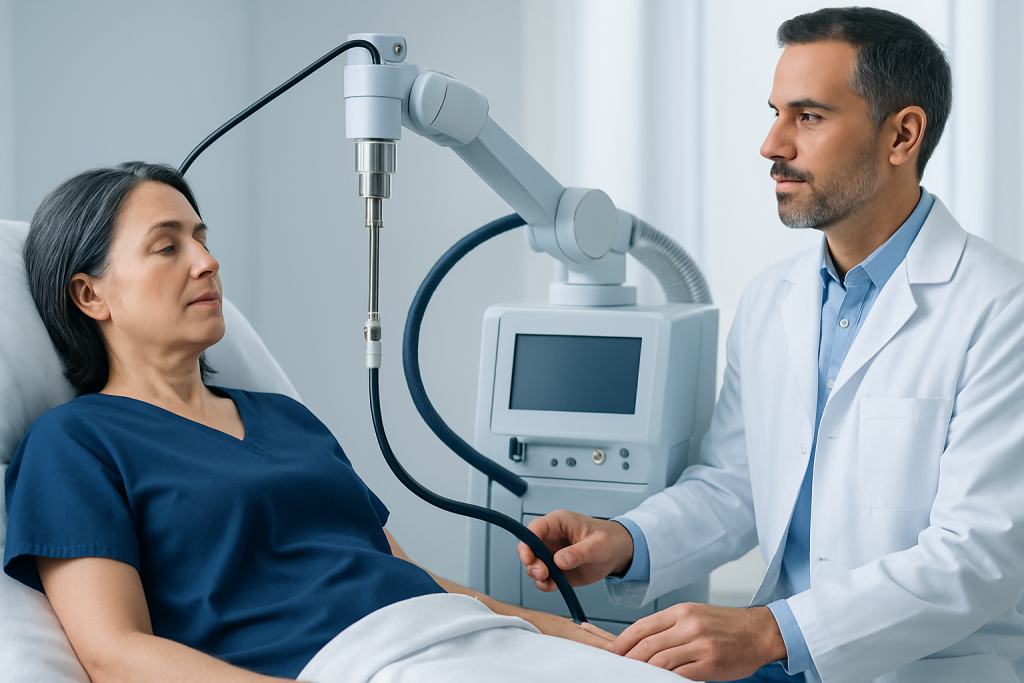
Radiation damages the genetic material inside cancer cells, making it harder for them to divide and survive. Because the radiation source is positioned close to the treatment target, its intensity falls quickly with distance. This is a key advantage of brachytherapy: it can concentrate treatment in the tumor area while helping to protect surrounding organs.
Before treatment, the team uses imaging and computerized planning to determine the source position, radiation dose and treatment duration. Depending on the technique, imaging may include ultrasound, CT, MRI or X-ray guidance. Medical physicists play an essential role in checking that the plan delivers radiation accurately and safely.
Internal radiation is not appropriate for every cancer or every person. In some situations, external-beam radiation, surgery, systemic treatment or a combination of approaches may offer a better balance of benefit and risk. A cancer team can explain whether brachytherapy is appropriate within an individual treatment plan.
Candidacy, Assessment and Preparation

Candidacy for a radium implant procedure depends on the specific cancer, its stage, location and whether it has spread. Doctors also consider previous radiation therapy or surgery, anatomy, urinary or bowel function when relevant, bleeding risk, other medical conditions and the person’s ability to attend follow-up appointments. For some cancers, brachytherapy is an important part of treatment intended to cure disease; for others, it may be used to control symptoms.
Assessment commonly includes a medical history, physical examination, blood tests and imaging. People may also meet an anesthesiologist if sedation, spinal anesthesia or general anesthesia is planned. The team should review all medicines, including blood thinners, diabetes medicines, supplements and herbal products, as some may need adjustment before the procedure.
Preparation instructions vary. The care team may advise when to stop eating or drinking before anesthesia, whether bowel or bladder preparation is needed, and whether a responsible adult should provide transport home. Patients should ask about work, driving, sexual activity, exercise, travel and any expected temporary changes in bladder, bowel or vaginal care before treatment begins.
Radium Implant Insertion: What Happens Step by Step
Radium implant insertion is performed in a hospital, outpatient procedure unit or radiation oncology department. The patient is positioned for treatment, and the area may be cleaned and prepared. Pain relief, sedation, spinal anesthesia or general anesthesia may be used depending on the treatment site and technique.
The doctor then places applicators, needles, catheters or seed-delivery devices into the planned location using imaging guidance where needed. For temporary high-dose-rate treatment, a computer-controlled machine sends the radiation source into the applicator for a precisely planned time and then withdraws it. The applicator may be removed after each session or remain in place for a short treatment course.
For permanent seed treatment, small radioactive seeds are implanted and remain in the body. They are not usually felt by the patient. After placement, imaging may confirm seed location. The clinical team will explain whether an overnight stay is needed, when normal eating and movement can resume, and what individual radium implant precautions apply.
These radium implant interventions are carefully planned rather than improvised. Patients are encouraged to ask who will be present, what type of anesthesia is planned, whether catheters or packing may be used temporarily, and how discomfort will be managed after the procedure.
Benefits, Risks and Recovery Timeline
A potential benefit of brachytherapy is focused radiation delivery over a shorter time than some external-beam schedules. In suitable cases, it can be highly effective and may reduce radiation exposure to nearby tissue. However, treatment success depends on the cancer type and stage, and no procedure can guarantee a particular outcome.
Side effects vary by treatment area. Short-term effects can include tiredness, local soreness, minor bleeding or discharge, urinary frequency or burning, bowel changes, skin irritation, and temporary discomfort related to applicators or anesthesia. Longer-term effects may include scarring, narrowing of treated tissues, persistent urinary or bowel changes, sexual effects, fertility effects or, less commonly, damage to nearby organs. The treating team will discuss the risks most relevant to the individual.
Recovery after an outpatient temporary implant may take a few days, while recovery after anesthesia or a more extensive procedure can take longer. Fatigue may build gradually during radiation treatment and can continue for weeks afterward. Follow-up visits are important to assess side effects, review pathology or imaging where relevant, and monitor the treatment response.
Radium implant care at home should follow the written plan from the radiation oncology team. Patients should rest as needed, drink fluids if medically appropriate, take prescribed medicines as directed and contact the care team about new or worsening symptoms rather than trying to manage significant symptoms alone.
What I Wish I Knew Before Radiation?
Many people find it helpful to know that radiation treatment is planned in detail, but the experience is still personal. It is reasonable to expect some uncertainty, especially before the first session. Asking practical questions in advance can make the process more manageable: what the goal of treatment is, how long appointments will take, which symptoms are expected, who to call after hours, and which activities may need temporary adjustment.
Side effects may not appear immediately. Some develop during treatment or in the following weeks, and the pattern depends on the area treated. Keeping a brief record of symptoms, energy level, food intake, bladder or bowel changes and questions for appointments can help the team provide timely support.
It is also useful to plan for help with transport, meals, childcare or work demands if fatigue is likely. Patients should tell the team about anxiety, sleep difficulty, pain, financial concerns or barriers to attending appointments. Supportive care, including nutrition, pain management, rehabilitation and mental health support, can be integrated into cancer care when needed.
What Not to Do During Radiation Treatment?
Patients should not stop prescribed medicines, use new supplements or apply creams, powders or herbal products to the treatment area without checking with their clinical team. Some products can irritate sensitive skin or interact with treatment. Smoking and tobacco exposure can also impair healing and may affect treatment outcomes, so support to stop smoking is worth discussing.
It is generally sensible to avoid strenuous activity if it worsens fatigue or discomfort, but gentle movement is often helpful when the doctor agrees. Patients should avoid missing appointments unless the treatment team advises otherwise, because radiation schedules are designed carefully. Alcohol advice varies by cancer type, medicines and general health, so this should be individualized.
With permanent radioactive seeds, the team may provide short-term precautions around close contact with pregnant people or young children. These instructions differ by isotope and implant site. Patients should not assume that all internal radiation requires the same restrictions; the radiation safety guidance provided for their own treatment is the correct source to follow.
What Are the Five R’s of Radiation Therapy?
The five R’s of radiation therapy describe biological principles that help explain why radiation is often given in planned fractions, or separate sessions. They are repair, reassortment, repopulation, reoxygenation and radiosensitivity. These concepts guide radiation specialists in designing schedules that aim to damage cancer cells effectively while allowing normal tissues time to recover.
- Repair: healthy cells can often repair some radiation-related damage between treatments.
- Reassortment: cells move through different stages of division, and some stages are more sensitive to radiation.
- Repopulation: cells can multiply between treatments, which influences the timing of therapy.
- Reoxygenation: better-oxygenated tumor cells may be more sensitive to radiation.
- Radiosensitivity: different cell types and cancers respond differently to radiation.
Not every brachytherapy plan uses many fractions. Some temporary implant treatments are delivered in a single session or a small number of sessions, while others are combined with external radiation. The radiation oncologist selects the schedule based on evidence for the particular cancer and the patient’s circumstances.
Can Patients With Radioactive Implants Have Visitors?
Visitors are often allowed, but the rules depend on whether the radioactive source remains inside the body and what type of source is used. During temporary brachytherapy in which a source stays in place for hours or days, a patient may stay in a protected hospital room. Visitor time, distance and number of visitors may be limited to keep exposure as low as reasonably achievable.
Pregnant visitors and young children may be asked not to enter the room during certain temporary implant treatments. Hospital staff provide specific instructions, and visitors should follow them closely. These precautions are protective and do not mean that routine contact is dangerous in every setting.
With permanent seed implants, radiation levels outside the body are usually low, but patients may receive temporary distance or contact advice. They should carry or keep treatment documentation when advised, particularly if travelling or attending another healthcare facility. Questions about visitors, sleeping arrangements and physical intimacy should be directed to the radiation safety team.
When to Seek Medical Care
Patients should contact their treatment team promptly for fever, worsening pain, heavy bleeding, inability to pass urine, severe constipation or diarrhea, persistent vomiting, new shortness of breath, swelling, signs of infection, or symptoms that feel severe or unusual. Emergency services should be used for life-threatening symptoms such as chest pain, severe breathing difficulty, fainting or uncontrolled bleeding.
After a permanent seed implant, patients should also contact the team if they think a seed has passed from the body or if a device, catheter or applicator appears displaced. They should not handle a suspected radioactive seed directly. The care team will explain what to do safely if this rare event occurs.
Acibadem International’s multidisciplinary specialists and JCI-accredited hospitals support international patients undergoing cancer assessment and treatment, including coordinated radiation oncology care. A qualified oncology team can provide individualized guidance on treatment choices, recovery and follow-up.
Frequently asked questions
Is a radium implant still made with radium?
Usually, no. The term is often used informally for brachytherapy, but modern internal radiation treatment generally uses other sealed radioactive sources chosen for their predictable radiation properties. The radiation oncology team can explain the material and technique used in an individual plan.
Is radium implant treatment painful?
The insertion procedure may involve discomfort, but anesthesia, sedation or pain relief is used when appropriate. Afterward, soreness or site-specific symptoms can occur and are usually managed with an individualized care plan. Patients should report pain that is severe, increasing or not relieved by prescribed measures.
How long does a radioactive implant stay in the body?
Temporary sources may remain in place for minutes, hours or, less commonly, days before removal. Permanent seeds remain in the body, but their radioactivity decreases gradually over time. The duration and precautions depend on the source and treatment site.
Will I be radioactive after brachytherapy?
After temporary brachytherapy, a person is not radioactive once the source has been removed. After permanent seed implantation, small amounts of radiation may be emitted for a limited period, so the team may recommend temporary precautions. Written guidance should be followed because restrictions differ between treatments.
Can I work and exercise during radiation treatment?
Many people can continue some usual activities, but tiredness and local side effects may require changes to work or exercise. Gentle activity may be suitable for some patients, while strenuous exercise may need to wait during recovery. The treating team can advise based on the procedure and cancer site.
What follow-up is needed after a radium implant?
Follow-up commonly includes symptom review, physical examinations and tests or imaging appropriate to the cancer type. These appointments help monitor treatment response and identify side effects early. Patients should attend scheduled visits even if they feel well.
References
- American Cancer Society
- National Cancer Institute
- International Atomic Energy Agency
- American Society for Radiation Oncology
- National Health Service
This article is for general information only and is not a substitute for professional medical advice. Please consult a qualified doctor about your individual situation.
Oncology care in Turkey — second opinion and treatment plan
JCI-accredited · board-certified surgeons · reply within 24h
Add us as a Preferred Source to see more of our trusted health content across Google Search, AI Overviews and Discover.

More from the Health Library



Related Specialists

Assoc. Prof. Dr. Semra Akkaya Turhan
Ophthalmology
Prof. Dr. Güldin Bingöl
Pediatric Allergy
Assoc. Prof. Dr. Bahar Özcabı
Pediatrics
Dr. Serdar Korkmaz
Anesthesiology