

Rebounding: An Evidence-Based Guide for Patients

Rebounding is a low-impact aerobic activity done on a mini trampoline. It may help support cardiovascular fitness, coordination, balance, and exercise adherence.
Key Takeaways
- Rebounding is a low-impact aerobic activity done on a mini trampoline.
- It may help support cardiovascular fitness, coordination, balance, and exercise adherence.
- Safety depends on equipment quality, technique, supervision, and a person’s overall health.
- People with balance problems, recent surgery, severe joint pain, or certain heart and neurological conditions should seek medical advice first.
- Rebounding should be started gradually and stopped if it causes pain, dizziness, chest symptoms, or falls.
Rebounding is a form of low-impact exercise performed on a mini trampoline. For many people, it can be an enjoyable way to improve movement, fitness, and balance, but it is not suitable for everyone and should be approached with proper technique and medical guidance when needed.
What rebounding is and how it may help
Rebounding is exercise performed on a small trampoline, often called a mini trampoline or rebounder. It usually involves gentle bouncing, marching, stepping, or simple aerobic movements rather than high jumps. Many people choose rebounding because it feels easier on the joints than some land-based activities such as running on hard surfaces.
When done correctly, rebounding can contribute to general physical activity. It may help improve heart and lung fitness, support leg strength, and challenge coordination and balance. Because the surface is elastic, the body must make small adjustments during movement, which can engage core and stabilizing muscles.
Rebounding is best understood as one exercise option within a broader healthy lifestyle. It is not a cure for medical conditions, and claims that it “detoxifies” the body or dramatically outperforms all other exercise are not supported by strong evidence. Its value lies in being a practical, enjoyable form of movement that some people can maintain consistently.
Who may benefit from rebounding
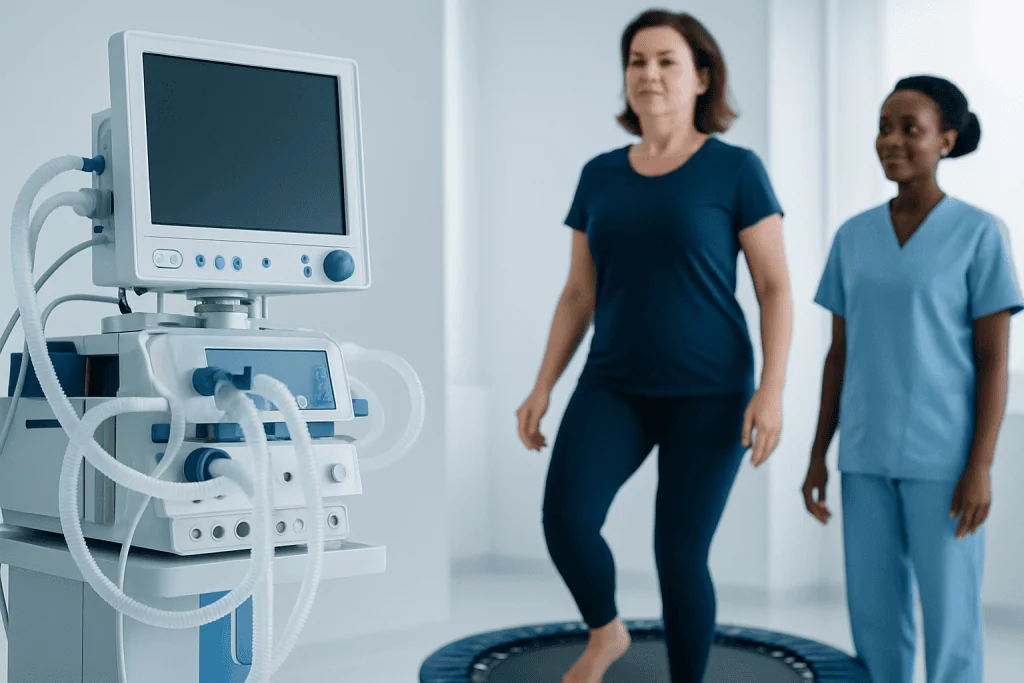
For generally healthy adults, rebounding can be a convenient way to add moderate physical activity at home. Short sessions may be useful for people who find traditional exercise repetitive or uncomfortable. The movement can be adapted to different fitness levels, from very gentle weight shifts to more vigorous interval-style routines.
Some people use rebounding to complement walking, cycling, resistance training, or structured rehabilitation under professional guidance. It may be especially appealing for those seeking a low-impact option that still raises the heart rate. In older adults, balance-focused exercise can be valuable, but trampoline-based activity should only be considered if stability is good and fall risk is low.
Children and teenagers may also enjoy rebounding, but safety rules are important. A rebounder should be used one person at a time, on a stable surface, with close supervision when appropriate. For anyone returning to exercise after illness or injury, a clinician or physiotherapist can help decide whether rebounding is suitable.
Potential benefits supported by evidence

Research on rebounding is smaller than the evidence base for walking, cycling, or standard aerobic training, but some findings are encouraging. Regular use may help improve aerobic capacity, general conditioning, and lower-body muscle endurance. Like other forms of exercise, it can also support mood, sleep quality, and long-term health when practiced consistently.
Balance and coordination may improve because the moving surface requires controlled adjustments. This does not mean rebounding is automatically safe for people with unsteadiness; rather, it may be helpful for selected individuals who already have adequate stability. In a supervised rehabilitation setting, clinicians sometimes use carefully graded exercises to rebuild confidence and movement control.
Rebounding may also reduce the impact forces associated with some higher-impact activities, which is one reason some people with mild joint sensitivity prefer it. However, low impact does not mean no risk. If knee, hip, back, or foot symptoms worsen during or after bouncing, the activity may need to be modified or stopped, and medical evaluation may be appropriate.
- Possible benefits include improved exercise tolerance and stamina.
- It may support balance, coordination, and lower-body control.
- It can be a practical home-based option for regular movement.
- Enjoyment may help some people stay physically active over time.
Risks, limits, and who should be cautious
The main risks of rebounding are falls, ankle twists, overuse discomfort, and symptom flare-ups in people with certain medical problems. Even a small trampoline can cause loss of balance, especially during fast movements, turns, or single-leg exercises. Poor-quality equipment, uneven flooring, and lack of hand support can increase risk.
People with known balance disorders, significant dizziness, uncontrolled seizures, severe osteoporosis, recent fractures, or recent surgery should speak with a doctor before starting. Caution is also important for those with severe arthritis, chronic back pain, pelvic floor symptoms, advanced diabetic nerve damage, or conditions affecting movement and coordination. If a person has a history of fainting, chest pain with activity, or significant shortness of breath, exercise advice should come from a qualified clinician.
Pregnancy, postpartum recovery, and older age do not automatically rule out rebounding, but individual assessment matters. Some people may be better served by walking, cycling, water exercise, or a tailored physical therapy and rehabilitation plan. People living with conditions that affect balance or movement, such as Parkinson’s disease, may need structured evaluation before trying trampoline-based exercise.
How to start rebounding safely
Safe rebounding begins with the right setup. The rebounder should be stable, in good condition, and placed on a flat, uncluttered surface with enough space around it. Support bars may help some users, but they do not replace good balance or proper supervision. Footwear depends on the surface and the manufacturer’s instructions, but whatever is chosen should reduce slipping.
Beginners should start with a warm-up and simple movements such as standing, gentle weight shifts, marching, or very light bouncing where the feet remain in contact with the mat. Sessions can be brief at first, with intensity increased gradually based on comfort, fitness, and recovery. Good posture, soft knees, and controlled movement are generally safer than aggressive jumping.
Pain is a signal to stop and reassess. It is normal to feel mildly challenged by exercise, but sharp pain, joint instability, dizziness, palpitations, unusual breathlessness, or visual disturbance are not expected. People recovering from musculoskeletal injuries may benefit from an individualized assessment, and in some cases orthopedic rehabilitation may be more appropriate than unsupervised exercise.
- Start with short, low-intensity sessions.
- Use one person on the rebounder at a time.
- Avoid complex moves until basic control is comfortable.
- Hold onto support only if recommended and without leaning heavily.
- Stop if symptoms develop during or after exercise.
Common symptoms that mean the activity is not suiting the body
Rebounding should not cause persistent pain or lingering instability. Warning symptoms can include repeated ankle rolling, knee swelling, hip or back pain, pelvic heaviness or urine leakage, headaches triggered by bouncing, or dizziness during movement. These may indicate technique problems, excessive intensity, or an underlying condition that needs attention.
Some symptoms deserve more careful review because they may reflect a medical issue rather than simple overexertion. Chest discomfort, racing or irregular heartbeat, near-fainting, marked breathlessness, or severe fatigue with light activity are reasons to stop exercise and seek medical advice. If there is numbness, weakness, tremor, gait difficulty, or ongoing vertigo, evaluation may include cardiovascular, musculoskeletal, or neurological assessment.
In people with recurring balance problems or exercise-related dizziness, clinicians may investigate inner ear, neurological, or circulation-related causes. Depending on the situation, further evaluation for vertigo or supervised recovery planning may be advised rather than continuing independent trampoline exercise.
When to seek medical care
Medical advice is sensible before starting rebounding if a person has heart disease, chronic lung disease, osteoporosis, severe joint disease, neurological illness, uncontrolled diabetes, recent surgery, or a history of falls. A doctor or physiotherapist can help decide whether rebounding is appropriate and how to modify it safely.
Prompt medical care is important if rebounding leads to a fall with head injury, inability to bear weight, significant swelling, chest pain, fainting, severe shortness of breath, or new neurological symptoms such as weakness or confusion. Persistent pain that lasts beyond a few days or keeps returning with exercise also deserves evaluation.
For people who need assessment, treatment may involve movement analysis, rehabilitation, imaging, or specialist care. In selected cases, clinicians may recommend cardiac rehabilitation or a tailored exercise prescription instead of unsupervised bouncing. Acibadem International’s multidisciplinary specialists and JCI-accredited hospitals diagnose and treat exercise-related injuries and underlying conditions for international patients.
Frequently asked questions
Is rebounding a good form of exercise?
For many healthy adults, rebounding can be a useful low-impact exercise option. It may help support cardiovascular fitness, coordination, and regular physical activity when done with safe technique and appropriate intensity.
Is rebounding safe for people with knee or back pain?
It depends on the cause and severity of the pain. Some people find the softer surface more comfortable than hard-ground exercise, but others may have worsening symptoms, so medical or physiotherapy advice is sensible if pain is ongoing.
Can older adults do rebounding?
Some older adults may be able to do gentle rebounding, but balance, bone health, medications, and fall risk should be considered first. If there is any unsteadiness, dizziness, or history of fractures, professional guidance is recommended before starting.
How often should a beginner do rebounding?
A beginner usually does best with short, low-intensity sessions and gradual progression. The exact frequency should match overall health, fitness level, and how the body feels during and after exercise.
What are the signs that rebounding is not right for someone?
Repeated joint pain, dizziness, chest symptoms, falls, or symptom flare-ups after sessions suggest the activity may not be suitable or may need modification. These symptoms should not be ignored, especially if they are new or persistent.
Can rebounding help with weight management?
Rebounding can contribute to calorie use and support an active lifestyle, but weight management usually depends on overall activity, nutrition, sleep, and long-term habits. It is best viewed as one part of a broader health plan rather than a standalone solution.
References
- World Health Organization
- American College of Sports Medicine
- Centers for Disease Control and Prevention
- National Institute on Aging
- National Institute of Arthritis and Musculoskeletal and Skin Diseases
This article is for general information only and is not a substitute for professional medical advice. Please consult a qualified doctor about your individual situation.
Joint and spine care in Turkey — expert assessment & treatment
JCI-accredited · board-certified surgeons · reply within 24h
Add us as a Preferred Source to see more of our trusted health content across Google Search, AI Overviews and Discover.
Check your numbers in seconds
BMI, calories, due date, blood pressure and 30+ more clinical calculators — free, instant, doctor-reviewed ranges.

More from the Health Library



Related Specialists

Assoc. Prof. Dr. Pınar Kahraman Koytak
Neurology
Dr. Mahmut Baktir
Pediatrics
Dr. Safiye Sayılır
Physical Medicine & Rehabilitation
Dt. Alperen Kaşkaya
Oral & Dental Health