Recessed Chin: An Evidence-Based Guide for Patients

A recessed chin may be a cosmetic concern, a variation of normal anatomy, or part of an underlying jaw or airway problem. Common causes include genetics, lower jaw position, dental bite differences, and some congenital conditions.
Key Takeaways
- A recessed chin may be a cosmetic concern, a variation of normal anatomy, or part of an underlying jaw or airway problem.
- Common causes include genetics, lower jaw position, dental bite differences, and some congenital conditions.
- Evaluation may involve a physical exam, dental or orthodontic assessment, and imaging when needed.
- Treatment ranges from observation and orthodontics to chin-focused procedures or jaw surgery, depending on function and goals.
- Children, people with snoring or breathing problems, and those with chewing or bite issues should be assessed by a qualified clinician.
A recessed chin is a chin that appears set back compared with the lips, nose, or forehead. In many people it is a normal inherited facial feature, but in others it may reflect jaw alignment, bite problems, breathing issues, or developmental conditions that deserve medical assessment.
What a recessed chin means
A recessed chin describes a chin that sits farther back than expected in relation to the rest of the face. Many people use terms such as “weak chin” or “small chin,” but clinicians may also describe the underlying jaw relationship with terms such as retrognathia, especially when the lower jaw is positioned behind the upper jaw. A recessed chin does not automatically mean there is a medical problem.
For some people, this feature is simply part of their natural facial anatomy and runs in families. In others, it can be linked to how the lower jaw grew, how the teeth meet, or how the airway functions during sleep. Because appearance, bite, and breathing are connected, the most helpful approach is to look beyond appearance alone and assess function as well.
This distinction matters because treatment is not the same for everyone. Someone bothered mainly by profile balance may consider aesthetic options, while a person with chewing difficulty, jaw pain, or sleep-disordered breathing may need a broader evaluation. An evidence-based assessment helps match the treatment to the actual cause.
How a recessed chin can affect appearance and function
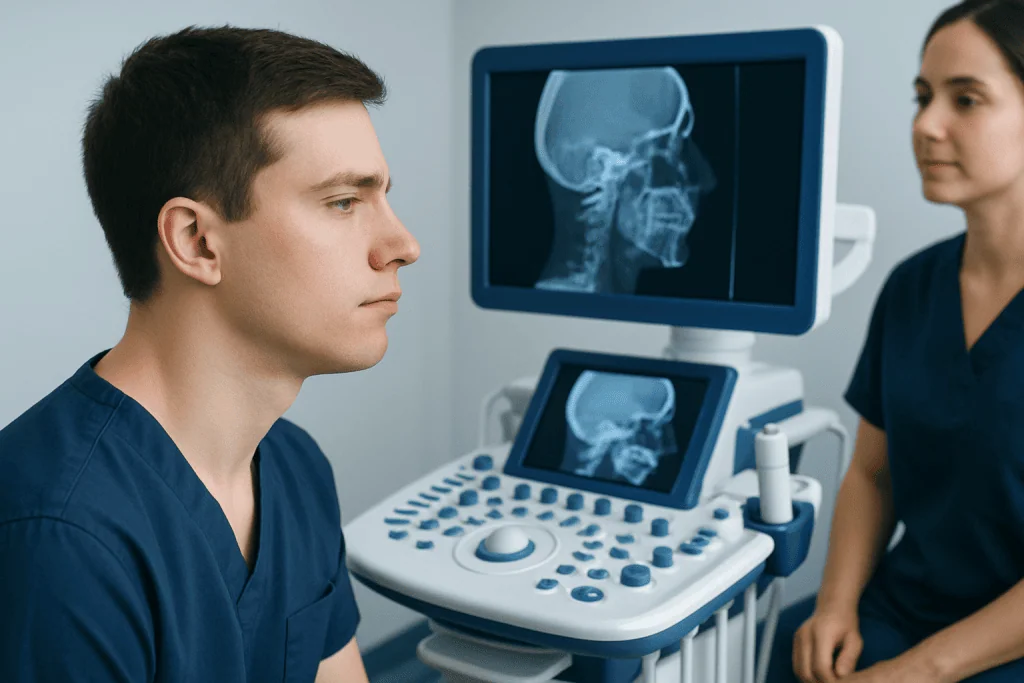
A recessed chin often changes facial profile more than it changes the front view. The chin may look less projected, the neck-chin angle may appear less defined, and the nose or upper lip may seem more prominent by comparison. These differences can affect self-image, but they do not necessarily indicate disease.
Functionally, a recessed chin can sometimes occur together with a retruded lower jaw. When this is present, the teeth may not meet normally, which can affect biting into foods or chewing efficiently. Some people also notice strain in the lips when trying to keep the mouth closed, or tension around the jaw muscles.
In certain cases, jaw position can influence the space behind the tongue and soft tissues of the throat. This may contribute to snoring, mouth breathing, or obstructive sleep apnea in susceptible individuals. Not everyone with a recessed chin has airway problems, but this possibility is one reason a symptom-based medical review is important.
Common causes and risk factors

The most common reason for a recessed chin is inherited facial structure. A person may naturally have a smaller or less projected chin bone, or the entire lower jaw may sit farther back than average. Family traits often explain why this feature appears in otherwise healthy children and adults.
Dental and skeletal relationships are another major factor. If the lower jaw develops less forward growth than the upper jaw, an overbite or Class II bite pattern may occur. This can make the chin appear recessed even if the chin bone itself is normal. Orthodontists and maxillofacial specialists often help distinguish whether the issue is mainly dental, skeletal, or both.
Less commonly, a recessed chin may be associated with congenital syndromes, childhood growth differences, prior facial trauma, or conditions affecting bone development. In infants, a markedly small or set-back lower jaw can occasionally interfere with feeding or breathing. In adults, age-related soft tissue changes can make an existing chin recession more noticeable, even without major changes in the bone.
- Inherited facial and jaw shape
- Lower jaw positioned farther back than the upper jaw
- Dental bite differences, including overbite
- Developmental or congenital conditions
- Previous trauma or, less often, growth disturbances
Symptoms and signs that may need evaluation
Many people have no symptoms apart from concern about facial balance. Others may notice difficulty biting into food, uneven tooth wear, frequent lip strain, or a bite that feels misaligned. Jaw discomfort, clicking, or tension can also coexist, though these symptoms can have several causes and are not specific to a recessed chin alone.
Breathing-related symptoms deserve special attention. Loud snoring, pauses in breathing during sleep, restless sleep, morning headaches, or excessive daytime sleepiness may suggest sleep-disordered breathing. In children, mouth breathing, poor sleep, behavioral changes, or feeding difficulty can also point to a problem that should not be dismissed as only a cosmetic issue.
Speech differences are less common, but some people with more significant jaw discrepancy may report articulation changes. If there are concerns about chewing, swallowing, breathing, or sleep quality, assessment by an appropriate specialist is more important than judging appearance from photographs alone.
How doctors diagnose a recessed chin
Diagnosis begins with a clinical history and physical examination. The doctor considers when the feature was first noticed, whether it has changed over time, and whether there are symptoms related to chewing, dental alignment, sleep, or breathing. Family history, past trauma, and previous orthodontic treatment can provide useful context.
The examination looks at facial proportions, chin position, jaw relationship, lip closure, and how the teeth meet. Depending on the findings, the patient may be referred to a dentist, orthodontist, oral and maxillofacial surgeon, ENT specialist, or plastic surgeon. The goal is to identify whether the main issue involves the chin itself, the entire lower jaw, the bite, or the airway.
Imaging may be recommended when planning treatment or clarifying anatomy. This may include cephalometric X-rays, dental imaging, or other scans to assess bone structure and alignment. If symptoms suggest sleep apnea or another breathing-related issue, additional testing may be appropriate. Related conditions such as sleep apnea may need targeted evaluation before deciding on treatment.
Treatment options: from monitoring to surgery
Treatment depends on age, symptoms, anatomy, and personal goals. If a recessed chin is mild and causes no functional problems, no treatment may be necessary. Reassurance and monitoring can be appropriate, especially when the concern is primarily about normal facial variation.
When the bite is involved, orthodontic care may help improve tooth alignment and jaw relationship. In growing children, some orthodontic approaches may guide jaw development in selected cases. In adults with significant skeletal discrepancy, orthodontics alone may not fully correct the underlying jaw position, and combined surgical planning may be discussed.
If the main concern is chin projection and facial balance, a chin-focused procedure may be considered. Depending on the anatomy and goals, this may involve chin augmentation or genioplasty. These options address the contour of the chin, but they do not correct every bite or airway issue, so careful selection is important.
When the lower jaw itself is retruded and there are functional problems such as severe malocclusion or airway compromise, jaw surgery may offer a more comprehensive solution. In selected patients, orthognathic surgery can reposition the jaws to improve both profile and function. Decisions about surgery should be made with a multidisciplinary team after a full discussion of expected benefits, limits, and recovery.
Self-care, expectations, and questions to ask
There is no exercise or home remedy proven to permanently move the chin bone forward in adults. Online claims about jaw exercises, devices, or posture techniques should be approached cautiously. Good posture can improve how the neck and jawline look in some people, but it does not change the underlying skeletal anatomy.
Self-care is most useful when it supports overall oral and sleep health. Regular dental care, treatment for teeth grinding if present, maintaining a healthy weight, and addressing nasal blockage or sleep symptoms can all be helpful. For those considering treatment, realistic goals are essential: improvement may focus on appearance, function, or both, and not every option addresses all concerns equally.
Patients often benefit from asking clear questions during consultation. Helpful topics include whether the issue is in the chin, the jaw, the bite, or the airway; what tests are needed; whether treatment is optional or medically recommended; and what changes can reasonably be expected. Near the end of the care pathway, some patients seek multidisciplinary evaluation at centers such as Acibadem International, where specialists in dental, maxillofacial, ENT, and aesthetic care in JCI-accredited hospitals diagnose and treat international patients.
When to seek medical care
Medical care is recommended if a recessed chin is accompanied by difficulty chewing, a noticeably misaligned bite, jaw pain, persistent mouth breathing, loud snoring, witnessed pauses in breathing during sleep, or daytime fatigue. In infants and children, feeding trouble, poor weight gain, noisy breathing, or sleep disturbance should be assessed promptly.
An evaluation is also sensible before choosing a cosmetic procedure. A chin that looks recessed may actually reflect a larger jaw alignment issue, and treating appearance alone may not address the underlying problem. A qualified clinician can explain whether observation, orthodontic care, a chin procedure, or broader jaw treatment is the safest and most effective path.
Urgent assessment is needed if there is new difficulty breathing, significant facial injury, sudden changes after trauma, or severe pain. While these situations are not the usual cause of a recessed chin, they should not be delayed or managed with self-diagnosis.
Frequently asked questions
Is a recessed chin always a medical problem?
No. A recessed chin is often a normal inherited facial feature and may not cause any health issues. It becomes more medically relevant when it is associated with bite problems, chewing difficulty, snoring, sleep apnea symptoms, or developmental concerns.
What is the difference between a recessed chin and a small lower jaw?
A recessed chin describes how the chin looks in relation to the rest of the face. A small or retruded lower jaw refers more broadly to the position or size of the mandible, which may also affect the bite and airway. A clinical exam helps determine which structure is responsible.
Can braces fix a recessed chin?
Braces can improve tooth alignment and may help certain bite problems, especially when the appearance is partly due to dental positioning. However, braces alone do not move the chin bone forward in adults. If the main issue is skeletal jaw position, other treatments may be considered.
Does a recessed chin cause sleep apnea?
It can contribute in some people, but it is not a cause in every case. When the lower jaw sits farther back, the tongue and soft tissues may reduce airway space during sleep. Anyone with loud snoring, witnessed breathing pauses, or daytime sleepiness should discuss evaluation with a doctor.
Can a recessed chin be corrected without surgery?
Sometimes. If the concern is mild or mainly related to dental alignment, observation or orthodontic treatment may be enough. When the goal is to change bony chin projection or jaw position significantly, procedural treatment may be needed.
At what age should a child with a recessed chin be assessed?
A child should be assessed sooner if there are feeding problems, noisy breathing, sleep concerns, or a clearly abnormal bite. Even without symptoms, parents may consider dental or orthodontic evaluation if the jaw relationship seems unusual as the child grows. Early review can help identify whether monitoring or treatment is appropriate.
References
- American Association of Oral and Maxillofacial Surgeons
- American Association of Orthodontists
- National Institute of Dental and Craniofacial Research
- American Academy of Sleep Medicine
This article is for general information only and is not a substitute for professional medical advice. Please consult a qualified doctor about your individual situation.
Explore treatments in Turkey — costs, top hospitals & a free quote
JCI-accredited · board-certified surgeons · reply within 24h
Add us as a Preferred Source to see more of our trusted health content across Google Search, AI Overviews and Discover.

More from the Health Library

Holosystolic Murmur: What Patients Need to Know

Razor Bumps on Vigina: An Evidence-Based Guide for Patients

Pins and Needles in Feet: What Patients Need to Know

Turmeric for Weight Loss: What Patients Need to Know

Mca Stroke — Explained by Medical Evidence, Not Myths