Red Itchy Pimples on Legs: Possible Causes and When to Seek Care

Red itchy pimples on legs are a symptom, not a diagnosis, and can have several different causes. Folliculitis, contact dermatitis, insect bites, heat rash, and eczema are common explanations.
Key Takeaways
- Red itchy pimples on legs are a symptom, not a diagnosis, and can have several different causes.
- Folliculitis, contact dermatitis, insect bites, heat rash, and eczema are common explanations.
- The pattern, timing, and appearance of the bumps often help doctors identify the cause.
- Avoid scratching, harsh products, and repeated shaving over irritated skin until it improves.
- Medical care is important if bumps are painful, draining pus, spreading quickly, or not improving.
Red itchy pimples on legs can result from several common skin problems, including inflamed hair follicles, irritation from shaving or products, insect bites, heat rash, or eczema. Most are mild, but persistent, spreading, painful, or infected-looking bumps should be assessed by a doctor to confirm the cause and guide treatment.
Overview: what red itchy pimples on legs can mean
Red itchy pimples on legs are usually caused by irritation or inflammation in the skin rather than a serious illness. Common reasons include folliculitis, insect bites, allergic or irritant contact dermatitis, heat rash, and eczema. In some people, the bumps appear after shaving, sweating, friction from clothing, or using a new lotion, soap, or detergent.
The term “pimples” can describe several types of bumps. Some are centered on hair follicles, some are flat or patchy, and others look like tiny raised spots. Whether the bumps are itchy, painful, warm, dry, or filled with fluid can help narrow the cause.
Because many rashes can look similar at first, it helps to consider when the bumps started, what the skin was exposed to, and whether there are other symptoms such as fever, swelling, or pus. If the rash keeps returning, spreads, or does not improve with simple skin care, a clinician may recommend an assessment for a skin condition such as eczema or an infection involving the hair follicles.
How the bumps may look and feel
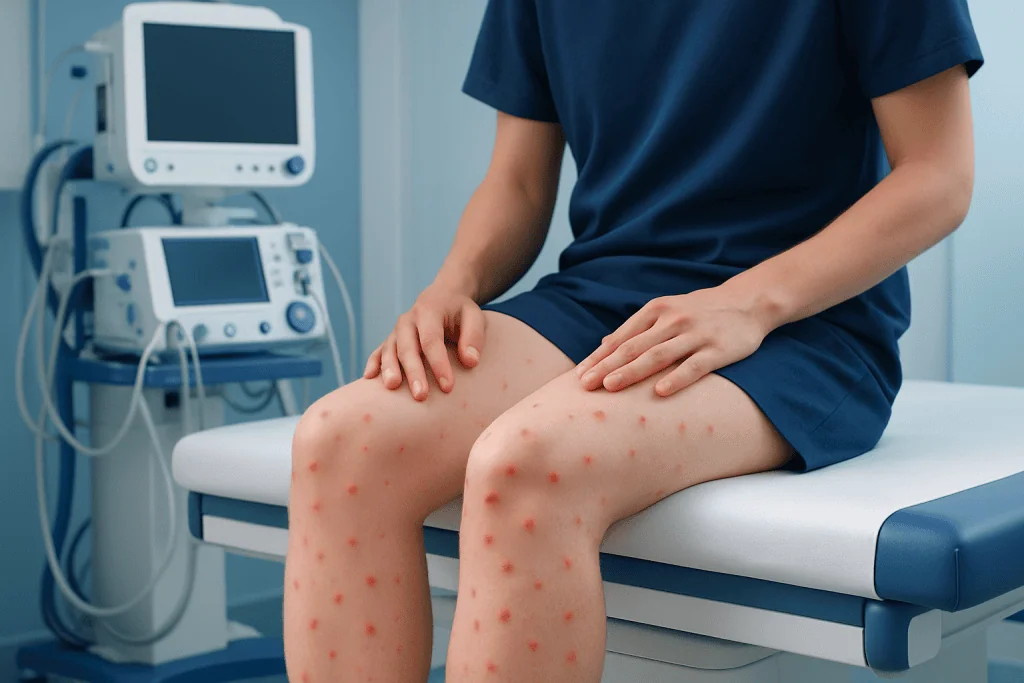
Different causes produce slightly different skin changes. Folliculitis often causes small red or white-topped bumps around hair follicles, sometimes with tenderness or mild burning. Contact dermatitis may cause itchy red spots or patches, often with dryness, scaling, or a stinging sensation. Insect bites tend to form grouped or scattered itchy bumps that may appear suddenly.
Heat rash usually develops as tiny prickly bumps after sweating or being in hot weather. Eczema may create rough, dry, itchy areas that can become red and inflamed after scratching. Keratosis pilaris, another common cause of rough bumps on the legs, is usually less itchy and feels more like persistent “chicken skin.”
Doctors often ask about the distribution of the rash. Bumps only on shaved areas can suggest razor irritation or folliculitis. A rash on both legs after using a new product may point to contact dermatitis. Grouped bumps around the ankles can be linked to bites. This pattern-based approach is one reason self-diagnosis can be difficult.
- Itchy more than painful: often seen with bites, eczema, or contact dermatitis
- Tender or pus-filled: more suggestive of folliculitis or a bacterial skin infection
- Dry and scaly: commonly associated with eczema or irritation
- Triggered by heat and sweat: may suggest heat rash
Common causes of red itchy pimples on legs
Folliculitis is one of the most common explanations. It happens when hair follicles become inflamed, sometimes due to bacteria, yeast, friction, occlusive clothing, or shaving. The bumps often look acne-like and may itch or sting. Tight athletic wear, sweating, and repeated hair removal can increase the chance of folliculitis developing on the thighs or lower legs.
Contact dermatitis is another frequent cause. This can occur when the skin reacts to an irritant such as fragranced products, harsh soaps, depilatory creams, detergents, or certain fabrics. An allergic form may develop after exposure to ingredients in skin care products, topical medications, or plants. The rash often becomes very itchy and may spread over the exposed area.
Insect bites can cause clusters of red itchy bumps, especially after time outdoors, travel, or sleeping in a new environment. Mosquitoes, fleas, and other insects commonly affect the legs. Heat rash may occur during hot weather or exercise when sweat gets trapped in the skin.
Other possibilities include eczema, hives, fungal infection, scabies, and less commonly psoriasis or inflamed keratosis pilaris. If there is suspicion of a persistent inflammatory condition, evaluation by a skin specialist may be helpful. In some cases, doctors may discuss dermatology evaluation and treatment to identify the exact cause and select the most appropriate therapy.
Risk factors and clues that help identify the cause
Several everyday factors can make red itchy pimples on legs more likely. Shaving, waxing, and friction from tight clothing can irritate follicles and the skin barrier. Hot weather, sweating, and prolonged exercise can contribute to heat rash and folliculitis. Dry skin may make eczema and irritation feel worse and lead to scratching, which can further inflame the area.
Recent changes often provide useful clues. New detergent, body wash, moisturizer, sunscreen, or self-tanning product may point toward contact dermatitis. Time spent outdoors, pets in the home, or recent travel may make insect bites more likely. A history of allergies, asthma, or sensitive skin can increase the chance of eczema-related symptoms.
Medical background matters too. People with diabetes, weakened immune systems, or ongoing skin conditions may be more prone to infections or slower healing. Recurrent boils, painful swollen lumps, or extensive rash should not be dismissed as simple irritation. If the bumps are severe or repeatedly come back, a doctor may look for an underlying problem rather than treating each flare as a separate event.
How doctors diagnose the problem
Diagnosis usually begins with a careful skin examination and a review of the person’s recent exposures, symptoms, and medical history. A doctor may ask when the rash started, whether it is itchy or painful, if shaving is involved, and whether any new products or medications were introduced. The exact shape, location, and pattern of the bumps are often very informative.
In many cases, no special test is needed. Doctors can often recognize common problems such as folliculitis, eczema, or contact dermatitis by appearance alone. If infection is suspected, they may take a swab or sample from a pustule to identify bacteria or yeast. If allergy is a concern, patch testing may be considered later in some cases.
When the diagnosis is uncertain, persistent, or unusual, a dermatologist may recommend further evaluation. This could include examining skin scrapings for mites or fungus, or rarely, a skin biopsy. The goal is not simply to name the rash but to distinguish between irritation, allergy, infection, and chronic inflammatory skin disease so treatment can be better targeted.
Treatment options and what may help at home
Treatment depends on the cause. Mild irritation or contact dermatitis may improve by stopping the triggering product, using bland fragrance-free moisturizers, and avoiding scratching. Folliculitis often improves with gentle cleansing, reducing friction, and pausing shaving until the skin settles. Some people need medicated creams or, if the infection is deeper or widespread, prescription treatment from a doctor.
If eczema is contributing, clinicians often recommend regular moisturizing and anti-inflammatory treatment tailored to the severity and location of the rash. For itchy allergic or inflammatory rashes, doctors may suggest short-term topical medications and skin-care changes. If infection is suspected, especially when there is pus, warmth, crusting, or increasing tenderness, treatment may differ from that used for eczema or allergy.
Home care should focus on protecting the skin barrier. Cool compresses may ease itch, and loose breathable clothing can reduce friction and sweating. Fragrance-free cleansers are usually gentler than strongly scented products. It is best to avoid picking or squeezing the bumps because this can worsen irritation and increase the risk of infection or scarring.
For stubborn or recurrent symptoms, specialist assessment can help confirm whether the problem is dermatitis, infection, or another skin disorder. In some cases, doctors may also evaluate whether treatments used for related conditions such as allergy assessment and management or more focused care for folliculitis are appropriate, depending on the pattern and trigger.
Prevention and self-care for recurring leg bumps
Prevention starts with reducing common triggers. Using a mild, fragrance-free cleanser and moisturizer can support the skin barrier and reduce irritation. After exercise or sweating, changing out of tight clothes and showering gently may help lower the chance of folliculitis and heat rash. If shaving seems to trigger bumps, using a clean sharp razor, shaving in the direction of hair growth, and avoiding repeated passes over the same area may help.
People with sensitive skin often benefit from simplifying their skin-care routine. Patch-testing new products on a small area first may reduce unexpected reactions. Laundry detergents without fragrance or dyes are often better tolerated by easily irritated skin. Breathable fabrics such as cotton may also lessen friction and sweating.
It is also helpful to avoid scratching as much as possible, even though itch can be strong. Scratching can break the skin and increase inflammation or infection risk. Keeping nails short, applying moisturizer regularly, and using cool compresses can make itch easier to manage while the cause is being addressed.
When to seek medical care
Medical advice is important if red itchy pimples on legs do not improve within a couple of weeks, keep coming back, or spread despite simple self-care. A doctor should also assess bumps that become painful, swollen, warm, crusted, or filled with pus, since these features may suggest infection. Fever, feeling unwell, or red streaking from the rash should be treated as urgent warning signs.
Care is also recommended if the rash interferes with sleep, daily activities, or exercise, or if the person has diabetes, poor circulation, or a weakened immune system. Children, older adults, and anyone with widespread skin involvement may need earlier evaluation. If there is severe itching, facial swelling, breathing symptoms, or a sudden whole-body rash, prompt medical attention is advisable.
For international patients who need expert evaluation, Acibadem International’s multidisciplinary specialists and JCI-accredited hospitals diagnose and treat a wide range of skin conditions. Depending on the findings, care may involve specialist dermatology care and, when allergic triggers are suspected, allergy-focused assessment.
Frequently asked questions
Are red itchy pimples on legs usually serious?
Most cases are not serious and are caused by common skin problems such as folliculitis, irritation, insect bites, or eczema. However, bumps that are very painful, spreading, draining pus, or associated with fever should be checked by a doctor.
Can shaving cause red itchy pimples on legs?
Yes. Shaving can irritate the skin and inflame hair follicles, leading to razor bumps or folliculitis. Using a clean razor, shaving gently, and pausing hair removal while the skin heals can help.
How can someone tell if the bumps are folliculitis or eczema?
Folliculitis often forms around hair follicles and may look like small pimples or pustules. Eczema is more likely to cause dry, scaly, itchy patches, although it can sometimes appear bumpy too. A doctor can help distinguish them if the appearance is unclear.
Should red itchy pimples on legs be squeezed or scratched?
No. Squeezing or scratching can worsen inflammation, damage the skin, and increase the chance of infection or scarring. Gentle skin care and itch control are safer while the cause is being identified.
What home care is generally safe for itchy bumps on the legs?
Simple measures include using fragrance-free moisturizers, avoiding harsh soaps, wearing loose breathable clothing, and applying cool compresses. It also helps to stop using any new product that may be irritating the skin until symptoms improve.
When should someone see a doctor for itchy red bumps on the legs?
Medical care is recommended if the bumps last more than one to two weeks, recur often, spread, or do not improve with basic skin care. Earlier evaluation is important if there is pain, pus, swelling, fever, or significant discomfort.
References
- American Academy of Dermatology
- National Eczema Association
- Mayo Clinic
- National Health Service
- Merck Manual Consumer Version
This article is for general information only and is not a substitute for professional medical advice. Please consult a qualified doctor about your individual situation.
Hair transplant in Turkey — costs, graft counts & a free assessment
JCI-accredited · board-certified surgeons · reply within 24h
Add us as a Preferred Source to see more of our trusted health content across Google Search, AI Overviews and Discover.