Red Pimples on Foot: What Patients Need to Know

Red pimples on foot are a symptom, not a diagnosis, and can result from irritation, allergy, infection, heat, or inflammatory skin conditions. Important clues include itching, pain, scaling, blisters, drainage, and whether one or both feet are affected.
Key Takeaways
- Red pimples on foot are a symptom, not a diagnosis, and can result from irritation, allergy, infection, heat, or inflammatory skin conditions.
- Important clues include itching, pain, scaling, blisters, drainage, and whether one or both feet are affected.
- Home care may help mild cases, but treatment depends on the cause and may include skin care, antifungal medicine, or other therapies.
- Medical review is important if bumps spread, become warm or swollen, do not improve, or occur with fever or diabetes.
- Good foot hygiene, breathable footwear, and avoiding known irritants can help prevent some causes.
Red pimples on foot can have several causes, from friction and contact irritation to infections such as athlete’s foot or inflamed hair follicles. Most cases are manageable, but persistent, painful, spreading, or blistering bumps should be checked by a doctor to confirm the cause and guide treatment.
Overview: what red pimples on foot may mean
Red pimples on foot are small raised red bumps that can appear on the top of the foot, the sole, between the toes, around the ankle, or along areas where shoes rub. In many people, they are caused by something local and treatable, such as friction, sweating, insect bites, irritated skin, or a mild infection. The appearance alone does not always reveal the cause, so symptoms such as itching, pain, scaling, or drainage provide helpful clues.
Some bumps are true pimples involving inflamed hair follicles, while others are tiny blisters, allergic rashes, or inflamed patches that only look like pimples. On the feet, common possibilities include contact dermatitis, fungal infection, dyshidrotic eczema, folliculitis, heat rash, and bites. Less commonly, red bumps may be linked to viral illness, autoimmune inflammation, or bacterial skin infection.
Because the feet are exposed to moisture, pressure, and repeated rubbing, small skin problems can become worse if they are ignored. A practical approach is to notice when the rash started, whether it is itchy or painful, and whether there are triggers such as new shoes, sports, sweating, recent travel, public pool use, or a new skin product. These details can help a clinician decide whether the issue is primarily dermatologic, infectious, or related to mechanical irritation.
How to recognize the pattern of symptoms
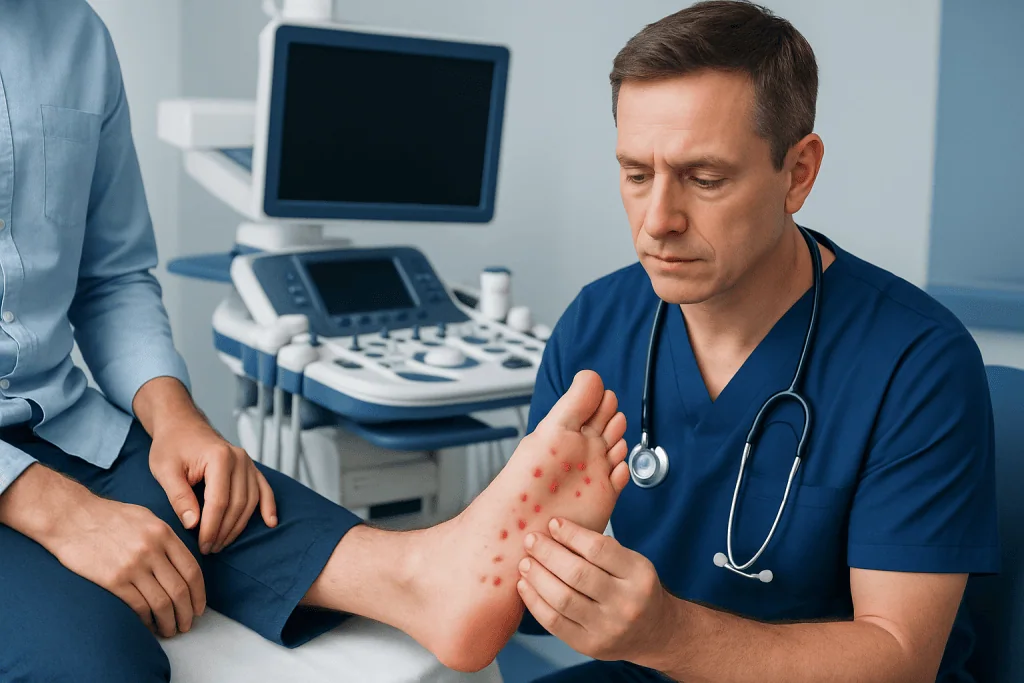
The pattern of the bumps often points toward the cause. Itchy red pimples on foot that come with peeling skin or scaling between the toes may suggest a fungal infection such as athlete’s foot. Small very itchy blisters on the sides of the feet or toes may fit dyshidrotic eczema. Tender red bumps centered on hair follicles can suggest folliculitis, especially after shaving, friction, sweating, or prolonged use of occlusive footwear.
When the skin is reacting to a material, the rash often appears where the foot touches a shoe strap, sock dye, insole, cream, or detergent residue. This type of contact dermatitis may look patchy or bumpy and can burn, itch, or sting. Insect bites usually appear as grouped bumps and may show a central punctum. Heat rash tends to occur in warm, sweaty conditions and can feel prickly.
Warning features deserve more attention. Painful swelling, warmth, pus, crusting, or redness that rapidly expands can point to bacterial infection. Purple discoloration, open sores, or a rash with fever are not typical simple pimples and should be assessed promptly. In people with diabetes, circulation problems, or reduced sensation in the feet, even a small rash should be taken seriously because the skin may heal more slowly and infection can be easier to miss.
- More likely irritation or allergy: itching, clear trigger, areas under straps or socks
- More likely fungal infection: scaling, peeling, toe-web involvement, recurring moisture
- More likely folliculitis: small tender bumps around follicles, friction or sweat history
- More urgent: spreading redness, severe pain, drainage, fever, or skin breakdown
Common causes and risk factors
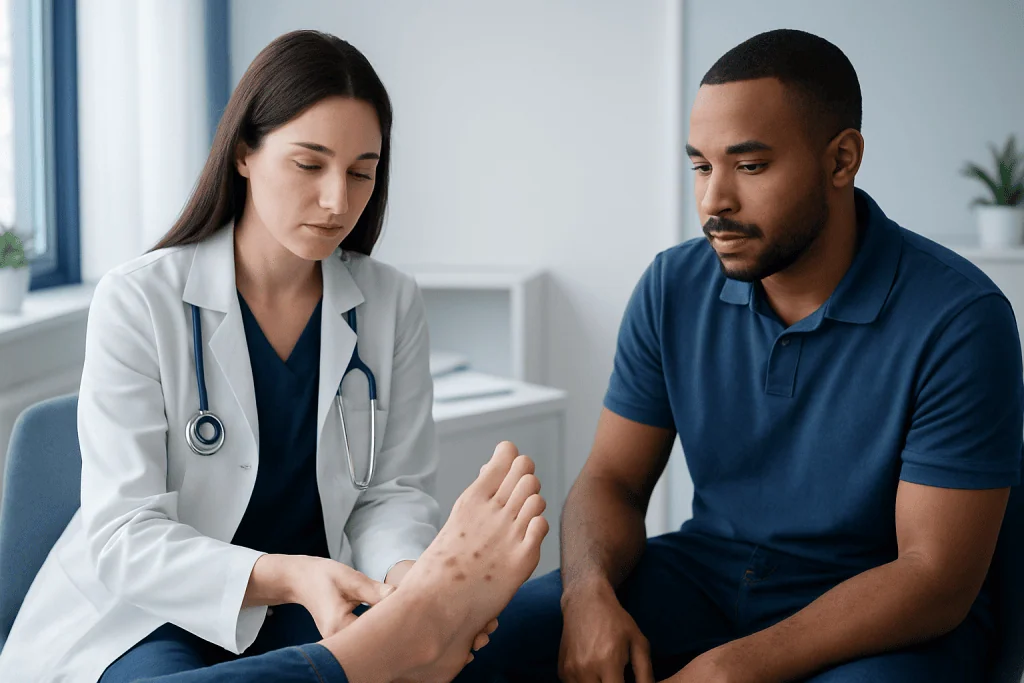
Several conditions can cause red pimples on foot. Fungal infection is common because feet spend long periods in shoes, where warmth and moisture favor fungal growth. Athlete’s foot may cause redness, itching, peeling, and sometimes tiny bumps or blisters. Another common cause is eczema, especially dyshidrotic eczema, which can produce clusters of small itchy vesicles that later dry and peel. Contact dermatitis can occur after exposure to rubber, adhesives, leather chemicals, detergents, fragrances, or medicated creams.
Folliculitis develops when hair follicles become inflamed, often because of friction, occlusion, or infection. Although the sole of the foot has no hair follicles, the top of the foot and ankle do, so pimple-like bumps can appear there. Bacterial skin infection, including cellulitis, can start after small cracks in the skin, scratching, blisters, or bites. Inflammatory skin conditions such as psoriasis may also affect the feet and may be confused with simple rash or infection.
Risk factors include sweaty feet, tight or non-breathable shoes, communal showers, sports participation, recent changes in shoes or socks, sensitive skin, eczema history, and poor foot hygiene. Skin injury from scratching or blisters can increase the chance of infection. People with diabetes, poor circulation, weakened immunity, or chronic swelling are at higher risk of complications and should not rely on self-diagnosis if a rash is worsening or slow to heal.
How doctors diagnose the cause
Diagnosis begins with a skin examination and a careful history. A doctor will usually ask when the bumps appeared, whether they itch or hurt, if one or both feet are involved, and whether there has been new footwear, travel, sweating, sports, or exposure to pools, pets, or insects. The location matters: bumps between the toes suggest different causes than bumps on the top of the foot, the ankle, or the sole.
In many cases, a clinician can make a likely diagnosis based on the pattern. If a fungal infection is suspected, the doctor may take a small skin scraping to examine or send for testing. If there is drainage or concern for bacterial infection, a swab or culture may be helpful. When allergy is suspected, patients may be advised to avoid likely triggers and, in some cases, later undergo patch testing. Persistent or unusual rashes may need assessment by a dermatologist, and sometimes a skin biopsy is considered.
Diagnosis is important because treatments are different. For example, steroid creams may help eczema but can worsen some infections if used alone. Likewise, antibiotic treatment is not useful for fungal conditions. Confirming the cause helps avoid delays, unnecessary medicines, and ongoing irritation from repeated exposure to a trigger.
Treatment options and what may help
Treatment depends on the cause rather than the appearance alone. Mild irritation from friction or contact exposure often improves with removing the trigger, keeping the area clean and dry, and switching to breathable footwear. A doctor may recommend a gentle emollient or, for certain inflammatory rashes, a short course of prescription anti-inflammatory treatment. If the pattern fits a fungal rash, targeted fungal infection treatment may be advised.
For folliculitis or suspected bacterial infection, management may include antiseptic skin care, reducing friction, and sometimes prescription antibiotics if there is clear infection. Eczema-related bumps are often managed with moisturization, trigger avoidance, and appropriate anti-inflammatory therapy. When itching is intense, avoiding scratching is important because broken skin increases infection risk and may prolong healing.
Supportive care also matters. Feet should be washed gently, dried well, especially between the toes, and protected from further rubbing. Socks should be changed regularly, and shoes should be allowed to dry fully between wears. If the diagnosis is uncertain, it is safer not to layer multiple over-the-counter products at once, because this can irritate the skin and make the original pattern harder to recognize.
For patients whose rash is persistent, recurrent, or unclear, specialist review may be appropriate. Depending on the suspected cause, evaluation by dermatology or treatment planning through infectious diseases care may help clarify whether the bumps are due to infection, inflammation, or allergy.
Self-care and prevention strategies
Daily habits can reduce the chance of recurring red pimples on foot. Breathable shoes, moisture-wicking socks, and regular sock changes help limit heat and sweat. Feet should be dried carefully after bathing, especially between the toes. People prone to fungal infection should avoid sharing towels or footwear and may wish to wear protective sandals in communal locker rooms or pool areas.
To reduce irritation, it helps to choose well-fitting shoes and avoid materials that have previously caused a skin reaction. New shoes can be broken in gradually to limit friction. Unscented skin products and detergents may be better for sensitive skin. If exercise or work causes sweating, rotating shoes and airing them out thoroughly can make a difference.
Skin should be inspected regularly if a person has diabetes, neuropathy, or poor circulation. Small cracks, blisters, or rashes can become entry points for infection. Nail and skin care should be gentle, and scratching should be avoided. If bumps recur in the same area, keeping a simple symptom diary with footwear, products, and activities can help identify patterns and triggers.
When to seek medical care
Medical advice is recommended if red pimples on foot do not improve within a short time, keep coming back, or are difficult to identify. Assessment is also important if the bumps are very painful, are filled with pus, form open sores, or are associated with marked swelling, warmth, or spreading redness. These features can suggest an infection that needs prompt treatment.
Urgent evaluation is needed if there is fever, red streaking, rapidly worsening swelling, severe tenderness, or trouble walking because of the skin problem. People with diabetes, vascular disease, weakened immunity, or reduced foot sensation should contact a clinician earlier, because complications can develop more easily and symptoms may be less obvious.
Patients who need specialist support may benefit from a multidisciplinary setting. Acibadem International’s specialists in dermatology, infectious diseases, and related fields diagnose and treat skin and foot conditions for international patients at JCI-accredited hospitals.
Frequently asked questions
Are red pimples on foot usually serious?
Most cases are not serious and are related to irritation, sweating, bites, eczema, or fungal infection. However, painful, spreading, or draining bumps need medical assessment, especially if there is fever or an underlying condition such as diabetes.
Can athlete’s foot look like red pimples?
Yes. Athlete’s foot can sometimes cause small red bumps or blisters, in addition to itching, peeling, and scaling. It is especially common between the toes or on moist areas of the foot.
What is the difference between foot eczema and infection?
Eczema often causes itching, dryness, and recurrent flares, while infection is more likely to cause warmth, tenderness, drainage, or spreading redness. The two can overlap, so diagnosis by a doctor may be needed when the pattern is unclear.
Should red pimples on foot be popped or scratched?
No. Popping or scratching can break the skin, increase irritation, and raise the risk of infection. Gentle skin care and avoiding friction are safer while the cause is being addressed.
When should someone with diabetes worry about a foot rash?
A person with diabetes should seek early medical review for any new foot rash, blister, crack, redness, or sore. Healing may be slower, infection risk is higher, and reduced sensation can make the severity easy to underestimate.
Can shoes cause red pimples on foot?
Yes. Tight shoes, friction, trapped sweat, and allergy to shoe materials can all trigger red bumps. A rash limited to areas that touch a shoe or strap often suggests a contact or friction-related problem.
This article is for general information only and is not a substitute for professional medical advice. Please consult a qualified doctor about your individual situation.
Hair transplant in Turkey — costs, graft counts & a free assessment
JCI-accredited · board-certified surgeons · reply within 24h
Add us as a Preferred Source to see more of our trusted health content across Google Search, AI Overviews and Discover.

More from the Health Library

Cructures: An Evidence-Based Guide for Patients

Nephrocaps: A Complete Medical Overview

Definition for Stoop: What Patients Need to Know

Concussion: What Patients Need to Know

Fitzpatrick Skin Type: What Patients Need to Know