Definition for Stoop: What Patients Need to Know

A stoop describes a forward-flexed posture rather than a disease by itself. Temporary stooping may come from fatigue or posture habits, while persistent stooping can reflect spine, muscle, bone, or neurologic problems.
Key Takeaways
- A stoop describes a forward-flexed posture rather than a disease by itself.
- Temporary stooping may come from fatigue or posture habits, while persistent stooping can reflect spine, muscle, bone, or neurologic problems.
- Associated symptoms such as pain, balance problems, breathing difficulty, or walking changes may help identify the cause.
- Evaluation may include a physical exam, posture assessment, and imaging or neurologic testing when needed.
- Treatment depends on the cause and may include exercise, physical therapy, osteoporosis care, pain management, or specialist treatment.
The definition for stoop is a forward-bent posture in which the head, shoulders, or upper back lean ahead of the body’s usual alignment. A stoop can happen from posture habits, muscle weakness, aging-related spinal changes, or underlying medical conditions, so persistent stooping deserves medical attention.
Overview: What is the definition for stoop?
The definition for stoop is a forward-bent or hunched posture, usually involving the neck, shoulders, upper back, or trunk. In everyday language, a person who stoops appears to lean forward instead of standing upright. This can happen briefly, such as when someone is tired or looking down for long periods, or it can become a more lasting change in posture.
A stoop is not a diagnosis on its own. Instead, it is a visible sign that may be related to posture habits, reduced muscle strength, stiffness, bone loss, spinal curvature, pain, or certain neurologic conditions. Some people develop a mild stoop gradually with age, while others notice a more sudden change after an injury, worsening back pain, or new walking difficulty.
Understanding the difference between a normal posture variation and a medical problem is important. If the stoop is progressive, uncomfortable, or affects balance, mobility, or breathing, it should be assessed by a qualified doctor. In some cases, stooping is associated with structural spine conditions such as kyphosis, while in others it reflects problems outside the spine itself.
How a stoop may look and feel
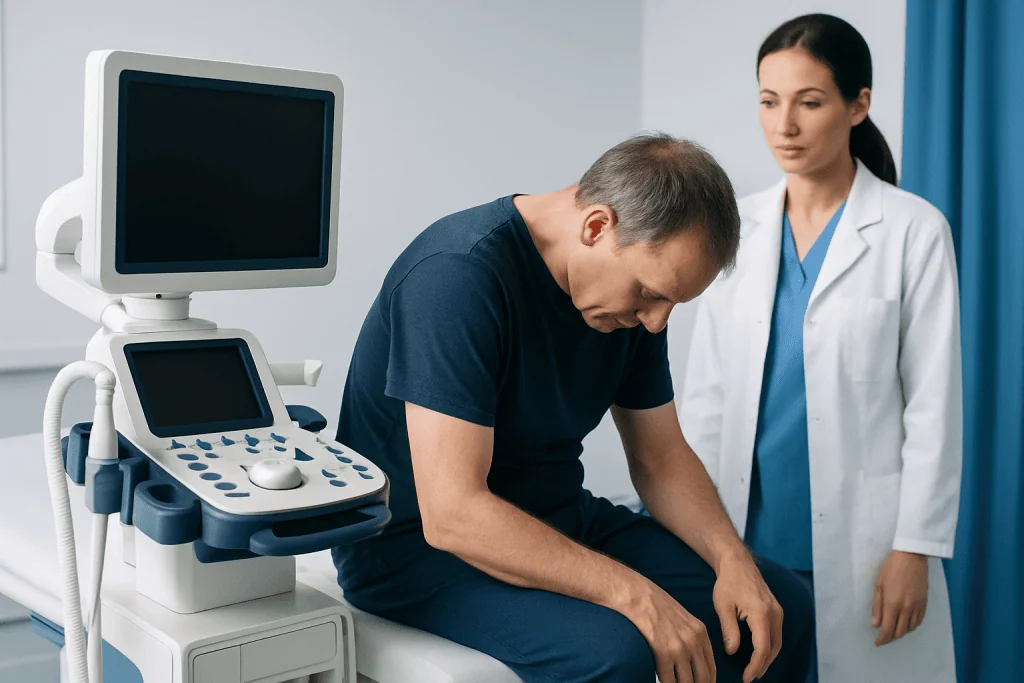
People use the word stoop in different ways, but it usually refers to the body bending forward more than expected. The shoulders may round, the chin may jut forward, and the upper back may appear curved. In some people, the whole trunk leans forward during standing or walking, making it harder to fully straighten.
A stoop may be painless at first, especially if it develops slowly. Over time, however, it can cause muscle fatigue, neck or back discomfort, stiffness, reduced walking endurance, and trouble with daily tasks such as reaching overhead or looking straight ahead. Some people feel unsteady because their center of gravity shifts forward.
Common features that can accompany stooped posture include:
- Rounded shoulders or a hunched upper back
- Forward head posture
- Back, shoulder, or neck pain
- Loss of height over time
- Difficulty standing upright for long periods
- Balance problems or a shuffling walk
- Shortness of breath if spinal curvature becomes severe
These details help doctors understand whether the stoop is mainly postural, structural, pain-related, or neurologic. The pattern matters because treatment is guided by the underlying cause rather than posture alone.
What can cause stooping?

There is no single cause of a stoop. In many adults, especially with increasing age, several factors can combine. Weakness of the back extensor muscles, decreased flexibility, sedentary habits, and long periods spent leaning over screens or desks can all contribute to a forward-bent posture.
Structural changes in the spine are also common causes. These may include age-related disc changes, arthritis, vertebral compression fractures linked to osteoporosis, or an exaggerated thoracic curve. A stoop can also develop as the body adapts to pain, especially if standing upright increases discomfort. In other cases, surgery, injury, or long-standing poor body mechanics may play a role.
Neurologic and movement disorders should also be considered when stooping is accompanied by slowness, tremor, stiffness, balance changes, or altered gait. For example, some people with Parkinson’s disease develop a forward-flexed posture. Less commonly, muscle diseases or nerve disorders can weaken the muscles that help keep the spine upright.
Important risk factors include:
- Older age
- Osteoporosis or low bone density
- Previous spinal fractures
- Poor muscle strength or deconditioning
- Chronic back or neck pain
- Arthritis affecting the spine
- Neurologic disease
- Long hours of sitting or screen use
When stooping may suggest an underlying condition
Not every stooped posture signals disease, but some patterns deserve closer attention. A slowly progressive stoop with loss of height may point to spinal curvature or compression fractures. A stoop that appears mainly while walking can sometimes reflect muscle fatigue, balance adaptation, or a neurologic movement pattern rather than a fixed spinal deformity.
Doctors often think about whether the stoop is flexible or fixed. A flexible stoop may improve when the person lies down, stretches, or consciously corrects posture. A fixed stoop that cannot be straightened may suggest a structural issue in the bones, discs, or joints of the spine. Pain, weakness, numbness, or changes in bowel or bladder function can provide further clues.
One condition sometimes associated with pronounced forward rounding of the upper back is osteoporosis, because weakened bones can fracture more easily and change spinal shape. In other situations, clinicians may look for inflammatory, degenerative, or neuromuscular causes. This is why persistent stooping should be evaluated in context rather than treated as just a cosmetic concern.
How doctors diagnose the cause of a stoop
Diagnosis begins with a medical history and physical examination. The doctor will usually ask when the stoop started, whether it is getting worse, and whether symptoms such as pain, stiffness, falls, tremor, weakness, numbness, or breathing difficulty are present. Daily habits, prior fractures, medications, and family history may also be relevant.
The physical exam often includes observing posture while standing and walking, checking spinal alignment, testing flexibility and muscle strength, and looking for neurologic signs. The doctor may ask the patient to try straightening up, bending backward, or lying flat to see how much the posture changes. These findings can help distinguish a postural habit from a fixed spinal or neurologic problem.
If needed, imaging tests such as X-rays may be used to assess curvature, arthritis, or compression fractures. Bone density testing may be recommended when osteoporosis is suspected. Some patients may need MRI, gait assessment, or referral to neurology, orthopedics, or rehabilitation specialists. When evaluation points to a structural spinal problem, further review of spine surgery options may be appropriate, although many people improve without surgery.
Treatment options and posture support
Treatment for a stoop depends on the cause. If posture habits and muscle weakness are the main factors, the first approach is usually conservative care. This often includes targeted exercise, stretching, strengthening of the back and core, and attention to ergonomics during sitting, reading, and screen use. A structured plan through physical therapy and rehabilitation can help many patients improve alignment, comfort, and mobility.
When pain is contributing to stooping, treatment may include activity modification, supervised exercise, and appropriate pain management guided by a doctor. If osteoporosis or vertebral fractures are involved, protecting bone health becomes an important part of care. That may include bone density evaluation, fall prevention, and medical treatment to reduce future fracture risk.
Some people benefit from supportive devices or mobility aids, especially if balance is affected. If a neurologic condition is causing stooped posture, care may involve specialists in movement disorders, rehabilitation, and sometimes neurology to address gait, stiffness, or muscle control problems. In selected cases of severe deformity, nerve compression, or instability, surgical treatment may be considered after careful assessment.
Near the end of the care pathway, some patients also seek multidisciplinary evaluation at centers experienced in international care. Acibadem International’s specialists and JCI-accredited hospitals diagnose and treat posture-related, spine, bone, and neurologic conditions for international patients when advanced assessment is needed.
Self-care, prevention, and when to seek medical care
Healthy daily habits can help reduce the risk of developing or worsening a stoop. Regular weight-bearing activity, posture awareness, flexibility work, and strength training for the back, hips, and core are often useful. A balanced diet that supports bone health, avoiding smoking, and limiting prolonged slouched sitting may also help preserve alignment over time.
At home, patients may benefit from setting up workspaces so screens are at eye level, taking breaks from sitting, and using gentle stretching rather than forcing the back into painful extension. For older adults, fall prevention and osteoporosis screening are especially important. Self-care can support better posture, but it should not replace medical evaluation when the stoop is new, worsening, or associated with other symptoms.
Medical care should be sought if a stoop develops suddenly, follows a fall or injury, or comes with significant pain, weakness, numbness, walking difficulty, repeated falls, unexplained weight loss, fever, or trouble breathing. It is also wise to seek care if the person is losing height, cannot stand upright, or notices progressive curvature of the back. Early evaluation may identify treatable causes before function is more affected.
Frequently asked questions
Is a stoop the same as kyphosis?
Not exactly. A stoop is a general term for a bent-forward posture, while kyphosis is a more specific spinal curvature pattern, usually involving the upper back. A person may look stooped because of kyphosis, but stooping can also happen for other reasons such as muscle weakness, pain, or neurologic disease.
Can poor posture alone cause stooping?
Yes, poor posture habits can contribute to a mild or moderate stoop, especially when combined with weak back and core muscles. However, persistent or progressive stooping should not automatically be blamed on posture alone. A doctor may need to check for bone, spine, or neurologic causes.
Does stooping always happen with aging?
Stooping becomes more common with age, but it is not an unavoidable part of aging. Regular exercise, bone health care, and early treatment of spine or neurologic problems may help reduce risk. Sudden or severe stooping is not considered a normal age change and should be assessed.
Can exercise help a stooped posture?
Exercise can help many people, particularly when the stoop is related to deconditioning, stiffness, or postural habits. Programs usually focus on flexibility, strengthening the back extensor muscles, improving balance, and supporting upright walking. Exercise should be guided by a qualified professional if pain, fractures, or neurologic symptoms are present.
What type of doctor evaluates a stoop?
A primary care doctor often starts the evaluation and may refer to a specialist depending on the suspected cause. Orthopedics, physical medicine and rehabilitation, neurology, or geriatrics may be involved. The right specialist depends on whether the issue appears mainly spinal, muscular, bone-related, or neurologic.
When is stooping an emergency?
Urgent medical attention is needed if stooping starts suddenly after trauma, or if it comes with severe back pain, new weakness, numbness, loss of bladder or bowel control, fever, or breathing problems. These symptoms may suggest a fracture, nerve compression, infection, or another serious condition. Even when it is not an emergency, a worsening stoop deserves timely evaluation.
References
- World Health Organization
- National Institute on Aging
- National Institute of Neurological Disorders and Stroke
- American Academy of Orthopaedic Surgeons
- International Osteoporosis Foundation
This article is for general information only and is not a substitute for professional medical advice. Please consult a qualified doctor about your individual situation.
Joint and spine care in Turkey — expert assessment & treatment
JCI-accredited · board-certified surgeons · reply within 24h
Add us as a Preferred Source to see more of our trusted health content across Google Search, AI Overviews and Discover.