Red Spots on Feet: An Evidence-Based Guide for Patients

Red spots on feet can be harmless or a sign of infection, inflammation, circulation problems, or bleeding under the skin. Important clues include whether the spots itch, hurt, blanch with pressure, spread quickly, or come with fever or swelling.
Key Takeaways
- Red spots on feet can be harmless or a sign of infection, inflammation, circulation problems, or bleeding under the skin.
- Important clues include whether the spots itch, hurt, blanch with pressure, spread quickly, or come with fever or swelling.
- Common causes include contact dermatitis, athlete’s foot, eczema, insect bites, pressure or friction, and petechiae or purpura.
- Medical assessment is important if spots are sudden, widespread, painful, non-blanching, or associated with diabetes, poor circulation, or immune suppression.
- Self-care depends on the cause and may include gentle skin care, dry footwear habits, avoiding irritants, and prompt evaluation for concerning symptoms.
Red spots on feet are a symptom rather than a diagnosis. They may be caused by friction, eczema, fungal infection, insect bites, small blood vessel changes, or less commonly a more serious problem, so the pattern and associated symptoms matter.
What red spots on feet can mean
Red spots on feet are usually caused by skin irritation, allergy, friction, infection, or inflammation. In some cases, they reflect tiny broken blood vessels or bleeding under the skin, especially if the spots do not fade when pressed. Because many different conditions can look similar at first, the most helpful question is not only what the spots look like, but also whether they itch, burn, hurt, peel, spread, or occur with swelling or fever.
The feet are exposed to heat, sweat, pressure, shoes, and contact with many surfaces. This makes them especially prone to rashes, fungal infections, blisters, and irritation. At the same time, changes in circulation, nerve function, or immune response can also show up in the feet, particularly in people with diabetes, vascular disease, or autoimmune conditions.
Many causes are minor and improve with simple care. However, red spots that are sudden, extensive, painful, non-blanching, or associated with other symptoms deserve medical attention. An accurate diagnosis usually depends on the appearance, timing, and location of the spots, along with a person’s general health and any recent exposures.
How to recognize different patterns
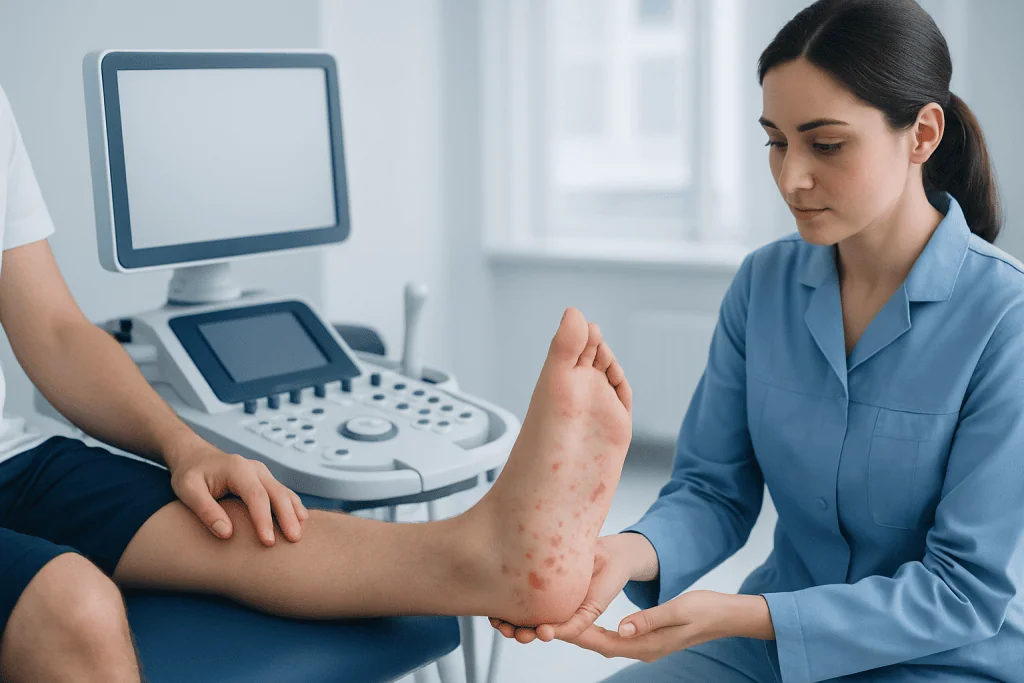
The pattern of red spots on feet often gives useful clues. Itchy, scaly, or peeling spots between the toes or on the soles may suggest a fungal infection. Small raised spots after outdoor exposure may be insect bites. Flat pinpoint red or purple dots that do not blanch under pressure can suggest petechiae, while larger purple-red patches may be purpura.
Some people notice red patches where shoes rub, where socks are tight, or after long periods of walking or exercise. Others develop blistering, cracking, or burning skin from dermatitis, eczema, or sweat-related irritation. In children, viral rashes may sometimes involve the hands and feet, while in adults, medication reactions or inflammatory skin conditions can also affect the feet.
Features worth noting include:
- Whether the spots are flat or raised
- Whether they itch, sting, hurt, or feel warm
- Whether they blanch when pressed
- Whether there is scaling, peeling, drainage, or blisters
- Whether one foot or both feet are affected
- Whether symptoms began after new shoes, creams, sports, travel, or illness
These details can help a clinician distinguish a superficial skin problem from a circulation, blood, or inflammatory issue.
Common causes of red spots on feet

Many cases are related to everyday skin conditions. Contact dermatitis can occur after exposure to shoe materials, detergents, topical products, or adhesives. Eczema can cause dry, itchy, inflamed red patches, sometimes with cracking. Athlete’s foot is another common cause, especially if there is peeling, itching, or scaling between the toes or along the sole; this may overlap with athlete’s foot.
Friction and pressure can also create red spots, especially in runners, hikers, or people wearing tight shoes. Heat, sweat, and prolonged moisture may trigger irritation or allow bacteria and fungi to grow. Small bites or stings can produce localized red bumps, often with itching.
Inflammatory and vascular causes are also possible. Petechiae are tiny red or purple spots caused by small amounts of bleeding under the skin. They may follow minor trauma, but when they appear without a clear reason or occur with bruising, fever, or illness, they need medical review. Purpura, vasculitis, chilblains, and circulation-related conditions can also affect the feet. In some people, a more generalized rash may include the feet, such as in eczema or an allergic skin reaction.
Less commonly, red spots may be linked to bacterial infection, autoimmune disease, medication reactions, platelet or clotting problems, or systemic infection. People with diabetes or poor circulation should take foot skin changes seriously because healing may be slower and infection risk can be higher.
Risk factors and associated symptoms
Certain factors make red spots on feet more likely. These include sweaty footwear, communal locker rooms, skin sensitivity, allergies, long-distance walking, and poorly fitting shoes. Existing skin conditions such as eczema or psoriasis may flare on the feet. Occupations or sports that involve prolonged standing, heat, or moisture can also contribute.
Medical history matters as well. Diabetes, venous disease, immune suppression, blood-thinning medication use, and circulation problems can change how the skin looks and how well it heals. A recent viral illness, new medication, travel, or insect exposure may also help explain the rash.
Associated symptoms often guide urgency. Itching suggests allergy, eczema, bites, or fungus. Pain, warmth, tenderness, and swelling may point toward infection or inflammation. Numbness, color change, or cool skin may suggest circulation issues. Fever, easy bruising, mouth sores, or a rapidly spreading rash can indicate a more serious underlying problem and should not be ignored.
How doctors diagnose the cause
Diagnosis begins with a clinical history and skin examination. A doctor will ask when the red spots started, whether they itch or hurt, whether they blanch with pressure, and whether there were any new shoes, products, medications, illnesses, or injuries. They will also look at the location of the spots, whether both feet are involved, and whether there is scaling, blistering, drainage, or swelling.
Sometimes the cause is clear from the examination alone. If a fungal infection is suspected, the doctor may take a skin scraping for microscopy or culture. If bacterial infection is possible, a swab may be needed. When petechiae, purpura, or unexplained bruising are present, blood tests may be used to evaluate platelet counts, inflammation, or clotting function.
Additional tests depend on the situation. Patch testing may help identify allergic contact dermatitis. If circulation problems are suspected, vascular assessment may be appropriate. Persistent or unusual lesions may occasionally need a skin biopsy. The goal is to identify the cause rather than simply treating all red spots the same way.
Treatment options and what may help
Treatment for red spots on feet depends on the underlying cause. Irritant or allergic rashes are often managed by avoiding the trigger, using gentle skin care, and applying clinician-recommended topical treatments. Fungal infections are usually treated with antifungal medication; for persistent cases, a dermatologist may recommend targeted dermatology evaluation and treatment.
If there is concern for bacterial infection, medical treatment is important because antibiotics may be needed. Inflammatory conditions such as eczema, psoriasis, or vasculitis may require prescription creams or other therapies. Non-blanching spots, unexplained bruising, or signs of a blood disorder should be assessed promptly rather than treated at home.
General supportive care often includes keeping the feet clean and dry, changing socks regularly, wearing breathable footwear, and avoiding scratching or picking at lesions. People with diabetes should inspect their feet daily and seek early care for any skin break, redness, or swelling. If the appearance suggests a broader foot problem, a specialist evaluation such as orthopedics and traumatology care or vascular assessment may be part of treatment planning.
Near the end of the diagnostic process, some patients benefit from multidisciplinary review. Acibadem International’s multidisciplinary specialists in JCI-accredited hospitals diagnose and treat skin, vascular, and systemic causes of foot symptoms for international patients when further evaluation is needed.
Self-care, prevention, and foot protection
Prevention starts with reducing moisture, friction, and contact with irritants. Washing the feet gently, drying well between the toes, and changing damp socks can lower the risk of fungal growth and irritation. Shoes that fit well and allow airflow may help prevent rubbing, heat rash, and blister-related redness.
People with sensitive skin may benefit from fragrance-free soaps, moisturizers, and laundry products. New creams, adhesive bandages, and shoe materials can sometimes trigger dermatitis, so it is sensible to stop suspected irritants if a rash develops. Moisturizing dry skin can help support the skin barrier, but cream should not be heavily applied between the toes if fungal infection is suspected.
It is also wise to avoid walking barefoot in communal areas such as locker rooms and pool decks. For people with diabetes, poor circulation, or nerve damage, regular foot checks are especially important. Persistent swelling, recurring sores, or skin color changes may need evaluation beyond routine skin care, and in selected cases clinicians may consider vascular-focused treatment assessment if circulation is a concern.
When to seek medical care
Many mild rashes improve with simple measures, but some situations call for medical attention. A person should arrange prompt evaluation if red spots on feet are spreading quickly, very painful, warm, swollen, draining fluid, or associated with fever. Medical care is also important if the spots do not blanch with pressure, appear with unexplained bruising, or develop after a new medication.
Urgent assessment is recommended for people with diabetes, immune suppression, or poor circulation if they develop foot redness, skin breakdown, or signs of infection. Any rash with shortness of breath, facial swelling, or severe whole-body symptoms needs emergency care. If red spots persist, recur, or remain unexplained despite home care, a clinician can help identify the cause and guide safe treatment.
Frequently asked questions
Are red spots on feet usually serious?
Not always. Many cases are caused by minor irritation, athlete’s foot, eczema, or friction from footwear. However, red spots can sometimes signal infection, circulation problems, or bleeding under the skin, so persistent or unusual symptoms should be checked.
How can someone tell if red spots are petechiae?
Petechiae are tiny flat red, purple, or brownish spots caused by small amounts of bleeding under the skin. A common clue is that they do not blanch or fade when pressed. Because petechiae can have different causes, a doctor should assess them if they appear suddenly, spread, or occur with bruising or illness.
Can athlete’s foot cause red spots on feet?
Yes. Athlete’s foot can cause redness, itching, peeling, scaling, and small inflamed areas, especially between the toes or on the soles. It may not always look like a classic ring-shaped rash, which is why examination is helpful.
Should red spots on feet be treated at home first?
If the rash is mild, itchy, and clearly linked to friction or a new product, basic skin care and avoiding the trigger may help. But home treatment should not delay medical care when spots are painful, non-blanching, spreading, infected-looking, or present in someone with diabetes or circulation problems.
What doctor should evaluate red spots on feet?
A primary care doctor can often assess the problem first and decide whether referral is needed. Depending on the cause, care may involve a dermatologist, vascular specialist, infectious disease specialist, or another clinician with experience in foot and skin conditions.
Can shoe materials cause red spots on feet?
Yes. Dyes, rubber, adhesives, leather treatments, and friction from tight footwear can trigger contact dermatitis or pressure-related irritation. If the spots appear where the shoe touches the skin, changing footwear and seeking medical advice may help identify the cause.
This article is for general information only and is not a substitute for professional medical advice. Please consult a qualified doctor about your individual situation.
Explore treatments in Turkey — costs, top hospitals & a free quote
JCI-accredited · board-certified surgeons · reply within 24h
Add us as a Preferred Source to see more of our trusted health content across Google Search, AI Overviews and Discover.

More from the Health Library

Flat Poop — Explained by Medical Evidence, Not Myths

Bactrim: What Patients Need to Know

Cimetidine: A Complete Medical Overview

Spearmint Tea Benefits: What Patients Need to Know

Nitrazine Test: An Evidence-Based Guide for Patients