Reinke’s Edema: A Complete Medical Overview

Reinke's edema is a noncancerous condition affecting the vocal cords. The most common symptom is persistent hoarseness or a deeper voice.
Key Takeaways
- Reinke's edema is a noncancerous condition affecting the vocal cords.
- The most common symptom is persistent hoarseness or a deeper voice.
- Smoking is the strongest risk factor, but reflux and heavy voice use can also contribute.
- Diagnosis is usually made by an ENT specialist using laryngoscopy.
- Treatment may include smoking cessation, voice therapy, reflux control, and surgery in selected cases.
- Persistent voice changes should be assessed by a doctor, especially in smokers.
Reinke's edema is a benign swelling of the superficial layer of the vocal cords that most often causes a low, rough, or persistently hoarse voice. It is commonly associated with smoking, long-term voice irritation, and reflux, and treatment focuses on removing the causes, improving vocal habits, and sometimes surgery.
Overview
Reinke’s edema is a buildup of fluid in the superficial layer of the vocal cords, an area sometimes called Reinke’s space. This swelling changes how the vocal cords vibrate, so the voice often becomes deeper, rougher, breathy, or chronically hoarse. Although it can sound worrying, it is usually a benign condition rather than a cancer.
The condition is seen most often in adults with long-term irritation of the larynx, especially from cigarette smoking. Other contributing factors can include heavy voice use, acid reflux reaching the throat, and ongoing inflammation. In many people, more than one factor is involved at the same time.
Reinke’s edema tends to develop gradually rather than suddenly. Because the change can happen over months or years, some people adjust to the altered voice and delay getting checked. A lasting voice change, however, is worth medical evaluation because several different vocal cord conditions can look or sound similar, including nodules, polyps, chronic laryngitis, and, less commonly, more serious disease.
How Reinke's Edema Affects the Voice and Breathing
The vocal cords normally open for breathing and close to create sound. For clear speech, they must be able to vibrate in a smooth, balanced way. When fluid collects in the outer layer of the cords, they become heavier and less flexible. This lowers the pitch and often creates a husky or gravelly quality.
Many people notice that their speaking voice feels effortful or unstable, especially later in the day. Some need to clear the throat often or feel that the voice does not carry as well as before. Professional voice users, such as teachers, singers, or people who speak for long hours at work, may notice the problem earlier because even a mild change can interfere with daily demands.
In more advanced cases, marked swelling can narrow the airway opening between the vocal cords. This is less common, but it may lead to noisy breathing, shortness of breath during exertion, or a sense of throat blockage. Breathing symptoms are one reason the condition should not be ignored, particularly if swelling is severe or progressing.
Symptoms

The most typical symptom of reinke’s edema is persistent hoarseness. The voice may sound deeper, lower-pitched, rough, or raspy. Some people also describe vocal fatigue, reduced range when singing, or difficulty projecting the voice in conversation.
Symptoms can vary depending on how much swelling is present and whether one or both vocal cords are affected. In many cases, the change develops slowly, so it may be more noticeable to family members or coworkers than to the person affected. Longstanding symptoms are common.
- Chronic hoarseness lasting weeks or longer
- Unusually deep or low-pitched voice
- Breathy, rough, or strained speech
- Frequent throat clearing
- Sensation of throat irritation or fullness
- Vocal fatigue after talking
- Shortness of breath or noisy breathing in severe cases
These symptoms are not specific to reinke’s edema alone. Similar complaints can occur with vocal cord nodules, polyps, laryngitis, and other laryngeal disorders. That is why persistent voice change should be evaluated by a qualified clinician rather than self-diagnosed.
Causes and Risk Factors
Smoking is the clearest and most important risk factor for reinke’s edema. Tobacco smoke irritates the lining of the larynx over time and promotes the fluid changes that cause swelling. The condition is especially associated with long-term smoking, but any ongoing smoke exposure, including secondhand smoke, can be relevant.
Voice overuse or misuse can also contribute. Repeated shouting, speaking loudly for long periods, straining the voice, or using poor vocal technique may place mechanical stress on the vocal cords. On its own this may not always cause reinke’s edema, but together with smoking or reflux it can worsen irritation.
Another common contributor is laryngopharyngeal reflux, in which stomach contents travel upward and irritate the throat and voice box. Some people with reflux do not feel classic heartburn, so the connection may be missed. Chronic inflammation, environmental irritants, and hormonal influences have also been discussed as possible contributors in some patients.
Risk is often highest when several factors overlap, such as a smoker with reflux who uses the voice heavily for work. Because the larynx can also be affected by vocal cord paralysis and other structural or neurologic problems, a proper examination helps identify whether reinke’s edema is the main issue or part of a broader voice disorder.
Diagnosis
Diagnosis usually begins with a detailed medical history and voice history. An ENT specialist asks about smoking, reflux symptoms, occupational voice demands, recent infections, breathing symptoms, and how long the voice change has been present. This step helps guide the examination and identifies modifiable triggers.
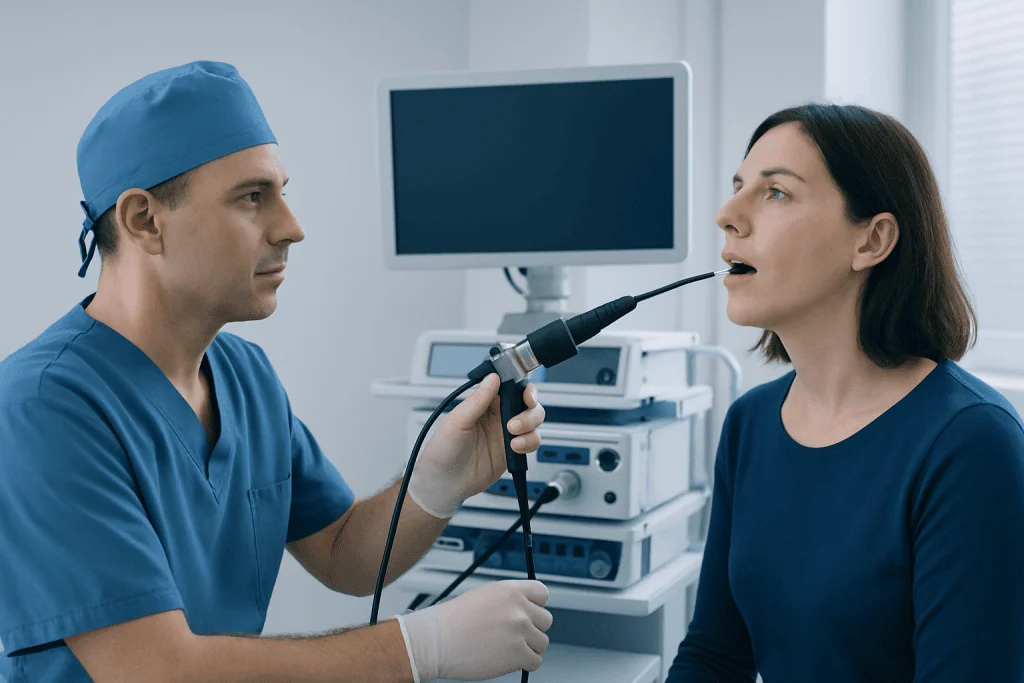
The key test is laryngoscopy, which allows direct visualization of the vocal cords. Using a small flexible or rigid scope, the specialist can look for the characteristic swollen, ballooned appearance of the cords. In some cases, videostroboscopy is used to assess how the vocal cords vibrate during speech. This can help distinguish reinke’s edema from nodules, cysts, polyps, and other lesions.
Additional evaluation may be recommended when symptoms suggest related conditions. For example, reflux assessment, smoking cessation support, or voice evaluation by a speech-language therapist may be useful. If there is significant airway narrowing or concern about another diagnosis, further testing may be needed. The goal is not only to confirm reinke’s edema but also to understand why it developed and how best to treat it.
When a voice disorder requires procedural assessment or treatment planning, specialists may use comprehensive ENT diagnosis and treatment pathways to evaluate the larynx, airway, and contributing conditions in a coordinated way.
Treatment Options
Treatment depends on symptom severity, the degree of swelling, and the patient’s voice and breathing needs. The first step is usually to address the causes. Stopping smoking is the most important measure because continued smoke exposure can worsen swelling and reduce the benefit of any other treatment. If reflux is present or suspected, dietary adjustments, lifestyle measures, and doctor-guided reflux treatment may also be recommended.
Voice therapy can be very helpful, especially for people who overuse or strain the voice. A speech-language therapist can teach healthier vocal techniques, reduce compensatory strain, and support recovery after other treatments. Hydration, limiting throat clearing, and avoiding irritants may also improve comfort and vocal function.
If swelling is advanced or the voice remains significantly affected despite conservative treatment, surgery may be considered. The aim is to remove or reduce the excess fluid and preserve as much normal vocal cord tissue as possible. Procedures are typically planned carefully because the vocal cords are delicate and voice quality depends on precise healing. In selected cases, an ENT surgeon may discuss laryngeal microsurgery to restore better vibration while minimizing scarring risk.
Treatment is individualized. Some patients mainly need smoking cessation and voice care, while others benefit from a combination of medical therapy, therapy for speaking habits, and surgery. If reflux symptoms coexist, management may overlap with reflux treatment as part of a broader plan. Near the end of the care journey, centers such as Acibadem International can support international patients through multidisciplinary evaluation in JCI-accredited hospitals when specialized voice and airway assessment is needed.
Prevention and Self-care
The most effective way to prevent reinke’s edema is to avoid smoking or to stop if currently smoking. This is beneficial not only for the voice but also for overall airway and lung health. Reducing exposure to secondhand smoke and occupational irritants can also help protect the vocal cords.
Healthy voice habits matter as well. Speaking at a comfortable volume, resting the voice when it feels strained, staying hydrated, and avoiding frequent throat clearing may reduce ongoing irritation. People whose work depends on heavy speaking or singing may benefit from early voice coaching to improve technique and reduce pressure on the larynx.
If reflux contributes to throat irritation, self-care can include avoiding large late meals, limiting personal trigger foods, maintaining a healthy weight if advised, and following a clinician’s recommendations. Prevention is often about reducing repeated injury over time rather than finding a single cure. Small daily changes can make a meaningful difference in long-term voice health.
When to Seek Medical Care
Medical assessment is advisable if hoarseness lasts more than two to three weeks, especially without a clear cause such as a temporary cold. Persistent voice changes deserve attention in anyone, but they are particularly important in people who smoke or have a history of heavy tobacco exposure.
Urgent evaluation is appropriate if there is trouble breathing, noisy breathing, coughing up blood, worsening swallowing difficulty, or unexplained weight loss. These symptoms do not necessarily mean a serious condition, but they should not be ignored because they can overlap with other laryngeal disorders that need prompt care.
Earlier review may also help when the voice is essential for work or when symptoms interfere with daily communication. Timely assessment can clarify whether the issue is reinke’s edema or another condition and can improve the chances of preserving voice quality with the least invasive treatment possible.
Frequently asked questions
Is reinke's edema cancer?
Reinke's edema itself is generally a benign, noncancerous swelling of the vocal cords. However, persistent hoarseness should still be checked by a doctor because smoking and long-term voice changes can also be associated with other laryngeal conditions that need evaluation.
Can reinke's edema go away on its own?
Mild symptoms may improve if the underlying irritation is removed, especially with smoking cessation and better voice habits. More established swelling often needs medical follow-up, and some people require voice therapy or surgery for meaningful improvement.
What does reinke's edema sound like?
It often causes a voice that sounds deeper, rougher, huskier, or persistently hoarse. Some people also notice vocal fatigue, reduced singing range, or a breathy quality when speaking.
Who is most at risk for reinke's edema?
The highest risk is seen in people with long-term smoking exposure. Risk may be greater when smoking is combined with heavy voice use, chronic throat irritation, or reflux reaching the voice box.
How is reinke's edema diagnosed?
An ENT specialist usually diagnoses it by reviewing symptoms and examining the vocal cords with laryngoscopy. Sometimes videostroboscopy is added to study vocal cord vibration more closely and distinguish it from nodules, polyps, or other lesions.
Will surgery fix the voice completely?
Surgery can improve voice quality in carefully selected patients, especially when swelling is marked. The final result depends on factors such as smoking status, healing, vocal habits, and whether other causes like reflux are also addressed.
This article is for general information only and is not a substitute for professional medical advice. Please consult a qualified doctor about your individual situation.
Persistent digestive symptoms? Get evaluated in Turkey
JCI-accredited · board-certified surgeons · reply within 24h
Add us as a Preferred Source to see more of our trusted health content across Google Search, AI Overviews and Discover.

More from the Health Library

Pollakiuria: What Patients Need to Know

Brachial Is: An Evidence-Based Guide for Patients

Brain Atrophy: An Evidence-Based Guide for Patients

Autophagy: What Patients Need to Know

Poppy Seeds Benefits — Explained by Medical Evidence, Not Myths