REM Sleep Behavior Disorder: Could Acting Out Dreams Signal a Brain Disorder?

REM sleep behavior disorder causes dream-enactment movements or sounds during REM sleep. It differs from sleepwalking and often happens later in the night, when REM sleep is more common.
Key Takeaways
- REM sleep behavior disorder causes dream-enactment movements or sounds during REM sleep.
- It differs from sleepwalking and often happens later in the night, when REM sleep is more common.
- A sleep study is usually needed to confirm the diagnosis and rule out other sleep disorders.
- Treatment focuses on safety, sleep health, and medicines when appropriate.
- In some adults, especially older adults, REM sleep behavior disorder can be associated with neurodegenerative disease.
REM sleep behavior disorder is a sleep condition in which the body does not stay normally relaxed during dream sleep, allowing a person to move, speak, or act out dreams. It can be manageable with proper evaluation, safety measures, and treatment, and in some cases it may be an early clue to an underlying neurological disorder.
Overview
REM sleep behavior disorder, often called RBD, is a condition in which a person physically acts out dreams during rapid eye movement (REM) sleep. Normally, the muscles are temporarily relaxed during REM sleep, which helps prevent dream-related movements. In RBD, that protective muscle relaxation is reduced or absent, so the sleeper may talk, shout, punch, kick, sit up, or make other movements linked to dream content.
This condition can be frightening for the person or a bed partner, especially when behaviors are sudden or forceful. However, many episodes are brief, and effective management is available. The most important first steps are recognizing the pattern, making the sleep environment safer, and arranging a medical evaluation.
RBD is different from occasional sleep talking or a single restless night. It tends to recur and often follows vivid, action-filled, or defensive dreams, such as being chased or protecting oneself. Because of this, dream-enactment behavior is often more noticeable than ordinary movement during sleep.
Doctors pay close attention to REM sleep behavior disorder because it can sometimes occur on its own and sometimes appear alongside other sleep or neurological conditions. A careful assessment helps clarify the cause and guide the next steps.
Symptoms
The hallmark symptom of REM sleep behavior disorder is acting out dreams while asleep. A person may speak, laugh, cry out, swear, flail their arms, kick, grab, jump from bed, or appear to defend themselves. These behaviors usually match the dream story and may happen more often in the second half of the night, when REM sleep periods are longer.
Many people with RBD remember vivid dreams if awakened during or soon after an episode. The dream may involve threat, pursuit, or conflict, and the movements may reflect that dream. Some people have mild episodes, such as hand gestures or talking, while others have more intense movements that can lead to falls or accidental injury.
Bed partners often notice the problem first. Signs may include repeated sleep disruption, unexplained bruises, hitting during sleep, or finding the person out of bed without being fully awake. The person with RBD may not realize how often it is happening unless someone else observes it.
- Talking, shouting, or calling out during sleep
- Punching, kicking, or grabbing in bed
- Sudden jerking or jumping out of bed
- Vivid dream recall after an event
- Injury to the sleeper or bed partner
Causes and Risk Factors

REM sleep behavior disorder happens when the brain mechanisms that usually keep the body still during REM sleep do not work properly. This can occur for different reasons. In some people, no clear cause is found at first, which may be described as isolated RBD. In others, RBD may be linked to medicines, other sleep disorders, or neurological disease.
Doctors are particularly interested in the relationship between RBD and certain neurodegenerative conditions that affect movement, thinking, and autonomic functions. In some adults, especially later in life, RBD may appear years before symptoms of disorders such as Parkinson’s disease or related synucleinopathies become more obvious. This does not mean everyone with RBD will develop one of these conditions, but it is an important reason for long-term medical follow-up.
Other factors can also contribute. Certain antidepressants and other medications may trigger or unmask dream-enactment behaviors in some people. Sleep deprivation, alcohol use, and untreated sleep disorders such as obstructive sleep apnea may worsen nighttime behaviors or make diagnosis more complicated.
- Older age, especially in adults over midlife
- Male sex, although women can also be affected
- Use of some antidepressants or other psychoactive medicines
- Underlying neurological disease
- Other sleep disorders, including sleep apnea
How REM Sleep Behavior Disorder Is Diagnosed
Diagnosis begins with a detailed sleep history. The doctor asks what happens during episodes, how often they occur, whether there is dream recall, and whether injuries have happened. A bed partner’s description is often very helpful, because the sleeping person may not witness the event directly. Information about medications, alcohol use, and other medical or neurological symptoms is also important.
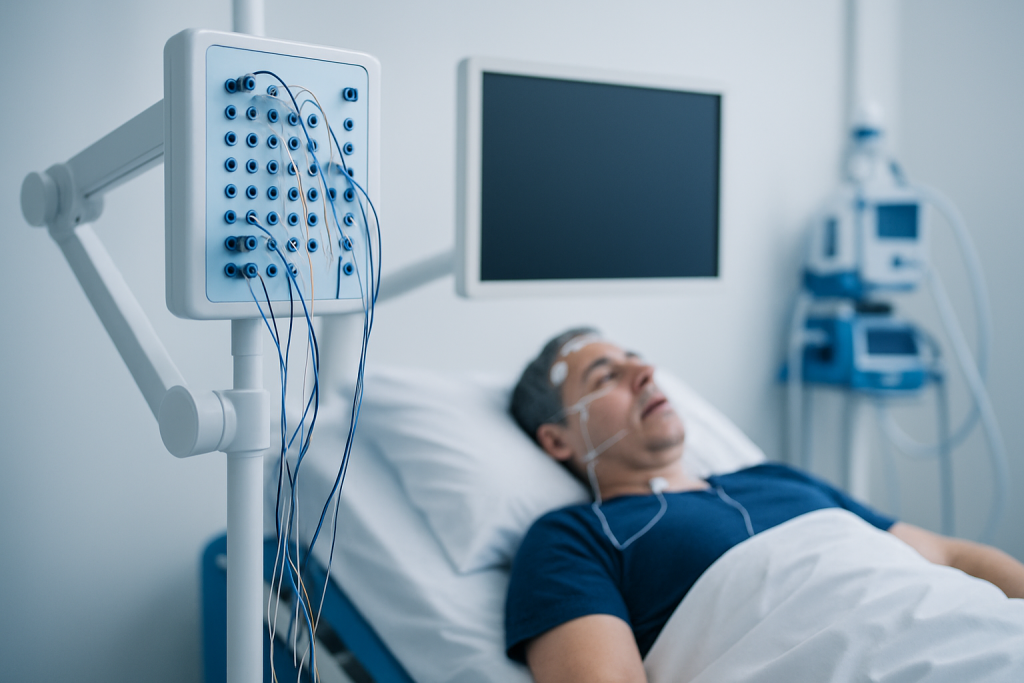
The most useful test for confirming RBD is an overnight sleep study called video polysomnography. This test records brain waves, eye movements, muscle activity, breathing, heart rhythm, and behavior during sleep. In RBD, the study may show REM sleep without the normal muscle atonia, along with observed or reported dream-enactment behavior.
Sleep testing also helps rule out or identify other conditions that can resemble RBD. These include obstructive sleep apnea, nighttime seizures, periodic limb movements, non-REM parasomnias such as sleepwalking, and severe nightmares without physical enactment. If symptoms suggest another neurological issue, the doctor may recommend a broader evaluation.
Depending on the person’s age and symptoms, follow-up may include neurological examinations over time. In some cases, a patient may benefit from coordinated assessment in neurology care and a specialized sleep program such as sleep disorder evaluation.
Treatment Options
Treatment aims to reduce the risk of injury and decrease nighttime episodes. For many people, the first and most important intervention is improving bedroom safety. This may include moving sharp objects away from the bed, padding corners, lowering the bed, placing cushions on the floor, or having the bed partner sleep separately for a time if episodes are frequent or forceful.
Doctors also review medications and lifestyle factors that may be contributing. If a medicine appears to worsen symptoms, the prescribing doctor may consider alternatives. Good sleep habits, avoiding sleep deprivation, and limiting alcohol can also help reduce episodes in some people.
When symptoms are disruptive or unsafe, medication may be recommended. Commonly used options include melatonin and, in selected cases, clonazepam. The best choice depends on age, overall health, risk of falls, memory concerns, and coexisting sleep disorders. Treatment should always be individualized and monitored by a qualified clinician.
If another sleep disorder is present, treating it can be an important part of care. For example, if sleep apnea is contributing to nighttime events, management such as sleep apnea treatment may improve sleep stability and safety. If there is concern for an associated neurological condition, referral for movement disorder evaluation and care may also be appropriate.
Prevention and Self-care
There is no guaranteed way to prevent REM sleep behavior disorder, but practical steps can lower the chance of harm and may reduce triggers. A regular sleep schedule is important, because sleep loss can make many parasomnias worse. Going to bed and waking up at consistent times helps support healthy sleep architecture.
People who have suspected or confirmed RBD should make the bedroom as safe as possible. Removing weapons or breakable items, securing windows, and considering padded bed rails may be helpful in selected cases. Some people temporarily sleep on a mattress closer to the floor if falls are a concern.
Alcohol and sedating substances can affect sleep quality and behavior, so it is wise to discuss their use with a doctor. Family members and bed partners should be informed about the condition so they understand that the behavior occurs during sleep and is not intentional.
Keeping a sleep diary can also be useful. Recording the timing of episodes, dream recall, medication changes, alcohol intake, and stress levels may help the doctor identify patterns and adjust treatment over time.
When to See a Doctor
A doctor should evaluate repeated episodes of talking, shouting, hitting, kicking, or falling out of bed during sleep. Medical attention is especially important if the behavior has caused injury, is happening more often, or is disturbing a bed partner. A professional assessment can distinguish RBD from other sleep or neurological conditions that need different treatment.
People should also seek medical advice if dream-enactment behavior begins after starting a new medication or if there are daytime symptoms such as tremor, slowed movement, balance changes, fainting, constipation, reduced sense of smell, or changes in thinking. These symptoms do not always mean there is a serious neurological disorder, but they deserve evaluation.
Children and younger adults can have unusual sleep behaviors too, but the causes may be different, so age-appropriate assessment matters. Prompt evaluation is also important for older adults, because RBD may sometimes be an early sign of a broader neurological process.
Near the end of the care journey, some patients may benefit from multidisciplinary support that includes sleep specialists and neurologists. Acibadem International’s multidisciplinary specialists and JCI-accredited hospitals diagnose and treat REM sleep behavior disorder for international patients when expert evaluation is needed.
Frequently asked questions
Is REM sleep behavior disorder the same as sleepwalking?
No. REM sleep behavior disorder usually happens during REM sleep, often later in the night, and the person may recall a vivid dream if awakened. Sleepwalking is usually a non-REM parasomnia that tends to occur earlier in the night and often involves less dream recall.
Can REM sleep behavior disorder be dangerous?
It can lead to accidental injury because movements during sleep may be forceful or sudden. The risk can often be reduced with simple bedroom safety changes and appropriate medical treatment.
Does acting out dreams mean a person has Parkinson’s disease?
Not necessarily. Some people with REM sleep behavior disorder never develop Parkinson’s disease or a related neurological condition. However, because there can be a connection in some adults, regular follow-up with a doctor is important.
How is REM sleep behavior disorder confirmed?
Doctors usually confirm the diagnosis with a detailed history and an overnight video sleep study. This test can show whether REM sleep is occurring without the normal muscle relaxation and can help rule out other causes of nighttime behaviors.
What treatments are commonly used?
Treatment often starts with making the sleep environment safer and reviewing possible triggers such as certain medications or alcohol. When needed, doctors may recommend medicines such as melatonin or clonazepam, depending on the person’s overall health and sleep profile.
Can REM sleep behavior disorder go away on its own?
Some people may have fluctuating symptoms, but repeated dream-enactment behavior should not be ignored. Even if episodes seem mild, a medical evaluation is helpful because treatment can improve safety and may identify related sleep or neurological conditions.
References
- American Academy of Sleep Medicine
- National Institute of Neurological Disorders and Stroke
- National Institute on Aging
- Mayo Clinic
- International Classification of Sleep Disorders
This article is for general information only and is not a substitute for professional medical advice. Please consult a qualified doctor about your individual situation.
Explore treatments in Turkey — costs, top hospitals & a free quote
JCI-accredited · board-certified surgeons · reply within 24h
Add us as a Preferred Source to see more of our trusted health content across Google Search, AI Overviews and Discover.