Removing of Moles — Explained by Medical Evidence, Not Myths

Moles should be assessed before removal, especially if they are new, changing, bleeding, or irregular. Doctors choose the removal method based on the mole’s size, depth, location, and whether cancer needs to be ruled out.
Key Takeaways
- Moles should be assessed before removal, especially if they are new, changing, bleeding, or irregular.
- Doctors choose the removal method based on the mole’s size, depth, location, and whether cancer needs to be ruled out.
- Home mole removal methods are not recommended because they can cause scarring, infection, or delay diagnosis.
- A removed mole may be sent to a laboratory for examination if there is any concern about abnormal cells.
- Sun protection and skin self-checks help reduce the chance of missing important warning signs.
Removing of moles can be safe and straightforward when it is guided by a qualified doctor rather than myths or home remedies. The best approach depends on whether the mole is being removed for comfort, appearance, or to check for skin cancer.
What removing of moles really means
Removing of moles means taking off part or all of a skin mole in a controlled medical setting. People may consider this because a mole rubs on clothing, catches while shaving, looks different from other moles, or simply causes cosmetic concern. In some cases, removal is recommended so the tissue can be examined under a microscope to rule out melanoma or another skin condition.
Not every mole needs to be removed. Many moles are harmless growths made of pigment-producing cells and remain stable for years. The key point is that a mole should be assessed before treatment, because the safest technique is not always the quickest cosmetic option.
This evidence-based approach matters because myths about “burning off” or “drying out” moles can lead to unnecessary injury. When a suspicious mole is destroyed without proper examination, an important diagnosis may be delayed. A dermatologist or another trained physician can decide whether simple observation, a biopsy, or complete removal is the best next step.
Why moles are removed
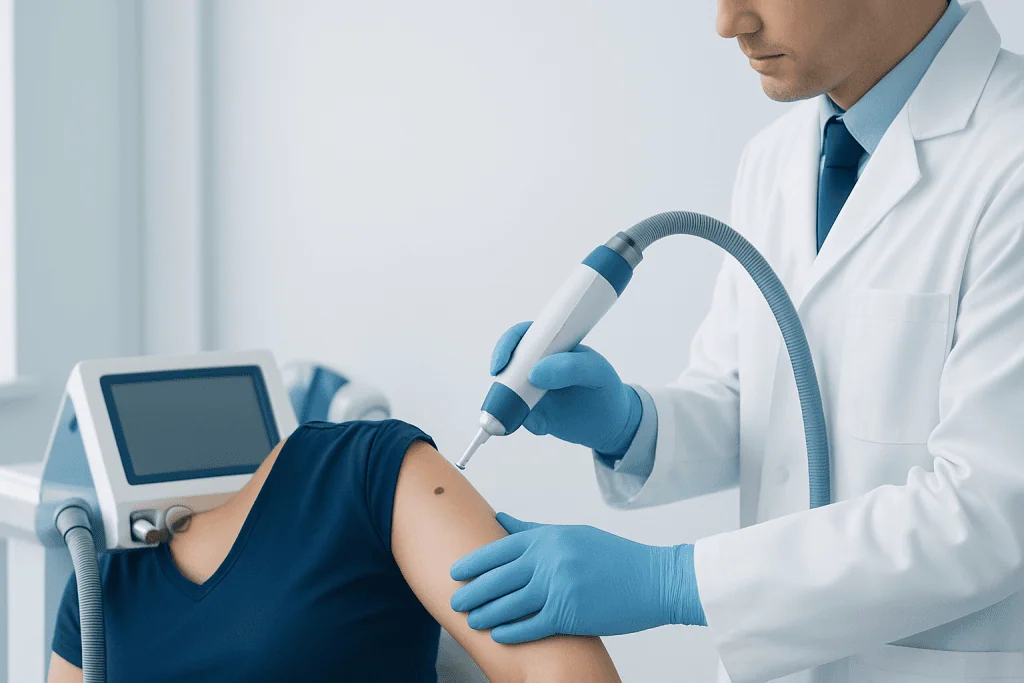
Moles are usually removed for one of three reasons: medical evaluation, physical irritation, or appearance. A doctor may advise removal if a mole has warning signs such as asymmetry, uneven borders, multiple colors, noticeable growth, or symptoms like itching and bleeding. In these cases, the tissue often needs laboratory analysis rather than purely cosmetic treatment.
Some moles are benign but bothersome in daily life. They may sit under a bra strap, at the waistline, on the scalp, or in the beard area, where repeated friction can cause irritation. Removal may improve comfort and reduce repeated trauma to the skin.
Cosmetic removal is also common when a mole is clearly benign and the person dislikes its appearance. Even then, a doctor usually checks the lesion first to be sure it does not resemble skin cancer or another condition that needs a different plan. A careful assessment helps balance cosmetic goals with safety, scarring, and long-term skin health.
Signs that a mole needs medical attention
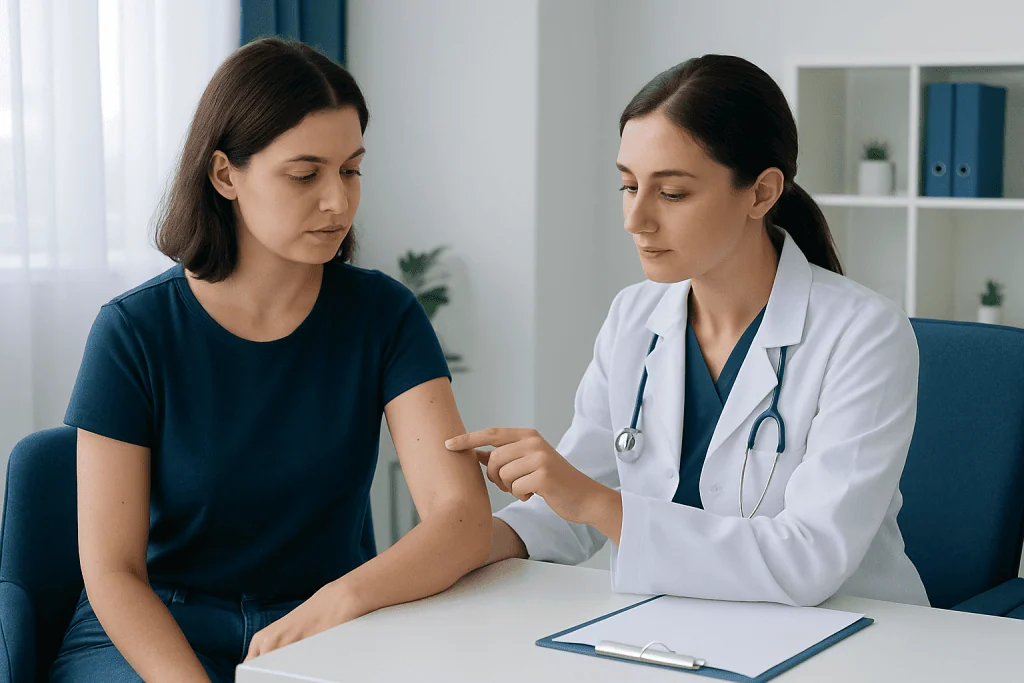
A helpful way to assess a mole is the ABCDE rule. Concerning features include asymmetry, irregular border, color variation, diameter that is increasing, and evolution over time. A new mole in adulthood, or one that looks different from a person’s other moles, also deserves attention.
Symptoms matter as much as appearance. A mole should be checked if it bleeds without clear injury, becomes crusted, starts itching persistently, feels painful, or develops a sore that does not heal. While these changes do not always mean cancer, they do mean the mole should not be treated casually at home.
Doctors may also look for the “ugly duckling” sign, meaning one spot appears noticeably different from surrounding moles. A history of frequent sunburns, tanning bed use, fair skin, many moles, or a personal or family history of melanoma raises the need for careful skin review. In that setting, removing of moles may be part of a broader skin check rather than an isolated procedure.
How doctors evaluate a mole before removal
Medical evaluation starts with questions about when the mole appeared, whether it has changed, and whether there are symptoms such as bleeding or itching. The doctor also asks about previous skin cancers, sun exposure, and family history. This background helps identify whether a mole is likely harmless or whether it needs closer examination.
The skin is then examined directly, often with a dermatoscope. This handheld device magnifies the lesion and helps the doctor see patterns of pigment and structure that are not visible to the naked eye. Dermoscopy can improve decisions about whether a lesion can be observed, sampled, or fully removed.
If cancer is a possibility, the priority is to preserve tissue for diagnosis. In that situation, the doctor may recommend a skin biopsy or complete excision rather than a purely superficial method. Imaging is usually not needed for a routine mole, but the laboratory examination of the sample is central when a suspicious lesion is removed.
Medical methods used for removing of moles
The removal method depends on the mole’s appearance and the reason for treatment. A shave removal takes the raised part of a mole off near the skin surface and may be suitable for clearly benign, superficial lesions. It is quick and often leaves a flat scar, but it may not be appropriate if deeper tissue or complete margin assessment is needed.
An excisional removal cuts out the entire mole with a small margin of surrounding skin and then closes the area, often with stitches. This method is commonly used when the doctor wants the whole lesion examined or when the mole extends deeper into the skin. It can provide the most complete sample, although it may leave a longer scar than a shave technique.
Sometimes a punch tool is used to remove a small round section of skin, especially for smaller lesions or diagnostic sampling. The exact approach is influenced by body location, skin tension, size, shape, and concern for malignancy. For selected patients with suspicious or confirmed lesions, care may involve dermatology evaluation and treatment and, when cancer is diagnosed, a broader plan linked to melanoma management.
Methods advertised online, such as acids, burning devices, or cutting a mole off at home, are not considered safe substitutes for medical care. They may not remove the full lesion, can distort the tissue needed for diagnosis, and may increase the risk of infection or noticeable scarring.
What to expect after mole removal
Most mole removals are outpatient procedures done with local anesthetic. The area is cleaned, numbed, treated, and covered with a dressing. Recovery is usually simple, although the healing time varies depending on the size of the wound, the technique used, and where the mole was located.
Patients are generally advised to keep the wound clean, follow dressing instructions, and avoid picking at the site. Mild tenderness, redness at the edges, or a small amount of oozing can occur early on. Larger excisions may need stitches and a follow-up visit for removal or review.
If the mole was sent for pathology, the result guides the next step. A benign finding may require no further treatment, while atypical or cancerous changes can mean additional excision or closer surveillance. When treatment extends beyond a simple office procedure, multidisciplinary care may be helpful; Acibadem International’s specialists in JCI-accredited hospitals diagnose and treat skin lesions for international patients, including when skin cancer treatment is needed.
Scarring is possible with any method, but doctors aim to minimize it by choosing the right technique and giving aftercare advice. Protecting the healing area from sun exposure can help the scar fade more evenly over time.
Myths, self-care, and prevention
A common myth is that all moles are dangerous or should be removed “just in case.” In reality, most moles are benign and can simply be monitored. Another myth is that if a mole is removed, it will automatically “come back worse.” What matters medically is whether the lesion was benign, fully removed when needed, and properly examined if suspicious.
Home remedies deserve special caution. Internet advice may suggest apple cider vinegar, garlic, tying off a mole, or over-the-counter removal kits. These methods are not reliable medical treatments. They can cause burns, bleeding, incomplete removal, and loss of tissue that might have shown important abnormal cells under the microscope.
Self-care is most useful in the form of observation and prevention. People can check their skin regularly in good light, using mirrors for hard-to-see areas, and note new or changing spots. Taking simple photographs can help track changes over time, but photographs do not replace professional examination.
Prevention focuses mainly on sun safety. Helpful steps include broad-spectrum sunscreen, protective clothing, shade during strong midday sun, and avoiding tanning beds. These habits do not remove existing moles, but they can lower UV-related skin damage and make future skin changes easier to detect.
When to seek medical care
Medical care should be sought promptly if a mole is new in adulthood, changes in size or color, becomes uneven, or starts bleeding, crusting, itching, or hurting. Evaluation is also important if a mole stands out from the rest or if there is a personal or family history of melanoma. A doctor can decide whether observation is enough or whether removal is the safest option.
Even when a mole seems harmless, it is reasonable to ask for assessment before cosmetic removal. This is especially true for moles on the face, scalp, hands, feet, or genital area, where technique choice can affect healing and scarring. Professional advice is also helpful for children, people with many moles, and anyone with immune suppression.
Urgent review is needed if a removal site develops spreading redness, increasing pain, pus, fever, or significant bleeding. These signs may point to infection or another complication. When in doubt, a dermatologist or qualified physician is the right source of guidance rather than self-treatment.
Frequently asked questions
Is removing of moles safe?
Yes, removing of moles is usually safe when it is done by a qualified doctor after the mole has been examined. Safety depends on choosing the right technique and making sure suspicious moles are not destroyed without proper testing.
Can a doctor tell if a mole is cancerous just by looking at it?
A trained doctor can often estimate whether a mole looks benign or suspicious, especially with dermoscopy. However, the only way to confirm many diagnoses is to examine the tissue under a microscope after biopsy or removal.
Should a benign mole always be removed?
No, a benign mole does not always need removal. If it is not changing, not causing symptoms, and not bothering the person cosmetically, observation is often enough.
Do home mole removal products work?
Home products may remove surface tissue, but they are not recommended. They can burn the skin, cause scars or infection, and make it harder to diagnose a dangerous lesion correctly.
Will a mole grow back after removal?
Sometimes pigment or part of a mole can appear again, especially if a superficial method was used and deeper cells remained. This does not automatically mean cancer, but the area should be rechecked if it changes or looks unusual.
Does mole removal leave a scar?
Any procedure that cuts or removes skin can leave some degree of scarring. The appearance of the scar depends on the method used, the body location, skin type, wound care, and how the area heals.
References
- American Academy of Dermatology
- National Cancer Institute
- American Cancer Society
- British Association of Dermatologists
- World Health Organization
This article is for general information only and is not a substitute for professional medical advice. Please consult a qualified doctor about your individual situation.
Oncology care in Turkey — second opinion and treatment plan
JCI-accredited · board-certified surgeons · reply within 24h
Add us as a Preferred Source to see more of our trusted health content across Google Search, AI Overviews and Discover.