

Replant Surgery: Procedure, Recovery and Results
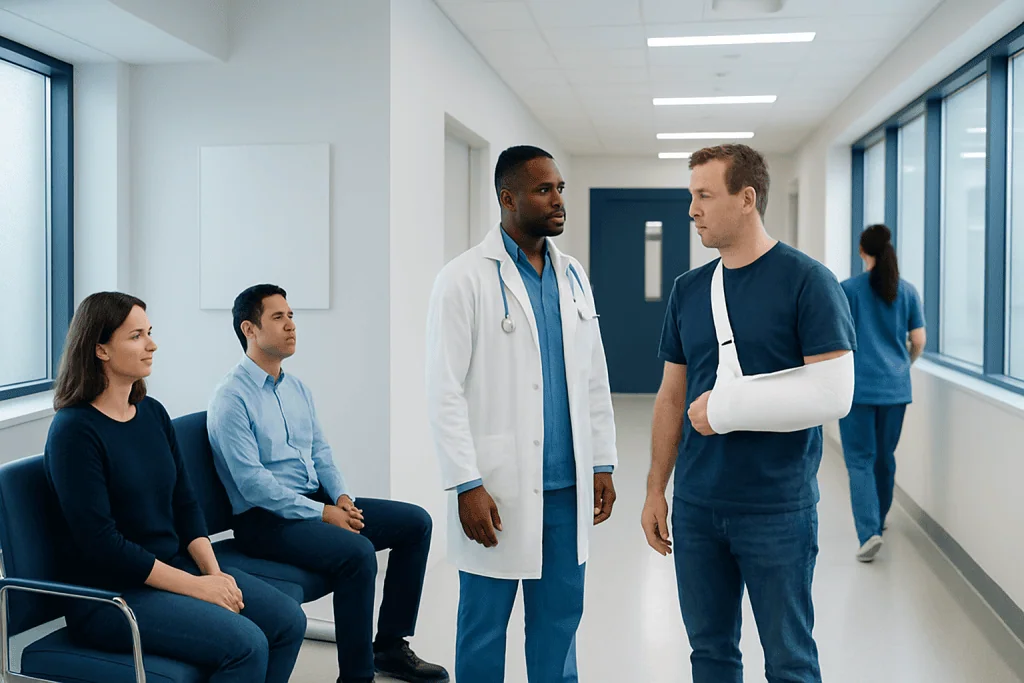
Replant surgery is time-sensitive and requires immediate assessment at a hospital with microsurgical expertise. The detached part should be wrapped in clean, moist gauze, sealed in a waterproof bag and placed on ice water—not directly on ice.
Key Takeaways
- Replant surgery is time-sensitive and requires immediate assessment at a hospital with microsurgical expertise.
- The detached part should be wrapped in clean, moist gauze, sealed in a waterproof bag and placed on ice water—not directly on ice.
- During the replantation procedure, surgeons stabilize bone and repair tendons, blood vessels, nerves and skin under magnification.
- Recovery is usually measured in months, with hand therapy and close follow-up playing a major role in function.
- Survival of the replanted part and final movement, feeling and strength are different outcomes; neither can be guaranteed.
Replant surgery is an emergency microsurgical procedure that may restore blood flow, nerves, tendons, bones and skin after a finger, thumb, hand, arm, toe or other body part has been completely severed. Suitability and results depend on the injury, the detached part’s condition, the time before treatment and a person’s overall health.
Overview: what is replant surgery?
Replant surgery, also called replantation surgery, is a highly specialized emergency operation used to reattach a body part that has been completely separated from the body. It is most often performed after traumatic amputation of a finger, thumb, hand or arm. In selected situations, surgeons may also consider replantation for the foot, toe, ear, scalp or other tissues.
The aim is first to restore circulation so the part can survive. The surgical team then repairs the structures needed for useful function, such as bone, tendons, nerves, arteries, veins and skin. Replantation is different from revascularization, in which a body part remains partly attached but has lost its blood supply.
Replant surgery is not appropriate for every injury. A specialist team weighs the likelihood of healing and meaningful function against the risks and recovery demands. When it is feasible, treatment is usually coordinated by plastic and reconstructive surgeons with microsurgical expertise, anesthesiologists, orthopedic specialists, vascular specialists, rehabilitation professionals and hand therapists.
When to seek medical care
A complete or partial traumatic amputation is a medical emergency. Emergency services should be contacted immediately, and the injured person should be taken to the nearest emergency department. If possible, the emergency team or hospital should be told that a detached body part is present so transfer to a microsurgical center can be arranged when needed.
First aid should focus on safety and bleeding control. Apply firm, direct pressure with a clean cloth or dressing to the injury site. Do not use a tourniquet unless instructed by trained emergency personnel, and do not attempt to wash aggressively, straighten, remove embedded material or reattach the part.
The detached part should be gently covered in clean gauze or cloth moistened with sterile saline or clean water, placed in a clean waterproof bag, and then placed in a second container with ice and water. It should not touch ice directly and should not be immersed in water. Keeping the part cool, clean and protected can help preserve tissue while urgent medical evaluation is arranged.
How surgeons decide whether replantation is suitable

Candidacy is individualized. Replantation is more likely to be considered for a thumb, multiple fingers, a hand, an arm, a child’s injury, or an amputation where the anticipated function could be better than that achieved with revision amputation and prosthetic rehabilitation. The thumb is particularly important because it contributes substantially to pinch and grasp.
Surgeons assess the type and level of injury, the condition of the tissues, contamination, elapsed time, and whether the detached part can be preserved safely. A clean-cut injury usually causes less tissue damage than a crush, tearing or avulsion injury. Severe crushing, extensive contamination, major tissue loss, or prolonged loss of blood supply can make successful replantation less likely.
The person’s general condition also matters. Life-threatening injuries are stabilized first. Factors such as serious infection risk, uncontrolled medical conditions and smoking may affect healing. Imaging, blood tests and examination of the injury help the team establish an individualized replant protocol, including whether immediate surgery, staged reconstruction or another treatment approach is safest.
Even when a part can be replanted, the expected result may include stiffness, reduced sensation, cold sensitivity, pain or limited strength. The decision is therefore based on the likely quality of function and the person’s ability to participate in a lengthy replantation recovery, not only on whether the part can be surgically reattached.
The replantation procedure: step by step
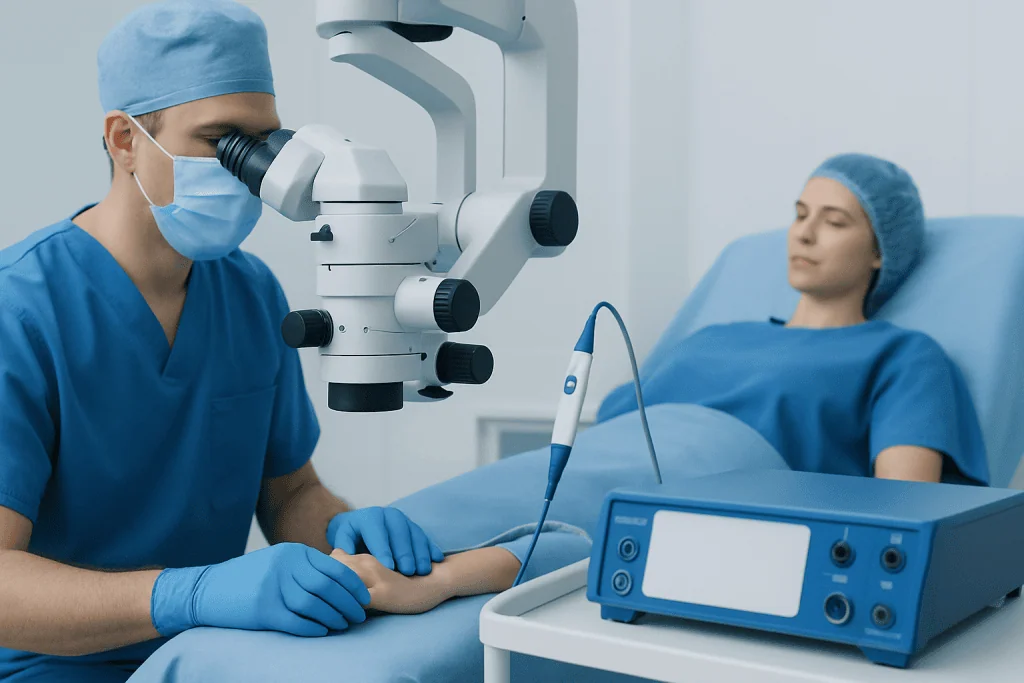
After emergency assessment and anesthesia planning, the surgical team carefully cleans the wound and removes tissue that cannot survive. The replantation procedure may take many hours, especially for larger body parts or complex injuries. Surgeons commonly use an operating microscope and very fine instruments and sutures to repair tiny blood vessels and nerves.
First, the bone may be shortened slightly and stabilized with pins, plates, screws or other fixation methods. This creates a stable framework and can reduce tension on repaired vessels. Tendons and muscles are then repaired when possible, followed by microscopic repair of arteries and veins to restore inflow and drainage of blood.
Once circulation returns, the team evaluates the color, warmth and bleeding of the replanted tissue. Nerves may be repaired to support later sensory and motor recovery, although nerves regrow slowly. Skin is closed directly when possible; skin grafts or tissue coverage procedures may be needed if there is not enough healthy skin.
After surgery, the replanted part is monitored closely for signs of impaired circulation. A return to the operating room may sometimes be necessary if a blood vessel becomes blocked or bleeds. In complex cases, reconstruction may involve related microsurgical and reconstructive approaches, including microsurgery for delicate vessel and nerve repair.
Benefits, limitations and risks
The potential benefit of replant surgery is preservation of a person’s own tissue and, in some cases, improved appearance, sensation, grasp, balance or independence in daily activities. A successfully replanted thumb, hand or multiple fingers may provide important practical function. For some people, retaining the body part can also support emotional adjustment after trauma.
However, replantation surgery success rate is not a single number that applies to every injury. In clinical practice, “success” may mean the replanted part survives, while the person may still have reduced movement, sensation or strength. Outcomes vary with the body part involved, the mechanism of injury, the quality of circulation, the time to treatment, surgical findings, complications and rehabilitation.
Possible complications include blood clots in repaired vessels, bleeding, infection, poor wound healing, tissue loss, bone healing problems, tendon adhesions, stiffness, chronic pain, numbness, cold intolerance and the need for further surgery. Some replants do not survive despite appropriate treatment, and a revision amputation may then be required.
Open discussion with the surgical team helps set realistic expectations. They can explain the expected function, risks, monitoring needs and alternatives for the individual injury, including wound management, reconstruction or prosthetic options when replantation is not advisable.
Replantation recovery and rehabilitation timeline
Replantation recovery begins in hospital, where clinicians monitor circulation, manage pain, protect the repair and watch for infection or clotting. The length of stay varies according to the injury and the operation. The replanted area may need to be kept warm, elevated and carefully positioned, and people are commonly advised to avoid nicotine because it can impair blood flow and healing.
Hand therapy or physical rehabilitation often starts under the surgical team’s guidance as soon as it is safe. Early movement may help limit stiffness, but repaired bones, tendons and vessels must also be protected. Splints, tailored exercises, scar care and gradual strengthening are adjusted over time by rehabilitation specialists.
Initial healing occurs over weeks, but recovery of useful movement and sensation often takes many months. Nerve healing is gradual, and the final result may continue to evolve for a year or longer. Follow-up appointments are important to identify problems such as restricted tendon movement, non-healing bone, painful scars or impaired circulation.
Rehabilitation is an active partnership between the patient and care team. Attending therapy, following splint and wound-care instructions, protecting the injury from cold or further trauma, eating a balanced diet and avoiding smoking can all support recovery. At Acibadem International, multidisciplinary specialists in JCI-accredited hospitals can assess and treat complex traumatic injuries for international patients.
Living with expectations after replant surgery
After discharge, people should follow their surgeon’s instructions closely and attend all scheduled reviews. The reattached part may look swollen or different in color during early healing, but any sudden change in temperature, color, pain, swelling, bleeding or wound drainage should be reported urgently. These changes can indicate a circulation or infection problem that needs prompt assessment.
Daily activities are reintroduced gradually. The team may recommend workplace adjustments, adaptive tools or occupational therapy while function returns. Driving, sports, heavy lifting and work involving machinery should wait until the treating team confirms that it is safe.
Emotional recovery also deserves attention. A traumatic injury and prolonged rehabilitation can affect mood, sleep, confidence and family life. Speaking with the clinical team, a counselor or a support service can be helpful, particularly when pain, stress or low mood becomes difficult to manage.
Long-term care may include additional procedures to improve function, release scar tissue, address nerve symptoms or revise bone alignment. These possibilities do not mean that the original operation has failed; they can be part of a planned reconstruction pathway designed around changing healing needs and personal goals.
Frequently asked questions
How long does replant surgery take?
The operation may take several hours and can be longer for complex injuries involving a hand, arm or multiple fingers. The exact duration depends on the structures that need repair, including bone, tendons, nerves and blood vessels. The surgical team can provide a more individualized estimate after assessing the injury.
Can any severed finger or hand be replanted?
No. A microsurgical team considers the injury mechanism, tissue damage, contamination, time without blood supply, the body part involved and the person’s overall medical condition. A clean-cut thumb or multiple-finger injury may be considered differently from a severely crushed or contaminated injury.
What is the most important first aid for a detached body part?
Control bleeding at the injury site with direct pressure and seek emergency help immediately. Wrap the detached part in clean, moist gauze, place it in a sealed waterproof bag, and put the bag in ice water. Do not place the part directly on ice or submerge it in water.
How long is replantation recovery?
Hospital recovery may last days to weeks depending on the injury and surgery, while rehabilitation commonly continues for months. Movement, strength and sensation can continue improving for a year or longer. The final outcome varies widely between individuals and injury types.
Will a replanted body part work normally?
A replanted part may regain meaningful function, but normal movement, sensation and strength cannot be promised. Stiffness, numbness, weakness and cold sensitivity are common long-term concerns. Consistent rehabilitation and follow-up give the best opportunity to improve function.
What symptoms need urgent attention after replant surgery?
Sudden paleness, bluish or dark color, unusual coldness, rapidly increasing pain or swelling, persistent bleeding, fever, wound drainage or a bad odor should be reported urgently. These may signal reduced circulation, bleeding or infection. Patients should use the emergency contact instructions provided by their surgical team.
References
- American Society for Surgery of the Hand
- American Academy of Orthopaedic Surgeons
- American College of Surgeons
- National Institute of Arthritis and Musculoskeletal and Skin Diseases
This article is for general information only and is not a substitute for professional medical advice. Please consult a qualified doctor about your individual situation.
Hair transplant in Turkey — costs, graft counts & a free assessment
JCI-accredited · board-certified surgeons · reply within 24h
Add us as a Preferred Source to see more of our trusted health content across Google Search, AI Overviews and Discover.

More from the Health Library



Related Specialists

Prof. Dr. Esen Demir
Pediatric Allergy
Dr. Aykut Türken
Orthopedic Surgery & Traumatology
Assoc. Prof. Dr. Erman Çilsal
Pediatric Cardiology
Prof. Dr. Ilgaz Doğusoy
Thoracic Surgery